Best Running Shoes for Women With Flat Feet: 8 Top Stability Picks for 2026
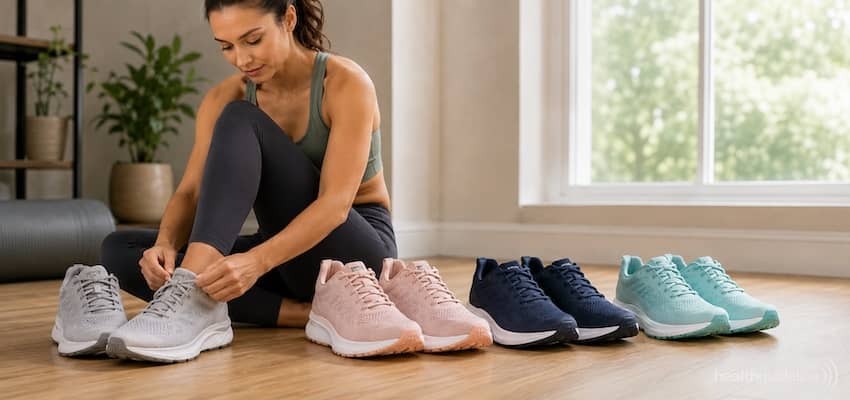
The Brooks Adrenaline GTS 24 is the best all-round pick for most women with flat feet — dependable, non-intrusive support in a shoe you can wear every day.
Also great: the ASICS Gel-Kayano 32 for plush long-run comfort, the Hoka Arahi 8 for lightweight support (with wide sizes), and the New Balance 860v15 for wide feet.
Flat feet are more common than most runners think — and having them doesn’t mean running has to be uncomfortable. The right shoe won’t reshape your arch, but a well-chosen pair can spread impact more evenly, calm excess inward roll (overpronation), and make your miles feel steadier. Below are eight running shoes for women with flat feet that are actually sold today, each picked for a specific kind of runner, with honest pros, cons and who each one isn’t for.
Do flat feet actually require stability shoes?
Not automatically. Flat feet (fallen arches) affect an estimated 20–30% of adults, and for many people they cause no pain and need no special shoe. Many flat-footed runners do fine in neutral shoes. Stability shoes help when flat feet come with overpronation that causes discomfort — so comfort and fit matter more than any label.
In other words: choose the shoe that feels best on your foot for the runs you actually do. If you’re unsure whether you overpronate, a gait analysis at a specialty running store (or a check-in with a podiatrist) is the most reliable way to find out. The picks below span gentle “guidance” shoes all the way to maximum-support trainers, so there’s a good option whether your feet need a little help or a lot.
How we chose
We prioritized current, widely available models from brands with a strong track record in support footwear, and focused on the features that matter most for flat feet: effective but non-corrective stability, cushioning that stays stable underfoot, a secure fit with room in the toe box, and availability in multiple widths. We cross-referenced hands-on reviews from specialist running publications (Fleet Feet, Doctors of Running, RunRepeat, Believe in the Run and others) and weighted honest, real-world feedback over marketing claims. Prices are approximate and change often — always check the live listing.
Top picks at a glance
| Shoe | Best for | Support level | Cushioning | Approx. price |
|---|---|---|---|---|
| Brooks Adrenaline GTS 24 | Best overall | Moderate (GuideRails) | Mid / firmer | ~$140 |
| ASICS Gel-Kayano 32 | Long-run comfort | Moderate (4D Guidance) | Max / plush | ~$165 |
| Hoka Arahi 8 | Lightweight support | Mild–moderate (H-Frame) | Moderate | ~$150 |
| Saucony Guide 18 | Everyday value | Mild (Center Path) | Moderate | ~$140 |
| New Balance 860v15 | Wide feet | Moderate / structured | High | ~$140 |
| Hoka Gaviota 5 | Maximum support | Maximum (H-Frame) | Max / plush | ~$175 |
| ASICS GT-2000 13 | Value stability | Moderate (3D Guidance) | Moderate | ~$140 |
| On Cloudflyer 5 | Plush, non-bouncy ride | Moderate (wide base) | Plush / controlled | ~$170 |
01 / BEST OVERALL
Brooks Adrenaline GTS 24
The Adrenaline GTS 24 is the safest all-round choice for flat-footed women who want dependable support without a stiff, corrective feel. Brooks’ GuideRails system reins in excess inward motion only when your stride needs it, while nitrogen-infused DNA Loft v3 foam keeps the ride cushioned but stable across daily miles.
Key features
- GuideRails “Go-To Support
- ” nitrogen-infused DNA Loft v3 midsole
- breathable engineered mesh upper
- RoadTack outsole
- 12 mm drop
- ~8.8 oz (women’s). Wide and GORE-TEX versions available.
Pros
- Reliable, non-intrusive stability
- durable
- breathable
- comes in wide widths
- a proven daily workhorse.
Cons
- Firmer than plush max-cushion shoes
- the tall 12 mm drop may not suit midfoot or forefoot strikers.
Best for: Everyday training and walking, mild-to-moderate overpronation, heel strikers who want “set it and forget it” support.
02 / BEST CUSHIONING FOR LONG RUNS
ASICS Gel-Kayano 32
If you want stability with a soft, plush ride for long runs and long days on your feet, the Gel-Kayano 32 delivers. Its 4D Guidance System adds support that adapts to your stride, while a tall stack of FF Blast Plus foam and an 8 mm drop make the miles feel smooth rather than corrective.
Key features
- FF Blast Plus midsole
- 4D Guidance System for adaptive stability
- comfortable engineered knit upper
- 8 mm drop. (The newer Gel-Kayano 33 is now out, and the 31 is often discounted.)
Pros
- Plush and stable at once
- smooth for long distances and standing
- roomy, breathable upper.
Cons
- One of the pricier picks (~$165)
- heavier than lightweight stability shoes.
Best for: Long runs, marathon training, all-day comfort, moderate overpronation.
03 / BEST LIGHTWEIGHT SUPPORT
Hoka Arahi 8
The Arahi 8 is the pick if you want support that stays out of the way. Its H-Frame guides the foot from both sides — without the heavy, over-corrective feel of a traditional medial post — and it’s light and roomy, with wide and extra-wide sizes plus an APMA Seal of Acceptance for foot health.
Key features
- H-Frame stability, ~7.7 oz (women’s), 8 mm drop, breathable jacquard mesh upper, MetaRocker geometry
- wide and extra-wide options
- APMA certified.
Pros
- Genuinely lightweight
- non-intrusive guidance
- roomy toe box
- excellent width range.
Cons
- The durable upper can run warm in heat
- the rearfoot feels firmer than the smooth forefoot to some runners.
Best for: Lighter runners and walkers, wide feet, anyone who dislikes a “corrective” shoe feel.
04 / BEST EVERYDAY VALUE
Saucony Guide 18
The Guide 18 is a no-frills daily trainer with gentle, non-intrusive stability. Saucony’s Center Path technology keeps you centered without feeling rigid, and a roomy engineered-mesh upper with a low 6 mm drop suits runners who want support that simply blends into an easy, comfortable ride.
Key features
- PWRRUN midsole with a PWRRUN+ sockliner
- Center Path guidance
- 6 mm drop
- roomy breathable upper (fits slightly wider than the Guide 17).
Pros
- Gentle, unobtrusive stability
- comfortable
- versatile for daily miles
- good value.
Cons
- EVA-based foam feels less lively than premium foams
- not a max-cushioned shoe.
Best for: Everyday easy runs, newer runners, mild overpronation, and those who prefer a lower drop.
05 / BEST FOR WIDE FEET
New Balance Fresh Foam X 860v15
New Balance’s 860 line is a long-standing go-to for structured support, and the v15 is roomier than older versions with a firmer “stability plane” for obvious guidance. Pair that with New Balance’s famously broad size range — including wide and extra-wide — and it’s the natural choice for flat-footed runners who need extra room.
Key features
- Fresh Foam X cushioning
- structured “stability plane
- ” roomier toe box and forefoot than the v14
- multiple widths from narrow to extra-wide. (The v14 is still sold, often cheaper.)
Pros
- Outstanding width options
- roomy fit
- noticeable, structured support
- durable.
Cons
- Firmer and stiffer than plush shoes
- on the heavier side
- the support can feel like “a lot” for mild pronators.
Best for: Wide or high-volume feet, and runners who want clearly structured support.
06 / BEST MAXIMUM SUPPORT
Hoka Gaviota 5
For stronger overpronation — or when you simply want the most support — the Gaviota 5 is Hoka’s maximum-stability trainer. Its H-Frame lets Hoka use softer foam than older max-support shoes, so you get a plush, cushioned ride on a very stable, planted platform underfoot.
Key features
- H-Frame stability
- maximum cushioning with softer foams
- MetaRocker for smooth transitions
- generous fit (tends to run large).
Pros
- Very stable and very cushioned
- smooth rocker ride
- excellent for heavier runners and stronger pronation.
Cons
- The priciest pick (~$175)
- bulkier and heavier
- runs large, so size carefully.
Best for: Strong overpronation, heavier runners, and max-cushion fans who also need real support.
07 / BEST VALUE STABILITY
ASICS GT-2000 13
The GT-2000 13 offers much of the Kayano’s supportive DNA in a lighter, lower-priced package. ASICS’ 3D Guidance System focuses on holistic support rather than a single medial post, giving a smooth, balanced ride that’s a strong value for everyday flat-footed miles.
Key features
- 3D Guidance System
- FF Blast Plus foam
- moderate cushioning
- lighter and more nimble than the Kayano.
Pros
- Balanced, non-intrusive stability
- lighter feel
- comfortable
- genuinely good value.
Cons
- Less cushioned than the Kayano or Gaviota
- fewer premium touches.
Best for: Daily training on a budget, moderate overpronation, and runners who want ASICS support for less.
08 / BEST PLUSH, NON-BOUNCY RIDE
On Cloudflyer 5
If you like the idea of a plush shoe but worry that too much bounce stresses flat feet, the Cloudflyer 5 is a smart pick. Its wider base helps limit inward roll, the ride is supportive rather than springy, and a roomy toe box adds stability for flat-footed road runners.
Key features
- Wider stabilizing base to limit inward rotation
- Helion superfoam cushioning
- roomy toe box
- a supportive (not bouncy) road ride.
Pros
- Stable wide platform
- plush but controlled
- roomy toe box
- premium feel.
Cons
- Pricey (~$170)
- built for roads, not trails
- firmer and less energetic than some rivals.
Best for: Road runners who want supportive plush cushioning and are sensitive to overly bouncy midsoles.
What to look for in running shoes for flat feet
Support type: neutral, stability or motion control
Running shoes fall into three broad categories. Neutral shoes add no corrective structure and suit runners whose feet track well. Stability shoes add gentle guidance (via guide rails, foam frames or firmer medial foam) and suit most flat-footed runners who overpronate. Motion control (maximum support) shoes are the most structured and are usually reserved for stronger overpronation. Most people are well served by a stability shoe; only a minority need maximum support.
Arch support and the role of insoles
Flat feet often benefit from a bit of arch support, but you don’t have to get it all from the shoe. Many podiatrists suggest adding a supportive insole or orthotic for extra arch reinforcement, especially if you have arch pain. If you plan to use inserts, look for a shoe with a removable insole and enough room to fit them. See our guide to the best insoles for arch and heel support for options.
Cushioning and firmness
Cushioning absorbs impact, but softer isn’t always better for flat feet — an over-soft, bouncy midsole can feel unstable. A shoe that’s cushioned and stable (firm enough to stay planted) usually gives flat-footed runners the best of both.
Fit and width
A secure midfoot and heel with a roomy toe box lets your foot splay naturally and reduces rubbing. If your feet are wide, prioritize brands with true wide and extra-wide options — New Balance and Hoka are standouts here. Try shoes on later in the day when feet are slightly larger, and leave about a thumb’s width at the toe.
Heel-to-toe drop
Drop is the height difference between heel and forefoot. Higher-drop shoes (10–12 mm) can feel more supportive to heel strikers; lower drops (4–6 mm) feel more natural to midfoot strikers. There’s no single “correct” drop for flat feet — pick what feels comfortable and matches how you land.
Durability and when to replace
Most running shoes are designed to last roughly 300–500 miles. Flat-footed runners should replace shoes once the midsole feels flat or the support breaks down, since worn-out shoes lose the stability you bought them for.
Flat feet and overpronation: a quick primer
Flat feet (also called fallen arches or pes planus) means the arch is low or collapses so that much of the sole contacts the ground when standing. It’s common — studies estimate 20–30% of adults have flat feet — and it’s frequently painless. Flat feet often go hand in hand with overpronation, where the ankle rolls inward more than usual after the foot lands. For some runners that extra motion is harmless; for others it adds stress to the ankles, knees, hips or lower back and can cause discomfort.
It’s worth being realistic about what shoes can and can’t do: a running shoe supports and guides your foot, but it won’t cure flat feet or permanently change your arch. The goal is comfort and injury prevention, not correction. If flat feet come with foot or joint pain, pairing the right shoes with targeted arch-pain relief strategies and appropriate insoles tends to help more than shoes alone.
When to see a professional
Supportive shoes are a reasonable first step, but see a doctor, podiatrist or physical therapist if you notice any of the following: persistent foot, ankle, knee or hip pain that doesn’t settle with rest; pain that limits your normal activity; swelling; a sudden change in your arch or foot shape; or numbness and tingling. A professional can assess your gait, confirm whether you overpronate, and recommend footwear, custom orthotics, strengthening or other treatment for your specific situation. This article is for general information only and isn’t medical advice.
Frequently asked questions
Do flat feet mean I need stability or motion-control shoes?
Not necessarily. Many people with flat feet have no pain and run comfortably in neutral shoes. Stability shoes help when flat feet come with overpronation that causes discomfort, and motion-control shoes are usually reserved for stronger overpronation. The best guide is comfort — and, if you’re unsure, a gait analysis or podiatrist visit.
Are Brooks or ASICS better for flat feet?
Both make excellent, well-proven stability shoes, so it comes down to fit and feel. Brooks (the Adrenaline GTS 24) tends to feel firmer and more structured; ASICS (the Gel-Kayano 32) tends to feel softer and more cushioned. If you can, try both — the “better” shoe is the one that’s most comfortable on your foot.
Can the wrong running shoes make flat feet worse?
Shoes are unlikely to change your arch structure, but poorly fitting or worn-out shoes can worsen discomfort and raise injury risk. Running in unsupportive or broken-down shoes when you overpronate may aggravate foot, knee or hip pain. Choosing a supportive shoe that fits well, and replacing it on time, is the safer approach.
Should I add insoles or orthotics to my running shoes?
Often, yes — many podiatrists recommend arch-support insoles or custom orthotics for flat feet, especially with arch or heel pain. If you use inserts, pick a shoe with a removable insole and enough volume to fit them comfortably. For persistent pain, custom orthotics prescribed by a professional may work better than off-the-shelf inserts.
How often should I replace running shoes for flat feet?
As a rule of thumb, every 300–500 miles, but let feel be your guide. Once the midsole feels flat, the support feels diminished, or you notice new aches, it’s time for a new pair. Flat-footed runners rely on that midsole structure, so worn-out shoes lose the stability you need.
Are cushioned neutral shoes bad for flat feet?
Not inherently. Plenty of flat-footed runners are comfortable in cushioned neutral shoes, particularly if they don’t overpronate much. The main caution is that very soft, bouncy midsoles can feel unstable for some flat feet. If a neutral shoe feels supportive and comfortable to you, it can be a perfectly good choice.
This article is for general information only and is not medical advice. Talk to a qualified healthcare professional about your specific situation.