Ankle Brace for Basketball: The 8 Best Braces for 2026
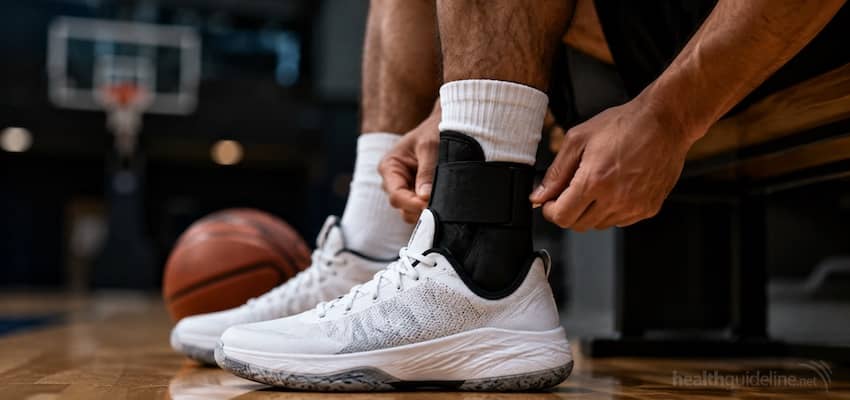
For most players, the Med Spec ASO Ankle Stabilizer is the best all-round ankle brace for basketball – trainer-trusted lace-up support that still fits inside a basketball shoe.
Best on a budget:
McDavid 195
Most support (weak/rolling ankles):
Zamst A2-DX
Lightest feel:
Aircast A60
If you play basketball, your ankles take a beating every time you cut, land, or step on someone’s foot under the rim. A good ankle brace won’t make you injury-proof, but the evidence is strong that it lowers your risk — especially if you’ve rolled an ankle before. This guide covers eight braces worth buying in 2026, who each one is best for, and how to pick the right support level for your ankles.
Ankle sprains are the single most common injury in basketball, and one large review of athletes found they account for roughly 16–40% of all sports injuries. Encouragingly, braces and taping have been shown to cut ankle-sprain rates by up to 71%, with the biggest benefit for players preventing a repeat sprain. (Sources are listed at the end.)
How we chose
We prioritized braces that deliver genuine lateral (side-to-side) support for jumping and landing, fit inside a basketball shoe without wrecking your mobility, breathe well enough for a full game, and hold up over a season. Picks were cross-checked against athletic-trainer and physical-therapist roundups and peer-reviewed sports-medicine research, and we deliberately span budgets and support levels — from thin compression sleeves to rigid stabilizers. We don’t list star ratings here because they change constantly; check the live Amazon listing for current reviews and price.
Top picks at a glance
| Brace | Best for | Type & standout feature | Approx. price* |
|---|---|---|---|
| Med Spec ASO Ankle Stabilizer | Best overall | Lace-up + figure-8 stabilizing straps | ~$30–$40 |
| Zamst A2-DX | Chronic instability / max support | Rigid exoskeleton, dual straps | ~$55–$70 |
| Bauerfeind Sports Ankle Support | Premium comfort | Breathable knit + figure-8 taping strap | ~$50–$70 |
| Aircast A60 | Lightest / low-profile | 60° stabilizer guard, single strap | ~$30–$45 |
| McDavid 195 | Best value lace-up | Figure-6 straps, tough 600-denier shell | ~$25–$35 |
| DonJoy Velocity ES | Return-to-play after repeat sprains | Semi-rigid hinged shells + SpeedWrap | ~$45–$70 |
| Sleeve Stars Ankle Support | Budget compression | Elastic sleeve + adjustable wrap strap | ~$15–$22 |
| Powerstep Dynamic Stability Sock | Lightweight all-day wear | Compression sock with built-in flex strap | ~$25–$35 |
01 / Best overall
1. Med Spec ASO Ankle Stabilizer — Best overall
The ASO is the brace you’ll spot in half the training rooms in the country: a lace-up boot with figure-8 stabilizing straps that mimic an athletic-tape job. It gives serious inversion control for the price, breaks in fast, and stays low-profile enough to fit most basketball shoes — the reason it’s the default pick for most players.
Key features
- Lace-up closure
- sewn-in figure-8 straps
- ballistic-nylon boot
- elastic cuff to lock in the straps.
Pros
- Excellent side-to-side support
- trainer/PT favorite
- affordable
- durable
- works for prevention and recovery.
Cons
- Takes longer to put on than a slip-on sleeve
- laces can loosen mid-game and need a quick re-cinch.
Best for: Almost any player who wants real support without going full rigid.
02 / Best for chronic instability and maximum support
2. Zamst A2-DX — Best for chronic instability and maximum support
If your ankle “gives way” or you’ve had several bad sprains, the A2-DX is the heavy hitter. Its molded exoskeleton and dual strapping system aggressively resist rolling while still allowing you to run and jump. It’s bulkier and pricier than most, but for genuinely unstable ankles it’s the closest thing to a rigid brace you’ll comfortably play in.
Key features
- Semi-rigid molded exoskeleton
- upper anchor strap plus heel straps
- anatomical left/right fit.
Pros
- Outstanding lateral stability
- adjustable, personalized fit
- very durable
- confidence-inspiring for weak ankles.
Cons
- Pricey
- noticeably bulkier — pair it with a roomier shoe.
Best for: Players with chronic ankle instability or a history of repeat/severe sprains.
03 / Best premium comfort
3. Bauerfeind Sports Ankle Support — Best premium comfort
Bauerfeind takes a different route: a medical-grade knitted sleeve with targeted compression pads and a figure-8 taping strap. It feels more like a second skin than a brace, breathes exceptionally well, and offers meaningful stability without the boxy feel of a lace-up. The trade-off is a premium price and a knit build that’s less rigid than the Zamst.
Key features
- 3D breathable knit
- anatomically contoured compression zones
- integrated figure-8 stabilizing strap
- washable.
Pros
- Very comfortable and low-profile
- great breathability
- strong build quality
- good for all-day and on-court wear.
Cons
- Expensive
- less aggressive support than a rigid brace
- sized left/right, so order carefully.
Best for: Players who want premium comfort with solid mid-level support.
04 / Best lightweight, low-profile brace
4. Aircast A60 — Best lightweight, low-profile brace
The A60 is built around a patented 60-degree guard that braces the outside of your ankle at the exact angle sprains happen, held on by a single anchoring strap. It’s one of the least bulky “real” braces here, slides easily into a basketball shoe, and goes on in seconds — ideal if a lace-up feels like too much.
Key features
- Rigid 60° stabilizer guard
- single-strap anchor
- breathable, sleek shell
- minimal bulk.
Pros
- Fast to put on
- barely noticeable in-shoe
- targeted sprain protection
- good for prevention.
Cons
- Less all-around support than lace-up or exoskeleton braces
- the guard can feel firm at first.
Best for: Players wanting lightweight sprain prevention without a bulky brace.
05 / Best value lace-up
5. McDavid 195 — Best value lace-up
The 195 is the workhorse many trainers keep in the team bag. A lace-up boot with figure-6 nylon straps and a rugged 600-denier shell, it delivers tape-like support that survives full seasons of dives and sprints — at a lower price than most premium options. If the ASO is sold out or over budget, this is the natural alternative.
Key features
- Lace-up boot
- figure-6 strapping
- heavy-duty 600-denier exterior
- adjustable top strap.
Pros
- Strong support for the money
- tough and durable
- adjustable without removing your shoe.
Cons
- A little bulky
- laces plus straps take a moment to dial in.
Best for: Budget-minded players who still want serious lace-up support.
06 / Best for returning to play after repeat sprains
6. DonJoy Velocity ES — Best for returning to play after repeat sprains
The Velocity ES is about as close to professional taping as you can strap on yourself: your ankle sits between two semi-rigid hinged shells that limit rolling while still letting you point your toe to sprint and jump. It’s an FDA-registered orthopedic brace, which makes it a common recommendation for players coming back from multiple sprains — but confirm the fit with your clinician if you’re rehabbing.
Key features
- Bilateral semi-rigid uprights
- hinge allows natural plantarflexion
- SpeedWrap straps for repeatable compression
- ES insert cushions the inner ankle bone.
Pros
- Very stable yet still athletic
- consistent, dial-in fit each time
- medical-grade build.
Cons
- More brace than casual players need
- firmer and pricier than a sleeve.
Best for: Athletes returning from multiple sprains or with chronic instability who need more than fabric.
07 / Best budget compression
7. Sleeve Stars Ankle Support — Best budget compression
If you don’t need rigid stabilization and mostly want compression, warmth, and mild support for soreness or a fully healed ankle, this sleeve-plus-strap wrap is a cheap, comfortable option. It slips on like a sock, adds an adjustable strap for a bit of extra hold, and is easy to wear all day. Just don’t expect it to stop a hard roll.
Key features
- Breathable elastic sleeve
- adjustable wrap-around strap
- open-heel design
- unisex sizing.
Pros
- Very affordable
- comfortable
- easy on/off
- good for tendonitis, soreness, and light support.
Cons
- Minimal protection against real sprains
- strap and elastic can loosen over time.
Best for: Mild support, compression, and everyday wear on a budget.
08 / Best for lightweight all-day wear
8. Powerstep Dynamic Ankle Stability Sock — Best for lightweight all-day wear
This one blurs the line between a compression sock and a brace: a thin, sock-like sleeve with a built-in flex strap that adds gentle stabilizing tension without any bulk. It’s the least noticeable option here and the easiest to wear for long stretches, making it a solid pick for light practices, warm-ups, or players who find full braces too restrictive.
Key features
- Sock-style compression sleeve
- integrated dynamic flex strap
- low-profile, thin knit.
Pros
- Barely-there feel
- comfortable for all-day wear
- good compression and flexibility.
Cons
- Light support only — not for unstable ankles or aggressive protection.
Best for: Minimalists who want a little support and compression with maximum mobility.
What to look for when buying an ankle brace for basketball
Support level (sleeve vs. lace-up vs. rigid)
Match the brace to your ankles. Compression sleeves offer the least support and are best for soreness or a fully healed ankle. Lace-up braces with figure-6 or figure-8 straps (ASO, McDavid 195) hit the sweet spot for most players — strong lateral support you can still move in. Rigid and hinged braces (Zamst A2-DX, DonJoy Velocity) are for chronic instability or coming back from repeat sprains.
Fit and sizing
Fit is everything — a brace that’s too loose won’t protect you, and one that’s too tight kills circulation and comfort. Measure per the manufacturer’s size chart (often based on shoe size or ankle circumference), and note that some braces are sold left/right specific. Aim for snug support that still lets your ankle flex naturally.
Closure system
Laces give the most adjustable, tape-like fit but take longer to put on; straps and hook-and-loop wraps are faster to adjust mid-game. Many of the best basketball braces combine both. If you re-tighten during timeouts, prioritize easy strap access.
Breathability and materials
Basketball is sweaty work, so look for breathable, moisture-wicking fabrics. Knitted braces (Bauerfeind) and mesh-lined designs stay cooler; some players prefer to avoid neoprene if it traps heat or irritates their skin. Breathable materials also cut down on odor and rubbing over a long game.
Weight and low-profile fit
Your brace has to fit inside your basketball shoe. Low-profile options (Aircast A60, Bauerfeind, Powerstep) slide in easily; bulkier stabilizers (Zamst A2-DX) may need a roomier or wider shoe. Lighter braces reduce fatigue but generally trade away some support.
Durability
If you play often, cheap braces wear out fast. Reinforced shells (McDavid’s 600-denier build) and trusted brands tend to hold their support and shape longer, which usually makes a slightly pricier brace the better value over a season.
About ankle sprains in basketball (and what a brace can and can’t do)
Ankle sprains are the most common injury in basketball, and most involve the lateral (outer) ligaments — especially the anterior talofibular ligament — when the foot rolls inward on a landing or a cut. They’re common for a reason: the sport is full of jumping, sudden direction changes, and landing on other players’ feet.
A brace meaningfully lowers your risk but doesn’t eliminate it. Research indicates bracing and taping can reduce ankle-sprain rates by up to 71%, with the strongest effect on preventing repeat sprains — and that matters, because players with a prior ankle injury have been found to be roughly five times more likely to injure it again. About 40% of people who sprain an ankle go on to develop some chronic ankle instability, so what you do after a sprain counts as much as the brace itself.
A brace is one layer of protection, not a cure. The most durable protection comes from combining a well-fitted brace with supportive footwear, a proper warm-up, and ankle-strengthening and balance work (calf raises, single-leg balance, and similar). If you’ve had a significant sprain, or your ankle keeps giving way, see a physical therapist or physician — braces support recovery but don’t replace rehab or professional care.
Frequently asked questions
Can you wear an ankle brace while playing basketball?
Yes. Ankle braces are allowed and widely used in basketball at every level, from rec leagues to the pros. Most low-profile and lace-up braces fit inside a standard basketball shoe. Choose one designed for sports so it supports your ankle during jumping, cutting, and landing without overly restricting movement.
Do ankle braces actually prevent injuries in basketball?
They reduce risk rather than guarantee prevention. Research indicates that bracing or taping can lower ankle-sprain rates by up to 71%, with the biggest benefit for players avoiding a repeat sprain. Braces work best alongside good footwear, warm-ups, and ankle-strengthening exercises — not as a standalone fix.
Are lace-up or sleeve ankle braces better for basketball?
It depends on your ankles. Lace-up braces with figure-6 or figure-8 straps give stronger, tape-like lateral support and suit players preventing or recovering from sprains. Compression sleeves are lighter and comfier but offer less protection, making them better for mild soreness or a fully healed ankle rather than instability.
Do ankle braces make you slower or weaker over time?
For most players, a well-fitted brace has little meaningful effect on jumping or sprint performance, and there’s no strong evidence it weakens the ankle if you also train it. To keep ankles strong, pair bracing with regular strengthening and balance work rather than relying on the brace alone.
Should you wear a brace on one ankle or both?
If you’ve injured or repeatedly rolled one ankle, bracing that side is the priority. Some players brace both for symmetry and confidence, which is fine. If only one ankle is unstable, a single brace is enough — just make sure it’s the correct left/right version if the model is side-specific.
Medical disclaimer: This article is for general information only and is not medical advice. Talk to a qualified healthcare professional about your specific situation, especially if you have a current injury or ongoing ankle instability.