Best Mushroom Supplement: 5 Picks for 2026
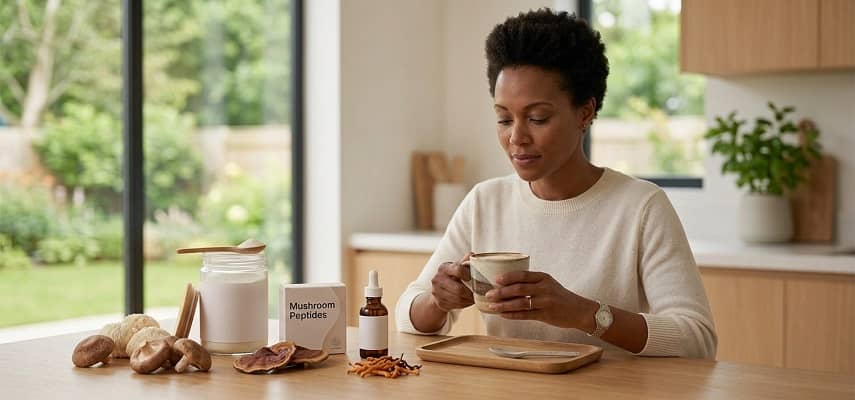
The best mushroom supplement is not necessarily the bottle with the longest species list. For most shoppers, Real Mushrooms 5 Defenders is the strongest all-around starting point because it uses five mushroom fruiting-body extracts and discloses a beta-glucan target. FreshCap is the more feature-rich six-mushroom alternative, while Gaia Herbs is the simplest one-capsule option. This 2026 guide compares what is actually on the labels—and keeps the health claims in perspective.
Quick picks
Best overall
Real Mushrooms 5 Defenders
Five fruiting-body extracts, a disclosed >20% beta-glucan target, and a relatively simple formula.
Six-mushroom blend
FreshCap Ultimate Complex
Six fruiting-body extracts with a manufacturer-disclosed 29% beta-glucan standard.
One capsule daily
Gaia Herbs Everyday Mushrooms
A five-mushroom fruiting-body extract blend with a simple one-capsule suggested use.
How we chose the best mushroom supplements
We treated this as a label-quality and buying-decision comparison—not a ranking of proven medical effects. We verified that each product has a current manufacturer page and a U.S. Amazon listing, then compared mushroom species, fruiting body versus mycelium/biomass, extraction or whole-powder format, disclosed beta-glucans, serving complexity, added ingredients, and relevant cautions.
We gave extra weight to specific, checkable label information. A stated beta-glucan percentage, for example, is more useful than a vague “potency” claim because it gives buyers a measurable composition detail. That does not mean a higher beta-glucan number automatically produces a better health outcome, and it does not prove that fruiting-body products are clinically superior to every mycelium-based product.
Important evidence limit: The U.S. Department of Defense’s Operation Supplement Safety notes that evidence is currently insufficient to support functional mushroom supplements for specific health purposes beyond mushrooms as food, and that product quality and safety data can vary. Use this guide to compare products—not as proof that you need a mushroom supplement.
Best mushroom supplements at a glance
| Product | Our category | Formula | Key label detail |
|---|---|---|---|
| Real Mushrooms 5 Defenders | Best overall | 5 fruiting-body extracts | >20% beta-glucans; proportions disclosed |
| FreshCap Ultimate Mushroom Complex | Best six-mushroom blend | 6 fruiting-body extracts | 29% beta-glucans; 1,000 mg extract serving |
| Gaia Herbs Everyday Mushrooms | Best one-capsule option | 5 mushroom extracts | 2,500 mg dried-mushroom equivalent; proprietary blend |
| Host Defense MyCommunity | Best broad mycelium-based blend | 17 mushroom species | Organic mushroom mycelium/biomass approach |
| Om Master Blend Capsules | Best mushroom + adaptogen blend | 10 mushrooms + ashwagandha | 2,000 mg whole mushroom powder; 3-capsule serving |
Do not compare “raw mushroom equivalent” with extract weight as if they were the same number. A label may describe an extract as equivalent to many grams of dried mushroom, but the capsule still contains the listed amount of finished extract. Compare like with like: serving size, extract/powder type, species, and disclosed marker compounds.
The five mushroom supplements we would shortlist in 2026
01 / BEST OVERALL
Real Mushrooms 5 Defenders
Real Mushrooms 5 Defenders is our best overall mushroom supplement for buyers who want a straightforward multi-mushroom extract with unusually clear composition details. It combines turkey tail, reishi, shiitake, maitake, and chaga fruiting-body extracts. The manufacturer says the blend is optimized to contain more than 20% beta-glucans and publishes the percentage of each mushroom in the formula.
Real Mushrooms 5 Defenders — view on Amazon
Key features
- Five mushroom extracts: 30% turkey tail, 20% reishi, 20% shiitake, 20% maitake, and 10% chaga
- Made from mushroom fruiting bodies rather than myceliated grain
- Manufacturer target of more than 20% beta-glucans
- Hot-water extracted mushroom blend
Pros
- More transparent than many proprietary mushroom blends
- Discloses a measurable beta-glucan target
- No extra herbs competing with the core mushroom formula
Cons
- Does not include lion’s mane or cordyceps
- A beta-glucan percentage is a composition detail, not proof of a specific health result
Best for: Buyers who want a multi-mushroom fruiting-body extract with a disclosed beta-glucan target and fewer label ambiguities.
Not ideal for: Someone specifically shopping for lion’s mane, cordyceps, or a single-species product that is easier to evaluate on its own.
02 / BEST SIX-MUSHROOM BLEND
FreshCap Ultimate Mushroom Complex
FreshCap Ultimate Mushroom Complex is the better fit if you want lion’s mane and cordyceps in the same blend as turkey tail, reishi, chaga, and maitake. The current capsule formula lists 1,000 mg of organic mushroom extracts per serving, standardized to 29% beta-glucans. FreshCap describes the blend as a 12:1 fruiting-body extract.
FreshCap Ultimate Mushroom Complex — view on Amazon
Key features
- Lion’s mane, cordyceps, reishi, chaga, turkey tail, and maitake fruiting-body extracts
- 1,000 mg finished mushroom extract blend per serving
- Manufacturer-standardized to 29% beta-glucans
- Two-capsule suggested serving; pullulan capsule is the only listed non-mushroom ingredient
Pros
- Includes six popular functional mushroom species
- Higher disclosed beta-glucan percentage than the other blends in this shortlist
- Simple capsule ingredient list
Cons
- The label does not make it easy to compare the amount of each individual mushroom
- “12,000 mg raw equivalent” should not be mistaken for 12,000 mg of material inside the capsules
Best for: Buyers who want one fruiting-body blend that includes lion’s mane and cordyceps and who value a clearly disclosed beta-glucan standard.
Not ideal for: Someone who wants to know the exact dose of each mushroom species or who only needs one targeted mushroom.
03 / BEST ONE-CAPSULE OPTION
Gaia Herbs Everyday Mushrooms
Gaia Herbs Everyday Mushrooms is the easiest fruiting-body blend in this shortlist to fit into a one-capsule routine. Formerly sold as Immune Mushroom Blend, the current formula contains cordyceps, reishi, turkey tail, shiitake, and chaga extracts. Gaia describes one capsule as equivalent to 2,500 mg of dried mushrooms.
Name change: Gaia now calls this product Everyday Mushrooms. Some Amazon inventory and search results may still display the former name, Immune Mushroom Blend. Check the label and item number rather than assuming they are different formulas.
Gaia Herbs Everyday Mushrooms — view on Amazon
Key features
- Cordyceps, reishi, turkey tail, shiitake, and chaga extracts
- Fruiting-body extracts (with chaga listed as sclerotium extract)
- One capsule once daily on the current label
- Gaia states it tests products for microbes and heavy metals using its laboratory program
Pros
- Convenient one-capsule suggested use
- No added adaptogen or stimulant ingredients
- Clear current manufacturer information and testing disclosures
Cons
- Uses a proprietary mushroom extract blend, so individual species amounts are not shown
- The current product page does not prominently provide a blend-wide beta-glucan percentage
Best for: Buyers who prefer a simpler one-capsule routine and a five-mushroom extract without added herbs.
Not ideal for: Anyone who wants exact per-species quantities or a disclosed beta-glucan percentage for the finished blend.
Label caution: Gaia advises against use during pregnancy or lactation and recommends consulting a healthcare practitioner if you have a medical condition or take medications.
04 / BROAD MYCELIUM-BASED BLEND
Host Defense MyCommunity
Host Defense MyCommunity stands apart because it deliberately uses a mycelium-centered approach rather than competing on fruiting-body extract percentages. The capsule formula covers 17 mushroom species and is marketed around organic mushroom mycelium grown on organic brown rice substrate. That makes it a genuinely different option—not a weaker copy of a fruiting-body blend.
Host Defense MyCommunity — view on Amazon
Key features
- 17-species mushroom blend
- Organic mushroom mycelium / fermented biomass approach
- Current suggested use is two capsules once daily
- Host Defense grows its mushroom mycelium in the United States
Pros
- Much broader species list than the other picks here
- Clear about using mushroom mycelium instead of hiding it behind vague wording
- Useful choice for buyers who specifically prefer Host Defense’s whole-lifecycle/mycelium philosophy
Cons
- Fermented grain substrate is part of the biomass, so it is not comparable gram-for-gram with a fruiting-body extract
- No blend-wide beta-glucan percentage is prominently disclosed for easy comparison with Real Mushrooms or FreshCap
Fruiting body vs. mycelium: Both are fungal materials and can contain biologically active compounds. The practical buying issue is transparency. If one brand lists a standardized beta-glucan percentage and another does not, you can compare their labels—but you still cannot conclude from that number alone which will produce a better health outcome.
Best for: Buyers intentionally looking for a broad, mycelium-based formulation from a long-established mushroom brand.
Not ideal for: Buyers who specifically want fruiting-body-only extracts or who want a disclosed beta-glucan percentage for direct label comparison.
05 / MUSHROOM + ADAPTOGEN BLEND
Om Mushroom Superfood Master Blend Capsules
Om Master Blend is the most complex formula here: ten mushroom species plus KSM-66 ashwagandha root extract. The manufacturer lists 2,000 mg of whole mushroom powder per serving and describes its mushroom material as a combination of mycelial biomass and fruit-body powder. That makes it better suited to someone who deliberately wants a mushroom-plus-adaptogen formula.
Om Master Blend Capsules — view on Amazon
Key features
- Ten mushroom species including lion’s mane, reishi, chaga, cordyceps, turkey tail, shiitake, and maitake
- Includes KSM-66 ashwagandha root extract
- 2,000 mg whole mushroom powder per suggested serving
- Three-capsule suggested serving
Pros
- Broad mushroom variety in one formula
- Clearly discloses that the formula includes ashwagandha
- Third-party testing is part of the brand’s quality program
Cons
- Three capsules per serving is less convenient than Gaia’s one-capsule routine
- Added ashwagandha creates extra safety and medication considerations
- Not suitable for shoppers who want a mushroom-only formula
Ashwagandha changes the decision. NCCIH advises avoiding ashwagandha during pregnancy and breastfeeding and notes possible interactions with thyroid medication, immunosuppressants, sedatives, anti-seizure drugs, and medicines for diabetes or high blood pressure. It has also been linked to rare cases of liver injury.
Best for: Adults who specifically want mushrooms combined with ashwagandha and have checked that the added herb fits their health situation.
Not ideal for: Pregnancy or breastfeeding, people seeking a mushroom-only product, or anyone taking potentially interacting medicines without professional guidance.
What should you look for in a mushroom supplement?
A useful mushroom supplement label should tell you what mushroom species are present, which fungal material is used, how much finished material is in a serving, and what else is added. Beta-glucan disclosure can improve comparability, but it should be treated as one composition marker—not as a guarantee of immune, cognitive, energy, or disease-related benefits.
1. Start with the species, not the marketing promise
“Mushroom complex” can mean five species, seventeen species, or a proprietary mix with other herbs. More species are not automatically better. A shorter blend can be easier to understand, and a single-species supplement is often the cleaner choice if you are specifically evaluating lion’s mane, reishi, cordyceps, or turkey tail.
2. Check fruiting body, mycelium, and growing substrate wording
Fruiting body is the mushroom structure most people recognize; mycelium is the thread-like fungal network. Some brands extract fruiting bodies, while others use mycelium grown on grain or a whole-lifecycle biomass. Do not assume one word settles the quality question. Instead, look for precise sourcing, processing, and composition information that lets you understand what you are actually buying.
3. Treat beta-glucans as a label metric, not a medical score
Beta-glucans are polysaccharides found in fungi, and some manufacturers standardize their extracts to a beta-glucan percentage. That makes two products easier to compare chemically. However, there is no universal rule saying that a supplement with 29% beta-glucans will produce a better real-world outcome than one with 20%, or that a blend without a disclosed percentage is ineffective.
4. Read the other ingredients
A mushroom-only supplement is simpler to assess than a combination formula. Extra botanicals can be useful for some people, but they also bring extra contraindications and drug-interaction questions. Om Master Blend is a good example: the added ashwagandha is central to whether the product fits you.
5. Prefer transparent testing statements—but understand their limits
Look for batch or quality testing for identity, microbes, and heavy metals. A “third-party tested” statement is more useful when the company explains what is tested and whether results are available. Testing can reduce quality uncertainty, but it does not turn a supplement’s marketing claims into proven clinical outcomes.
If your real goal is bloating, gas, or constipation rather than a general mushroom blend, our probiotic guide for bloating, gas, and constipation may be the more relevant comparison.
Do mushroom supplements actually work?
The evidence depends on the exact mushroom, extract, dose, population, and outcome—and it is much less settled than supplement marketing often suggests. Operation Supplement Safety states that current evidence is insufficient to support functional mushroom supplements for specific purposes beyond mushrooms as food. Research on purified mushroom compounds or medical adjuncts also should not be automatically generalized to retail multi-mushroom capsules.
Turkey tail research is a good example of why product details matter
The National Cancer Institute discusses research on PSK, a specific purified turkey-tail-derived product used as an adjunct to cancer treatment in Japan. The NCI also notes that turkey tail and PSK are not FDA-approved cancer treatments in the United States. An over-the-counter turkey tail or multi-mushroom supplement should not be treated as equivalent to PSK or used in place of cancer care.
The most responsible way to shop is therefore to ask two separate questions: Is the product label clear and credible? and Is there good evidence for the health outcome I want? A product can have excellent manufacturing transparency without having strong clinical evidence for every benefit printed in advertising.
Who should be cautious with mushroom supplements?
Dietary supplements are not approved by FDA for safety and effectiveness before they are marketed. FDA recommends discussing supplements with a doctor, pharmacist, or other healthcare professional because ingredients can interact with medicines or medical conditions. For mushroom supplements specifically, reported side effects can include gastrointestinal discomfort and allergic reactions, while individual species or added herbs can create additional concerns.
Check before using a blend if any of these apply
- You are pregnant or breastfeeding: several manufacturers advise against use, and ashwagandha-containing products add a specific pregnancy/breastfeeding concern.
- You take prescription or over-the-counter medicines: FDA warns that supplements can alter medication effects.
- You take blood thinners or immunosuppressants: Memorial Sloan Kettering advises discussing reishi with a healthcare provider because of bleeding and immune-interaction concerns.
- You have a mushroom allergy or develop rash, swelling, vomiting, or significant GI symptoms: stop the product and seek appropriate medical advice.
- You are being treated for cancer or another serious condition: do not substitute mushroom supplements for evidence-based treatment.
For products containing reishi, see Memorial Sloan Kettering’s reishi safety guidance. For general supplement safety and interactions, see the FDA’s consumer guidance on dietary supplements.
Frequently asked questions
What is the best mushroom supplement overall?
For most buyers comparing multi-mushroom formulas, Real Mushrooms 5 Defenders is our best overall pick because it uses five fruiting-body extracts, discloses the proportion of each species, and states a beta-glucan target above 20%. That makes the label easier to evaluate. It is still a supplement, though, and those specifications do not prove a specific medical benefit.
Is fruiting body better than mushroom mycelium?
Not as a universal clinical rule. Fruiting bodies and mycelium are different fungal materials, and both can contain bioactive compounds. Fruiting-body brands often make beta-glucan standardization easier to compare, while mycelium-focused brands use a different manufacturing philosophy. Judge the exact product by transparent sourcing, composition, testing, and evidence rather than assuming one label term automatically guarantees better results.
How much beta-glucan should a mushroom supplement have?
There is no established beta-glucan percentage that guarantees a specific health outcome for retail mushroom supplements. A disclosed percentage is useful because it gives you a measurable composition marker, but 29% is not automatically “better” for you than 20%. Compare beta-glucans alongside serving size, mushroom species, extraction method, added ingredients, and the evidence for your intended use.
Is a 10- or 17-mushroom blend better than a five-mushroom blend?
No. A longer ingredient list increases breadth, but it can make the dose of each species harder to interpret. A five-mushroom blend with clearer composition information may be easier to compare than a 17-species proprietary formula. Choose the product that matches your preference for transparency, serving complexity, mushroom form, and added ingredients rather than using species count as a quality score.
Can mushroom supplements boost immunity or prevent illness?
Retail mushroom supplements are commonly marketed for immune support, but that is not the same as evidence that they prevent infections or illness. Operation Supplement Safety says scientific evidence for functional mushroom supplements remains limited. Do not use a mushroom supplement as a substitute for vaccination, prescribed treatment, sleep, nutrition, or other established health measures.
Can I take mushroom supplements with medications?
Ask a healthcare professional first. FDA warns that dietary supplements can change how medicines are absorbed, metabolized, or eliminated. Reishi may increase bleeding risk with blood thinners and may interact with immunosuppressants, while ashwagandha can interact with several medication classes. The exact risk depends on your product, dose, medicines, and health conditions.
Are mushroom supplements FDA approved?
No. FDA does not approve dietary supplements for safety and effectiveness before they are marketed. Manufacturers are responsible for product safety and truthful labeling, while FDA’s regulatory role is largely post-market. Treat “FDA approved mushroom supplement” wording as a red flag unless the claim refers to something very different from the dietary supplement itself.
This article is for general information only and is not medical advice. Talk to a qualified healthcare professional about your specific health conditions, medications, pregnancy/breastfeeding status, allergies, and supplement use.