Best Leg Press Machine for Home Gyms (2026 Guide)
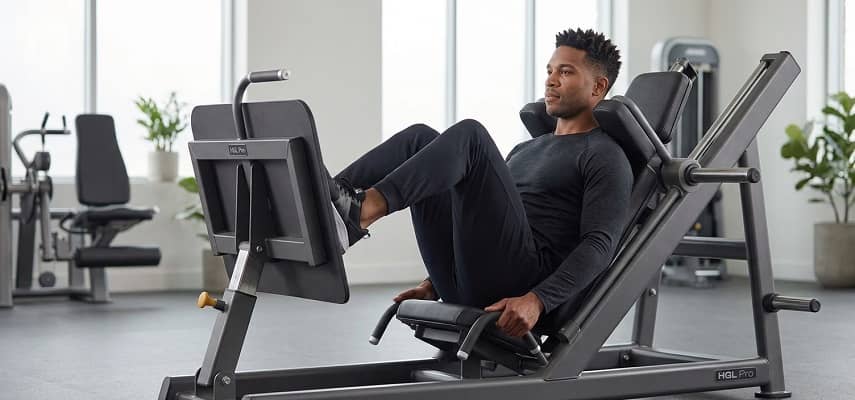
2026 home gym buying guide · strength, space & setup
For most home gyms, the best leg press machine is a plate-loaded sled with reliable lockouts, a footplate that fits your stance, and enough adjustment for your body size. Body-Solid GLPH1100 is our best overall pick for its clearly documented 1,000-lb capacity, heavy steel frame and leg-press/hack-squat versatility. Smaller or lower-cost gyms have credible alternatives below.
Quick picks
Best overall
Body-Solid GLPH1100
Heavy 45-degree leg press/hack squat combo with a published 1,000-lb capacity and three lockout positions.
Best value combo
RitFit BLP01
A 3-in-1 45-degree design with linear bearings, leg press, hack squat and calf-raise functionality.
Budget shortlist
Mikolo Compact
A lower-profile 30-degree combo that was priced below the larger picks when checked; verify today’s offer.
How we chose these leg press machines
We reviewed the existing Health Guideline page, current manufacturer specifications, and current U.S. Amazon listing evidence. We prioritized safe stopping/lockout hardware, published load rating, usable footplate and adjustment options, sled/rail design, footprint, and whether the machine adds hack-squat or calf-raise functionality without becoming impractical for a home gym. We did not award points for unverified ratings, review counts or marketing claims.
Important buying rule: “Maximum capacity” is not the same as the resistance you will feel. Sled angle, carriage weight, friction and machine geometry all change the effective load. Compare machines by construction and fit, not by the biggest pound number in a listing.
Best leg press machines at a glance
| Machine | Best for | Design | Published load / size | Before you buy |
|---|---|---|---|---|
| Body-Solid GLPH1100 | Best overall | 45° leg press + hack squat | 1,000-lb capacity; 96 × 34 × 56 in | Large 317-lb machine; Olympic plates required for most setups |
| RitFit BLP01 | Best value combo | 45° leg press + hack squat + calf raise | Listing states 1,200-lb max load; about 55.9 × 40.6 × 75.6 in | Confirm current variant, dimensions and included hardware |
| GMWD DD07 | Narrow heavy-training footprint | 45° leg press + hack squat | 1,000-lb loading capacity; 81 × 34 × 56 in | Manufacturer page contains multiple capacity phrases; use the detailed loading spec |
| Mikolo Compact | Budget / low-profile shortlist | 30° leg press + hack squat | Listing states 1,000-lb max; about 67 × 52 × 47 in | Wide footprint; “compact” does not mean tiny |
| JELENS L11 | Newer Amazon alternative | Leg press + hack squat | Listing states up to 1,100 lb | Independent model history is limited; verify dimensions, warranty and seller |
The five leg press machine picks
01 / BEST OVERALL
Body-Solid GLPH1100 Leg Press/Hack Squat
The GLPH1100 is the easiest recommendation to defend on specifications alone. Body-Solid publishes a 1,000-lb capacity, a 2 × 4-inch 11-gauge steel mainframe, three lockout positions and a 60-lb unloaded carriage. It also converts between a 45-degree leg press and hack squat, giving a serious home gym two lower-body stations in one frame.
Body-Solid GLPH1100 — view on Amazon
Key features
- 1,000-lb published capacity
- 2 × 4-inch 11-gauge steel mainframe
- Three safety lockout positions
- Leg press and hack squat modes
- 96 × 34 × 56-inch assembled dimensions
- 317-lb assembled machine weight
Pros
- Clear, detailed manufacturer specifications
- High-capacity frame with multiple lockout points
- Two major exercises in one station
Cons
- Eight feet long, so it needs real floor space
- Heavy delivery and assembly are significant considerations
- Premium build usually means a premium purchase price
Best for: Home lifters who want a durable, high-capacity 45-degree leg press/hack squat and have enough room for a full-length machine.
Who it is not for: Apartments, upstairs rooms with uncertain floor loading, or anyone who cannot comfortably receive and assemble a 300-plus-pound machine.
02 / BEST VALUE COMBO
RitFit BLP01 3-in-1 Leg Press/Hack Squat
RitFit’s BLP01 is a practical shortlist choice when you want leg press, hack squat and calf-raise work from one 45-degree machine. The current product page identifies it as a 3-in-1 model, and Amazon-linked listing data describes linear bearings, multiple leg-press/hack-squat adjustments and a 1,200-lb maximum-load claim. Its main advantage is versatility without moving into commercial-gym pricing territory.
Key features
- 45-degree 3-in-1 configuration
- Linear-bearing carriage system
- Multiple hack-squat and leg-press positions
- Weight-storage posts add stability and organization
- Large textured footplate
- Olympic-plate loading
Pros
- Three lower-body movements from one frame
- Linear bearings are a desirable feature at this category
- Current Amazon listing is easy to verify by model/ASIN
Cons
- Still a large, heavy machine despite the home-gym positioning
- Published dimensions and capacities can vary by listing/variant
- Assembly is more involved than a simple vertical press
Best for: Buyers who want the most exercise variety per machine and are willing to spend time checking the exact current variant before purchase.
Who it is not for: Anyone who needs a grab-and-go compact machine or has a narrow doorway/turning path that cannot accommodate large boxed components.
03 / NARROW HEAVY-TRAINING FOOTPRINT
GMWD DD07 Leg Press/Hack Squat Combo
GMWD’s DD07 stands out for putting a 45-degree leg press/hack squat into a relatively narrow 34-inch width. The detailed manufacturer specification lists an 81 × 34 × 56-inch frame, 58.5-lb starting sled and 1,000-lb weight-loading capacity, with linear bearings, three lockout positions and an additional safety stopper. That combination makes it attractive for a long-but-narrow garage bay.
Key features
- 81 × 34 × 56-inch manufacturer dimensions
- 1,000-lb detailed weight-loading specification
- 58.5-lb starting sled
- Premium linear-bearing carriage
- Three lockout positions plus adjustable limiter
- Band pegs and built-in plate storage
Pros
- Narrower than many full-size combinations
- Published user-height range of 4 ft 11 in to 6 ft 5 in
- Multiple safety and adjustment features
Cons
- Manufacturer marketing copy uses more than one capacity phrase
- 297-lb machine weight still makes delivery and assembly demanding
- Leg-press footplate sizing should be checked against your preferred stance
Capacity note: GMWD’s page contains both broad “heavy-duty” capacity language and a detailed specification table. For comparison, we use the manufacturer’s 1,000-lb weight-loading capacity figure from that detailed table rather than the larger promotional phrase.
Best for: Garage gyms where width is tighter than depth and the buyer wants a higher-capacity combo with a documented starting sled weight.
Who it is not for: Buyers who want perfectly consistent capacity language across every product page or who need a lightweight machine they can move after assembly.
04 / BUDGET & LOW-PROFILE SHORTLIST
Mikolo 30-Degree Compact Leg Press/Hack Squat
Mikolo’s 30-degree combo is worth comparing if you want a lower-profile machine and the current price is materially below larger sleds. Current Amazon-linked data identifies the model as a 67 × 52 × 47-inch, 165-lb machine with a 1,000-lb maximum-weight claim. Its 47-inch height is useful under lower ceilings, but the 52-inch width means you should not assume “compact” equals a tiny floor footprint.
Mikolo Compact Leg Press/Hack Squat — view on Amazon
Key features
- 30-degree sled angle
- Leg press and hack squat modes
- About 47 inches tall
- Amazon-linked listing states 1,000-lb maximum
- Removable shoulder-pad arrangement
- Home-gym oriented frame size
Pros
- Lower overall height than many 45-degree combos
- Combines two major lower-body movements
- Was one of the lower-priced full sleds at research time
Cons
- 52-inch width still consumes meaningful floor space
- Fewer manufacturer-level specifications were independently available than for Body-Solid or GMWD
- Current price advantage may disappear with promotions elsewhere
Best for: Cost-conscious home-gym buyers who value a shorter machine and are comfortable verifying the exact listing details before purchase.
Who it is not for: Buyers who need narrow equipment or who want extensive commercial-grade documentation before purchase.
05 / NEWER AMAZON ALTERNATIVE
JELENS L11 Leg Press/Hack Squat Machine
The JELENS L11 is a newer Amazon-listed combination machine aimed at buyers comparing mid-priced leg press/hack squat options. Current Amazon-linked data describes heavy square-steel construction, linear-bearing movement, adjustable safety locks and an up-to-1,100-lb load claim. It is included as an alternative rather than a top-three pick because independent model history and manufacturer documentation are more limited.
Key features
- Leg press and hack squat combination
- Linear-bearing rail system
- Adjustable safety-lock design
- Diamond-textured footplate
- Amazon-linked listing states up to 1,100 lb
- Current U.S. ASIN verified
Pros
- Modern combo layout with adjustable stops
- Linear-bearing construction is attractive in this category
- Another current option if the top picks are unavailable
Cons
- Shorter product track record than established models
- Exact dimensions should be verified on the current listing
- Warranty/support details deserve extra scrutiny before purchase
Best for: Buyers who have checked the top picks and want another currently listed Amazon option with a high stated load capacity.
Who it is not for: Buyers who prioritize a long-established equipment brand, detailed official specifications or a mature warranty history.
What should you look for when buying a leg press machine?
The best home leg press is the one you can fit, load, enter, adjust and stop safely. A giant capacity number is less important than a stable frame, a comfortable range of motion and enough room around the machine to use the safety hardware. Measure the room and your delivery path before comparing prices.
1. Measure the full footprint — not just the frame
Mark the machine footprint on the floor with tape, then add working room for loading plates, changing modes and getting in and out. Check ceiling height for hack-squat shoulder pads and carriage travel. Also measure doorways, stair turns and the path from the delivery point to the final room.
2. Compare the safety stops and lockouts
A home leg press should give you reachable lockout handles or catches and a lower safety stop that you can set to your usable range. More positions can make the machine easier to fit to different users. Read the manual before loading heavily; the safest stop location depends on both the machine and your body proportions.
3. Check the starting resistance, not only the max capacity
A high-capacity sled can still be a poor match for a beginner if the unloaded carriage is heavy. Manufacturers sometimes publish a carriage or starting-sled weight; Body-Solid lists 60 lb for the GLPH1100 and GMWD lists 58.5 lb for the DD07. The force you feel is also affected by the angle and mechanics, so these numbers are useful comparisons rather than exact equivalents.
4. Look at the carriage system
Home presses commonly use rollers, bushings or linear bearings. Smooth travel matters because sticking or uneven motion can make a set harder to control. Linear bearings are appealing, but the entire rail alignment, frame rigidity and maintenance still matter; a bearing label alone does not guarantee a better machine.
5. Match the footplate to your stance
A larger footplate gives you more room to place your feet comfortably and adjust stance, but it also adds size and weight to the machine. Check both width and height of the plate, not just overall machine dimensions. If multiple people will use the machine, a generous plate and several seat/back-pad settings are especially valuable.
6. Confirm plate compatibility and what is included
Most full-size home sleds are plate-loaded and commonly use 2-inch Olympic plates, but some vertical presses use 1-inch standard posts unless adapters are added. Weight plates are often not included. Budget for plates, collars, floor protection and any adapter sleeves before you compare the total cost.
7. Treat delivery, assembly and warranty as part of the purchase
A 250–350 lb machine can arrive in multiple heavy cartons. Check curbside versus room-of-choice delivery, whether two people are recommended for assembly, tool requirements, return freight rules and which components the warranty actually covers. These details can matter more than a small price difference.
Not ready for a full sled? For lighter, smaller lower-body equipment, see our leg exercisers guide. For low-impact cardio rather than heavy resistance training, compare our recumbent exercise bike guide.
How do you use a leg press machine safely?
Set the machine so your back and pelvis stay supported, start with a load you can control, and stop the descent before your lower back rounds or lifts from the pad. Keep your feet planted, track your knees in the same general direction as your toes, use the machine’s safety catches, and avoid forcefully hyperextending your knees at the top.
- Read the exact manual first. Learn how the lockout handles, safety stops and mode changes work before adding plates.
- Set your position. Keep your back and sacrum against the pad and choose a seat/foot position that gives a comfortable starting bend without forcing your hips to curl under.
- Use a controllable load. Lower the sled smoothly. Do not bounce out of the bottom or let the carriage drop into the stops.
- Keep feet and knees stable. Maintain full-foot contact and avoid allowing the knees to collapse inward as the load gets difficult.
- Finish under control. Extend to a comfortable near-straight position without forcefully locking the knees, then re-engage the safety catches before exiting.
Technique reference: The American Council on Exercise advises keeping the back and sacrum against the backrest, heels on the platform, controlling the return phase, and avoiding knee hyperextension. See ACE’s seated leg press guide.
Pain is a stop signal, not a challenge. If you have a recent knee, hip or back injury, unexplained pain, numbness, weakness, or a clinician has restricted lower-body loading, get individualized advice before heavy leg pressing. A machine’s guided path does not make every load or range safe for every person.
What does the evidence say about leg press training?
Leg pressing is a legitimate form of resistance training, not a shortcut that automatically replaces squats. U.S. physical-activity guidance recommends muscle-strengthening work for all major muscle groups on at least two days per week. The leg press can be one lower-body exercise within that broader program.
12 weeks of leg press increased quadriceps size in a 2026 trial
A 2026 comparative study had 17 untrained adults train knee extension with one leg and leg press with the other at 70% of one-repetition maximum for 12 weeks. Whole-quadriceps muscle volume increased significantly with leg-press training, although the rectus femoris did not show a significant increase in that condition.
The study is useful evidence that leg press can stimulate quadriceps hypertrophy, but it was small and does not show that one machine, foot position or rep scheme is best for everyone.
For general health, the current U.S. Physical Activity Guidelines recommend adults perform muscle-strengthening activity on at least two days per week in addition to aerobic activity. See the current federal guidelines.
What are the main pros and cons of a home leg press?
Pros
- Stable, guided resistance for high-effort lower-body training
- Easy to change load in small increments if you own enough plates
- Many home models combine leg press, hack squat and calf raise
- Can complement squats, split squats and other free-weight work
Cons
- Large footprint and difficult delivery/assembly
- Requires additional weight plates on most home models
- Guided movement does not train balance and stabilization the same way free weights do
- Poor setup or excessive load can still aggravate joints or cause injury
Frequently asked questions
Is leg press as good as squats?
They are useful for different reasons. A leg press provides a stable guided path that can make it easier to load the legs heavily, while squats demand more balance and whole-body stabilization. Neither is automatically “better.” Your program can include both, or emphasize one based on goals, equipment, experience and any movement limitations.
What muscles does a leg press work?
The quadriceps are major contributors, with the glutes and other hip and thigh muscles also involved depending on the machine, range and foot position. A 2026 MRI-based training study found significant growth in whole-quadriceps volume after 12 weeks of leg-press training, though not every quadriceps head responded equally.
Is the leg press bad for your knees?
Not inherently, but technique, load, range of motion and individual joint health matter. Keep the movement controlled, avoid letting the knees collapse inward, and stop before your pelvis or lower back loses contact with the pad. If pressing causes persistent knee pain, reduce or stop the exercise and seek qualified assessment rather than pushing through it.
Can a leg press machine reduce belly fat?
No exercise can selectively remove fat from one area. Leg pressing can contribute to a strength-training program and energy expenditure, but changes in body fat depend on overall energy balance, nutrition, activity and individual factors. Buy a leg press for lower-body resistance training — not because a listing promises targeted belly-fat loss.
How much weight should a beginner use on a leg press?
There is no universal starting number because machines have different sled weights, angles and friction. Start with the empty or lightly loaded machine, learn the safety catches, and choose a resistance you can move smoothly through a comfortable range without your back lifting or knees collapsing inward. Increase gradually as technique becomes consistent.
How much space do I need for a home leg press?
Full-size 45-degree combinations in this guide range from roughly 34 to 52 inches wide and about 67 to 96 inches long. You need additional clearance for plate loading, entry, mode changes and safe use. Tape the full footprint on the floor and measure the delivery route before buying.
Are weight plates included with a leg press machine?
Usually not. Most home leg press/hack squat machines are sold as the frame and carriage only, with plates purchased separately. Some Amazon variants or bundles may include plates, so check the exact listing title and “what’s included” section. Also confirm whether the sleeves accept 2-inch Olympic plates or require adapters.