Noise Cancelling Headphones for Sleeping: 6 Picks (2026)
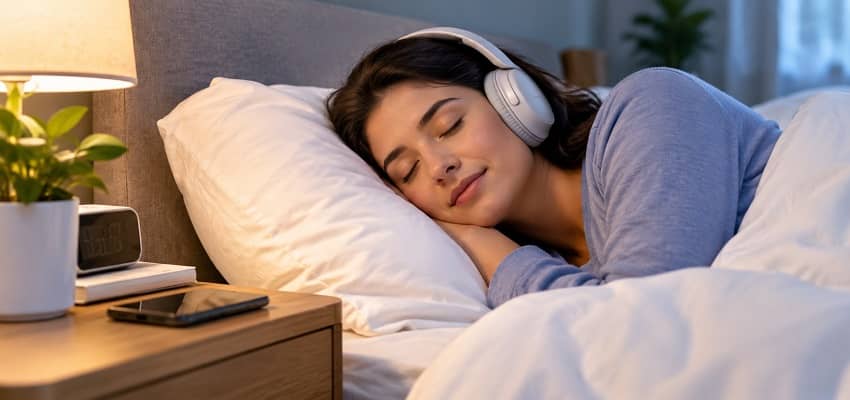
2026 sleep audio guide · ANC, masking & side-sleeper comfort
The best noise cancelling headphones for sleeping are not all the same type. For true sleep-focused ANC, the soundcore Sleep A30 is the clearest current pick. Side sleepers who value comfort more than electronic cancellation may prefer low-profile sleep earbuds such as Ozlo Sleepbuds 2 or soundcore Sleep A20, while a soft headband avoids putting anything inside the ear canal.
Quick picks
Best true ANC
soundcore Sleep A30
Sleep-specific ANC, passive isolation and adaptive snore masking in a low-profile in-ear design.
Best side-sleeper comfort
Ozlo Sleepbuds 2
Very small sleep buds with long battery life, passive blocking and masking rather than ANC.
No in-ear pressure
MUSICOZY headband
A soft, inexpensive headband with flat speakers; comfortable, but it does not provide active noise cancellation.
How did we choose the best noise cancelling headphones for sleeping?
We prioritized products that are genuinely usable in bed, then separated true active noise cancellation from passive isolation and sound masking. We checked current manufacturer specifications, Amazon US product pages, side-sleeper design, battery life, fit, audio options and important limitations. Category labels such as “best overall” are editorial judgments, not results from a clinical or laboratory head-to-head test.
Freshness note: soundcore has announced its next Sleep Earbuds 4 series, but the US product page is still in pre-launch/reservation mode as of September 7, 2026. We did not rank unreleased models as current buying picks.
Which sleep headphones are best at a glance?
| Product | Best for | Noise control | Side sleeping | Battery claim | Before you buy |
|---|---|---|---|---|---|
| soundcore Sleep A30 | Best true ANC | ANC + passive isolation + snore masking | Designed for it | About 8–10 hours in typical sleep use; mode-dependent | All-night ANC can shorten runtime |
| Ozlo Sleepbuds 2 | Side-sleeper comfort | Passive isolation + masking | Designed for it | Up to 14 hours | No active noise cancellation |
| soundcore Sleep A20 | Best value sleep earbuds | Passive isolation + masking | Designed for it | Up to 14 hours in Sleep mode | No ANC and no calls |
| 1MORE Z30 | Compact budget earbuds | Passive isolation | Designed for it | About 8 hours; up to 32 with case | Verify the exact US seller/variant |
| MUSICOZY headband | Avoiding in-ear devices | Minimal passive blocking + audio masking | Generally pillow-friendly | About 14 hours | Not ANC; speakers can shift |
| Bose QC Ultra 2nd Gen | Back sleeping, recliners, travel | Adaptive ANC | Poor | Up to 30 hours with ANC | Bulky for bed; not sleep-specific |
Important distinction: “Noise cancelling” is often used loosely in product listings. soundcore explicitly states that Sleep A20 does not support ANC, and Ozlo says Sleepbuds 2 use passive cancellation plus noise masking. If you specifically want electronic ANC while lying in bed, Sleep A30 is the sleep-focused option in this list.
The 6 best noise cancelling headphones for sleeping in 2026
01 / BEST TRUE ANC FOR SLEEP
soundcore Sleep A30
The soundcore Sleep A30 is the strongest fit for the exact search intent: a low-profile sleep earbud with active noise cancellation engineered for sleep. Its system combines ANC for lower-frequency background noise, passive sealing for higher-frequency sound, and adaptive masking for snoring. The manufacturer specifically notes that snoring is handled by masking, not ANC alone.
Key features
- Sleep-specific ANC plus passive isolation
- Adaptive snore-masking system
- About 3 g per earbud and a low-profile side-sleeper design
- Private alarm, sleep monitoring and sound library in the soundcore app
- IPX4 earbud water resistance
- Battery life varies by mode; full-time Bluetooth + ANC is shorter than mixed sleep playback
Pros
- One of the few sleep-dedicated products with true ANC
- Low-profile shape is more practical in bed than conventional ANC earbuds
- Multiple noise-control methods cover more than steady hum alone
Cons
- Premium price
- Battery can be much shorter if you stream Bluetooth audio with ANC all night
- Any in-ear device can cause pressure or irritation for some sleepers
Best for: Light sleepers who want true ANC for traffic or appliance hum and also need masking for a snoring partner.
Who should skip it: People who need to hear a child, emergency alarm or other important nighttime sounds, and anyone who develops ear pain from in-ear devices.
02 / BEST SIDE-SLEEPER COMFORT
Ozlo Sleepbuds 2
Ozlo Sleepbuds 2 are tiny, sleep-first earbuds built around comfort, passive sealing and masking rather than electronic ANC. Each bud is listed at about 1.6 g, and the current model claims up to 14 hours of playback. That combination makes Ozlo a strong premium choice for side sleepers who find ordinary earbuds too rigid or bulky.
Key features
- Passive noise blocking plus built-in masking sounds
- About 1.6 g per Sleepbud
- Up to 14 hours of playback
- Bluetooth streaming through the Smart Case
- Private in-ear alarm
- IPX4 protection for the Sleepbuds
Pros
- Very small and light for pillow contact
- Longer single-charge claim than many sleep buds
- Can stream audio or use dedicated sleep sounds
Cons
- No true ANC
- Premium price for a masking-focused product
- In-ear fit still depends heavily on your ear shape and tip size
Best for: Side sleepers who prioritize low pressure and all-night wear over having active noise cancellation.
Who should skip it: Buyers who specifically want electronic ANC for low-frequency traffic or HVAC noise.
03 / BEST VALUE SLEEP EARBUDS
soundcore Sleep A20
The soundcore Sleep A20 is a useful middle ground if you want dedicated side-sleeper earbuds but do not need ANC. It uses sealing ear tips, passive blocking, sound masking and smart volume controls. The key limitation is important: soundcore explicitly says the A20 does not have active noise cancellation.
Key features
- Twin-seal tips for passive isolation
- Built-in masking sounds and Smart Volume Control
- Side-sleeper-oriented 3D ergonomic design
- Up to 14 hours in Sleep mode; about 10 hours in Bluetooth mode
- Sleep monitoring and private alarm
- IPX4 water resistance
Pros
- Purpose-built for sleep and side sleeping
- Strong battery life for a full night
- Usually costs less than the newest sleep-focused ANC models
Cons
- No ANC
- Does not support calls
- Noise blocking depends on getting the right sealed tip fit
Best for: Side sleepers who mainly want passive blocking, white-noise-style masking and long battery life at a lower price than premium ANC sleep buds.
Who should skip it: Anyone shopping specifically for active noise cancellation.
04 / COMPACT BUDGET EARBUDS
1MORE Sleeping Earbuds Z30
The 1MORE Z30 is a compact passive-isolation option for people who want less bulk than ordinary wireless earbuds. Published specifications list a 2.7 g earbud weight, roughly 7.5 mm thickness and up to 24 dB of passive noise reduction. It is not true ANC, but its low profile is much more relevant to side sleeping than a standard earbud shell.
Key features
- About 2.7 g per earbud
- About 7.5 mm thin
- Up to 24 dB passive noise isolation claim
- About 8 hours per charge and up to 32 hours with the case
- Bluetooth 5.3
- Built-in relaxation/sleep sounds through the 1MORE app
Pros
- Thin, light design aimed at side sleepers
- Passive isolation does not consume extra battery
- More budget-friendly than premium sleep buds
Cons
- No active noise cancellation
- Shorter single-charge runtime than A20 or Ozlo Sleepbuds 2
- US listing/variant details can be less straightforward than larger sleep-audio brands
Best for: Buyers who want a small, lower-cost sleep earbud and are comfortable relying on a physical seal rather than ANC.
Who should skip it: People who need stronger low-frequency electronic cancellation or longer standalone runtime.
05 / BEST IF YOU DISLIKE EARBUDS
MUSICOZY Sleep Headphones Bluetooth Headband
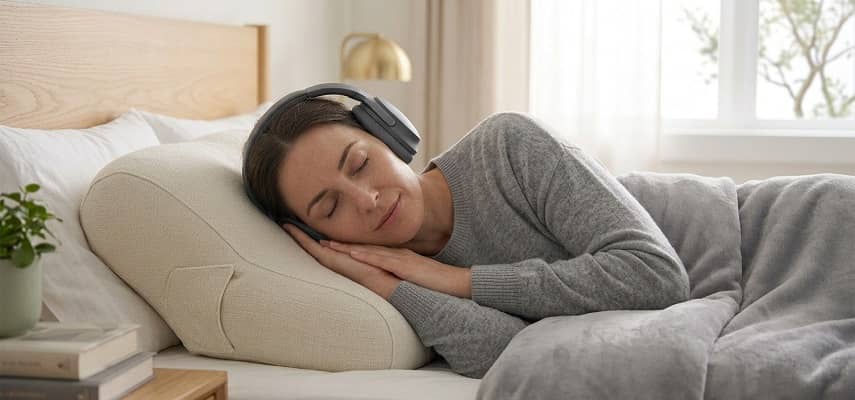
MUSICOZY’s fabric headband is the practical alternative for people who do not want anything sealed inside the ear canal. Flat speakers sit inside a soft band and play music, podcasts or masking audio. It is inexpensive and pillow-friendly, but shoppers should understand the tradeoff: this is not active noise cancellation, and the fabric itself blocks little sound.
Key features
- Flat speakers inside a soft fabric headband
- Bluetooth audio for music, podcasts or masking sounds
- Manufacturer claims about 14+ hours of playback on current models
- Electronics can be removed for washing on compatible versions
- No seal inside the ear canal
- Budget price category
Pros
- Avoids in-ear pressure and ear-canal sealing
- Generally more forgiving for side sleepers
- Low-cost way to listen to masking audio in bed
Cons
- No ANC
- Speakers can shift away from your ears as you move
- Fabric can feel warm for hot sleepers
Best for: Ear-sensitive sleepers, podcast listeners and anyone who wants a simple headband instead of in-ear earbuds.
Who should skip it: People whose main problem is loud snoring or traffic and who need stronger noise reduction.
If darkness is just as important as sound, our eye covers for sleeping guide covers separate sleep masks and light-blocking options.
06 / BEST CONVENTIONAL ANC FOR BACK SLEEPERS
Bose QuietComfort Ultra Headphones (2nd Gen)
Bose’s current QuietComfort Ultra 2nd Gen is included for one narrow use case: people who rest on their back, recline, nap while traveling or want strong ANC before they fall asleep. It offers advanced adaptive noise cancellation and long battery life, but the full-size earcups and headband make it a poor choice for side sleeping and an awkward device for all-night bed use.
Key features
- Premium adaptive active noise cancellation
- Up to 30 hours of playback with ANC
- Over-ear fit avoids sealing the ear canal
- Aware mode when you need environmental sound
- USB-C audio and charging during use
- Conventional headphone design rather than a sleep-specific shell
Pros
- Strong conventional ANC for travel and steady background noise
- Long battery life
- No earbud pressing into the ear canal
Cons
- Not practical for side sleeping
- Bulky and expensive for a bedtime-only use case
- Not designed to stay in place through normal tossing and turning
Best for: Back sleepers, recliner naps and travel where strong conventional ANC matters more than pillow compatibility.
Who should skip it: Side sleepers and anyone specifically shopping for all-night sleep headphones.
What is the difference between ANC, passive isolation and noise masking?
ANC uses microphones and electronics to generate an opposing signal that reduces incoming sound, and it is usually most effective on steady low-frequency noise such as engine, fan or HVAC hum. Passive isolation physically seals or covers the ear. Masking adds a steady sound—such as white, pink or nature noise—to make remaining disturbances less noticeable.
Does active noise cancellation block snoring?
ANC can reduce parts of snoring, but it cannot guarantee silence because snoring changes in pitch and loudness and includes higher-frequency components. That is why some sleep products combine methods. soundcore states that the Sleep A30 handles snoring through its adaptive snore-masking audio, while ANC addresses other nighttime noise such as traffic rumble and appliance hum.
If snoring is the main problem, also remember that headphones only change what the listener hears. Loud, frequent snoring accompanied by breathing pauses, gasping or marked daytime sleepiness can be a sign that the person who snores should discuss symptoms with a healthcare professional.
What should you look for when buying sleep headphones?
The best sleep headphones depend more on sleep position, noise type and comfort than on the biggest noise-reduction claim. A side sleeper should prioritize a low-profile design; a back sleeper has more flexibility. Also check whether the product uses real ANC, whether battery life covers your intended mode, and whether you still need to hear important sounds overnight.
1. Sleep position and pressure points
Side sleepers should avoid bulky over-ear headphones and ordinary earbuds that protrude far from the ear. Even a sleep-specific earbud can become uncomfortable if the shell, tip or wing presses against the pillow. If your ear canal is sensitive, a soft headband or bedside speaker may be easier to tolerate than any in-ear device.
2. The type of noise you are trying to reduce
Steady low-frequency sounds are the classic ANC use case. Human voices and changing snoring are harder, so passive sealing and masking can matter just as much. Do not compare products by a single “dB reduction” number unless the manufacturer explains how and under what conditions it was measured.
3. Battery life in the mode you will actually use
Battery claims can change dramatically by mode. The Sleep A30, for example, lasts longer when it switches from Bluetooth streaming to local audio and when ANC is not running continuously. Check the exact scenario in the manufacturer’s battery table instead of assuming the largest advertised number applies to all-night streaming with ANC.
4. Fit, cleaning and return policy
Noise isolation depends on fit, but tighter is not automatically better. You should be able to wear the device without pain, numbness, skin irritation or a blocked sensation. Because ear shapes vary so much, a return window is especially valuable for sleep earbuds. Clean reusable earbuds regularly and let your ears and the device dry before overnight use.
5. Alarms and environmental awareness
Strong isolation can make a partner, phone, smoke alarm, child or other important sound harder to hear. Some sleep earbuds include a private in-ear alarm, but that is not the same as remaining aware of your environment. If overnight awareness is important, consider lower isolation, a transparency mode, a timer, or an external speaker.
For a non-audio comparison, see our noise cancelling ear muffs for sleeping guide. Earmuffs can provide passive attenuation but are also bulky in bed, so they suit a different use case.
Is it safe to sleep with headphones or earbuds?
Sleeping with headphones is not automatically unsafe, but risk depends on volume, fit, hygiene, duration and whether you need to hear your surroundings. Cleveland Clinic notes concerns including hearing damage from prolonged loud playback, earwax buildup, trapped moisture, infection risk, side-sleeper pressure and reduced awareness of alarms or emergencies.
Keep overnight audio quieter than daytime listening
The National Institute on Deafness and Other Communication Disorders says sounds at or below about 70 dBA, even after long exposure, are unlikely to cause hearing loss, while long or repeated exposure at or above 85 dBA can cause damage. WHO also advises keeping personal listening levels low and notes that safe listening time falls quickly as volume rises.
For all-night playback, use the lowest volume that works, avoid treating “80 dB” as a nightly target, and use a timer or auto-stop feature if continuous audio is unnecessary.
- Start low. Set the volume only high enough to make the masking sound useful; do not use volume to overpower a loud room.
- Use a timer when possible. If you only need audio to fall asleep, let it stop instead of playing for the entire night.
- Keep earbuds clean and dry. Moisture and dirty ear tips can increase irritation and infection risk.
- Stop if you feel pain or pressure. Do not “break in” an earbud that hurts against the pillow.
- Plan for alarms and emergencies. If you must remain aware of your surroundings, strong isolation or ANC may be the wrong overnight setup.
Lower-risk audio alternative: If private audio is not necessary, an external bedside speaker or sound machine avoids ear-canal pressure, earbud moisture and wax issues. Cleveland Clinic specifically identifies an external speaker as the safer option for many people who simply want calming sound at night.
When should you talk to a professional?
Stop overnight earbud use and seek medical advice if you develop persistent ear pain, drainage, a blocked feeling, sudden hearing changes or ongoing ringing in the ears. If sleep remains poor despite controlling environmental noise, discuss the problem with a healthcare professional rather than continually increasing masking volume or isolation.
If a partner’s snoring includes breathing pauses, gasping or choking, or they have significant daytime sleepiness, NIH and Mayo Clinic guidance recommends discussing possible sleep apnea with a healthcare professional. Headphones can reduce what you hear, but they do not treat the cause of the snoring.
If someone is already diagnosed with sleep apnea and uses positive airway pressure, our CPAP mask for side sleepers guide covers mask-fit considerations. A CPAP machine should not be self-prescribed simply because someone snores.
Frequently asked questions
What are the best noise cancelling headphones for sleeping?
For true sleep-focused ANC, soundcore Sleep A30 is the clearest current option in this guide. Side sleepers who do not require ANC may prefer Ozlo Sleepbuds 2 or soundcore Sleep A20 because their low-profile designs prioritize overnight comfort. If in-ear devices bother you, a fabric sleep headband is usually more comfortable but blocks much less noise.
Do noise cancelling headphones block snoring?
They can reduce how noticeable snoring sounds, but no headphone can promise complete silence. ANC is strongest against steady low-frequency noise, while snoring changes over time. Products such as Sleep A30 therefore add adaptive masking to passive isolation and ANC. If snoring includes gasping or breathing pauses, the snorer should discuss those symptoms with a healthcare professional.
Is it safe to sleep with ANC on all night?
ANC itself is not the main hearing risk; playback volume, duration, fit and reduced awareness of your environment matter more. Keep audio low, consider a timer, and avoid strong isolation if you need to hear alarms, children or emergencies. Stop if you develop pain, pressure, ringing or hearing changes, and seek medical advice if symptoms persist.
Are over-ear noise cancelling headphones good for side sleepers?
Usually not. Full-size earcups create a large pressure point between your head and pillow, and the headband can shift as you turn. Over-ear ANC models are more realistic for back sleeping, recliner naps or travel. Side sleepers are generally better served by purpose-built low-profile sleep earbuds or a flat-speaker fabric headband.
Is passive noise isolation the same as active noise cancellation?
No. Passive isolation reduces sound by physically sealing or covering the ear. Active noise cancellation uses microphones and electronics to create an opposing signal that reduces incoming noise. Masking is different again: it plays a steady sound to make remaining disturbances less noticeable. Many sleep products combine two methods, while only some include true ANC.
What is the safest way to listen to sound while falling asleep?
If you do not need private audio, a low-volume external bedside speaker or sound machine avoids the pressure, moisture and earwax issues associated with in-ear devices. If you do use sleep earbuds or headphones, keep volume low, keep the device clean and dry, use a timer where possible, and make sure your setup does not prevent you from hearing important alarms.
This article is for general information only and is not medical advice. Talk to a qualified healthcare professional about hearing symptoms, persistent sleep problems or suspected sleep apnea.