Best Lace-Up Ankle Braces (2026): 6 Tested Picks for Sprains & Instability
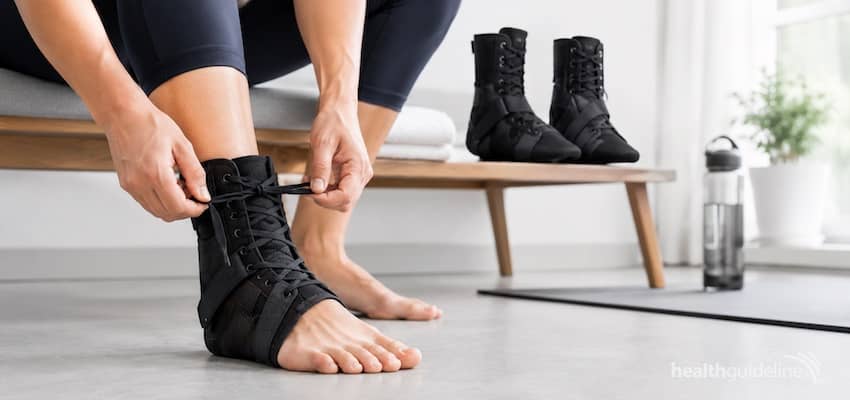
A lace-up ankle brace is the closest thing you can buy to a taped ankle without a trainer in the room: a laced boot that cinches around the joint, usually with figure-eight straps that limit the inward roll behind most sprains. This guide compares six lace-up braces that are genuinely worth owning in 2026 — the ones physical therapists and athletic trainers actually recommend — with honest notes on who each one is (and isn’t) for.
Quick Picks
Best overall
Med Spec ASO
A versatile starting point with figure-eight straps and an adjustable laced boot.
Budget shortlist
Vive Lace Up
A straightforward design. Compare today’s price, and note the latex warning.
JUMP TO A SECTION
How we chose these ankle braces
We started from the braces that sports-medicine clinicians and independent testers consistently rank at the top, then confirmed each one is a real product currently sold on Amazon in the United States. We prioritized support level, how the strap system controls inversion (the inward roll), fit inside a normal shoe, breathability, and durability – and we weighed recurring themes in verified buyer feedback.
Top ankle braces at a glance
| Brace | Our category | Support design | Before you buy |
|---|---|---|---|
| Med Spec ASO | Best overall | Laces + figure-eight straps | Measure using the ASO chart |
| McDavid 195 | Taping-style sports support | Laces + figure-six straps | 195 is the strap-based model |
| Zamst A2-DX | Rigid alternative for court sports | Molded guards + X-straps | Choose left or right; not lace-up |
| Shock Doctor 849 | Cushioning-focused option | Lacing loops + gel cushions | Contains latex |
| Vive Lace Up | Budget shortlist | Laces + figure-eight straps | Contains latex; check seller terms |
| ASO Speed Lacer | Faster fastening | Speed-lace closure + figure-eight straps | Confirm exact Speed Lacer version |
Compare construction, not just a “support level.” Brand labels such as “Level 3” are not treated here as a shared clinical scale. Select the brace and size that fit your needs, and check the current offer using the product link.
The six product profiles
01 / BEST OVERALL
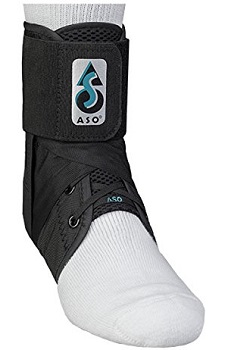
Med Spec ASO Ankle Stabilizer
The Med Spec ASO is the lace-up brace most athletic trainers and physical therapists reach for first. A ballistic-nylon boot laces snugly, then two figure-eight elastic straps wrap the ankle the way a taping job would – targeting the inward roll (inversion) behind the large majority of sprains — while staying low-profile enough to fit inside a normal shoe.
Key features
- Complete figure-eight stabilizing straps that mimic athletic taping
- CoolFlex Achilles pad and contoured tongue for breathability
- Durable ballistic-nylon boot with a woven elastic cuff closure
- Bilateral design (fits left or right) with a wide range of sizes, including wider feet
Pros
- Taping-level lateral support without a trainer
- Low profile fits most athletic and work shoes
- Widely recommended by clinicians for chronic instability and peroneal tendonitis
- Holds up to heavy use.
Cons
- Getting the straps genuinely tight takes a few tries
- Can feel warm on all-day wear
- It’s a soft brace, not a rigid one for fractures
Best for: An all-round lace-up option for people whose clinician recommends this type of support. Read our in-depth ASO review and peroneal tendonitis brace guide.
02 / TAPING-STYLE SPORTS SUPPORT
McDavid 195 Ankle Brace with Straps
The McDavid 195 uses a single-layer polyester shell and a figure-six strap pattern designed to resemble an athletic tape wrap. Its useful convenience is strap adjustment without undoing the laces or removing your shoe.
Key features
- Figure-six strapping pattern
- Adjustable top compression strap
- Ventilated tongue and padded lining
- Bilateral fit
Pros
- Straps can be retightened during activity
- Adjustable fabric-and-strap construction
Cons
- Requires careful fitting and fastening
- Does not provide molded-guard rigidity
Model check: The 195 is not McDavid’s separate lace-up brace with spring-steel stays. Do not buy the 195 expecting those stays.
Best for: People considering a taping-style lace-up brace for sports, with appropriate return-to-play guidance.
For more court-sport options, see our basketball ankle brace guide.
03 / RIGID ALTERNATIVE FOR COURT SPORTS
Zamst A2-DX
The A2-DX is included as a rigid alternative, not a conventional lace-up brace. It combines exterior guards with X-straps and rear application. The guards are designed to limit excessive inward and outward ankle movement.
Key features
- Molded protective guards
- X-strap support system
- Left- and right-specific versions
- Rear opening for application and adjustment
Pros
- Guard-based construction for a different support feel
- Ankle-specific design
Cons
- Correct side and size are essential
- Guard pressure and shoe fit need checking
Different category: A rigid brace is not automatically the right treatment for a high ankle sprain. Get the injury assessed before selecting a device.
Best for: Court-sport players comparing more structured support after assessment of recurring instability. See our Zamst A2-DX review and semi-rigid ankle brace guide.
04 / CUSHIONING-FOCUSED OPTION
Shock Doctor 849 Ultra Gel Lace
The Shock Doctor 849 adds gel cushioning to its lace-up construction. A pre-curved tongue, compression lacing system and silicone-grip footbed are designed to make the fit feel secure and padded.
Key features
- Internal gel cushions
- Compression wrap lacing-loop system
- Pre-curved tongue and grip footbed
- Finger tabs to assist tightening
Pros
- Padding around the ankle
- Adjustable compression
Cons
- Contains latex
- Extra padding takes up shoe space
Latex allergy warning: Shock Doctor lists latex in this model’s materials. Avoid it if you have a latex allergy.
Best for: People who prioritize cushioning and have been advised that a lace-up brace suits their needs.
05 / BUDGET SHORTLIST
Vive Lace Up Ankle Brace
Vive’s laced brace pairs adjustable laces with two figure-eight straps in a bilateral design. It belongs on a budget shortlist, but compare the current price in your size before assuming it is the least expensive option.
Key features
- Adjustable laces and cross straps
- Two figure-eight compression straps
- Open-heel, either-foot design
- Low-profile construction
Pros
- Straightforward adjustable fastening
- One model fits either ankle
Cons
- Contains latex
- Return and guarantee terms depend on the seller
Latex allergy warning: Vive’s product FAQ says this brace contains latex. It is not a latex-free alternative to the Shock Doctor 849.
Best for: Price-conscious buyers comparing a straightforward lace-up design for an appropriate support plan.
06 / FASTER FASTENING
Med Spec ASO Speed Lacer
The ASO Speed Lacer combines the ASO’s figure-eight strap arrangement with a faster lace closure and a knitted-nylon boot. It is worth considering if conventional lacing is the part of putting on a brace that slows you down.
Key features
- Speed-lace closure
- Figure-eight nylon stabilizing straps
- Knitted-nylon boot
- Bilateral fit
Pros
- Faster fastening design
- Retains an adjustable strap system
Cons
- Straps still need positioning and securing
- Ease of use depends on your reach and grip
Best for: People seeking a quicker fastening routine; try the closure first if hand dexterity is limited.
What to look for in a lace-up ankle brace
Support construction: flexible or more rigid?
A conventional lace-up brace supports through a fabric boot, laces and straps. Some other designs add stays, hinges or molded guards. More rigidity is not automatically better for every injury. A clinician can help decide whether functional support or temporary immobilization is appropriate. Mayo Clinic explains the treatment options.
For other constructions, explore our semi-rigid brace guide, hinged brace guide and Aircast AirSport review.
Straps and fastening
Figure-eight and figure-six systems add a wrap around the ankle. Compare how easily you can position, tighten and release the straps. If gripping or reaching is difficult, try a speed-lace closure rather than assuming that any particular design will be easy for you.
Stays and guards
Check the exact product model. The McDavid 195 is a fabric-and-strap design; McDavid sells a different lace-up brace with spring-steel stays. The Zamst A2-DX uses molded guards. These are different constructions, not interchangeable product descriptions.
Fit inside your shoe
Try the brace with the shoes and socks you actually plan to wear. There should be room for the brace without painful pressure, heel slipping or forced shoe lacing. Do not automatically buy shoes half a size larger; compare the fit first. Our ankle-support sneaker guide covers footwear considerations.
Sizing, materials and durability
Follow the measurement method for the exact model. Some charts use shoe size, while Med Spec’s ASO charts use an ankle measurement. Choose the correct side for the A2-DX. Inspect straps, seams and fasteners periodically; a brace that no longer holds its intended fit needs attention.
Check every material label. Both the Shock Doctor 849 and Vive’s laced ankle brace list latex. If you have an allergy, confirm the materials of the exact version before buying.
How to get the right fit
- Start with the instructions. Use the exact model’s size chart and application guide. Wear the recommended sock and position your foot as directed.
- Fasten in the correct order. Smooth the tongue, tighten the laces evenly, then route and secure the straps according to the manufacturer’s guide.
- Check comfort and circulation. The brace should feel secure without causing pain, numbness, tingling or changes in toe color or temperature. Loosen or remove it if these occur; seek prompt help if symptoms persist.
- Recheck in your shoe. If walking is comfortable and permitted, take a few steps and check for rubbing or pressure. Ask a clinician to check the fit if you are unsure.
Fit is not a diagnosis. A brace should not be used to push through significant pain or avoid assessment of a new injury.
Do lace-up ankle braces really work?
For injury prevention in some sporting settings, the evidence is encouraging. A randomized trial enrolled 1,460 male and female players from 46 high schools during a basketball season.
0.47 vs. 1.41 injuries
The trial recorded 0.47 acute ankle injuries per 1,000 athlete-exposures in the braced group, compared with 1.41 in the control group.
Injuries occurred less often, but injury severity, measured by time lost, was not significantly different. These results do not establish that every brace works equally well in every sport or age group.
A brace also does not replace rehabilitation. Strength, mobility and balance work remain part of recovery and a return-to-activity plan. Mayo Clinic’s rehabilitation guidance explains why exercises are used alongside supportive devices.
When to see a professional
Get the injury assessed
Seek urgent care for substantial pain or swelling, inability to bear weight, or symptoms that are worsening. Seek emergency assessment for a visible deformity, numbness after injury, or a foot that is blue, grey or cold. NHS warning signs.
Repeated giving way or ongoing pain also deserves assessment. A severe sprain can resemble a fracture, and an examination may change the treatment you need. AAOS guidance on ankle sprains.
For some injuries, a clinician may recommend temporary immobilization instead of a lace-up brace. Our walking boot guide provides background, but the device should follow your diagnosis.
Frequently asked questions
Do lace-up ankle braces prevent sprains?
They can reduce ankle injury frequency in some settings. The high-school basketball trial above found fewer acute ankle injuries among braced players, without a significant difference in severity. That is evidence for the studied setting, not a guarantee for every wearer. Read the trial.
Lace-up brace or compression sleeve — which is better?
They serve different purposes. A sleeve provides compression, while a lace-up brace adds adjustable fastening and, often, stabilizing straps. The right choice depends on whether you need compression, movement control or a different treatment. Ask your clinician if you are choosing support after an injury.
Can I wear a lace-up ankle brace in normal shoes?
Often, but the combination needs to fit comfortably. Try it with your intended socks and shoes, and check for pressure or heel slipping. Do not force a bulky brace into a tight shoe or automatically size up without trying the fit.
How tight should an ankle brace be?
Follow the manufacturer’s fitting guide. Aim for a secure fit without pain, numbness, tingling or toe color changes. Loosen or remove the brace if these occur, and get medical help if symptoms persist. Being able to fit a finger under the laces is not a reliable circulation test.
Can I wear an ankle brace all day or while sleeping?
Follow the schedule recommended for your injury and device, and check your skin for irritation. Do not assume an activity brace should be worn overnight. Ask your treating clinician whether sleeping in it is appropriate.
How long should I wear a brace after a sprain?
There is no single timetable for every sprain. Injury severity, symptoms, rehabilitation progress and activity demands affect the plan. Your clinician can advise when to continue, reduce or stop using the brace; the brace alone does not determine readiness to return to sport. AAOS recovery guidance.
This article provides general information, not medical advice. Ask a qualified healthcare professional about your injury, brace choice and return to activity.