Compression Socks for Pregnancy: 5 Best Picks (2026)
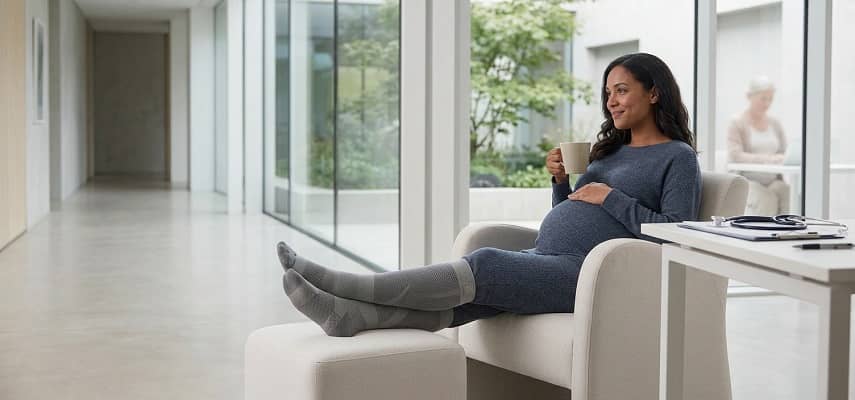
2026 pregnancy guide · swelling, fit & compression levels
Compression socks for pregnancy can be useful for tired, heavy or gradually swollen legs, and NHS guidance says they may ease symptoms of pregnancy-related varicose veins. For uncomplicated everyday discomfort, many people start by discussing a lower over-the-counter compression level such as 15–20 mmHg with their maternity clinician. Sudden swelling, one-sided leg swelling, chest pain or breathing difficulty needs medical assessment rather than a stronger pair of socks.
Quick picks
Best overall
Comrad Nylon Knee High
15–20 mmHg graduated compression, breathable nylon and wide-calf sizing make this a practical everyday starting point.
Budget multipack
CHARMKING 15–20 mmHg
A lower-cost way to rotate clean pairs through the week without jumping to firm compression.
Wide calves
LEVSOX Plus Size
A 15–20 mmHg wide-calf option with sizing based on calf measurement, which matters when swelling changes fit.
How we chose these compression socks
This is a desk-research buying guide, not a hands-on test. We verified that each featured product had a live U.S. Amazon listing at review time, checked stated compression levels and fit details against current listings or manufacturer pages, and prioritized graduated knee-high designs, clear sizing information, breathable materials and options for different calf sizes. We did not use fixed prices, star ratings or review counts because those change.
Pregnancy changes the buying decision. A firmer sock is not automatically a better sock. Compression pressure should match your symptoms and health history, especially if you have significant swelling, diabetes, reduced sensation, peripheral artery disease, skin problems or a previous blood clot.
Best compression socks for pregnancy at a glance
| Product | Our category | Compression | Best fit note |
|---|---|---|---|
| Comrad Nylon Knee High | Best overall | 15–20 mmHg | Standard and wide-calf sizing |
| CHARMKING | Budget multipack | 15–20 mmHg | Check exact pack and size chart |
| LEVSOX Plus Size | Best for wide calves | 15–20 mmHg | Measure widest calf before ordering |
| Sockwell Elevation | Firm natural-fiber option | 20–30 mmHg | Discuss firm compression with clinician |
| Physix Gear | Firm sport/travel option | 20–30 mmHg | Discuss firm compression with clinician |
Five compression socks to consider during pregnancy
01 / BEST OVERALL
Comrad Nylon Knee High Compression Socks
Comrad’s Nylon Knee High is the most balanced everyday option in this shortlist because it uses 15–20 mmHg graduated compression, is sold in both standard and wide-calf sizes, and has a breathable nylon-spandex construction. The Amazon listing specifically includes pregnancy among its intended everyday uses.
Key features
- 15–20 mmHg graduated compression
- Knee-high design with pressure strongest near the ankle
- Standard and wide-calf size choices
- Moisture-wicking nylon blend
Pros
- Moderate OTC compression rather than jumping straight to 20–30 mmHg
- Wide-calf variants help with changing leg measurements
- Breathable fabric is useful for long daytime wear
Cons
- Still requires careful sizing at the calf and foot
- Can be harder to pull on as pregnancy progresses
Best for: Everyday daytime support for mild swelling or tired legs when 15–20 mmHg is appropriate for you.
02 / BUDGET MULTIPACK
CHARMKING 15–20 mmHg Compression Socks
CHARMKING is the budget-oriented pick because the brand sells 15–20 mmHg compression socks in multipacks. That can be practical if you want several clean pairs for workdays or travel without paying premium single-pair pricing. Check the exact Amazon variation because pack size, colors and sizing can change within the listing.
Key features
- 15–20 mmHg options
- Multiple-pair packs
- Knee-high compression-sock format
- Many color and pattern variations
Pros
- Good value if you need a rotation of pairs
- 15–20 mmHg is less aggressive than the firm options below
Cons
- Amazon variations make it important to verify the exact pack and size
- Less specialized calf sizing than a dedicated wide-calf model
Best for: Price-conscious buyers who want multiple moderate-compression pairs for daytime rotation.
03 / WIDE CALF
LEVSOX Plus Size Wide Calf Compression Socks
LEVSOX’s plus-size model is a useful wide-calf choice because its current listing specifies 15–20 mmHg and tells buyers to measure the widest part of the calf. That measurement-first approach is especially important in pregnancy, when calf and ankle size can change as the day goes on.
Key features
- 15–20 mmHg graduated compression
- Wide-calf / plus-size construction
- Breathable fabric
- Calf measurement emphasized in sizing guidance
Pros
- Designed for larger calf circumferences
- Moderate 15–20 mmHg pressure
- Current listing specifically mentions pregnancy use
Cons
- Calf fit still varies by leg shape
- Pattern and pack variants can make the listing confusing
Best for: Pregnant buyers who need a wider calf range but still want 15–20 mmHg rather than firm compression.
04 / FIRM NATURAL-FIBER OPTION
Sockwell Women’s Elevation Firm Graduated Compression Socks
Sockwell Elevation uses 20–30 mmHg firm graduated compression with a merino-wool and bamboo-rayon blend, an ultra-light cushioned sole, arch support and a seamless toe. It is the comfort-focused firm option here, but 20–30 mmHg is more pressure than the first three picks and is best chosen with pregnancy-specific guidance from your clinician.
Key features
- 20–30 mmHg firm graduated compression
- Merino wool and bamboo-rayon blend
- Arch support and seamless toe closure
- Ultra-light cushioned sole
Pros
- Breathable natural-fiber blend
- Firm graduated compression with supportive foot details
- Good choice to compare if 20–30 mmHg has been recommended
Cons
- Firm compression takes more effort to put on
- Not the default choice simply because it has a higher mmHg number
Before choosing 20–30 mmHg in pregnancy: ask your obstetrician, midwife or other clinician whether firm compression is appropriate for your symptoms and medical history.
Best for: People who have been advised to use firm graduated compression and prefer a merino-blend sock.
05 / FIRM SPORT & TRAVEL OPTION
Physix Gear Compression Socks
Physix Gear is another 20–30 mmHg knee-high option, positioned for long periods on your feet, exercise and travel. Its main advantage is broad everyday versatility, but the same caution applies: firm compression should match your pregnancy care plan rather than being selected only because swelling feels worse late in the day.
Key features
- 20–30 mmHg compression
- Knee-high sport/travel design
- Designed for prolonged standing, work and travel
- Multiple size and color variants
Pros
- Versatile for work, walking and travel
- Firm option if 20–30 mmHg is appropriate for you
Cons
- Firm pressure is not necessary for every pregnant wearer
- Later pregnancy can make firm socks harder to apply without help
Best for: Work or travel when a healthcare professional has advised that 20–30 mmHg compression is suitable.
Do compression socks help during pregnancy?
They can help with some common leg symptoms, especially varicose-vein discomfort and swelling that builds gradually. NHS pregnancy guidance says compression stockings can ease symptoms of varicose veins, while general compression guidance explains that graduated stockings are tightest at the ankle and become less compressive higher up the leg. They are supportive garments, not a treatment for every cause of swelling.
Pregnancy also increases the risk of venous thrombosis. The Royal College of Obstetricians and Gynaecologists (RCOG) says venous thrombosis is still uncommon, occurring in about 1–2 in 1,000 women during pregnancy or the first 6 weeks after birth. RCOG includes graduated elastic compression stockings among measures that may be used to reduce clot risk in people with relevant risk factors, but an individual risk assessment is important.
For long travel: ACOG notes that pregnancy adds to DVT risk during travel lasting 4 hours or more and says special compression stockings may be worn to help prevent clots. It also advises talking with your ob-gyn first because compression stockings are not suitable for everyone.
For more general product options, compare our compression socks guide, compression socks for swelling guide and knee-high compression socks guide.
What compression level is best in pregnancy?
There is no single correct mmHg level for every pregnancy. Cleveland Clinic lists common compression ranges as mild 8–15 mmHg, moderate 15–20 mmHg and firm 20–30 mmHg, with extra-firm 30–40 mmHg generally used under medical supervision. The safest approach is to match the pressure to your symptoms, circulation and clinician’s advice rather than choosing the highest number.
| Range | General description | Pregnancy buying note |
|---|---|---|
| 8–15 mmHg | Mild | Light support; still check fit and comfort |
| 15–20 mmHg | Moderate | Common OTC range and the starting point represented by our first three picks |
| 20–30 mmHg | Firm | Discuss with your maternity clinician, especially for significant swelling or venous problems |
| 30–40 mmHg | Extra firm | Use only with professional guidance |
Do not self-escalate compression because swelling suddenly worsens. A sudden increase in swelling can be a sign of pre-eclampsia, while one-sided red, hot or painful swelling can be a sign of DVT. Those situations need medical assessment.
How should compression socks fit during pregnancy?
A compression sock should feel snug and supportive, not painful, numb or increasingly restrictive. The exact size method varies by brand, so use the current chart and measure where instructed—often around the ankle and widest part of the calf. Recheck measurements if your legs change noticeably later in pregnancy.
- Measure before ordering. Follow the exact brand chart rather than assuming your normal shoe size determines the correct compression fit.
- Put them on before swelling is at its worst. Many people find morning application easier because the legs have had less time to swell.
- Smooth out folds. Bunched fabric can create concentrated pressure. Do not roll the top band down.
- Check your skin and sensation. Remove the socks if you develop pain, numbness, tingling, skin discoloration, skin damage or worsening swelling, and contact a healthcare professional if symptoms persist.
- Follow your clinician’s wearing schedule. NHS guidance for compression stockings used for varicose veins generally describes daytime wear and removal at bedtime; do not assume you should sleep in them unless you have been told to.
If bending to reach your feet has become difficult, ask your partner, support person, pharmacist or maternity team about safe application techniques or a stocking aid. Do not struggle with a sock that is clearly too tight.
For another pregnancy clothing option, see our maternity compression leggings guide. For non-compression comfort strategies, our leg elevation pillow guide may also be useful.
When should you contact a healthcare professional?
Pregnancy swelling is not always ordinary swelling
Call your maternity team urgently if swelling suddenly increases—especially in your face, hands or feet—or if it comes with a severe headache, vision changes, severe pain below the ribs, persistent heartburn or feeling very unwell. NHS guidance lists these as possible warning signs of pre-eclampsia.
Seek prompt medical advice for possible DVT if one leg becomes red, hot or swollen, feels unusually heavy, or is painful/tender, particularly when standing or walking. RCOG notes that DVT symptoms usually occur in one leg.
Seek emergency help for sudden unexplained breathing difficulty, chest pain or tightness, coughing up blood, collapse or feeling severely unwell, because these can be symptoms of pulmonary embolism.
Ask a healthcare professional before using compression socks if you have known circulation problems, peripheral artery disease, severe or unexplained swelling, open wounds or skin infection, very fragile skin, markedly reduced sensation in your legs, or another condition that may affect safe compression use. ACOG also advises people with diabetes or other circulation problems to speak with their ob-gyn before using travel compression stockings.
Frequently asked questions
Are compression socks safe during pregnancy?
Compression socks are commonly used during pregnancy, and NHS guidance says they can ease symptoms of pregnancy-related varicose veins. They are not suitable for everyone, though. If you have severe or sudden swelling, circulation problems, diabetes, skin wounds, reduced sensation or another medical condition, ask your maternity clinician before wearing them.
Is 15–20 mmHg enough for pregnancy?
15–20 mmHg is a common moderate over-the-counter compression range and may be reasonable for mild symptoms when your clinician agrees. It is not a universal prescription. More significant swelling, varicose veins or clot risk can change the recommendation, while sudden swelling needs assessment rather than simply stronger compression.
Can I wear 20–30 mmHg compression socks while pregnant?
Some pregnant people are advised to use 20–30 mmHg compression, but it is a firmer level than everyday 15–20 mmHg socks. Because pregnancy symptoms and clot risk vary, confirm that 20–30 mmHg is appropriate for you with your obstetrician, midwife or other healthcare professional before making it your default choice.
When should I put compression socks on during pregnancy?
They are generally easier to put on before your legs have become more swollen later in the day, so morning application is often practical. Follow the schedule recommended for your symptoms and product. If a sock becomes painful, causes numbness or tingling, or makes swelling worse, remove it and seek advice.
Can I sleep in compression socks during pregnancy?
Do not assume daytime compression socks should be worn overnight. NHS guidance for compression stockings used for varicose veins describes wearing them during the day and removing them at bedtime. If your clinician has prescribed a different schedule for a medical reason, follow that individualized advice.
Do compression socks prevent blood clots in pregnancy?
Compression stockings may be part of a clot-prevention plan for some pregnant people, but they are not a complete substitute for medical risk assessment or other recommended measures. RCOG includes graduated compression stockings among preventive strategies in relevant situations, and ACOG says they may help during long travel after discussion with your ob-gyn.
What if only one leg is swollen?
One-sided swelling needs more caution than ordinary gradual swelling in both legs. RCOG lists a red, hot swollen leg, heaviness, pain or tenderness—usually in one leg—as possible DVT symptoms. Contact your doctor or midwife promptly rather than trying to manage new one-sided swelling with a compression sock alone.
Medical disclaimer: This article is for general information only and is not medical advice. Talk to a qualified healthcare professional about your specific pregnancy, symptoms, compression level and risk factors.