Compression Socks for Running: 5 Best Picks (2026)
2026 runner’s guide · fit, evidence & recovery
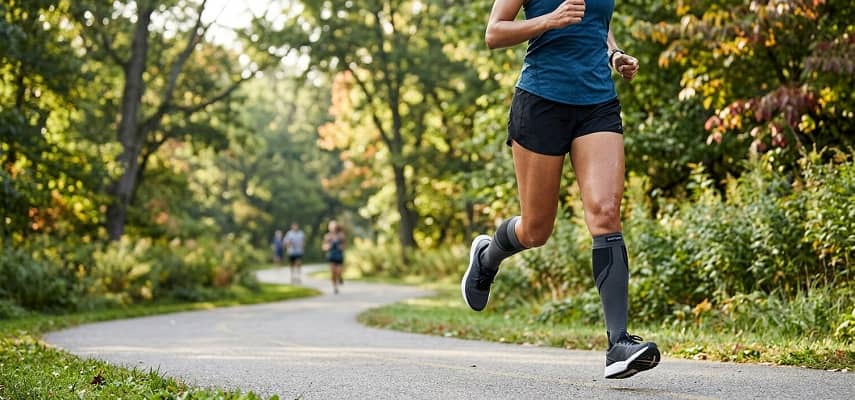
Compression socks for running are optional, not a proven speed shortcut. The best pair is one that fits smoothly, stays put, manages sweat and provides a pressure level you can tolerate. Current research does not show a meaningful performance advantage during running, although some runners still like the supportive feel and there is limited evidence that compression garments may help aspects of recovery after exercise.
Our quick picks
Best overall shortlist
CEP Core Run 5.0
A running-specific 20–30 mmHg option with targeted padding, ventilation and separate men’s and women’s sizing.
Best trail durability
MudGear Tall Compression
A tougher 15–20 mmHg knee-high sock with a cushioned footbed and abrasion-minded yarn blend.
Lighter compression
SB SOX Lite
A 15–20 mmHg alternative for runners who prefer a lighter, lower-profile knee-high feel.
JUMP TO A SECTION
How we chose these compression socks for running
This is a desk-research buying guide, not a hands-on product test. We checked current manufacturer specifications, current U.S. Amazon product pages and published research. We prioritized running-relevant construction, moisture management, verified compression information when available, sizing clarity, footbed design and whether the product still has an active Amazon listing.
Our category labels are editorial judgments based on those specifications; they are not results from a head-to-head clinical trial. We also did not treat a higher mmHg number, a higher review count or a manufacturer’s performance claim as proof that a sock makes runners faster.
Do compression socks actually help runners?
For faster running, the best current evidence is not convincing. A 2025 systematic review focused specifically on compression socks during running included 28 trials and 600 runners. Its meta-analysis found no meaningful advantage over regular socks for physiological measures, running performance or perceived outcomes such as exertion and soreness. Read the PubMed abstract.
51 studies, no clear race-time benefit
A separate 2025 systematic review of compression garments included 51 eligible studies and 899 participants. In pooled analyses, compression did not significantly improve race time or time to exhaustion. It did reduce soft-tissue vibration, but the certainty of evidence across outcomes was rated low to very low. Read the open-access review.
Recovery is a little more nuanced. A 2017 meta-analysis of 23 studies reported small overall recovery benefits from compression garments, with the clearest effects in strength recovery rather than running performance. A small randomized marathon trial involving 33 runners also reported better treadmill recovery after participants wore below-knee compression socks for 48 hours post-marathon. Those findings are interesting, but they do not establish a universal recovery protocol for every runner. 2017 recovery meta-analysis · marathon trial.
Practical takeaway: Buy running compression socks for fit, comfort, support feel or a recovery routine you personally tolerate — not because a product promises guaranteed speed, injury prevention or faster healing.
Best compression socks for running at a glance
| Sock | Our category | Compression | What stands out | Before you buy |
|---|---|---|---|---|
| CEP Core Run 5.0 | Best overall shortlist | 20–30 mmHg | Running-specific footbed, ventilation, targeted cushioning | Firm feel; separate men’s/women’s sizing |
| Zensah Tech+ | Best seamless running design | Graduated; current brand page does not publish an mmHg range | 200-needle knit, seamless construction, arch/ankle structure | Availability varies; verify seller and fit |
| MudGear Tall Compression | Best for trail/OCR durability | 15–20 mmHg | Durable yarn blend, cushioned footbed, trail-oriented build | More substantial feel than minimalist road socks |
| Physix Gear Sport | Best value firm compression | 20–30 mmHg | Simple knee-high format with broad size/color availability | Less running-specific detailing than premium picks |
| SB SOX Lite | Best lighter-compression alternative | 15–20 mmHg | Lightweight, low-profile construction and calf-based sizing | Positioned mainly for travel/everyday wear rather than technical running |
The five Compression Socks for Running
01 / BEST OVERALL SHORTLIST
CEP Core Run Tall Compression Socks 5.0
CEP’s current Core Run 5.0 is the most running-specific option in this shortlist. The brand lists 20–30 mmHg graduated compression, targeted padding, ventilation zones, airflow channels, a moisture-wicking knit and a structured Achilles area. Those design details make it a strong choice for runners who already know they like firm, knee-high compression.
Key features
- 20–30 mmHg graduated compression
- Moisture-wicking fabric and ventilation panels
- Targeted cushioning and grooved airflow channels
- Men’s and women’s models with dedicated size charts
Pros
- Built specifically around running rather than general travel use
- Clear compression specification from the manufacturer
- Detailed footbed, cushioning and ventilation features
Cons
- Premium price class — about $60 direct when checked
- 20–30 mmHg can feel too firm for runners who prefer light compression
- Men’s and women’s Amazon listings are separate
Best for: Runners who want a technical knee-high sock with a verified firm compression range and a running-specific footbed.
Who it isn’t for: Anyone who dislikes firm compression, has difficulty putting on tight hosiery, or needs a medically prescribed pressure level different from this model.
Amazon links: CEP Core Run 5.0 for men — view on Amazon · CEP Core Run 5.0 for women — view on Amazon.
02 / SEAMLESS RUNNING DESIGN
Zensah Tech+ Graduated Compression Socks
The Zensah Tech+ is a long-running sport-focused option made in Italy with an 82% nylon / 18% spandex knit. Zensah describes a 200-needle construction, true graduated compression, a seamless design and structured arch/ankle zones. One important limitation: the current Tech+ product page does not state a specific mmHg range, so we would not buy it based on assumptions about pressure.
Key features
- Graduated compression; exact mmHg not currently published on the brand page
- 200-needle knit and seamless construction
- 82% nylon / 18% spandex
- Sized primarily by shoe size according to Zensah’s FAQ
Pros
- Running-oriented construction with a seamless toe/foot feel
- Dense knit designed for durability
- Unisex product format
Cons
- No current mmHg figure on the manufacturer’s Tech+ page
- About $50 direct when listed; not a budget sock
- Brand and Amazon availability can vary by size/color
Best for: Runners who value a seamless, sport-specific knit and are comfortable choosing by Zensah’s sizing system rather than shopping by a known mmHg number.
Who it isn’t for: Anyone who needs an exact prescribed compression pressure or wants a clearly published 15–20 or 20–30 mmHg label.
03 / TRAIL & OCR DURABILITY
MudGear Tall Graduated Compression Socks
MudGear takes a more rugged approach. Its tall compression socks use 15–20 mmHg graduated compression, a 63% nylon / 28% polyester / 9% spandex blend and a cushioned footbed. The brand positions them for running, hiking and obstacle-course use, making this the shortlist choice for runners who care more about durability than a barely-there race sock.
Key features
- 15–20 mmHg graduated compression
- 63% nylon / 28% polyester / 9% spandex
- Cushioned footbed and abrasion-minded construction
- Standard and wide-calf choices are offered on the brand site
Pros
- Moderate 15–20 mmHg range
- Useful for trail runners who want a more substantial sock
- Clear material and compression specifications
Cons
- More substantial feel than minimalist road-racing socks
- About $46 direct when checked
- Still needs careful shoe-fit testing because of the cushioned footbed
Best for: Trail, hiking and obstacle-course runners who want knee-high coverage with moderate compression and a durable footbed.
Who it isn’t for: Runners who prefer ultra-thin socks or already have very tight-fitting shoes with little extra volume.
04 / VALUE FIRM COMPRESSION
Physix Gear Sport Compression Socks
Physix Gear Sport is the value-oriented 20–30 mmHg option in this comparison. The current Amazon listing is a straightforward knee-high compression sock with multiple sizes and colors, while the brand’s own store continues to list compression socks as a core product. It lacks some of the detailed running-specific footbed information of CEP or Zensah, but it costs considerably less direct from the brand.
Key features
- 20–30 mmHg stated on the current Amazon listing
- Knee-high unisex format
- Multiple sizes and colors
- Value-tier direct-brand pricing
Pros
- Lower purchase price than premium running brands
- Firm compression range clearly stated on Amazon
- Simple choice for runners who do not need specialized cushioning features
Cons
- Less detailed running-specific construction information
- Amazon marketing language makes broad benefit claims that should not be treated as clinical proof
- 20–30 mmHg may be more pressure than some runners want
Best for: Budget-conscious runners who already know they are comfortable in a firm 20–30 mmHg knee-high sock.
Who it isn’t for: Runners looking for a highly specialized technical running footbed or anyone choosing compression for a diagnosed vascular condition without clinical guidance.
05 / LIGHTER-COMPRESSION ALTERNATIVE
SB SOX Lite Compression Socks 15–20 mmHg
SB SOX Lite uses 15–20 mmHg graduated compression in a lightweight, low-profile knee-high sock. The current brand positioning is mainly travel, work and everyday comfort rather than technical running, so this is an alternative for runners who prioritize a gentler feel over running-specific padding or race features.
Key features
- 15–20 mmHg graduated compression
- 80% nylon / 20% spandex on the current Amazon listing
- Lightweight, thin construction
- Size chart uses calf circumference plus shoe size
Pros
- Lighter 15–20 mmHg range
- Calf measurements are part of the sizing process
- Lower direct-brand price — about $26 when checked
Cons
- Not primarily designed or marketed as a technical running sock
- Fewer specialized footbed features than running-first models
- Brand-site stock status can vary
Best for: Runners who want a lighter knee-high compression feel for easy runs, travel to races or post-run wear and do not need a technical race sock.
Who it isn’t for: Runners specifically looking for firm compression or a highly structured running footbed.
What should runners look for in compression socks?
1. Start with fit, not the biggest mmHg number
Compression pressure is commonly described in millimeters of mercury (mmHg). In this shortlist, 15–20 mmHg is the lighter range and 20–30 mmHg is firmer. That does not mean 20–30 mmHg is automatically better for running. Research has not established one universal pressure as the performance sweet spot, so prioritize a correct size and a comfortable pressure rather than chasing the largest number.
If compression is being used for swelling, a vascular condition, after surgery or for another medical reason, the right pressure should follow professional advice rather than a running-gear roundup. For a broader overview, see our compression socks guide.
2. Use the exact brand’s size chart
There is no single sizing method. Some brands use calf circumference and shoe size; others emphasize shoe size; CEP uses its own sex-specific sizing system. Measure exactly what the manufacturer asks for. A sock that bunches, rolls or digs into one spot is not improved by having the “right” compression number on the package.
3. Match cushioning to your running shoe
Compression socks can add more material than a standard racing sock, especially around the heel and forefoot. Try them in the shoes you actually run in. A cushioned compression sock may feel excellent in a roomy daily trainer but cramped in a close-fitting racing shoe.
4. Look for moisture management and smooth seams
For running, sweat control and friction management matter as much as compression. Breathable yarns, ventilation zones and smooth toe construction can make a bigger practical difference over a long run than marketing language about circulation or “energy.” Test any new pair on an easy run before using it for a race or long workout.
5. Decide whether you really need a full sock
A knee-high compression sock combines calf compression with a foot section, while a calf sleeve leaves your foot free to use your normal running sock. If shoe fit is already tight or you have a favorite anti-blister sock, a sleeve may be easier to integrate. Compare our leg compression sleeves guide and knee-high compression socks guide.
How should running compression socks fit and be worn?
- Measure before ordering. Follow the exact chart for the product. Do not assume your normal sock size translates directly to compression hosiery.
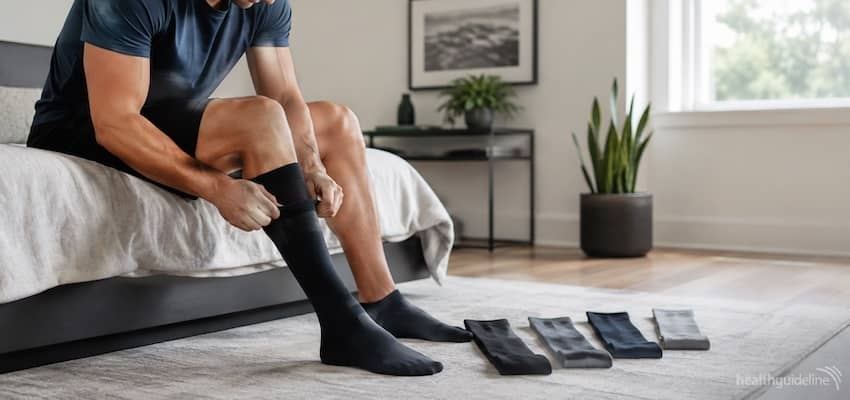
- Put them on without twists or folds. Work the fabric gradually over the foot and calf, then smooth out wrinkles. Do not intentionally roll or fold the top band down to create extra pressure.
- Check comfort before running. Your toes should stay warm and normal in color, and the sock should feel snug rather than painful. Numbness, tingling, increasing pain or unusual color/temperature change are reasons to remove it.
- Test on an easy run first. Check for heel slip, toe pressure, hot spots and whether the sock changes shoe fit. Do not make race day the first trial.
- Reassess after the run. Skin irritation, deep marks that do not settle, or persistent discomfort are signs that the size, pressure or style may not suit you.
There is no universal “wear them as long as possible” rule. For healthy runners using compression for sport or comfort, wear time should be based on comfort and product guidance. If compression has been prescribed for a medical condition, follow the clinician’s schedule instead.
When should runners avoid compression socks or get medical advice?
Compression stockings are safe for many people, but not every situation is a DIY gear choice. Cleveland Clinic advises avoiding them over open wounds or skin infections and with extremely fragile skin. It also recommends professional guidance for people with peripheral artery disease (PAD), severe swelling or swelling related to conditions such as heart or kidney disease. Cleveland Clinic compression-sock safety guidance.
Do not use running gear to self-treat a possible blood clot
New one-sided leg pain or swelling can be a sign of deep vein thrombosis (DVT) and needs prompt medical assessment. If leg pain/swelling occurs with chest pain or shortness of breath, seek emergency care. NHS DVT warning signs.
If your main concern is persistent swelling rather than running comfort, our compression socks for swelling guide may help you understand product formats, but unexplained or severe swelling still deserves medical assessment.
Frequently asked questions
Do compression socks make you run faster?
Current evidence does not show a consistent speed or endurance benefit. A 2025 meta-analysis focused on compression socks during running found no meaningful improvement in running performance compared with regular socks. Some runners still prefer the feel, but compression should not be treated as a guaranteed performance enhancer. Read the review.
What compression level is best for running?
There is no single evidence-based compression level that is “best” for every healthy runner. Commercial running socks commonly include ranges such as 15–20 or 20–30 mmHg, but higher pressure is not automatically better. Choose a comfortable, correctly sized product; get professional guidance if you are using compression for a medical condition.
Should I wear compression socks during a run or after it?
During running, compression socks have not consistently improved performance in trials. Post-exercise recovery research is more mixed and suggests possible benefits in some settings, but there is no universal recovery schedule. If you enjoy them, test them during easy training or for a comfortable post-run period rather than assuming longer wear is always better.
Can compression socks prevent shin splints?
Do not rely on compression socks to prevent or treat shin splints. Some brands market support around the shin, but current running research does not establish compression socks as a proven injury-prevention treatment. Persistent shin pain deserves attention to training load, recovery and diagnosis rather than simply increasing sock pressure.
How tight should running compression socks feel?
They should feel snug and even, not painful. Remove the sock if you develop numbness, tingling, increasing pain, unusual toe discoloration or a cold foot. Wrinkles and rolled bands can create concentrated pressure, so smooth the fabric and use the manufacturer’s size chart rather than deliberately sizing down.
Can I sleep in compression socks after a long run?
Do not assume a running compression sock should be worn overnight. If compression is part of a medical treatment plan, follow the clinician’s instructions. For optional sports/recovery use, remove the socks if they are uncomfortable and avoid turning overnight wear into a self-prescribed medical routine.
Compression socks or calf sleeves — which are better for runners?
A full sock compresses the lower leg and also replaces your normal running sock; a calf sleeve leaves the foot uncovered. Choose based on shoe fit, friction control and what feels comfortable. If you already have a favorite running sock or a tight shoe, a sleeve may be easier to pair with your existing setup.
Medical disclaimer: This article is for general information only and is not medical advice. Talk to a qualified healthcare professional about your specific situation.