Best Elbow Compression Sleeve: 7 Top Picks for 2026
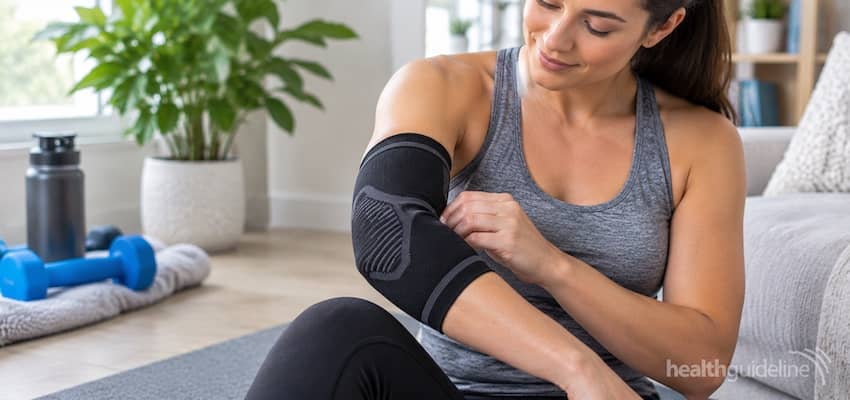
For most people, the CAMBIVO 2-Pack Elbow Compression Sleeve is the best all-round pick — a breathable, pull-on sleeve for everyday aches, arthritis and light training, and you get two so you always have a spare. On a budget, the Copper Joe 2-Pack is strong value. If your pain is specifically tennis or golfer’s elbow, a counterforce strap like FREETOO targets the tendon more directly than any plain sleeve — and pairs best with rest and strengthening exercises.
An elbow compression sleeve is one of the simplest, cheapest things you can try for a sore, stiff or overworked elbow. The catch is that “elbow sleeve” covers everything from a $12 pull-on knit tube to a targeted counterforce brace — and they are not interchangeable. This guide sorts the real options by who each one is actually for, tells you honestly what a sleeve can and can’t do, and links every pick to its live Amazon listing so you can check the current price yourself.
How we chose
We focused on elbow compression sleeves that are currently sold on Amazon (US) and prioritized four things: an appropriate, comfortable compression level; breathable materials you’ll actually wear all day; sizing that stays put without cutting off circulation; and a clear best-use (everyday support, tennis/golfer’s elbow, or the gym). We cross-checked product listings against reputable orthopedic and physical-therapy sources on how — and how well — compression and bracing work for the elbow, and we’ve flagged where marketing outruns the evidence. Prices and stock change constantly, so we list an approximate band and link out to the live listing rather than quoting a number that will be wrong next week.
Top picks at a glance
| Sleeve | Best for | Type | Standout feature | Approx. price* |
|---|---|---|---|---|
| CAMBIVO 2-Pack | Best overall / everyday | Pull-on sleeve (pair) | Seamless 3D knit, no straps | Budget |
| Copper Joe 2-Pack | Best value / copper | Pull-on sleeve (pair) | Copper-infused, anti-odor | Budget |
| APOYO Adjustable | Best adjustable fit | Sleeve + strap | Strap dials in compression | Budget–mid |
| FREETOO Counterforce | Best for tennis/golfer's elbow | Counterforce strap | Targeted gel-pad pressure | Budget–mid |
| Nordic Lifting | Best for weightlifting | Thick sleeve (pair) | Firmer support for pressing | Mid |
| Tommie Copper | Best premium | Graduated sleeve | 15–20 mmHg graduated compression | Premium |
| Kunto Fitness | Best breathable all-day | Pull-on sleeve | Lightweight, moisture-wicking | Budget–mid |
What is an elbow compression sleeve, and does it actually work?
An elbow compression sleeve is a stretchy, pull-on tube that wraps the elbow and upper forearm in gentle, even pressure. It’s designed to add warmth, light support and joint-position awareness (proprioception) during activity. It can ease general aches, stiffness and minor swelling — but it is a support tool, not a cure for any specific injury. Used sensibly, it helps you stay comfortable and active while the real work of recovery happens.
Here’s the honest nuance most product pages skip: for tennis elbow specifically, the problem is an irritated tendon, not swelling — and clinical evidence for a plain compression sleeve as a standalone fix is limited. A counterforce strap (a narrow band worn just below the elbow) applies focused pressure to the forearm muscles and has better support in the research for short-term pain relief. The best-documented benefits of a plain sleeve are comfort, warmth and proprioceptive feedback during rehab — which is genuinely useful, just not the whole answer. Whatever you wear works best alongside rest, activity changes and progressive strengthening.
The 7 best elbow compression sleeves
01 / Best overall
1. CAMBIVO 2-Pack Elbow Compression Sleeve — Best overall
A seamless, pull-on 3D-knit sleeve that delivers even, all-day compression with no straps or Velcro to fuss with. It’s breathable enough for a desk and supportive enough for light training, arthritis flare-ups and general soreness — and because it’s a two-pack, you always have a spare or one for each arm.
Key features:
- Seamless 3D-knit fabric
- graduated all-over compression
- anti-slip
- moisture-wicking
- sold as a pair.
Pros
- Comfortable for all-day wear
- genuinely breathable
- two sleeves for the price many brands charge for one
- no straps to bunch.
Cons
- Fit depends entirely on choosing the right size (no adjustable strap)
- not thick enough for heavy powerlifting
- pull-on style is snug to get on.
Best for: Everyday aches, office/desk strain, mild arthritis, light-to-moderate exercise.
02 / Best value
2. Copper Joe 2-Pack Copper Elbow Compression Sleeve — Best value
A copper-infused pull-on sleeve sold as a pair, aimed at general joint support for arthritis, tendonitis and everyday activity. You get comfortable compression, warmth and anti-odor fabric at a low price. Just set expectations honestly: the compression and warmth do the work — copper’s added therapeutic benefit isn’t well established in research.
Key features:
- Copper-nylon knit
- all-over compression
- breathable
- anti-odor
- unisex
- two per pack.
Pros
- Excellent value (a pair)
- comfortable for all-day wear
- anti-odor helps for sweaty activity
- wide size range.
Cons
- Copper claims outpace the evidence — you’re mainly buying a good-value compression sleeve
- sizing can run snug
- light support only.
Best for: Budget shoppers, general joint soreness, arthritis, all-day comfort.
03 / Best adjustable fit
3. APOYO Elbow Compression Sleeve with Adjustable Strap — Best adjustable fit
Part sleeve, part brace: this option adds an adjustable strap so you can dial compression up during activity and ease off afterward. That flexibility makes it a good pick if you’re between sizes or want firmer support only some of the time, without committing to a rigid brace.
Key features:
- Compression sleeve with an adjustable hook-and-loop strap
- breathable fabric
- stays in place during movement.
Pros
- Customizable compression
- forgiving fit if you’re between sizes
- more support than a plain sleeve when you want it.
Cons
- The strap can bunch or roll for some users
- slightly bulkier than a plain sleeve
- check the listing for single vs. pair.
Best for: People between sizes, variable activity levels, those wanting adjustable support.
04 / Best for tennis & golfer’s elbow
4. FREETOO Tennis Elbow Counterforce Brace — Best for tennis & golfer’s elbow
Strictly speaking this is a counterforce strap, not a sleeve — and that’s exactly why it’s here. For diagnosed tennis or golfer’s elbow, targeted pressure on the forearm just below the joint is better supported by research than diffuse sleeve compression. A gel pad concentrates that pressure where the tendon attaches.
Key features:
- Adjustable counterforce band
- cushioned gel pad
- one-size adjustable strap
- targets lateral/medial epicondylitis.
Pros
- Focused pressure where tennis/golfer’s elbow actually hurts
- adjustable
- compact under sleeves
- often the more effective choice for that specific condition.
Cons
- It’s a strap, not a full-coverage sleeve, so it feels different and covers a small area
- needs correct placement to work
- gel-pad pressure isn’t for everyone.
Best for: Diagnosed tennis elbow or golfer’s elbow, repetitive-strain forearm pain.
If you’re set on a strap-style brace, our dedicated tennis elbow brace guide and golfer’s elbow brace guide compare more options.
05 / Best for weightlifting
5. Nordic Lifting Elbow Compression Sleeves — Best for weightlifting
Thicker and firmer than everyday knit sleeves, these are built for the gym — pressing, curls and heavier work where you want real support and joint warmth. The trade-off is that they’re warmer and more substantial, which is overkill for desk use but ideal under a barbell.
Key features:
- Firmer, thicker compression fabric
- targeted support for lifting
- sold as a pair
- sized for a snug lifting fit.
Pros
- Noticeably more supportive for pressing movements
- keeps joints warm
- durable
- pair included.
Cons
- Too warm and firm for all-day/casual wear
- primarily a gym product
- get sizing right for the compression to feel right.
Best for: Weightlifting, CrossFit, gym-goers who want joint support and warmth under load.
06 / Best premium
6. Tommie Copper Elbow Compression Sleeve — Best premium
From an established brand, this graduated-compression sleeve (around 15–20 mmHg) uses a 4-way-stretch, non-slip knit and copper-infused fabric. You’re paying more for build quality, consistent graduated compression and a refined fit rather than for any proven copper effect — but the fit and durability are a genuine step up.
Key features:
- Graduated 15–20 mmHg compression
- 4-way stretch
- non-slip silicone edges
- copper-infused anti-odor fabric.
Pros
- Well-made and durable
- consistent graduated compression
- refined, low-profile fit
- reputable brand support.
Cons
- Pricier than generic sleeves
- often sold as a single sleeve, not a pair
- copper marketing outruns the evidence.
Best for: Shoppers who prioritize fit, quality and graduated compression over lowest price.
07 / Best breathable all-day
7. Kunto Fitness Elbow Brace Compression Support Sleeve — Best breathable all-day
A lightweight, moisture-wicking pull-on sleeve designed for comfort over long stretches — a good choice in warm climates or if bulkier sleeves feel hot and restrictive. Compression is moderate and even, aimed at general support and soreness rather than heavy-duty stabilization.
Key features:
- Lightweight breathable knit
- moisture-wicking
- even moderate compression
- pull-on design.
Pros
- Cool and comfortable for all-day wear
- unobtrusive under clothing
- good for warm weather and repetitive daily tasks.
Cons
- Moderate compression only
- no adjustable strap
- check the listing for available sizes.
Best for: Warm climates, long wear times, general soreness and everyday support.
Compression sleeve vs. counterforce brace: which do you need?
This is the decision that matters most, and it comes down to what’s causing your pain:
Choose a compression sleeve if you want even, all-over support and warmth for general soreness, mild arthritis, gym sessions or desk-related stiffness. Its strengths are comfort, warmth and joint-position awareness. A standard sleeve wraps the whole forearm evenly.
Choose a counterforce strap/brace if you have diagnosed tennis elbow (lateral epicondylitis) or golfer’s elbow (medial epicondylitis). It concentrates pressure on the forearm muscles just below the elbow, which the research supports better for short-term pain and function in these specific conditions.
Consider a hinged or rigid brace if you need genuine stabilization after an injury or for instability — see our hinged elbow brace guide. If your issue is elbow-nerve related (numbness or tingling in the ring and little fingers), read up on cubital tunnel bracing instead.
Whichever you pick, remember the honest bottom line: a sleeve or brace is a support tool, not a treatment plan. Progressive strengthening exercises and activity modification have the strongest long-term evidence for elbow tendon pain.
What to look for when buying an elbow compression sleeve
Compression level and fit
The sleeve should feel snug and supportive but never tight enough to tingle, throb or leave deep marks — that means it’s restricting circulation. Measure the widest part of your forearm and check the brand’s size chart; sizing between brands varies a lot. Too loose does nothing; too tight can do harm.
Material and breathability
If a sleeve is hot or itchy, you won’t wear it consistently — and consistency is what makes it useful. Look for moisture-wicking, breathable knits for all-day or warm-weather wear, and thicker fabrics only if you specifically want gym-grade support and warmth.
Single vs. pair, and pull-on vs. strap
Two-packs (like CAMBIVO and Copper Joe) are great value and give you a spare. Pull-on sleeves are simplest; strap or counterforce styles let you fine-tune pressure or target a specific tendon. Match the format to your use-case rather than buying the cheapest.
When (and when not) to wear it
Wear a sleeve during activities that aggravate your elbow, and take it off to rest. Continuous, all-day-and-night wear generally isn’t recommended — medical guidance warns that non-stop compression may slow tendon healing, and sleeping in a sleeve is usually discouraged.
About tennis elbow, golfer’s elbow and everyday elbow pain
This section is general information, not a diagnosis. Tennis elbow (lateral epicondylitis) and golfer’s elbow (medial epicondylitis) are overuse conditions where the forearm tendons that attach near the elbow become irritated — usually from repetitive gripping, lifting or wrist motions. They’re common not just in athletes but in anyone doing repetitive arm work: office workers, tradespeople, hairstylists, chefs and new parents included.
Because these are tendon problems rather than swelling problems, the most effective approaches tend to be relative rest, activity modification, and progressive strengthening and stretching of the forearm — often guided by a physical therapist. Braces and sleeves play a helpful supporting role by easing symptoms during activity, but they work best as part of that bigger plan, not on their own.
When to see a professional
See a doctor or physical therapist if your elbow pain lasts more than a few weeks despite self-care, keeps returning, or interferes with daily tasks. Seek prompt care for significant swelling, an obvious deformity, pain after a fall or direct blow, a fever alongside a hot swollen joint, or numbness, tingling or weakness in the hand or fingers — these can point to something that needs proper assessment. This article isn’t medical advice; a qualified professional can diagnose the cause and tailor treatment to you.
Frequently asked questions
Do elbow compression sleeves really work?
For general soreness, arthritis and light activity, many people find they help with comfort, warmth and a feeling of support, and mild compression may ease minor swelling. For tennis elbow specifically, evidence for plain sleeves as a standalone fix is limited — a counterforce strap plus strengthening exercises is better supported.
Should I wear an elbow sleeve to bed?
Usually not. Medical guidance generally advises against continuous, all-night compression because non-stop pressure may slow tendon healing and can affect circulation. Most of the benefit comes from wearing a sleeve during activities that aggravate your elbow, then taking it off to rest and sleep.
How tight should an elbow compression sleeve be?
Snug and supportive, never painful. It should stay in place without rolling, but if you feel tingling, throbbing, numbness or see deep indentations, it’s too tight and may be restricting blood flow. Size using the brand’s chart based on your forearm measurement, since fit varies between brands.
Is a compression sleeve or a counterforce brace better for tennis elbow?
For diagnosed tennis or golfer’s elbow, a counterforce strap is generally the better choice. It concentrates pressure on the forearm muscles just below the elbow, which research supports for short-term pain and function. A plain sleeve offers comfort and warmth but doesn’t target the tendon in the same focused way.
Does copper in a compression sleeve do anything?
Copper-infused sleeves are popular and often have useful properties like anti-odor fabric, but strong evidence that the copper itself provides added pain relief or healing is lacking. If you like a copper sleeve, you’re mainly benefiting from the compression, warmth and fit — treat copper as a bonus, not the reason to buy.
Can I wear an elbow sleeve all day at work?
Yes, a breathable, well-fitting sleeve is generally fine for daytime wear during activities that bother your elbow, and lightweight options are made for exactly this. Just take it off periodically to rest the joint, and don’t rely on it as a substitute for addressing the underlying repetitive strain.
Medical disclaimer: This article is for general information only and is not medical advice. Talk to a qualified healthcare professional about your specific situation.