Best Knee Brace for Chondromalacia: 5 Picks (2026)
2026 buying guide · patella support, fit & evidence
The best knee brace for chondromalacia is not a device that “repairs” cartilage. If a clinician has diagnosed chondromalacia patella or patellofemoral pain and you want a brace as an adjunct, look for comfortable patella guidance, a secure fit and a design you can actually wear during your normal activities. For targeted tracking support, the DonJoy Tru-Pull Lite is our best overall pick in this comparison.
Quick picks
Best overall
DonJoy Tru-Pull Lite
Purpose-built patella tracking support with a corrective buttress and removable side hinges.
Wraparound fit
BioSkin Q Brace
A low-profile wraparound option with an adjustable tracking strap for easier fine-tuning.
Budget sleeve
NEENCA Professional
Compression, a patella gel ring and side stabilizers at a lower typical price than specialist tracking braces.
Should you use a knee brace for chondromalacia?
A brace can be a comfort or tracking aid, but it should not be presented as the main treatment for patellofemoral pain. The American Academy of Orthopaedic Surgeons explains that chondromalacia patella is softening and breakdown of the articular cartilage under the kneecap and can occur in some people with patellofemoral pain. Current best-practice guidance emphasizes education and hip- and knee-targeted exercise; a 2024 multidisciplinary guideline says braces may be considered as an additional option when exercise therapy has not produced clinically relevant improvement, while also telling patients that evidence for these add-ons is limited.
Important: No brace in this guide can regrow cartilage or correct every cause of front-of-knee pain. If your knee has not been assessed, start with a qualified healthcare professional—especially if pain follows an injury, the knee locks or gives way, or you have significant swelling.
For a broader look at support types, see our knee brace guide. If you mainly want light compression, compare our knee compression sleeve guide instead.
How we chose these braces
We compared current manufacturer specifications, intended patella-support features and U.S. Amazon listings. We prioritized designs that address patellar tracking, provide adjustable compression or stabilization, and represent genuinely different use cases rather than five near-identical sleeves. We also checked current clinical guidance so the product recommendations do not overstate what bracing can do.
Best knee braces for chondromalacia at a glance
| Product | Our category | Support design | Main trade-off |
|---|---|---|---|
| DonJoy Tru-Pull Lite | Best overall | Corrective patella buttress + bifurcated strap + removable hinges | Side and size selection matter |
| BioSkin Q Brace – Wraparound | Best wraparound | Dynamic lateral buttress + adjustable tracking strap | More expensive than basic sleeves |
| NEENCA Professional Knee Brace | Best budget sleeve | Compression knit + patella gel ring + spring stabilizers | Contains latex; fit can be less customizable |
| FUTURO Comfort Fit Knee Stabilizer | Best adjustable everyday support | Patella ring + side stabilizers + three straps | General stabilizer, not a directional tracking brace |
| McDavid Knee Strap / Patella 414 | Best minimal strap | Below-patella tubular buttress + hook-and-loop closure | Least coverage and least patella-control structure here |
Do not choose by “support level” alone. A brace that specifically guides the patella is mechanically different from a compression sleeve or a strap below the kneecap. Your symptoms, diagnosis, activity and tolerance matter more than a marketing label.
The five best knee-brace options in this guide
01 / BEST OVERALL
DonJoy Tru-Pull Lite
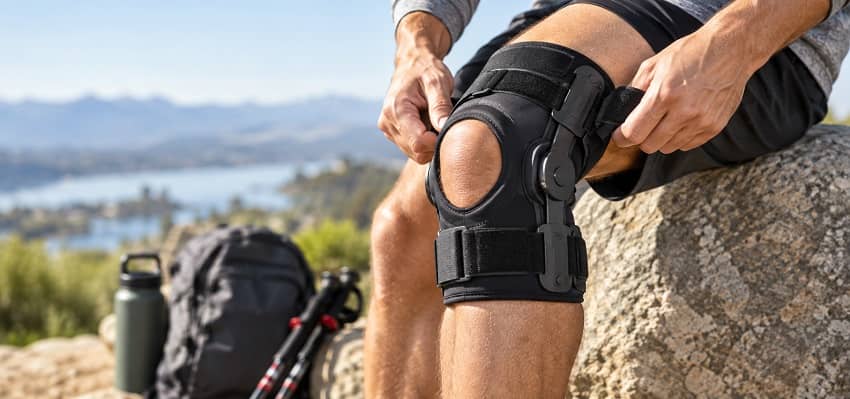
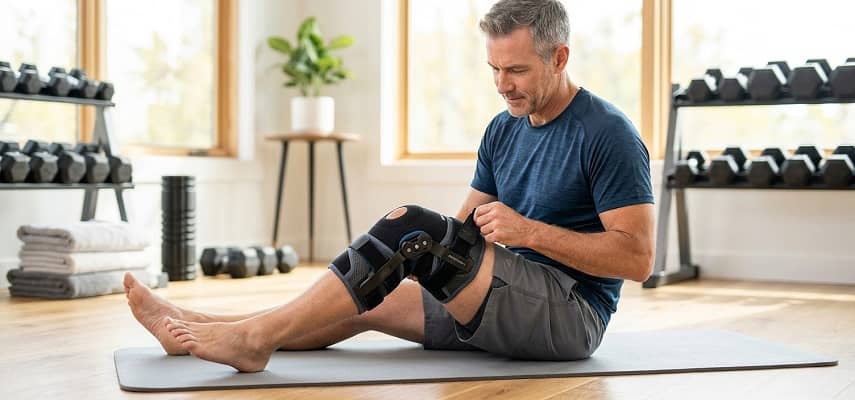
The DonJoy Tru-Pull Lite is the most targeted tracking brace in this five-product shortlist. DonJoy describes it for patellar instability, subluxation and maltracking, and its bifurcated strap works with a dual-durometer buttress to apply corrective force as the knee bends and straightens. Removable side hinges add medial-lateral support without turning it into a full-length ligament brace.
Key features
- Dual-durometer patella buttress designed to provide corrective pressure
- Bifurcated strap for directional patella guidance
- Removable semi-flexible side hinges
- Low-profile, breathable construction
Pros
- More specifically aimed at maltracking than a generic sleeve
- Directional support changes as the knee moves
- Hinges are removable if you do not need the extra side support
Cons
- Left/right and size selection require care
- Bulkier and more involved to fit than a simple sleeve
- Amazon offers can vary by side and size
Best for: Someone who has been assessed for patellar maltracking or instability and wants a brace designed specifically around kneecap guidance.
Who it is not for: Someone who only wants light compression, or anyone who has been told to use a different type of brace or immobilizer.
DonJoy Tru-Pull Lite — view on Amazon. The linked listing is a specific side/size variation, so select the correct leg and measurements before ordering.
02 / BEST WRAPAROUND
BioSkin Q Brace – Wraparound
The BioSkin Q Brace – Wraparound is a good fit when you want directional patella support but dislike pulling a tight sleeve over the foot and calf. BioSkin’s current Q Brace uses an adjustable T-strap and lateral buttress to manage patellar tracking while the wraparound body lets you fine-tune compression around the leg.
Key features
- Wraparound application rather than pull-on-only fitting
- Adjustable tracking strap for directional pressure
- Dynamic lateral buttress for patellar control
- Lightweight, breathable compression material
Pros
- Easier to put on if pull-on sleeves are difficult
- More adjustable than a fixed compression sleeve
- Designed around patellar tracking rather than general knee compression
Cons
- Higher-cost category than basic elastic sleeves
- Several straps mean more setup and adjustment
- Too much directional pressure can be uncomfortable if fitted poorly
Best for: People who want a wraparound brace with adjustable kneecap guidance and easier on/off access.
Who it is not for: Anyone looking for the simplest low-cost sleeve, or someone who has not been advised that directional patella support suits their problem.
BioSkin Q Brace – Wraparound — view on Amazon. Amazon variations can be size-specific; compare the product title and BioSkin sizing guide before purchase.
03 / BEST BUDGET SLEEVE
NEENCA Professional Knee Brace
The NEENCA Professional Knee Brace is a compression-sleeve option with a patella gel ring and spring side stabilizers. It is less specialized than the DonJoy or BioSkin tracking braces, but it combines compression, kneecap cushioning and side support in a relatively simple pull-on format.
Key features
- Elastic compression-knit sleeve
- Patella gel pad around the kneecap
- Double-sided spring stabilizers
- Anti-slip elements to help reduce migration
Pros
- Simple pull-on construction
- Combines compression and patella cushioning
- Typically less expensive than specialist tracking braces
Cons
- Not a directional patella-tracking system
- Compression fit is less adjustable once the size is chosen
- Amazon lists latex in the materials
Latex warning: The current Amazon listing includes latex in the material composition. Avoid this model if you have a latex allergy or sensitivity.
Best for: Buyers who mainly want a compressive sleeve with a patella ring and some side stabilization at a lower typical price point.
Who it is not for: People who need precise directional tracking control, a wraparound fit, or a latex-free product.
04 / BEST ADJUSTABLE EVERYDAY SUPPORT
FUTURO Comfort Fit Knee Stabilizer
The FUTURO Comfort Fit Knee Stabilizer is a general-purpose adjustable brace rather than a dedicated tracking orthosis. Its reinforced patella ring supports around the kneecap, flexible side stabilizers reduce unwanted lateral movement, and three straps let you adjust compression without having to buy a highly specialized brace.
Key features
- Reinforced patella ring
- Dual flexible side stabilizers
- Three adjustable straps
- One adjustable design for left or right knee
Pros
- Easy to adjust during everyday use
- Works on either knee
- Patella ring plus side support in one brace
Cons
- Does not provide the directional pull of a dedicated tracking brace
- Neoprene-blend material can bother sensitive skin
- One-size-adjustable designs do not fit every leg equally well
Skin sensitivity: FUTURO advises that some people can be sensitive to neoprene or neoprene-blend rubber. Stop using it if a rash develops and seek medical advice if needed.
Best for: Everyday users who want adjustable compression and general kneecap support without a left/right-specific brace.
Who it is not for: Someone specifically prescribed directional patellar tracking support.
05 / BEST MINIMAL STRAP
McDavid Knee Strap / Patella 414
The McDavid 414 is the least brace-like option here. It sits below the kneecap and uses a tubular buttress to apply localized pressure at the patellar tendon. McDavid markets it for patellar tendonitis, Osgood-Schlatter disease and patella-tracking symptoms, but it provides far less kneecap control than a dedicated tracking brace.
Key features
- Low-profile strap worn below the patella
- Tubular, non-slip buttress
- Hook-and-loop adjustment
- Fits either knee
Pros
- Minimal coverage and less heat than a full sleeve
- Fast to put on and adjust
- Latex-free neoprene construction according to McDavid
Cons
- Does not surround or actively guide the kneecap like the top two picks
- Localized strap pressure is not comfortable for everyone
- Better known as a patellar-tendon strap than a chondromalacia brace
Best for: Someone who wants the smallest possible support and whose clinician or therapist thinks a below-patella strap is reasonable for their symptoms.
Who it is not for: Anyone specifically seeking substantial patella stabilization or directional tracking control.
For more options in this category, see our patellar tendon strap guide.
What should you look for in a knee brace for chondromalacia?
1. Match the brace to the problem you are trying to solve
If the concern is patellar maltracking, a directional buttress or tracking strap is more relevant than generic compression. If the main goal is warmth, mild swelling control or a sense of support, a compression sleeve may be enough. If ligament instability is the main issue, a different brace category may be more appropriate; compare our hinged knee brace guide.
2. Prioritize fit over maximum tightness
A brace should feel secure without causing numbness, tingling, coldness, color change, sharp pressure or worsening pain. Use the exact manufacturer’s measurement method instead of guessing from normal clothing size. For left/right-specific braces, verify the side before checkout.
3. Decide between pull-on and wraparound designs
Pull-on sleeves are simple once the size is right, but they can be difficult to pull over a swollen knee or large calf. Wraparound models are easier to open fully and usually give you more control over strap tension. The trade-off is extra fastening time and more edges that can rub if they are positioned poorly.
4. Check the patella-support mechanism
An open-patella hole by itself does not guarantee meaningful tracking control. Look at what surrounds the kneecap: a fixed gel ring, foam buttress, J-shaped/lateral wall, or an adjustable strap that can apply directional pressure. The DonJoy and BioSkin options in this guide are more specifically designed for tracking than the general compression designs.
5. Consider skin tolerance and heat
Long periods of wear can expose skin to heat, sweat, friction and rubber materials. Check latex and neoprene warnings, wash the brace according to the manufacturer’s instructions, and inspect your skin after use. A breathable brace that you can tolerate is more useful than a “maximum support” model that stays in a drawer.
If you mainly use a brace for running or workouts, our knee sleeve for running guide compares lower-profile options.
How should a knee brace fit?
- Measure exactly where the brand tells you. Different braces use thigh, knee-center, calf or other measurements.
- Center the patella support. The ring or buttress should sit where the manufacturer intends; an off-center brace can create pressure instead of useful support.
- Adjust gradually. Tighten straps enough to prevent migration, not enough to create numbness, tingling, color change or throbbing.
- Test your normal movement. Walk, sit, climb a step or perform the activity your clinician has cleared. Recheck for slipping, bunching or pinching behind the knee.
- Recheck after 15–30 minutes. Heat and movement can change the fit. Remove or loosen the brace if symptoms worsen.
A brace should not be used to push through increasing pain. If the device changes your gait, creates new pain, causes numbness or repeatedly slips despite correct sizing, stop and reassess the fit or brace choice.
Do knee braces actually help chondromalacia or patellofemoral pain?
The evidence for patellofemoral bracing is mixed and weaker than the evidence for exercise-based care. A clinical practice guideline from the Academy of Orthopaedic Physical Therapy recommended combined hip- and knee-targeted exercise and advised against routinely prescribing patellofemoral knee orthoses for patellofemoral pain. A newer multidisciplinary guideline takes a more permissive position: after an initial exercise-therapy period, braces, tape or foot orthoses may be considered as additional options when progress is insufficient, with clear discussion of the limited evidence.
What this means for a buyer
Think of a brace as a trial of symptom support, not a cartilage treatment. If it reduces discomfort or improves confidence during an agreed activity without causing new symptoms, it may be useful to you. If it does not help, wearing a more restrictive brace is not automatically the next step.
AAOS notes that conservative treatment for patellofemoral pain often includes activity modification and a therapeutic exercise program. A 2024 best-practice synthesis likewise recommends education plus knee-targeted and/or hip-targeted exercise as the primary intervention, with other supports tailored to the individual after assessment.
If your clinician has suggested cold therapy for short-term symptom relief after activity, see our ice packs for knees guide. Cold therapy does not replace rehabilitation or diagnosis.
When should you see a healthcare professional?
Get urgent advice for red-flag knee symptoms
Seek urgent medical assessment if the knee is very painful, badly swollen or misshapen; you cannot move it or put weight on it; it locks or repeatedly gives way; or the joint is hot/red and you have a high temperature or feel unwell. These symptoms can point to injuries or conditions that should not be managed by simply buying a brace.
For persistent front-of-knee pain, recurrent swelling, loss of motion or symptoms that do not improve with an appropriate rehabilitation plan, a sports-medicine clinician, physical therapist or orthopedic professional can help clarify the diagnosis and whether a brace, taping, exercise modification, imaging or another approach is appropriate.
Frequently asked questions
What type of knee brace is best for chondromalacia?
If a brace is appropriate for you, a patella-tracking design is the most targeted option when maltracking is part of the problem. A compression sleeve may be enough if you only want light support. Clinical guidelines still put exercise-based rehabilitation first, so brace type should follow your diagnosis and goals rather than the label “chondromalacia.”
Can a knee brace heal chondromalacia patella?
No knee brace has been shown to regrow or “heal” damaged patellar cartilage. A brace may change comfort, compression or kneecap guidance for some people, but it should be viewed as an adjunct. Exercise therapy, load management and an individualized plan are the main evidence-based components of care for patellofemoral pain.
Is an open-patella brace better than a closed knee sleeve?
Not automatically. An open patella can reduce direct fabric pressure over the kneecap and may help position a buttress, but the important question is how the whole brace fits and what support mechanism it uses. A closed compression sleeve can still be comfortable, while a tracking brace may use straps or a lateral wall for more targeted control.
How tight should a patella brace be?
It should be snug enough to stay in position but not so tight that it causes numbness, tingling, coldness, color change, throbbing or increased pain. Follow the exact product’s sizing and application instructions. If the brace keeps slipping or must be painfully tight to stay up, the size or design may be wrong for you.
Can I wear a knee brace all day?
Wear time depends on the device, your skin, symptoms and the reason you are using it. Check the manufacturer’s instructions and your clinician’s advice. Remove the brace to inspect the skin, and stop if it causes worsening pain, numbness, swelling below the brace or a persistent rash. Do not assume that more hours means better results.
Can I exercise with chondromalacia while wearing a brace?
A brace does not by itself determine whether an exercise is appropriate. Patellofemoral pain is commonly managed with graded hip- and knee-targeted exercise, but the exact load and movements should match your symptoms and clinical plan. If a brace makes movement more comfortable, it can be an adjunct; it should not be used to override increasing pain.
This article provides general information and product-comparison guidance, not medical advice, diagnosis or treatment. Talk to a qualified healthcare professional about your symptoms and rehabilitation plan.