Compression Socks for Sleeping: Is It Safe? (2026)
2026 sleep & circulation guide · overnight compression explained
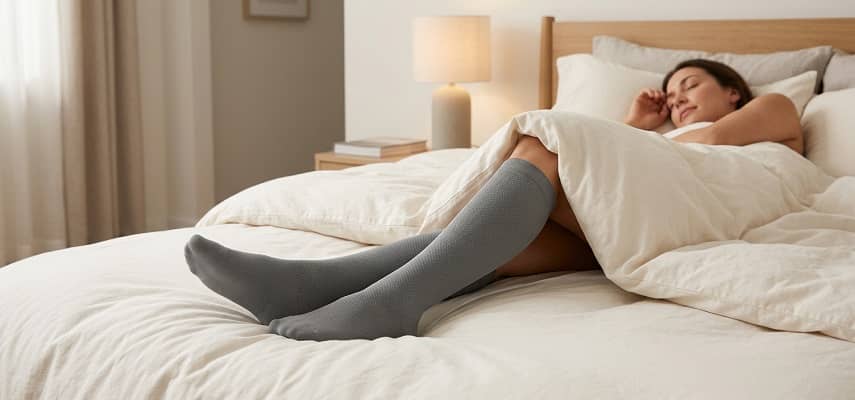
Quick answer: Most people do not need to sleep in standard graduated compression socks. These garments are usually most useful while you are upright, when gravity encourages blood and fluid to collect in the legs. Put them on in the morning and remove them before bed unless a healthcare professional has specifically told you to wear compression overnight.
Can you sleep in compression socks?
For most people using ordinary graduated compression socks for leg swelling, venous symptoms, work, travel or exercise, routine overnight wear is unnecessary. Cleveland Clinic’s 2026 guidance recommends putting compression stockings on in the morning and taking them off before bed, while NHS vascular guidance similarly advises daytime use unless a clinician gives different instructions.
The reason is practical: graduated compression is designed to help counter the effects of gravity and support venous return while you are sitting, standing or moving around. When you lie flat, gravity is no longer pulling blood toward your feet in the same way, so the usual daytime benefit is reduced.
The important exception: “Compression stockings” is a broad label. Anti-embolism stockings used after surgery or during major immobility, specialist lymphoedema compression and some post-procedure plans can have different wear schedules. If your hospital, vascular specialist, surgeon or lymphoedema therapist told you to wear a garment at night, follow that plan rather than general daytime advice.
If you are new to compression and want a broader overview first, see our compression socks guide. For daytime swelling specifically, our compression socks for swelling guide covers common use cases and fit considerations.
Why are compression socks usually worn during the day?
Graduated compression socks are tightest around the ankle and gradually become less compressive higher up the leg. That pressure pattern helps reduce fluid buildup and supports blood moving back toward the heart. The effect is most relevant when you are upright, especially during long periods of sitting or standing.
That is why many clinical instructions tell people to put compression hosiery on early in the morning, before swelling has had time to build, and take it off at bedtime. Removing it overnight also gives you a regular opportunity to inspect and moisturize your skin.
Compression socks are not ordinary bedtime socks
Loose, breathable socks may help some people feel warmer and more comfortable in bed. That does not mean medical or athletic compression socks provide the same sleep benefit. Cleveland Clinic’s 2026 sleep guidance specifically recommends avoiding compression socks at bedtime unless they are being used for a medical reason.
When might you be told to wear compression overnight?
Nighttime compression can be appropriate in selected medical situations, but the garment and schedule should match the condition. Do not assume that a pair bought for work, travel or exercise can simply be worn around the clock.
| Garment or situation | Typical nighttime approach | Key point |
|---|---|---|
| Standard graduated compression socks | Usually removed before sleep | Commonly used while awake for venous symptoms or swelling |
| Anti-embolism stockings after surgery or major immobility | May be prescribed day and night | Follow the hospital’s exact instructions and daily skin-check routine |
| Post-procedure compression | Schedule varies | Some procedures require 24-hour wear for a limited period |
| Lymphoedema compression | Usually daytime, but specialist nighttime compression may be recommended | Night garments, wraps or bandaging are specialist treatments, not interchangeable with ordinary socks |
After surgery or while mobility is greatly reduced
Anti-embolism stockings are used differently from everyday graduated compression socks. Cambridge University Hospitals advises some patients who are much less mobile after surgery or illness to wear anti-embolism stockings day and night until mobility improves, removing them daily for washing and a skin check. Your own hospital protocol takes priority.
After a vein procedure
Temporary round-the-clock wear may also be part of a specific post-procedure plan. For example, University College London Hospitals advises patients after some varicose vein procedures to wear compression stockings all day and night during the first week, then daytime only during the second week. This is a treatment protocol, not a general rule for anyone with varicose veins.
For lymphoedema
Standard lymphoedema garments are often worn during the day and removed at night. However, specialist teams may prescribe nighttime bandaging, wraps or dedicated nighttime compression for some people. Wirral University Teaching Hospital notes that some patients are advised to sleep in bandages during intensive treatment and that long-term nighttime compression is sometimes recommended.
Do not copy another person’s schedule. The pressure, garment type, fit and reason for treatment matter. “Wear compression overnight” should be an individualized instruction, especially after surgery or for vascular and lymphatic conditions.
What are the risks of sleeping in compression socks?
A properly fitted compression sock is safe for many people during its intended wear period, but nonstop or poorly fitted compression can create problems. At night, you are also less likely to notice a sock that has rolled, bunched or started pressing on one area of skin.
- Skin irritation or breakdown: Constant pressure, moisture and friction can irritate fragile skin. Overnight removal gives you time to inspect the skin and moisturize if appropriate.
- Pressure from wrinkles or a rolled top: Creases can create localized pressure. Never roll the top of a compression stocking down like a cuff.
- Pain, numbness or tingling: These can mean the garment is too tight, poorly positioned or unsuitable for you.
- Toe or foot color changes: Pale, blue, unusually cold or discolored toes need prompt attention, particularly if symptoms do not resolve after removing the garment.
- Higher risk in some medical conditions: People with peripheral artery disease, severely reduced sensation, severe unexplained swelling, fragile skin, open wounds or skin infection may need a clinician to assess whether compression is appropriate at all.
Remove the sock and get advice if it causes pain, numbness, tingling, skin damage, discoloration or worsening swelling. Cleveland Clinic specifically lists these as warning signs that warrant reassessment of the garment or the underlying condition.
How should you use compression socks safely?
- Use the right garment for the reason you are wearing it. Everyday graduated socks, anti-embolism stockings and lymphoedema garments are not identical products.
- Get the size right. Follow the manufacturer’s measurement method. Medical-grade compression should be selected with professional guidance when it is being used to treat a health condition.
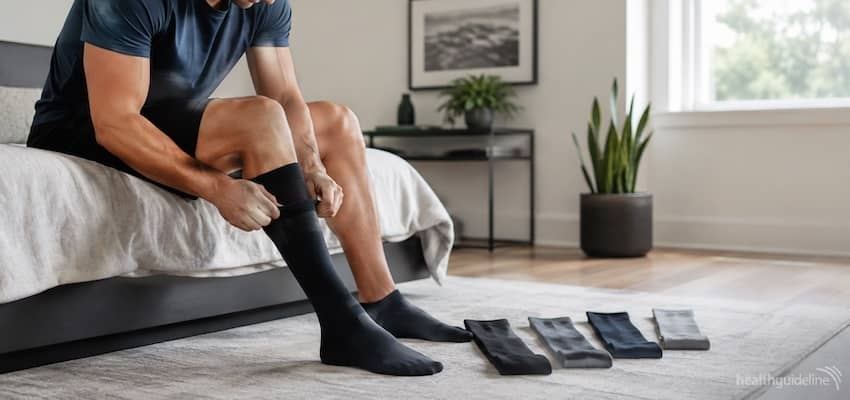
- Put daytime stockings on early. They are often easiest to apply in the morning before swelling increases.
- Smooth the fabric. Avoid wrinkles, twisting and rolled edges. The heel and toe should sit where the garment is designed for them to sit.
- Check your skin every day. Look for persistent redness, pressure marks, blisters, broken skin, color changes or new pain.
- Take them off at bedtime unless your treatment plan says otherwise. If you were explicitly told to wear them overnight, follow the prescribed schedule and skin-check instructions.
If pulling standard stockings on and off is difficult, a different design may be easier to manage. Our compression socks with zippers guide discusses that option. You can also compare knee-high compression socks if coverage and ease of use are part of your decision.
What about pregnancy, exercise and swelling?
Pregnancy
Compression socks may be suggested during pregnancy for leg swelling or venous symptoms, but ordinary graduated stockings are still generally a daytime tool. If your maternity team has given you a different schedule because of clot risk, a procedure or another medical issue, follow their instructions. For more context, see our compression socks for pregnancy guide.
Exercise and “recovery” socks
There is no general need to sleep in athletic compression socks simply because they are marketed for recovery. Cleveland Clinic notes that wearing sports compression overnight is not necessary to obtain their usual circulation-related benefit. Comfort, fit and the intended use of the product matter more than wearing it for the maximum number of hours.
Leg swelling
If swelling is the reason you are considering compression, the cause matters. Bilateral swelling after a long day on your feet is different from sudden swelling in one leg. Do not use overnight compression to self-treat new, unexplained or rapidly worsening swelling without medical assessment.
People who spend long shifts standing may benefit from learning how daytime compression is used rather than extending wear through the night. Our compression socks for nurses guide focuses on that daytime use case.
When should you see a healthcare professional?
Ask a healthcare professional before choosing stronger compression or overnight use if you have peripheral artery disease, diabetes-related or other significant neuropathy, fragile skin, wounds, recurrent skin infections, severe swelling, heart or kidney disease, or a history of vascular problems. A clinician can check whether compression is appropriate and recommend the correct type and pressure.
Do not treat possible blood-clot symptoms with socks
The CDC lists swelling, pain or tenderness, warmth and redness or discoloration in an affected limb as possible symptoms of deep vein thrombosis (DVT). Seek medical care promptly if you develop these symptoms, especially when they are new or mainly affect one leg.
Seek emergency medical help for difficulty breathing, chest pain, coughing up blood, fainting or other symptoms that could indicate a pulmonary embolism. Compression socks are not a substitute for diagnosis or treatment of a blood clot.
Frequently asked questions
Is it safe to sleep in compression socks?
For many otherwise healthy people, accidentally leaving well-fitted compression socks on for a short sleep is unlikely to be harmful. But standard graduated compression socks are usually meant for daytime use, and routine overnight wear is generally unnecessary. If a clinician has prescribed nighttime compression, follow that specific plan instead.
Can I sleep in 20–30 mmHg compression socks?
Do not choose overnight wear based only on the pressure number. A 20–30 mmHg garment is relatively firm compression and is often used for medical indications. Whether it is appropriate at night depends on your condition, circulation, fit and treatment plan. Ask the clinician who recommended that compression level if nighttime use is intended.
Should I sleep in compression socks after surgery?
Sometimes. Hospitals may prescribe anti-embolism stockings day and night while mobility is reduced, and some procedures use round-the-clock compression for a limited period. Other post-operative plans allow removal at night. Follow your surgeon or hospital discharge instructions rather than general advice for everyday compression socks.
Can I take a nap in compression socks?
A short nap in a comfortable, properly fitted pair is generally different from making overnight wear a daily habit. Cleveland Clinic notes that briefly sleeping in compression socks is not necessarily harmful for most people. Remove them if they become uncomfortable, and follow medical instructions if they were prescribed for a specific condition.
Will sleeping in compression socks reduce morning swelling?
Not necessarily. Standard graduated compression is most useful against fluid pooling that occurs while you are upright. If you wake with persistent swelling, especially if it is new, severe, one-sided or associated with pain or breathing symptoms, the priority is finding the cause rather than adding more hours of compression.
What should I do if my toes go numb in compression socks?
Remove the garment and check your skin and foot. Numbness, tingling, pain, color changes or worsening swelling can indicate excessive pressure, poor fit or a circulation problem. If symptoms do not quickly settle after removal, or if your foot becomes cold, pale, blue or very painful, seek prompt medical assessment.
Are regular socks better than compression socks for sleeping?
If your goal is simply warm feet or sleep comfort, loose, breathable regular socks are the more appropriate choice for most people. Compression socks are designed to apply purposeful pressure for circulation-related uses. They should not be used as ordinary bedtime socks unless a healthcare professional has recommended nighttime compression for a medical reason.
This article is for general information only and is not medical advice. Talk to a qualified healthcare professional about your symptoms, circulation, compression level and whether you should wear a garment while sleeping.