Compression Socks: 6 Best Picks for Swelling (2026)

2026 buying guide · swelling, travel & daily wear
Compression socks apply graduated pressure to the lower legs, usually with the greatest pressure near the ankle. For everyday sitting, standing or travel, 15–20 mmHg is a common moderate range; 20–30 mmHg is firmer and may be appropriate for specific needs. If swelling is new, severe, one-sided or unexplained, get medical advice before treating it with socks.
Quick picks
Best overall
Comrad CloudCotton
Soft 15–20 mmHg graduated compression, wide-size options and a cushioned build make it a practical everyday starting point.
Firm pressure
Physix Gear
A 20–30 mmHg option for people intentionally shopping for firm graduated compression rather than a lighter everyday sock.
Budget multipack
CHARMKING 3-Pair
Three pairs at 15–20 mmHg give cost-conscious buyers a simple way to rotate moderate-compression socks through the week.
How did we choose these compression socks?
We compared current U.S. Amazon listings with 2026 expert and editorial roundups, then checked the stated pressure level, length, sizing options, materials or cushioning, and the use case each sock is designed to serve. We favored distinct choices rather than six near-identical pairs and excluded products whose exact U.S. listing could not be verified.
This is a desk-research comparison, not an independent clinical trial or hands-on test. “Best” labels are editorial judgments based on verified specifications and suitability for the stated use case. Current seller, size, color, stock and price should be confirmed before ordering.
Which compression socks are best in 2026?
| Sock | Our category | Compression | Standout | Before you buy |
|---|---|---|---|---|
| Comrad CloudCotton | Best overall | 15–20 mmHg | Soft, cushioned daily wear | Wide sizes available; check exact chart |
| Physix Gear | Best firm pressure | 20–30 mmHg | Thin, firm graduated compression | Harder to put on than lighter socks |
| SB SOX | Best size range | 20–30 mmHg | Sizes through XXL / wide-calf range | Measure calf and follow the listing chart |
| Feetures Knee High | Best for exercise | 15–20 mmHg | Moisture-wicking + light cushioning | One-pair premium option |
| CHARMKING 3-Pair | Best budget multipack | 15–20 mmHg | Three-pair value | Fit choices are less granular than some premium lines |
| FITRELL 3-Pair | Best firm multipack | 20–30 mmHg | Three pairs + firm pressure | Choose by calf size first |
More pressure is not automatically better. Compression is measured in millimeters of mercury (mmHg). If you are using compression for a medical condition rather than general comfort, ask a clinician which pressure level and garment length fit your situation.
The six compression sock profiles
01 / BEST OVERALL
Comrad CloudCotton Compression Socks
Comrad CloudCotton is our best overall starting point for everyday wear because it combines moderate 15–20 mmHg graduated compression with a softer, more cushioned construction than many clinical-looking socks. The line also includes wide-size options, which is useful because correct calf fit matters as much as shoe size.
Key features
- 15–20 mmHg graduated compression
- Blend includes nylon, combed cotton, micromodal, lyocell and elastane
- Extra cushioning around high-wear areas
- Standard and wide-size options
Pros
- Moderate pressure suits many everyday use cases
- Soft, plush feel for long wear
- Wide-size choices improve fit options
Cons
- Costs more per pair than budget multipacks
- 15–20 mmHg is not a substitute for stronger compression prescribed by a clinician
Best for: Daily sitting or standing, travel and buyers who prioritize comfort in a moderate graduated-compression sock.
Who should skip it: Anyone whose clinician has specified a different pressure level or garment style.
02 / BEST FIRM PRESSURE
Physix Gear Compression Socks 20–30 mmHg
Physix Gear is the firm-pressure pick for readers intentionally shopping in the 20–30 mmHg range. The nylon-and-spandex design is relatively thin, and current testing coverage notes a noticeably stronger squeeze than moderate socks. That firmer fit can be useful for the right wearer, but it also makes the pair harder to pull on and remove.
Key features
- 20–30 mmHg graduated compression
- Nylon and spandex construction
- Thin profile for use under pants
- Multiple size choices
Pros
- Firm, clearly stated pressure level
- Low-bulk material
- Established option in current expert roundups
Cons
- Can be challenging to put on and take off
- Firm pressure is not the right default for every casual wearer
Best for: Buyers who know they want 20–30 mmHg graduated compression and can manage a tighter sock.
Who should skip it: First-time users who have not established that firm compression is appropriate, or anyone who struggles with hand strength or bending to dress.
03 / BEST SIZE RANGE
SB SOX Compression Socks 20–30 mmHg
SB SOX stands out when calf sizing is the main challenge. Its current Amazon listing offers sizes from Small through XX-Large and markets the line for wide-calf fit, while maintaining firm 20–30 mmHg compression. That broader range is useful, but the correct size still depends on the listing’s current measurement chart rather than a guess from shoe size alone.
Key features
- 20–30 mmHg compression
- 80% nylon / 20% spandex on the verified listing
- Sizes Small through XX-Large
- Multiple color and pattern options
Pros
- Broad calf-size range
- Firm compression in a conventional knee-high design
- Many appearance options
Cons
- Firm compression takes more effort to put on
- Overlapping shoe and calf measurements make careful chart reading important
Best for: People shopping for firm compression who need more calf-size choices than a simple S/M–L/XL range.
Who should skip it: Anyone looking for lighter 15–20 mmHg compression or who has been advised to use a different medical compression level.
04 / BEST FOR EXERCISE
Feetures Compression Knee High Socks
Feetures is the exercise-focused choice in this list. The knee-high sock uses 15–20 mmHg graduated compression plus light cushioning, targeted arch support, moisture-wicking fibers and a low-friction toe construction. Those details make it more purpose-built for walking or running than a basic medical-style sock, while still staying in a moderate pressure range.
Key features
- 15–20 mmHg graduated compression
- Light cushioning
- Targeted arch support
- Moisture-wicking, breathable construction
Pros
- Designed with exercise comfort in mind
- Moderate graduated pressure
- Cushioning and sweat management add versatility
Cons
- Sold as a premium single pair rather than a multipack
- 15–20 mmHg may not match a clinician-prescribed stronger level
Best for: Walkers, runners and active users who want moderate graduated compression with athletic sock features.
See our related compression socks for running guide for more activity-specific considerations.
05 / BEST BUDGET MULTIPACK
CHARMKING 3-Pair Compression Socks 15–20 mmHg
CHARMKING is the budget multipack pick for buyers who want several moderate-compression pairs. The verified three-pair listing states 15–20 mmHg and offers many colors and patterns. A multipack is convenient for regular rotation, but the simpler size structure means you should compare your measurements with the current chart instead of choosing only by your usual sock size.
Key features
- 15–20 mmHg stated pressure
- Three pairs per set
- Multiple size categories
- Large choice of colors and patterns
Pros
- Good value for a three-pair rotation
- Moderate rather than firm pressure
- Many style choices
Cons
- Less granular sizing than some specialist brands
- Exact fabric and fit can vary by selected version, so check the listing carefully
Best for: Cost-conscious users who want multiple 15–20 mmHg pairs for travel, work or everyday rotation.
Who should skip it: Anyone who needs a medically specified pressure level or a more precisely fitted compression garment.
06 / BEST VALUE FIRM MULTIPACK
FITRELL 3-Pair Compression Socks 20–30 mmHg
FITRELL is the value pick for shoppers who specifically want firm compression in a multipack. Its current listing states 20–30 mmHg, three pairs, knee-high length and a cushioned sole. The manufacturer also tells shoppers to choose by calf size first, an important detail because a compression sock that is too loose or too tight can defeat the purpose of careful pressure selection.
Key features
- 20–30 mmHg graduated compression
- Three pairs
- Knee-high / calf length
- Cushioned sole and breathable calf panels on the verified listing
Pros
- Three-pair value
- Firm, clearly stated pressure
- Calf-first sizing guidance
Cons
- 20–30 mmHg may be harder for beginners to put on
- Firm compression should be chosen for a reason, not simply because it sounds stronger
Best for: Value-focused shoppers who have already decided that 20–30 mmHg is the appropriate range for them.
Who should skip it: Casual shoppers who only want mild or moderate support, or anyone unsure which pressure level is safe for their health situation.
What compression level should you choose?
The right compression level depends on why you are wearing the socks. Common graduated ranges include 8–15 mmHg (mild), 15–20 mmHg (moderate), 20–30 mmHg (firm) and 30–40 mmHg (extra-firm). Cleveland Clinic advises that people using compression for a medical concern should be measured and get a recommended pressure level rather than choosing at random.
| Pressure | Common label | Practical interpretation |
|---|---|---|
| 8–15 mmHg | Mild | Light compression for people seeking gentle support. |
| 15–20 mmHg | Moderate | Common everyday range for prolonged sitting or standing when compression is appropriate. |
| 20–30 mmHg | Firm | Stronger graduated compression; ask a clinician if you are treating swelling or another medical issue. |
| 30–40 mmHg | Extra-firm | Medical-grade compression that should generally be used under professional supervision. |
Do not use “strongest” as your shopping rule. A sock needs the right pressure, size and length for the reason you are wearing it. If a healthcare professional gave you a specific prescription or recommendation, follow that instead of a generic buying guide.
What should you look for when buying compression socks?
Start with pressure level and fit, then compare comfort features. The sock should match your use case, stay smooth against the leg and feel snug without causing pain, numbness, tingling or color changes. Fabric, cushioning and ease of dressing matter because the best compression sock is one you can wear correctly and consistently when it is appropriate.
1. Measure your calf, ankle and leg as directed
Compression brands do not all size the same way. Some use shoe size plus calf circumference; others rely more heavily on ankle or calf measurements. Measure at the time of day recommended by the manufacturer and use the chart for the exact model. For more conventional options, compare our knee-high compression socks guide.
2. Pick a length that matches the problem area
Knee-high socks are common for lower-leg and ankle compression, but they are not automatically right for every condition. Thigh-high or waist-high garments may be recommended for specific medical situations. If you mainly want an easier closure, see our compression socks with zipper guide.
3. Match the material to your day
For warm workplaces or exercise, moisture-wicking fibers and breathable panels can make long wear more comfortable. Cushioned soles help if you spend hours on your feet, while thinner socks can fit more easily under trousers and snug shoes. Nurses and other standing workers can also use our compression socks for nurses guide.
4. Consider how easy the sock is to put on
Firm compression can require significant hand strength and bending. If dressing is difficult, ask about donning aids or alternative garment designs rather than buying an oversized sock, because intentionally sizing up can change the intended pressure. A medical supply fitter can also help with measurement and technique.
5. Shop for the actual use case
Someone standing for a long shift, someone taking a long flight and someone with medically evaluated edema may need different garments. We also maintain separate guides for compression socks for men, compression socks for pregnancy and running.
How do you put on compression socks correctly?
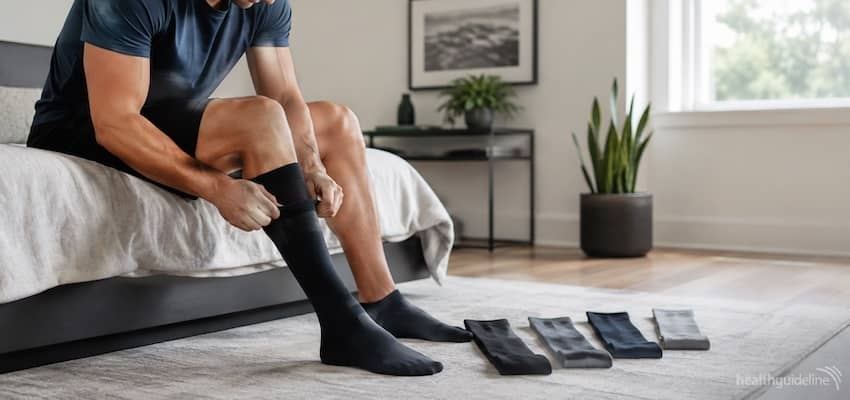
Put them on before significant swelling develops, unless your clinician or product instructions say otherwise. Work the sock over the foot first, then gradually smooth it up the leg. Avoid bunching, wrinkles or rolling the top into a tight band, because concentrated pressure can irritate the skin and alter how the garment works.
- Check the size and pressure first. Make sure you have the correct sock and the correct leg measurements.
- Start when your legs are least swollen. For many daytime users, that means putting the socks on in the morning.
- Seat the heel correctly. Turn or gather the sock to the heel, place the foot in, then bring the fabric upward gradually.
- Smooth the material. Remove wrinkles and do not fold or roll the upper cuff into a narrow band.
- Recheck your skin and symptoms. Remove the sock and seek advice if you develop pain, numbness, tingling, unusual discoloration, skin damage or worsening swelling.
Compression socks are generally worn during the day and removed before bed unless a healthcare professional specifically tells you otherwise. If nighttime wear is the question you are researching, see our compression socks for sleeping guide.
Do compression socks help leg and ankle swelling?
Compression can help reduce lower-leg fluid buildup for some people, but the cause of swelling matters. Graduated socks support venous blood flow and can limit pooling in the lower legs. Edema can also result from pregnancy, medicines, venous insufficiency, heart or kidney disease and other conditions, so persistent or unexplained swelling deserves assessment rather than self-treatment alone.
Mayo Clinic describes edema as swelling caused by excess fluid in the tissues and notes that compression garments can be part of treatment in appropriate cases. MedlinePlus likewise describes compression stockings as a tool to improve leg blood flow and help with swelling in certain situations. They are supportive garments, not a diagnosis or a cure for every cause of swollen feet or legs.
Get medical advice before using compression for severe or unexplained swelling. Compression may be inappropriate for some people with peripheral arterial disease, severely reduced sensation/neuropathy, open wounds or skin infection. Remove a sock that causes pain, numbness, tingling, skin color changes or worsening symptoms and seek professional guidance.
When should you see a professional for swollen legs?
Seek prompt assessment for swelling that is sudden, severe, painful, one-sided, red or hot. Seek emergency care for swelling accompanied by chest pain, difficulty breathing, coughing up blood, fainting, or a foot that becomes blue, gray or cold. These warning signs can indicate a problem that should not be managed by simply putting on compression socks.
If swelling persists, keeps returning, or occurs with known heart, kidney, liver or circulation disease, ask a qualified healthcare professional about the cause and whether compression is suitable. For pregnancy-related swelling, use our pregnancy compression sock guide alongside advice from your prenatal care team.
Frequently asked questions about compression socks
What does mmHg mean on compression socks?
mmHg means millimeters of mercury, the unit used to describe compression pressure. A range such as 15–20 mmHg indicates moderate pressure, while 20–30 mmHg is firmer. The number is not a quality score: the appropriate range depends on your reason for wearing compression and, for medical use, professional guidance.
Is 15–20 or 20–30 mmHg better?
Neither range is universally better. 15–20 mmHg is moderate compression and is common in everyday socks for prolonged sitting, standing or travel. 20–30 mmHg is firm compression and feels substantially tighter. If you are treating swelling, varicose veins or another medical problem, ask a clinician which level is appropriate instead of choosing the stronger number automatically.
Can you wear compression socks all day?
Many people wear properly fitted graduated compression socks during daytime hours, but the correct schedule depends on the reason for use and the garment. Check your skin and comfort during the day. If you develop pain, numbness, tingling, discoloration or worsening swelling, remove the socks and seek medical advice rather than continuing through symptoms.
Should you sleep in compression socks?
Do not assume a daytime compression sock should be worn to bed. Cleveland Clinic advises removing compression socks before sleep unless a healthcare professional tells you otherwise. Nighttime compression can be appropriate in selected medical situations, but the decision should match your diagnosis and the exact garment rather than a general rule from a product page.
Are knee-high compression socks enough for ankle swelling?
Knee-high graduated socks are a common style for lower-leg and ankle compression, but “enough” depends on why the swelling is occurring and where treatment is needed. A clinician may recommend a different length or pressure for certain venous or lymphatic conditions. If swelling is new, persistent or one-sided, get it assessed before relying on a garment.
Can people with diabetes or neuropathy wear compression socks?
Some people with diabetes can use compression, but reduced sensation and peripheral arterial disease can change what is safe. Do not choose firm compression solely because a product is marketed to people with diabetes. If you have neuropathy, poor circulation, foot wounds or reduced sensation, ask your healthcare professional to assess circulation, skin and the appropriate garment first.
How tight should compression socks feel?
They should feel snug and evenly supportive, not painfully tight. The fabric should lie smooth without deep folds or a rolled cuff. Pain, numbness, tingling, skin discoloration, cold toes, skin damage or increasing swelling are warning signs to remove the sock and get advice. Correct measurement is more reliable than trying to judge tightness by feel alone.
Sources and editorial scope
Medical guidance and product information were checked for this update on September 6, 2026. Health claims were based on recognized medical sources; product profiles use verified specifications and current editorial testing/roundups where available. We did not independently test these six products, and we do not treat Amazon prices, stock, ratings or review counts as fixed facts.
- Cleveland Clinic: What To Know About Compression Socks (2026)
- Cleveland Clinic: Compression Therapy
- Mayo Clinic: Edema — symptoms and causes
- Mayo Clinic: Edema — diagnosis and treatment
- MedlinePlus: Compression stockings
- NHS: Oedema
- NBC Select: Best Compression Socks of 2026, Tested
- The Guardian: Compression sock recommendations (July 2026)
- Direct Amazon product listings for Comrad CloudCotton, Physix Gear, SB SOX, Feetures, CHARMKING and FITRELL, linked in the product profiles above.
Medical disclaimer: This article is for general information only and is not medical advice. Talk to a qualified healthcare professional about unexplained swelling, circulation problems, the right compression pressure and your individual health situation.