Most Comfortable Steel Toe Boots for Standing All Day (2026)
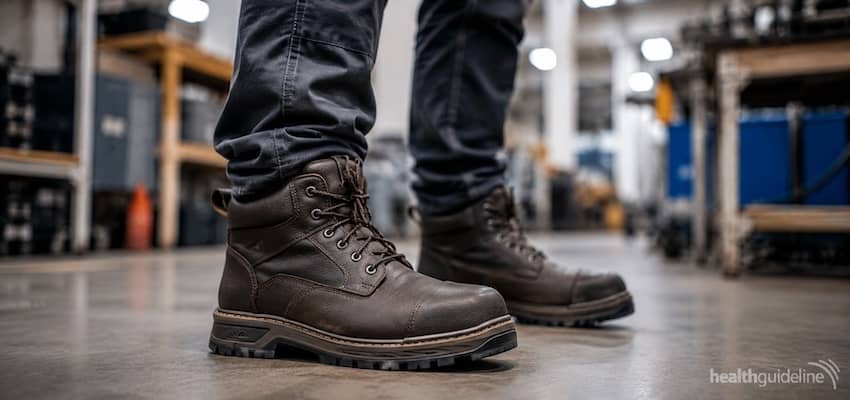
If you spend your shift on your feet, the right comfortable steel toe boots for standing all day are the difference between finishing strong and limping to your car. The steel cap keeps you compliant with jobsite safety rules; the cushioning, fit, and outsole are what actually keep your feet, knees, and lower back from aching by hour ten. This guide covers seven genuinely comfortable, currently-available steel toe boots — verified as real steel toe (ASTM F2413) models on Amazon — with honest pros, cons, and who each one isn’t for.
Best overall
Timberland PRO Pit Boss 6″
Anti-fatigue cushioning and a roomy toe box at a fair price.
Best for concrete
Thorogood American Heritage
A flat wedge sole that spreads your weight on hard floors.
Foot fatigue from standing is not a minor complaint. A European Agency for Safety and Health at Work (EU-OSHA) review found that roughly one in five workers spend most of their day standing, and nearly a third report lower-limb pain over the previous year. In one study of surgical staff who stand for long stretches, the foot was the second most common site of pain — reported by about 55% of workers — and footwear choice was directly linked to musculoskeletal problems in the hip, knee, and foot. In other words: the boot you pick matters.
JUMP TO A SECTION
How we chose
We prioritized the things that actually reduce fatigue during long, upright shifts, rather than the toughest-looking boot. Every pick below is a true steel toe rated to ASTM F2413 for impact and compression. Beyond that, we weighted underfoot cushioning and insole quality, arch and midfoot support, toe-box room (cramped toes are a top cause of all-day pain), boot weight, outsole traction on wet or oily floors, and break-in behavior. We favored models with a long sales history and a deep pool of long-term owner feedback, and we deliberately included budget, lightweight, wide-fit, waterproof, and women’s options because “comfortable” depends on your feet and your floor. Prices are listed as approximate bands — always check the live listing, since Amazon pricing and stock change constantly.
Top picks at a glance
| Boot | Best for | Standout comfort feature | Approx. price | Link |
|---|---|---|---|---|
| Timberland PRO Pit Boss 6" | Best overall / value | PRO 24/7 anti-fatigue suspension | ~$110 | Check price |
| Thorogood American Heritage 6" | Best for concrete / premium | Poron footbed + flat wedge sole | ~$210 | Check price |
| Skechers Work Trophus Letic | Best lightweight / easy break-in | Memory-foam insole, hiker weight | ~$80 | Check price |
| KEEN Utility Detroit 8" | Best for wide feet | Roomy asymmetrical toe box | ~$150 | Check price |
| KEEN Utility Detroit XT Waterproof | Best waterproof | KEEN.DRY breathable membrane | ~$170 | Check price |
| Caterpillar Second Shift | Best budget | Goodyear welt, resoleable build | ~$110 | Check price |
| Skechers Work Workshire Peril (women's) | Best for women | Women’s last + memory-foam gel insole | ~$80 | Check price |
01 / BEST OVERALL
Timberland PRO Pit Boss 6″ Steel Toe
The Timberland PRO Pit Boss is the best all-round steel toe boot for standing all day. Its PRO 24/7 Comfort Suspension cushions each step and supports the arch, the toe box is roomier than most work boots, and the price sits well below premium rivals — a rare mix of comfort, protection, and value that has kept it a best-seller for years.
Key features
- Steel safety toe meeting ASTM F2413 impact and compression standards
- PRO 24/7 Comfort Suspension — anti-fatigue cushioning plus arch support
- Roomier toe box and removable, antimicrobial open-cell footbed
- Slip-, oil-, and abrasion-resistant Timberland PRO rubber outsole; electrical-hazard rated
- Roughly 1.6 lb per boot (size 9) — mid-weight for a leather work boot
Pros
- Excellent comfort-for-the-money
- proven all-day cushioning
- generous toe room
- strong traction
- sold nearly everywhere so sizing help is easy.
Cons
- Needs a break-in period
- water-resistant rather than fully waterproof
- heavier than athletic-style safety footwear.
Best for: Warehouse, construction, and general labor on concrete who want the best balance of price, comfort, and durability. Not for: anyone who needs a truly waterproof boot or the lightest possible option.
02 / BEST FOR CONCRETE FLOORS
Thorogood American Heritage 6″ Steel Toe
Thorogood’s American Heritage pairs a shock-absorbing Poron footbed with a flat MAXwear wedge outsole that spreads your weight evenly across hard, flat surfaces — ideal for concrete. It’s made in the USA, Goodyear-welted so it can be resoled instead of replaced, and built to outlast cheaper boots by years, which helps justify the higher upfront price.
Key features
- Steel safety toe (ASTM F2413); electrical-hazard rated
- Flat MAXwear wedge outsole that disperses pressure on hard, flat floors
- Removable Poron comfort-cushion, shock-absorbing footbed
- Goodyear welt construction — resoleable, so the boot can last for years
- Full-grain leather, built in the USA
Pros
- Premium materials and build
- wedge sole excels on concrete and warehouse floors
- resoleable
- comfortable, replaceable footbed.
Cons
- Expensive up front
- a flat wedge grips loose gravel and ladder rungs less well than a lugged heel
- needs a break-in
- some find the standard width snug (a wide is offered).
Best for: People on flat, hard floors all day — warehouse, manufacturing, retail stockrooms — who want a boot that lasts. Not for: muddy outdoor sites, loose terrain, or a tight first-day budget.
03 / BEST LIGHTWEIGHT & EASIEST BREAK-IN
Skechers Work Trophus Letic Steel Toe
If stiff leather boots leave your feet aching, the Skechers Trophus is the easiest pick to live with. It’s light, hiker-styled, and cushioned with a memory-foam insole, so most wearers report little to no break-in. The trade-off is durability — softer materials won’t outlast heavy leather boots on rough sites — but for comfort out of the box, it’s hard to beat.
Key features
- Steel safety toe (ASTM F2413 I/75 C/75); electrical-hazard rated
- Memory-foam cushioned insole over a shock-absorbing midsole
- Lightweight athletic/hiker build with a breathable mesh-panel upper
- Oil- and slip-resistant outsole; roomy enough for wider feet per many owners
Pros
- Very light
- comfortable almost immediately with minimal break-in
- breathable
- budget-friendly.
Cons
- Less durable than full-leather boots
- memory foam can pack down over months
- not waterproof
- the softer sole is less supportive for very heavy-duty work.
Best for: Retail, light industrial, and anyone who hates stiff boots and wants sneaker-like comfort with a steel toe. Not for: heavy construction or wet, abrasive environments.
04 / BEST FOR WIDE FEET
KEEN Utility Detroit 8″ Steel Toe
KEEN builds the Detroit on a naturally wider last with an asymmetrical, left-and-right steel toe cap, giving your toes room to spread instead of pinch. The 8-inch shaft adds ankle support and a nylon shank steadies your midfoot — a strong choice for wide feet and long, upright shifts where cramped toes would otherwise wreck your day.
Key features
- Asymmetrical (left/right-specific) steel toe with a notably roomy toe box (ASTM F2413)
- KEEN’s wider footwear form; nylon shank for midfoot support and torsional stability
- Cushioned PU footbed; oil- and slip-resistant outsole; electrical-hazard rated
- 8-inch shaft for added ankle support (also sold in a 6″/low cut)
Pros
- Exceptionally roomy toe box for toe splay and wide feet
- supportive midfoot
- tall shaft steadies the ankle
- durable.
Cons
- Heavier than low-cut or athletic styles
- the tall shaft isn’t for everyone
- break-in needed
- pricier than budget picks.
Best for: Wide feet, anyone who wants room to spread their toes, and workers wanting extra ankle support. Also offered in a women’s version. Not for: narrow feet (it may feel loose) or those wanting a light boot.
05 / BEST WATERPROOF
KEEN Utility Detroit XT Waterproof Steel Toe
For wet sites, the KEEN Detroit XT adds a KEEN.DRY waterproof-breathable membrane to that same roomy steel toe, keeping feet dry without turning the boot into a sweatbox in mild weather. A TPU torsional plate and a cushioned EVA midsole handle uneven ground, though — like any waterproof boot — the membrane runs warmer in peak summer heat.
Key features
- KEEN.DRY waterproof, breathable membrane with a moisture-wicking lining
- Asymmetrical roomy steel toe (ASTM F2413); electrical-hazard rated
- KEEN.KEY-TECH FLEX TPU torsional plate plus dual-density EVA midsole and metatomical footbed
- Lugged, oil- and slip-resistant outsole for grip on slick or uneven surfaces
Pros
- Genuinely waterproof yet breathable
- roomy toe box
- good traction and underfoot support
- comfortable cushioning.
Cons
- Heavier
- warmer in hot weather
- costs more than non-waterproof boots.
Best for: Landscaping, outdoor sites, wash-down areas, and anyone whose feet get wet on the job. Not for: dry indoor work in a hot facility, where a breathable non-waterproof boot stays cooler.
06 / BEST BUDGET
Caterpillar Second Shift Steel Toe
The Caterpillar Second Shift is the classic entry-level steel toe: Goodyear-welted, full-grain leather, and cheap enough to replace without wincing. The stock insole is basic, so many wearers pair it with a cushioned aftermarket insole for all-day standing — an easy, inexpensive upgrade that transforms the comfort and gets you a durable boot for very little money.
Key features
- Steel safety toe (ASTM F2413); electrical-hazard rated
- Goodyear welt construction — durable and resoleable
- Full-grain leather upper; Climasphere breathable sock liner; steel shank for support
- Slip-resistant T3 rubber outsole
Pros
- Low price
- durable welted build
- classic looks
- widely stocked
- supportive steel shank.
Cons
- Stiff break-in
- the basic factory insole benefits from an upgrade for long shifts
- heavier
- not waterproof.
Best for: Budget-conscious buyers who want a durable, no-frills steel toe and don’t mind adding a cushioned insole. Not for: anyone wanting plush comfort straight out of the box with no tweaks.
07 / BEST FOR WOMEN
Skechers Work Workshire Peril Steel Toe (Women’s)
Built on a women’s-specific last rather than a shrunken men’s mould, the Skechers Workshire Peril fits narrower heels and smaller feet more naturally. A memory-foam, gel-infused insole cushions long shifts and the price stays low. For a roomier women’s option with more toe room, KEEN’s Detroit is the wider alternative worth trying.
Key features
- Women’s-specific fit; leather upper
- Steel safety toe (ASTM F2413 I/75 C/75); electrical-hazard rated
- Memory-foam, gel-infused cushioned insole
- Slip-resistant outsole tested for wet and dry conditions
Pros
- Proper women’s last for a better fit
- cushioned memory-foam insole
- affordable
- good traction.
Cons
- Memory foam packs down over time
- not waterproof
- lighter-duty than heavy leather boots.
Best for: Women in retail, warehouse, and light industrial roles who want a comfortable, affordable steel toe. Not for: heavy-duty outdoor work or those needing a waterproof boot (size up to a KEEN or a waterproof model instead).
What to look for when buying steel toe boots for standing all day
The safety cap is only one part of the picture. These are the factors that decide whether a boot is comfortable through a long, upright shift.
Steel toe vs composite toe
Both steel and composite toes must pass the same safety test — the ASTM F2413 standard for impact and compression — so neither is “safer.” Steel is thinner and usually cheaper; composite is lighter and doesn’t transfer heat or cold, which some standing workers prefer in very hot or cold settings. Some jobs specify a particular standard set by the American National Standards Institute (ANSI), so check your employer’s requirements first. This guide focuses on steel toe models specifically.
Cushioning and the insole
Underfoot cushioning is the single biggest comfort lever for standing. Anti-fatigue systems (like Timberland PRO’s suspension footbed) and shock-absorbing wedge soles reduce the pounding your feet take on hard floors. Many budget boots ship with a thin factory insole — swapping in a cushioned or arch-supporting insole is the cheapest, most effective upgrade you can make. See our guide to the best plantar fasciitis insoles if your arches ache by the end of the day.
Fit and toe-box room
Cramped toes are one of the most common causes of all-day foot pain. Look for a roomy toe box (KEEN’s asymmetrical cap is a standout) and a secure heel that doesn’t slip. Try boots on late in the day, when your feet are at their largest, wearing the same socks you’ll work in.
Weight
Every ounce is lifted thousands of times a shift. Lighter boots (athletic or hiker styles) fatigue you less over a day of walking and standing; heavier leather boots trade some of that for durability and support. Match the weight to how much you move.
Traction and slip resistance
Slip-resistant outsoles with siping and an oil-resistant compound keep you upright on wet, greasy, or polished floors — and preventing a slip also prevents the sudden strains that come with catching yourself. If you work on slick surfaces, prioritize this. For non-safety-toe jobs, our roundup of slip-resistant work shoes covers more options.
Waterproofing and breathability
Waterproof membranes keep feet dry in wet conditions but run warmer, so only pay for waterproofing if your feet actually get wet. For dry indoor work, a breathable boot keeps feet cooler and drier through sweat. Pairing either with good moisture-wicking socks matters too — see the best socks for work boots.
Break-in
Full-grain leather boots (CAT, Thorogood) need a gradual break-in — wear them a few hours at a time before a full shift. Softer athletic styles (Skechers) are comfortable almost immediately. Plan for this so a stiff first week doesn’t put you off an otherwise great boot.
A note on foot pain: This article is for general information and product guidance, not medical advice. Good boots help, but persistent foot, heel, or leg pain can point to conditions like plantar fasciitis that footwear alone won’t fix. If pain continues despite well-fitted boots, see a qualified healthcare professional or podiatrist. Our guide to the best shoes for heel pain may also help.
Frequently asked questions
Are steel toe boots comfortable for standing all day?
Yes — modern steel toe boots with anti-fatigue cushioning, a supportive footbed, and a roomy toe box can be comfortable through a 10–12 hour shift. Comfort depends far more on fit, insole quality, and outsole design than on the steel cap itself. A well-fitted boot plus a cushioned insole makes the biggest difference.
Is a steel toe or composite toe better for standing all day?
Both meet the same ASTM F2413 safety rating, so neither is “safer.” Composite toes are lighter and don’t conduct heat or cold, which some standing workers prefer. Steel toes are thinner and often cheaper. For pure all-day comfort, weight matters — but fit and cushioning matter more than the toe material.
How do I stop my feet from hurting in steel toe boots?
Start with the right fit and break the boots in gradually. Swap a thin factory insole for a cushioned or arch-supporting one, wear moisture-wicking work socks, and lace for a secure midfoot. If pain persists despite good footwear, see a podiatrist — ongoing foot pain can signal issues such as plantar fasciitis.
How should steel toe boots fit?
Your heel should stay locked with minimal slip, and your longest toe should sit about a thumb’s width from the steel cap so it never touches on impact. Try boots on late in the day with your work socks. Too tight around the cap bruises toes; too loose causes blisters and fatigue.
Are steel toe boots bad for your feet?
No — a properly fitted steel toe boot won’t harm healthy feet, and the cap protects against crushing injuries. Problems come from boots that are too small, too stiff, or unsupportive, which can bruise toenails or aggravate existing conditions. Choose the correct size and width, and add cushioning if the stock insole feels thin.
How long do steel toe work boots last?
Most steel toe boots last roughly 6–12 months of daily, heavy use. Goodyear-welted boots like the Thorogood or Caterpillar can be resoled and last far longer. Replace them once the tread wears smooth, the midsole stops rebounding, or the safety cap is ever exposed or damaged.
Do I need waterproof steel toe boots?
Only if your feet actually get wet. Waterproof membranes add cost and run warmer, so skip them for dry indoor work. If you’re outdoors, in wash-down areas, or around wet floors, a waterproof boot such as the KEEN Detroit XT keeps feet dry and comfortable. Otherwise, a breathable non-waterproof boot stays cooler.