Best Plantar Fasciitis Insoles: 6 Top Picks for 2026
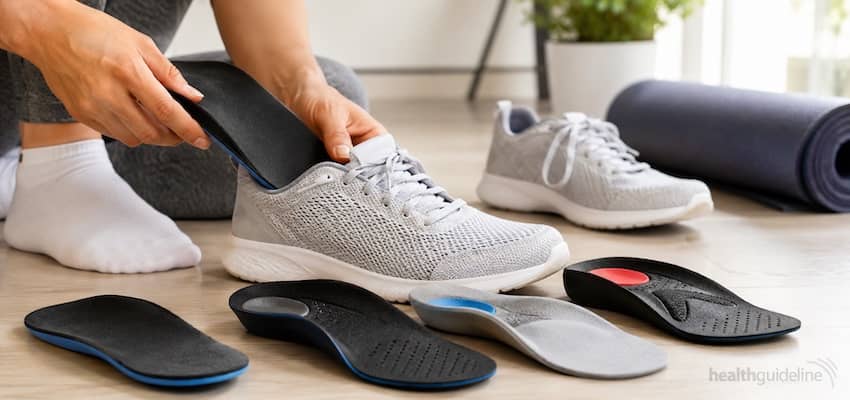
If your first steps in the morning feel like a nail in the heel, the right insole can take real pressure off the sore tissue with every step. The catch is that “best” depends on your arch and your shoes — a firm, high-arch shell that rescues one person can feel like a brick to another. Below are six insoles worth your money in 2026, chosen with podiatrist guidance, each with an honest look at who it suits and who should skip it.
Quick Picks
Best overall
PowerStep Pinnacle
The insole most podiatrists start with; firm arch support with a forgiving cushioned top cover.
Best for firm, lasting support
Tread Labs Pace
Extra-firm shell, four arch heights, replaceable top covers.
Best budget pick
Dr. Scholl’s Plantar Fasciitis Relief
Affordable, widely available, good for mild-to-moderate pain.
Best if your insole doesn’t come out
Samurai Insoles Ninjas
A slim 3/4-length support that sits on top of your existing insole.
JUMP TO A SECTION
How we chose
We reviewed current recommendations from podiatrists and independent testing teams at Forbes, CNN Underscored and NBC Select, then cross-checked every pick against what foot specialists agree actually matters for plantar fasciitis: firm arch support, a deep heel cup, and cushioning that doesn’t collapse underfoot. We prioritized insoles with a real track record for heel and arch pain, deliberately spanned budgets and arch types, and confirmed each product is currently sold on Amazon before listing it. Because prices and stock change constantly, we link to the live listing rather than quoting a fixed price.
Top picks at a glance
| Insole | Best for | Support feel | Length / fit | Approx. price* |
|---|---|---|---|---|
| PowerStep Pinnacle | Most people / overall | Firm shell + cushioned top | Full-length, by shoe size | ~$45–50 |
| Tread Labs Pace | Chronic pain, firm control | Extra firm | Full-length, 4 arch heights | ~$50–75 |
| Superfeet All-Purpose High Arch (Green) | High arches, boots | Firm, structured | Full-length, by size band | ~$50–55 |
| Dr. Scholl's Plantar Fasciitis Relief | Budget, mild-to-moderate | Cushioned, softer | Full-length, trim-to-fit | ~$15–20 |
| Samurai Insoles Ninjas | Non-removable insoles | Firm, no cushioning | 3/4-length, sits on top | ~$30 |
| WALK·HERO Arch Support | Value, all-day standing | Cushioned + arch support | Full-length, by size band | ~$20–30 |
01 / BEST OVERALL
PowerStep Pinnacle
The PowerStep Pinnacle is the insole most podiatrists reach for first. It pairs a semi-rigid arch shell and a deep, stabilizing heel cup with a dual-layer foam top cover, so you get firm support without a harsh feel. That balance suits most people dealing with plantar fasciitis, overpronation, or flat-to-neutral arches.
Key features
- Semi-rigid arch support shell
- dual-layer cushioning
- deep heel cup for stability
- made in the USA
- HSA/FSA eligible.
Pros
- Widely described as the “#1 podiatrist-recommended” orthotic with a huge review history
- firm yet forgiving on acute flares
- sized by shoe size so there’s no trimming
- backed by a money-back guarantee.
Cons
- Needs a removable factory insole to fit properly
- the arch can feel firm for the first few days
- it’s a prefab, not a custom orthotic.
Best for: Anyone who wants one reliable all-rounder for work, walking, and athletic shoes.
Not for: Shoes with glued-in insoles, or people who want a plush, pillowy feel.
02 / BEST FOR FIRM, LASTING SUPPORT
Tread Labs Pace
Tread Labs’ Pace is our pick for stubborn, chronic pain that needs serious arch control. Its extra-firm polypropylene shell comes in four arch heights, and the foam top cover snaps off to replace when it wears out — so the supportive part can outlast the cushioning by years. It’s a favorite for people who’ve outgrown softer inserts.
Key features
- Extra-firm arch shell
- four arch heights (low to extra high)
- replaceable top covers
- deep heel cup
- odor-resistant
- long guarantee on the shell.
Pros
- Among the firmest OTC support you can buy
- choosing an exact arch height gives a better match than one-size shells
- replaceable covers make it economical over time.
Cons
- The firm feel can be too much during an acute flare and needs a break-in
- costs more than drugstore options
- two-part design is slightly more involved.
Best for: High or specific arch profiles, chronic overpronation, and heavy daily use.
Not for: Anyone whose feet prefer softness, or who wants the cheapest possible fix.
03 / BEST FOR HIGH ARCHES
Superfeet All-Purpose Support High Arch (Green)
Superfeet’s high-arch Green insole is built around a firm structural cap and a deep heel cup rather than plush padding. That structure holds its shape in work boots and on long days on hard floors, which makes it a strong match for high arches and for anyone who prefers stability over softness underfoot.
Key features
- Firm stabilizer cap
- high-volume arch
- deep heel cup
- durable build that resists compression.
Pros
- Very durable and supportive
- deep heel cup aids stability
- holds up well in boots and multi-day wear.
Cons
- The firm cap can feel “too hard” during an acute flare
- minimal cushioning
- the high volume needs roomier shoes with a removable insole.
Best for: High arches, work boots and hiking, and people who want firm structure.
Not for: Low-volume dress shoes or anyone chasing a soft, cushioned ride.
04 / BEST BUDGET PICK
Dr. Scholl’s Plantar Fasciitis Relief
Dr. Scholl’s plantar fasciitis insole is the easy, affordable place to start. It uses shock-absorbing foam and a cushioned, reinforced heel to spread pressure across the foot. It’s best for mild-to-moderate pain and sensitive feet, and you can find it in most pharmacies for well under a specialty price.
Key features
- Shock-absorbing foam
- cushioned/reinforced heel
- designed to distribute foot pressure
- trim-to-fit and sized versions available.
Pros
- Inexpensive and easy to find
- low-risk way to see whether added support helps
- the brand markets it as clinically shown to relieve plantar fasciitis pain.
Cons
- Softer and less structured than the picks above
- may not be enough for severe pain or strong overpronation
- cushioning can pack down over time.
Best for: First-timers, mild-to-moderate pain, and tight budgets.
Not for: Chronic, severe cases that need firm mechanical control.
05 / BEST IF YOUR INSOLE DOESN’T COME OUT
Samurai Insoles Ninjas
Samurai Insoles Ninjas solve a common problem: shoes whose insoles don’t come out. This firm 3/4-length arch support slides under your existing insole instead of replacing it, adding structure without bulk. It’s all support and no cushioning by design, so it targets overpronation rather than softening each step.
Key features
- Firm 3/4-length polypropylene arch support
- podiatrist-designed and orthotic-lab made in the USA
- sits beneath your shoe’s factory insole.
Pros
- Works in shoes with glued-in insoles
- durable plastic that won’t get soggy or smelly
- firm, springy arch support with no added bulk.
Cons
- No cushioning at all — feels hard if placed directly against the foot
- 3/4 length skips the heel and forefoot
- won’t fit every shoe.
Best for: Non-removable insoles and people who specifically want firm arch support, not softness.
Not for: Anyone expecting a plush, cushioned insole.
06 / BEST VALUE FOR ALL-DAY STANDING
WALK·HERO Arch Support Insoles
WALK·HERO is the value pick for people on their feet all day. The full-length foam adds arch support, a heel cup, and shock absorption at a drugstore-friendly price, with heavy-duty versions rated for higher body weight. It’s a sensible entry point for flat or low arches and long shifts on hard floors.
Key features
- Full-length cushioned insole with built-in arch support and heel cup
- shock absorption
- heavy-duty options rated for higher body weight
- fits work boots to sneakers.
Pros
- Affordable
- popular Amazon best-seller with a large review base
- full-length cushioning plus support
- heavier-duty variants available.
Cons
- Not a clinical/podiatry brand pedigree
- support is less validated than the specialist picks
- foam can compress over time
- check sizing carefully.
Best for: Nurses, warehouse, restaurant and retail workers; flat or low arches; value shoppers.
Not for: Severe cases needing the firmest possible arch control.
What to look for in plantar fasciitis insoles
Match your arch type
The single most important fit factor is your arch. Low or flat arches usually do best with firm support that limits inward roll; high arches often need a taller arch profile and extra cushioning at the heel. If you’re not sure, a specialty running store or podiatrist can assess your arch, and several brands here (Tread Labs, Superfeet) offer more than one arch height.
Firm arch support is the working part
Cushioning feels nice, but it’s the firm arch support that changes how much load lands on the plantar fascia with each step. That’s why the specialist picks lead with a structured shell. A very soft insole can be comfortable and still do little for the underlying strain.
A deep heel cup
Foot specialists consistently point to a deep heel cup as a key feature. It cradles the heel, cushions heel strike, and helps keep the foot stable — which reduces excess motion that aggravates the fascia. Every specialist pick above has one.
Cushioning vs. firmness
During an acute flare, an all-firm shell can feel punishing, so a firm insole with a cushioned top cover (like the PowerStep Pinnacle) is often the easier place to start. Once pain settles, some people move to firmer, more corrective support. There’s no universal “right” — it depends on your feet and your stage.
Length and whether your insole comes out
Full-length insoles replace your shoe’s factory insole, so they need one that lifts out. If your shoe has a glued-in insole, a 3/4-length option like Samurai Insoles sits on top instead. Check this before you buy — it’s the most common reason an insole “doesn’t fit.”
Materials, durability and break-in
Polypropylene shells hold their shape far longer than soft foam, and some insoles let you replace just the worn top cover. Expect a short break-in period with firmer insoles: start with a few hours a day and build up rather than wearing them all day immediately.
About plantar fasciitis (and how insoles fit in)
Plantar fasciitis is irritation and inflammation of the plantar fascia, the band of tissue that supports the arch and connects the heel to the front of the foot; it’s the leading cause of heel pain and affects roughly 1 in 10 people at some point, according to the Cleveland Clinic. The classic sign, as the Mayo Clinic describes, is sharp heel pain with your first steps in the morning or after sitting, which often eases as you move and returns after long periods on your feet.
Insoles help because a supportive insert reduces the tension and repeated micro-stress placed on the fascia with each step, which is why the American Academy of Orthopaedic Surgeons lists pre-made or custom orthotics among standard conservative measures — alongside calf and foot stretching, supportive shoes, and rest. Insoles are one piece of the picture, not a cure on their own, and most cases improve with simple, non-surgical care given time. If your pain is severe, follows an injury, or hasn’t improved after a few weeks of consistent self-care, see a doctor or podiatrist, who can advise whether over-the-counter or custom orthotics are right for you and rule out other causes of heel pain.
Frequently asked questions
Do insoles actually help plantar fasciitis?
For many people, yes — as part of a broader plan. Supportive insoles reduce the strain placed on the plantar fascia with each step, which is why orthotics are a standard conservative measure recommended by orthopaedic and podiatry sources. They work best combined with calf and foot stretching, supportive shoes, and rest, rather than on their own.
Should insoles for plantar fasciitis be firm or cushioned?
Both matter, but firm arch support does the real work of offloading the fascia, while cushioning adds comfort. During a painful flare, a firm insole with a cushioned top cover is often the easiest starting point. Very soft, unstructured insoles feel pleasant but usually do less for the underlying strain.
Over-the-counter or custom orthotics — which do I need?
Most people can start with a quality over-the-counter insole, which specialists often suggest as a first step for mild-to-moderate cases. Custom orthotics are molded to your foot and can help complex or stubborn cases, but they cost more. If OTC options don’t help after a fair trial, ask a podiatrist whether custom is worth it for you.
How long do plantar fasciitis insoles take to work?
Give them a fair trial. Some people feel relief within days, but it’s common to need a few weeks of consistent daily wear before you notice a clear difference. Firmer insoles also need a break-in period — start with a few hours a day and build up gradually to avoid new aches.
Can I use plantar fasciitis insoles in any shoe?
Not always. Full-length insoles need a shoe whose factory insole lifts out, so they fit poorly in shoes with glued-in liners. For those, a 3/4-length insole that sits on top is a better option. Support also works best in a stable, closed shoe — flip-flops and unsupportive flats undercut the benefit.
How often should I replace them?
It depends on the material and your mileage. Foam insoles that flatten out should be replaced once the cushioning packs down, often within several months to a year of heavy use. Firm polypropylene shells last much longer, and some brands let you swap only the worn top cover instead of the whole insole.
Medical disclaimer: This article is for general information only and is not medical advice. Talk to a qualified healthcare professional about your specific situation.