Best Running Shoes for Supination: 7 Top Neutral Picks for Underpronators (2026)
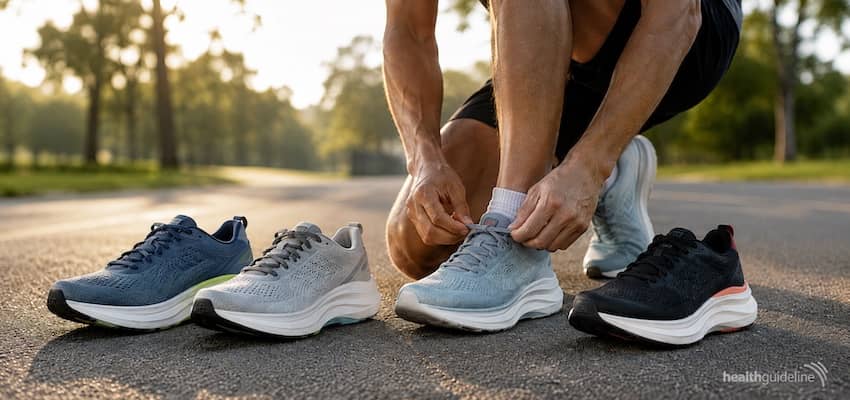
The ASICS Gel-Nimbus 28 is our best overall running shoe for supination — a cushioned, neutral trainer with a broad, stable platform that absorbs the outer-edge impact underpronators feel most.
Also great: the Brooks Ghost 18 for everyday value, and the New Balance Fresh Foam X 1080v15 if you have wide feet. If you supinate, the golden rule is simple: choose a neutral, cushioned shoe — not a stability or motion-control shoe.
If your foot rolls outward as you run and your shoes wear down along the outer edge, you supinate — also called underpronation. Supinators don’t need the “support” features built into stability shoes; those actively push an outward-rolling foot further out. What you need is cushioning to soak up impact and a flexible, neutral platform. Below are seven current-generation shoes that do that well, with honest pros, cons and who each pair suits.
JUMP TO A SECTION
How we chose these shoes
We focused on neutral, well-cushioned trainers — the category podiatric sources consistently recommend for underpronation — and deliberately excluded stability and motion-control shoes, which over-correct a supinating foot. We prioritized impact protection under both heel and forefoot, a stable landing platform, flexibility for natural toe-off, and the availability of multiple widths for runners whose feet slide toward the outer edge. We cross-referenced current independent shoe testing (The Wired Runner, RunRepeat, Live Science, RunRepeat’s lab data) with clinical guidance from the Cleveland Clinic on high-arched (pes cavus) feet. Every model below is a current-generation shoe as of August 2026; prices are approximate and change often, so we link to live listings rather than quoting a fixed price.
Top picks at a glance
| Shoe | Best for | Cushioning / ride | Approx. price | Widths |
|---|---|---|---|---|
| ASICS Gel-Nimbus 28 | Best overall | Max cushion, soft but planted | ~$170 | Standard, wide |
| Brooks Ghost 18 | Everyday value | Balanced, smooth daily ride | ~$150 | Narrow, standard, wide |
| HOKA Clifton 10 | Lightweight cushioning | Plush yet light and quick | ~$145–150 | Standard, wide |
| New Balance Fresh Foam X 1080v15 | Wide feet / roomy fit | Soft, plush, accommodating | ~$165 | Standard, wide, x-wide |
| Brooks Glycerin 23 | Premium plush | Deep, soft, durable outsole | ~$175 | Standard, wide |
| HOKA Bondi 9 | Maximum cushioning | Softest, most protective | ~$170 | Standard, wide |
| Saucony Triumph 24 | Energetic long-run alt | Plush with lively rebound | ~$160 | Standard |
01 / BEST OVERALL
ASICS Gel-Nimbus 28
The Gel-Nimbus 28 is the shoe we’d point most supinators to first: a maximally cushioned, fully neutral trainer that soaks up impact without adding the motion-control features underpronators don’t want. Its FF BLAST PLUS foam and a rearfoot PureGEL unit give a soft, protected landing, while a notably broad platform keeps all that foam feeling planted rather than tippy — the balance many high-cushion shoes get wrong.
Key features
- FF BLAST PLUS midsole + PureGEL
- ~8 mm heel-to-toe drop
- tall stack with a broad base
- engineered knit upper.
Pros
- Excellent shock absorption on the outer edge
- stable for a max-cushion shoe
- roughly 7% lighter than the previous version
- comes in a wide.
Cons
- Premium price
- the deep, soft ride isn’t built for fast tempo work.
Best for: Daily miles and longer runs where impact protection matters most.
Who it isn’t for: Runners who want a firm, snappy, race-day feel.
02 / BEST EVERYDAY VALUE
Brooks Ghost 18
The Ghost is Brooks’ long-running neutral daily trainer, and the 18th version leans softer than Ghosts of old thanks to a nitrogen-infused midsole. It’s the “just works” option: smooth heel-to-toe transitions, no gimmicks, broad availability, and one of the widest fit ranges here (including narrow and wide). For a supinator who wants a dependable everyday shoe without paying flagship prices, this is the sensible pick.
Key features
- Nitrogen-infused DNA cushioning
- smooth segmented transition
- engineered mesh upper
- multiple widths.
Pros
- Comfortable and versatile
- softer than previous Ghosts
- narrow/standard/wide options
- strong value.
Cons
- Not as deeply cushioned as the Nimbus or Bondi
- ride is pleasant rather than exciting.
Best for: Everyday training and runners who want one reliable do-everything shoe.
Who it isn’t for: Those chasing maximum plushness for very long runs.
03 / BEST LIGHTWEIGHT CUSHIONING
HOKA Clifton 10
If big, soft shoes feel clumsy to you, the Clifton is HOKA’s answer: a genuinely cushioned trainer that stays light and moves cleanly. At roughly 8.6–9.7 oz it’s noticeably nimbler than most max-cushion shoes, with an 8 mm drop and a compression-molded foam that’s plush but not mushy. Fit runs on the narrow side, so order the wide version if your foot needs room. (The newer Clifton 11 is an upper-only refresh on the same midsole, so the ride is essentially identical.)
Key features
- Compression-molded EVA midsole
- early-stage rocker geometry
- 8 mm drop
- lightweight build.
Pros
- Cushioned yet light and versatile across paces
- good value
- wide option available.
Cons
- Standard width is narrow
- less overall foam than the Bondi for very long efforts.
Best for: Supinators who want cushioning without the weight, from recovery jogs to moderate tempo.
Who it isn’t for: Wide-footed runners who don’t size up; fans of a maximal, sink-in ride.
04 / BEST FOR WIDE FEET
New Balance Fresh Foam X 1080v15
Supinators often find their foot sliding toward the outer edge of a too-narrow shoe, which makes fit as important as cushioning. The 1080v15 is the pick here because New Balance offers it in standard, wide and extra-wide, wrapped around a soft, plush Fresh Foam X midsole. It’s a comfortable, accommodating neutral trainer that suits higher-volume feet and longer easy runs.
Key features
- Fresh Foam X midsole
- roomy accommodating upper
- multiple width options
- everyday-trainer geometry.
Pros
- Excellent width range
- soft, forgiving ride
- comfortable for long durations.
Cons
- Softness can feel less precise at faster paces
- premium price.
Best for: Wide or high-volume feet, and anyone prioritizing a roomy, plush fit.
Who it isn’t for: Runners who prefer a firm, locked-down, low-volume fit.
05 / BEST PREMIUM PLUSH
Brooks Glycerin 23
The Glycerin is Brooks’ flagship neutral trainer — think of it as the Ghost’s more luxurious sibling. The 23rd version uses a nitrogen-infused DNA TUNED midsole for a deep, soft ride, but it’s more stable and more durable underfoot than some very soft max-cushion shoes, with generous outsole rubber coverage. If you want plush cushioning with a bit more control, this is a strong choice.
Key features
- Nitrogen-infused DNA TUNED cushioning
- broad neutral platform
- heavy outsole rubber coverage
- secure upper.
Pros
- Soft yet stable and controlled
- durable
- comfortable for daily mileage and long runs.
Cons
- The most expensive shoe here
- heavier than lightweight options like the Clifton.
Best for: Runners who want premium plushness without a wobbly, over-soft feel.
Who it isn’t for: Budget shoppers and minimal-shoe fans.
06 / BEST MAXIMUM CUSHIONING
HOKA Bondi 9
When you want the most protection underfoot — for long runs, time on your feet, recovery days or hard pavement — the Bondi is HOKA’s softest, plushest, most cushioned neutral trainer. It has a wider, very stable base and a memory-foam heel collar, at the cost of extra weight (~10.5 oz) and a lower 5 mm drop. It’s a superb impact-absorber, which is exactly what a supinating foot benefits from over distance.
Key features
- Maximum-cushion midsole
- wide stable platform
- memory-foam heel
- 5 mm drop.
Pros
- Outstanding cushioning and impact protection
- smooth, planted ride
- great for long/recovery efforts and standing.
Cons
- Heaviest option here
- not quick
- snug toe box for some.
Best for: Long-distance comfort, recovery runs, and pavement-heavy training.
Who it isn’t for: Runners who want a light, responsive, fast-feeling shoe.
07 / BEST ENERGETIC LONG-RUN ALTERNATIVE
Saucony Triumph 24
Rounding out the list with a fifth brand, the Triumph is Saucony’s premium neutral, max-cushion trainer. It pairs a plush, protective stack with a livelier, more energetic rebound than most shoes in this soft category, which keeps long runs from feeling flat. If the ASICS and HOKA options feel too placid for you but you still want plenty of cushioning, the Triumph is worth a look.
Key features
- Premium max-cushion neutral platform
- energetic midsole foam
- secure everyday-trainer upper.
Pros
- Plush but with more bounce and life
- comfortable for long efforts
- a genuinely different feel from the plusher-but-calmer picks.
Cons
- Premium price
- primarily standard width
- a touch firmer than the very softest options.
Best for: Supinators who want cushioning with more energy return on long runs.
Who it isn’t for: Those who need wide sizing or want the softest possible ride.
What to look for in running shoes for supination
Neutral cushioning — not stability or motion control
This is the single most important point, and the most common mistake. Stability and motion-control shoes are built to slow a foot that rolls inward (overpronation). A supinating foot already rolls outward, so a firm medial post pushes it even further to the outside and can make the shoe feel harsh and awkward. Look for shoes explicitly labeled “neutral.”
Ample cushioning
Supinators — especially those with high, rigid arches — absorb less shock naturally, so the shoe has to do more of that work. Prioritize generous, comfortable cushioning under both the heel and the forefoot. That said, softest isn’t automatically best: a shoe that compresses too much or tilts under load can feel less stable, so a broad platform matters as much as raw softness.
Flexibility
Rigid shoes restrict an already-stiff foot. A flexible forefoot that lets the foot bend naturally at toe-off tends to suit underpronators better than a stiff, controlling build.
Fit and toe box
A well-fitting shoe for a supinator is not a tight one. Your foot tends to load the outer edge, so a secure midfoot with enough room in the toe box helps. If your standard size feels narrow, order a wide — several picks above offer one. Many runners find a half-size up works well for running shoes generally.
About supination (underpronation)
Supination, or underpronation, is the outward-rolling motion of the foot during walking or running: you tend to land and push off on the outer edge rather than rolling inward enough to distribute impact. A small amount of outward roll is normal — it becomes a concern mainly when your stride repeatedly loads the lateral edge and your body absorbs impact through a smaller contact area.
It’s the opposite of overpronation. The Cleveland Clinic describes the distinction plainly: with overpronation the foot rolls inward, while with underpronation (supination) the foot rolls outward. Supination is frequently linked to high arches (pes cavus). The Cleveland Clinic notes that walking on high-arched feet causes supination, putting more pressure on the ball, heel and outer toes — the less flexible parts of the foot. High-arched feet also tend to be more rigid, so they absorb shock less effectively, which is exactly why cushioning helps.
If you’re not sure whether you supinate, two quick at-home checks help: flip over your most-worn pair of shoes and look for wear concentrated along the outer edge (heel and little-toe side), and try the “wet test” — wet your foot, step on paper or concrete, and look at the print. A very high arch that leaves little or no middle band is common among supinators. These are rough indicators, not a diagnosis.
No running shoe “cures” supination — the right shoe manages impact and helps you run comfortably, but it doesn’t change your underlying mechanics. For persistent issues, that’s where a professional comes in.
When to see a professional
Supination itself isn’t necessarily a problem, especially if you’re pain-free. But see a physical therapist, podiatrist or sports-medicine professional if you have any of the following, because these point to more than a shoe choice:
- Recurring lateral (outer) ankle sprains or ongoing ankle instability.
- Pain along the outer edge of the foot, or repeated metatarsal stress fractures.
- Persistent heel or ball-of-foot pain that hasn’t eased after several weeks in a well-cushioned neutral shoe.
- Noticeably uneven, rapid shoe wear alongside pain.
Frequently asked questions
What are the best running shoes for supination?
The best running shoes for supinators are cushioned, flexible, neutral shoes that absorb the impact a high-arched, outward-rolling foot can’t. Strong current picks include the ASICS Gel-Nimbus 28, Brooks Ghost 18 and Glycerin 23, HOKA Clifton 10 and Bondi 9, and the New Balance Fresh Foam X 1080v15. Avoid stability and motion-control models.
Do supinators need stability or motion-control shoes?
No — and this is the most common error. Stability and motion-control shoes are designed to correct overpronation (an inward roll). A supinating foot already rolls outward, so those features push it further out and can make the ride feel harsh. Underpronators should choose neutral, cushioned shoes instead.
Do supinators need arch support or insoles?
Many supinators do well with added cushioning rather than aggressive arch support. A high, rigid arch doesn’t collapse, so a tall medial arch insert can actually increase outer-edge pressure. A cushioned, neutral insole can add shock absorption without forcing the foot inward. If you have significant symptoms, ask a podiatrist whether an over-the-counter or custom orthotic makes sense for you. See our guide to insoles for high arches for more.
What’s the difference between supination and overpronation?
They’re opposite motions. Overpronation is when the foot rolls too far inward after landing; supination (underpronation) is when it doesn’t roll inward enough and stays on the outer edge. Overpronation is more common and is often linked to flat feet; supination is less common and is often linked to high, rigid arches.
Can the wrong shoes make supination worse?
The wrong shoes won’t necessarily worsen your mechanics, but they can increase your injury risk and discomfort. Rigid or insufficiently cushioned shoes leave a supinating foot to absorb more shock, and motion-control shoes push an outward-rolling foot further out. A cushioned, flexible neutral shoe reduces that risk.
How do I know if I supinate?
Look for wear concentrated on the outer edge of your shoe soles (heel and little-toe side), a tendency to roll your ankle on uneven ground, and high arches. The wet-footprint test — a print with little or no middle band — is another clue. These are indicators, not a formal diagnosis; a gait assessment confirms it.
If high arches or arch discomfort are part of your picture, you may also find our guide to arch pain on the foot helpful.
Medical disclaimer: This article is for general information only and is not medical advice. Talk to a qualified healthcare professional about your specific situation.