Extensor Tendonitis Foot Brace: The 5 Best Options for Top-of-Foot Pain (2026)
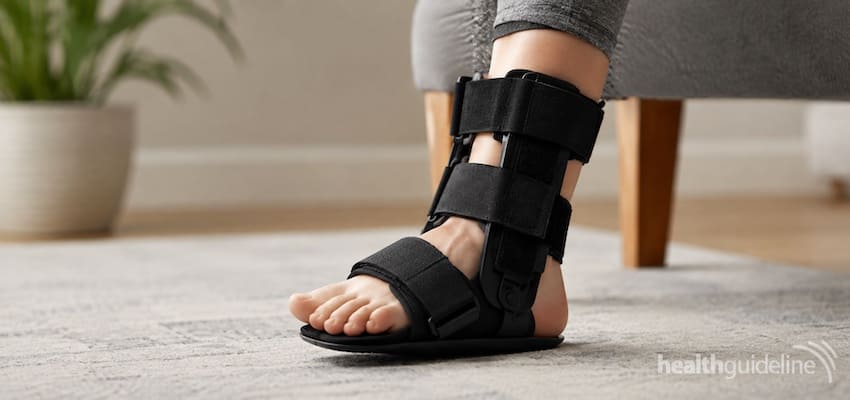
Extensor tendonitis is inflammation of the tendons that run across the top of your foot, most often caused by tight shoelaces, overuse, or high arches. A brace isn’t a cure — the fastest relief is usually looser, skip-pattern lacing plus rest, ice, and supportive shoes. A light compression sleeve can ease swelling, but avoid anything that presses hard on the sore tendon, which can make it worse.
Top picks
Best overall
Lock Laces No-Tie Elastic Shoelaces
— let you set gentle, even tension and skip the exact spot that hurts, fixing the most common cause of top-of-foot pain.
Best light compression
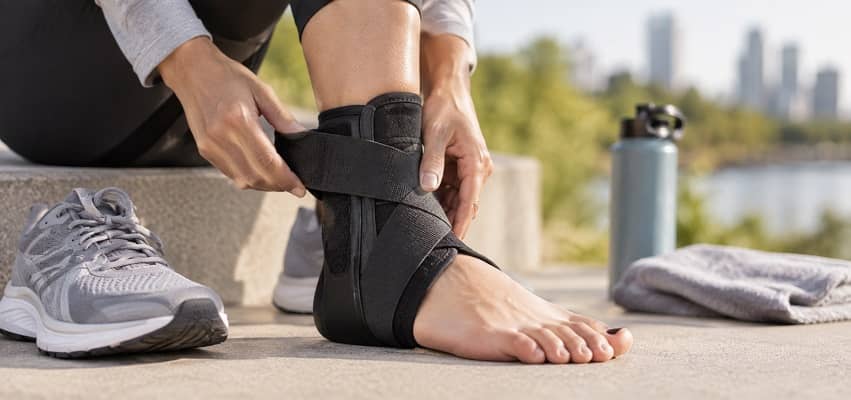
Crucial Compression Ankle Brace
thin, breathable support for swelling and warmth.
But try looser lacing first — orthopedic guidance says most cases settle with simple conservative care.
If you searched for an “extensor tendonitis foot brace,” you probably have a nagging ache across the top of your foot that flares up when you walk or run. Here’s the honest version most product pages skip: for this specific injury, the single most effective step isn’t strapping on a brace — it’s taking pressure off the tendon. Below are the five products that genuinely help, ranked for how much difference they make, plus exactly how to use lacing, ice, and footwear to recover faster.
What podiatrists say to try first (before any brace)
Extensor tendonitis is one of the most fixable foot problems there is, and the most common solution is almost embarrassingly simple: loosen your shoelaces. Your extensor tendons sit right under the skin on top of the foot with very little padding, so laces tied too tightly press straight down on them. A quick test used by podiatrists: you should be able to slide one finger under the laces at the top of your foot. If you can’t, they’re too tight.
Even better than just loosening is to change the pattern. With “skip” or “window” lacing, you skip the one or two eyelets directly over the sore spot, creating a pressure-free zone while keeping the rest of the shoe secure. Straight-across (parallel) lacing spreads pressure more evenly and makes the shoe feel wider on top without feeling loose. These simple changes often produce immediate partial relief, and for many people they’re all that’s needed.
How we chose
We prioritized products that address the real causes of top-of-foot tendon pain — lace pressure, swelling, inflammation, and foot mechanics — rather than whatever is easiest to link. Every pick is a real product currently listed on Amazon (US) at the time of writing, spanning the fix (lacing), gentle support (sleeves), symptom relief (hot/cold), and biomechanics (arch support). We deliberately favored light, breathable support over rigid, tight braces, because compressing an already-irritated dorsal tendon can worsen it — a point we cross-checked against podiatric guidance and the American Academy of Orthopaedic Surgeons.
Extensor tendonitis products at a glance
| Product | Best for | Why it helps | Approx. price* |
|---|---|---|---|
| Lock Laces No-Tie Elastic Shoelaces | The most common cause (lace pressure) | Even, gentle tension; skip the sore spot | ~$10 (3 pairs) |
| Crucial Compression Ankle Brace | Light support & swelling | Thin, breathable graduated compression | ~$15 |
| Sleeve Stars Ankle Brace | Adjustable, targeted support | Strap you can position off the tendon | ~$15–20 |
| Bodyprox Cold & Hot Therapy Wrap | Flare-ups & inflammation | Reusable gel — ice first, heat later | ~$15 |
| Powerstep Original Insoles | Arch support & foot mechanics | Low-profile, won’t add lace pressure | ~$30–35 |
01 / BEST OVERALL FOR LACE PRESSURE
Lock Laces No-Tie Elastic Shoelaces
Lock Laces replace your regular laces with stretchy elastic cords and a spring lock, so you set the tension once and it stays even across the whole foot. That lets you keep the shoe secure while easing pressure off the exact spot where the extensor tendons are inflamed — directly targeting the most common cause of top-of-foot pain. At around $10 for three pairs, it’s the highest-value fix here.
Key features
- Patented elastic no-tie system
- one-size, trim-to-fit
- spring-lock toggle
- installs in a couple of minutes on any lace-up shoe.
Pros
- Removes uneven lace pressure that irritates the tendon
- cheap
- three pairs per pack
- turns shoes into easy slip-ons.
Cons
- Less precise “lockdown” than laces for some athletes
- not suited to dress shoes
- you’ll want to set tension with your foot already in the shoe.
Best for: Almost anyone with top-of-foot pain from tight or uneven lacing — the first thing to try.
02 / BEST LIGHT COMPRESSION SLEEVE
Crucial Compression Ankle Brace
This is a thin, breathable slip-on sleeve that adds gentle, even compression to help control swelling and keep the area warm during activity. It’s the sleeve to choose if you want support that stays low-profile under socks and shoes. For extensor tendonitis, use it for mild swelling and comfort — not as a tight “cast” — and stop if it increases pain on top of the foot.
Key features
- Lightweight breathable “ComfortFlex” knit
- graduated compression
- open-heel sleeve design
- sold as a pair.
Pros
- Thin enough to wear all day under shoes
- helps with swelling and circulation
- simple to put on
- widely reviewed.
Cons
- A sleeve compresses the whole midfoot, so if it presses on the sore tendon, size up or switch to the adjustable option below
- sizing runs snug.
Best for: Mild swelling and light daily support once acute pain has eased.
03 / BEST ADJUSTABLE, TARGETED SUPPORT
Sleeve Stars Ankle Brace
Unlike a plain sleeve, this brace adds a wrap-around strap you can tighten where you want support and leave loose over the tender tendon. That control makes it a smart pick for extensor tendonitis, where the goal is stability without crushing the top of the foot. It’s a single sleeve with a removable strap, so you can dial the fit in to your symptoms.
Key features
- Breathable compression sleeve plus an adjustable, removable figure-8-style strap
- universal left/right fit
- moisture-wicking fabric.
Pros
- You can direct the compression and keep pressure off the sore spot
- good for activity
- customizable snugness.
Cons
- Slightly more setup than a slip-on sleeve
- single unit (not a pair)
- check the size chart, as fit is measurement-based.
Best for: People who want support but need to avoid pressing on the inflamed tendon.
04 / BEST FOR FLARE-UPS
Bodyprox Cold & Hot Therapy Wrap
Icing is a cornerstone of early treatment, and this reusable gel wrap makes it hands-free: freeze it for cold therapy in the first days of a flare-up to reduce swelling, or microwave it for heat once the sharp pain settles. The hook-and-loop straps hold it on the top of the foot and the gel holds temperature for roughly 20–25 minutes — about one full icing session.
Key features
- Reusable gel pack (freeze or microwave)
- adjustable hook-and-loop straps
- holds temperature ~20–25 minutes
- fits foot, ankle, elbow, and more.
Pros
- One product covers both ice and heat
- hands-free
- inexpensive and reusable
- easy to target the top of the foot.
Cons
- Needs a couple of hours in the freezer beforehand
- wrap it gently — very tight strapping over the tendon defeats the purpose.
Best for: The first 48 hours of a flare (cold), and stiff, achy days later on (heat).
05 / BEST ARCH SUPPORT
Powerstep Original Insoles
Supporting the arch reduces some of the strain that gets transferred to the top of the foot, which is why arch-supporting orthotics are part of standard conservative care. Powerstep Original is a good default: it has firm-but-flexible neutral arch support and a deep heel cradle, and it’s low-profile — important here, because a bulky insole raises your foot into the laces and adds the very pressure you’re trying to relieve.
Key features
- Full-length, low-profile shell with neutral arch support (works for low, neutral, and high arches)
- deep heel cradle
- dual-layer cushioning
- designed to fit tighter shoes.
Pros
- Reduces load on the foot
- slim enough not to add lace pressure
- durable
- podiatrist-recommended line.
Cons
- Sized by shoe size, so order carefully
- firmer support takes a few days to get used to
- you may need to remove the shoe’s stock insole.
Best for: Anyone whose foot mechanics (flat feet, high arches, long time on their feet) contribute to the pain.
Do foot braces actually help extensor tendonitis?
Yes and no — and the nuance matters. A light compression sleeve or wrap can genuinely help by easing swelling, adding warmth, and giving a reassuring sense of support during activity. But a brace is not a cure, and here’s the catch specific to this condition: most ankle and foot braces tighten across the midfoot, which is exactly where the inflamed extensor tendons sit. Clamp them down and you can increase the irritation instead of calming it.
So the rule of thumb is: use support that is gentle, breathable, and easy to position off the sore spot. Wrap loosely enough to slide a finger underneath. If a sleeve or wrap makes the top-of-foot pain worse, take it off — that’s your body telling you it’s compressing the tendon. Think of a brace as a supporting player behind the real fixes: lacing, rest, ice, and shoes.
What to look for when choosing a brace or support
- Light, not crushing compression. You want circulation and gentle support, not a tourniquet over the tendon.
- Adjustability. A strap you can direct lets you keep pressure off the painful area — a real advantage for this injury.
- Breathable, moisture-wicking fabric. You’ll wear it for hours; sweaty, bulky braces get abandoned.
- Low profile. It should fit under your normal shoe without forcing your foot harder into the laces.
- Easy on/off. Slip-on sleeves suit all-day wear; wraps suit targeted, activity-specific support.
Best shoes and footwear for extensor tendonitis
Footwear does more than any brace. The goal is a shoe that doesn’t press on the top of your foot and lets you adjust the lacing. Look for a soft, stretchy upper, a roomy toe box, and no stiff overlays or seams across the instep. Cushioned neutral trainers commonly suggested for top-of-foot pain include the HOKA Clifton, Brooks Glycerin, New Balance Fresh Foam 1080, and the wide-toe, low-drop Altra Torin. Avoid low-volume race shoes and anything that feels tight over the instep. If you run, replace your shoes roughly every 400–500 miles (about every six months), since worn-out cushioning shifts stress onto the foot.
About extensor tendonitis
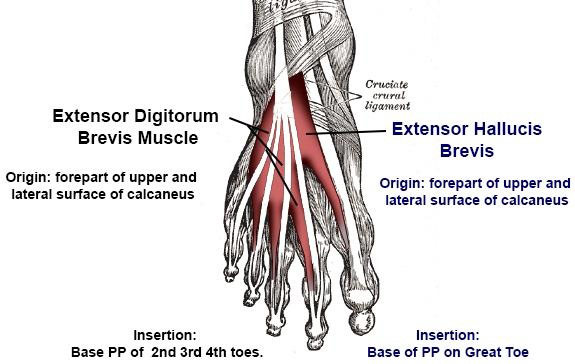
The extensor tendons are a group of tendons that cross the top (dorsum) of the foot and connect the muscles at the front of your lower leg to your toes. Their job is to lift the foot toward the shin (dorsiflexion) and straighten the toes. Because they lie just under the skin with very little cushioning, they’re easily irritated by pressure or repetitive strain — and that inflammation is what’s called extensor tendonitis.
What causes it?
- Tight or over-laced shoes pressing directly on the tendons — the most common trigger.
- Overuse or a sudden jump in activity, especially uphill running or treadmill inclines, which load the extensor tendons more.
- Tight calf muscles, which increase strain on the tendons.
- Foot shape — high arches concentrate pressure on top of the foot, while flat feet can strain the tendons too.
- A direct blow, such as dropping something on your foot or kicking something hard.
Symptoms
The hallmark is aching pain across the top of the foot — often around the middle — that gets worse with activity and eases with rest. Pressing on the tendon usually hurts, as does actively lifting the foot or toes against resistance. Some people notice mild swelling, and occasionally numbness or tingling. Symptoms typically build gradually rather than starting suddenly.
How it’s diagnosed
A primary care doctor or podiatrist can usually diagnose extensor tendonitis from your history and a physical exam. If there’s any concern about a stress fracture or another problem, imaging such as an X-ray, ultrasound, or MRI may be used to rule it out. This distinction matters, because a stress fracture is treated very differently from tendonitis.
How extensor tendonitis is treated
Most cases respond well to simple, conservative care. According to guidance from the American Academy of Orthopaedic Surgeons, reducing tension on the extensor tendons — through footwear changes and arch-supporting orthotics — is the cornerstone of treatment, and most cases resolve within about six to eight weeks with consistent load management. A typical home approach:
- Rest from the activities that trigger the pain until it settles; pushing through can prolong recovery.
- Ice the top of the foot for about 15 minutes several times a day during a flare-up.
- Loosen and re-pattern your laces (skip/window lacing) — often the single biggest change.
- Anti-inflammatories such as ibuprofen for a short course, if appropriate for you.
- Supportive shoes and arch support to reduce load on the tendons.
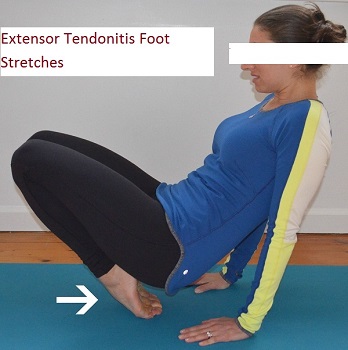
- Gentle stretching and strengthening once pain allows — calf stretches and easy ankle dorsiflexion, kept pain-free.
- Physical therapy if it lingers; a therapist can guide a graded rehab program.
Because this is an overuse injury, doing too much too soon is the most common reason it comes back. Ease into stretching and activity, and back off if pain flares.
When to see a professional
See a doctor or podiatrist if:
- Top-of-foot pain lasts more than a couple of weeks despite looser lacing and well-fitting shoes (this can point to a tendon problem or a stress fracture rather than simple irritation).
- You have significant swelling, bruising, or a specific sharp spot of pain on the bone.
- You develop numbness, tingling, or weakness lifting the foot or toes.
- You can’t bear weight, or the pain followed a direct blow to the foot.
- Symptoms aren’t improving with conservative care.
Frequently asked questions
Does a foot brace help extensor tendonitis?
A light compression sleeve can ease swelling and add gentle support, but it isn’t the main fix — and a brace that presses tightly across the top of the foot can make the pain worse. Looser lacing, rest, ice, and supportive shoes do more. Choose light, breathable support and stop if pain increases.
What is the fastest way to relieve extensor tendonitis?
The quickest relief is usually loosening your shoelaces and using skip or “window” lacing so nothing presses on the sore tendon. Add rest, ice for about 15 minutes a few times a day, and a short course of anti-inflammatories if appropriate. Most mild cases ease within days to a couple of weeks.
Should I wrap my foot for extensor tendonitis?
A light wrap or sleeve can help control swelling and add gentle support during activity, but wrap loosely — you should be able to slide a finger underneath. Tight wrapping over the top of the foot squeezes the already-irritated tendons and can worsen symptoms. Remove it if the pain increases.
How long does extensor tendonitis take to heal?
Most cases settle within about six to eight weeks with consistent rest, looser lacing, ice, and supportive footwear, per orthopedic guidance. Mild cases can improve in days. Pain that lasts beyond a couple of weeks in well-fitting shoes should be checked by a podiatrist to rule out a stress fracture.
Can I still run or walk with extensor tendonitis?
Gentle walking in loose-laced, supportive shoes is usually fine, but stop activities that reproduce the pain — especially uphill running and tight footwear. Pushing through sharp top-of-foot pain can prolong the injury. Ease back gradually once the tendon is no longer tender, and replace worn-out shoes.
What shoes are best for extensor tendonitis?
Look for a soft, stretchy upper, a roomy toe box, and lacing you can loosen or skip over the sore spot, with no stiff overlays across the instep. Cushioned models such as the HOKA Clifton, Brooks Glycerin, New Balance Fresh Foam 1080, or wide-toe Altra Torin are commonly recommended. Replace running shoes every 400–500 miles.
Medical disclaimer: This article is for general information only and is not medical advice. Extensor tendonitis can share symptoms with other conditions, including stress fractures. Talk to a qualified healthcare professional about your specific situation before starting treatment.