Eye Covers for Sleeping: 5 Best Sleep Masks (2026)
2026 buying guide · blackout, fit & comfort
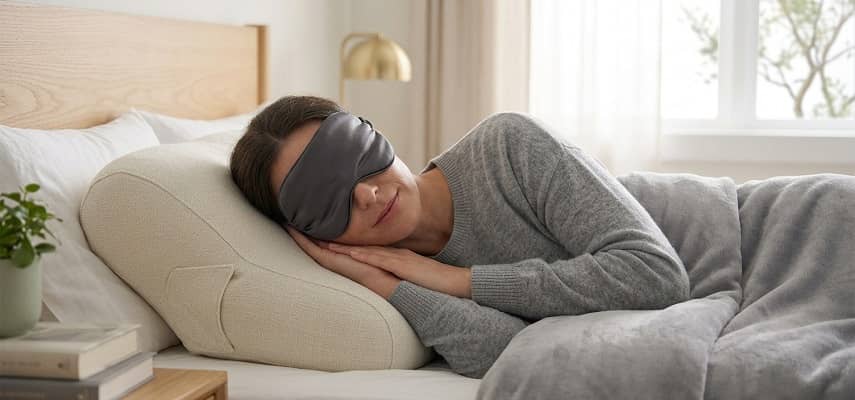
Eye covers for sleeping are most useful when unwanted light is the problem. A good sleep mask should create darkness without pressing painfully on your eyes, slipping off, trapping too much heat or digging into your head. For most people, the best starting point is a comfortable blackout mask that fits their face and usual sleep position.
Quick picks
Best overall
MZOO Luxury Sleep Mask
Contoured eye space, a low-profile side design and strong light-blocking make it the most broadly useful pick here.
Most customizable
Manta Original
Moveable eye cups let you fine-tune the seal around your eyes instead of relying on one fixed face shape.
Premium silk
DROWSY Silk Sleep Mask
A wide, padded mulberry-silk design for people who prefer a softer wraparound feel rather than foam eye cups.
JUMP TO A SECTION
How we chose these eye covers for sleeping
We reviewed the old Health Guideline article, then rebuilt the selection around products that still have active Amazon US listings and clear current specifications. We compared blackout design, pressure around the eyes, adjustability, side-sleep comfort, materials, care requirements and whether each product fills a genuinely different use case. We also cross-checked 2026 testing from The Guardian and Sleep Foundation.
What “best” means here: These are editorial categories based on design, fit and current third-party testing — not results from our own head-to-head lab test. Prices, sellers and stock can change, so every Amazon link is a current-listing check rather than a promise of a fixed offer.
Best sleep masks at a glance
| Sleep mask | Best for | Design | Price tier | Main trade-off |
|---|---|---|---|---|
| MZOO Luxury Sleep Mask | Best overall | Contoured foam eye cups | $ | Foam can feel warmer than thin fabric |
| Manta Original Sleep Mask | Custom fit | Moveable detachable eye cups | $$ | More structure than a flat mask |
| DROWSY Silk Sleep Mask | Premium silk feel | Wide padded wraparound mask | $$$ | Premium price; can feel bulky |
| nodpod Gentle Pressure | Weighted relaxation | Bead-filled draped mask | $$ | Weight is a preference, not a proven sleep treatment |
| Therabody SleepMask | Vibration feature | Blackout mask + vibration | $$$$ | Expensive and less side-sleeper friendly |
The 5 best eye covers for sleeping in 2026
01 / BEST OVERALL
MZOO Luxury Sleep Mask
The MZOO is the most balanced choice for most sleepers because its 3D cups leave space around the eyelids while the thinner sides reduce the amount of material pressed between your temple and pillow. Recent independent testing also rated an MZOO mask highly for blackout performance and broad comfort across different sleepers.
MZOO Luxury Sleep Mask — view on Amazon
Key features
- Contoured eye cups designed to keep fabric off the eyelids
- Low-rebound memory foam
- Adjustable head strap
- Curved, thinner sides intended to reduce temple pressure
Pros
- Good balance of blackout and eye space
- Better suited to side sleeping than many thick contoured masks
- Adjustable without relying on a one-size elastic band
Cons
- Foam can retain more warmth than thin silk or cotton
- Blackout depends on how the nose area matches your face
- Not ideal if you strongly prefer a barely-there flat mask
Best for: Most people who want blackout performance without direct eyelid pressure, especially side sleepers who dislike bulky temple padding.
Who should skip it: Hot sleepers who find memory foam stuffy, or anyone who prefers a flat silk mask.
02 / MOST CUSTOMIZABLE
Manta Original Sleep Mask
Manta’s key advantage is adjustability: the eye cups can be repositioned to match the spacing and angle of your eyes, which can help create a better seal than a fixed-shape mask. It is a sensible pick for people who have struggled with nose-gap light leaks or eyelash contact in simpler masks.
Manta Original Sleep Mask — view on Amazon
Key features
- Detachable, repositionable eye cups
- Contoured cups designed to avoid eyelid and lash pressure
- Adjustable head strap
- Replaceable/swappable mask components
Pros
- More customizable than fixed-cup masks
- Creates eye space for blinking and lashes
- Parts can be adjusted rather than replacing the whole mask
Cons
- Takes a little setup to position the cups correctly
- More structured than a flat fabric mask
- Manta says its PRO version has thinner temple cups for dedicated side sleepers
Best for: People who want to fine-tune the cup position and seal instead of accepting a fixed eye-mask shape.
Who should skip it: Anyone who wants the thinnest possible mask for side sleeping or does not want to adjust separate eye cups.
03 / PREMIUM SILK
DROWSY Silk Sleep Mask
The DROWSY takes a different approach from molded eye cups: it uses a wide, padded wraparound construction with a mulberry-silk surface. That can feel gentler and more luxurious against the skin, while the larger footprint helps cover light around the sides. The trade-off is more fabric and a much higher price tier.
DROWSY Silk Sleep Mask — view on Amazon
Key features
- 100% mulberry-silk outer material listed on the Amazon product page
- Wide padded, face-hugging design
- Adjustable wraparound fastening
- Flat/padded style rather than rigid eye cups
Pros
- Smooth silk feel against the face
- Wide coverage can help with side light leakage
- Soft, giftable premium construction
Cons
- Significantly pricier than basic silk masks
- Wide padding may feel warm or bulky to some sleepers
- Less open space around the eyes than deep contoured cups
Best for: People who prioritize a soft silk surface, wide coverage and a plush feel over low price or minimal bulk.
Who should skip it: Budget shoppers, very hot sleepers, or people who want the mask to sit completely away from their lashes.
Silk is a comfort choice, not an anti-aging treatment. A smooth fabric may reduce friction compared with rougher materials, but a sleep mask should not be sold as a proven wrinkle, dry-eye or skin-treatment device.
04 / BEST WEIGHTED OPTION
nodpod Gentle Pressure Sleep Mask
The nodpod is essentially a small weighted eye blanket: bead-filled sections drape across the eyes instead of relying on a tight strap. Some people find that gentle weight relaxing, and the mask is machine washable. But weighted eye masks have far less evidence behind them than the simple idea of blocking unwanted light.
nodpod Gentle Pressure Sleep Mask — view on Amazon
Key features
- Bead-filled weighted construction
- Designed to drape over the eyes rather than clamp tightly
- Machine-washable design listed on the Amazon page
- Can be used for rest, travel or relaxation
Pros
- Different feel from strapped masks
- Gentle weight may feel calming to people who like pressure
- Machine-washable
Cons
- Weight on the face is not comfortable for everyone
- Draped designs can move more than tightly secured masks
- Do not treat “weighted” as proof of a medical or anxiety-relief benefit
Best for: People who already know they like gentle facial pressure and want a washable weighted design.
Who should skip it: Anyone who dislikes pressure around the eyes, wants a firmly strapped all-night mask, or has been advised to avoid pressure around the eye area.
05 / BEST VIBRATING OPTION
Therabody SleepMask
Therabody’s SleepMask combines blackout coverage with three vibration patterns, so it is the most feature-heavy option here. A 2025 controlled at-home study reported modest objective sleep improvements versus a non-vibrating mask, but the work was supported by Therabody and published as a conference abstract, so the findings should be treated as product-specific and preliminary.
Therabody SleepMask — view on Amazon
Key features
- Three adjustable vibration patterns
- Contoured blackout padding
- Adjustable curved strap
- Rechargeable battery and included travel pouch
Pros
- Combines darkness and a pre-sleep relaxation feature
- Multiple vibration patterns and intensity choices
- Current manufacturer-supported sleep data exists for this specific product
Cons
- By far the most expensive pick in this guide
- Needs charging
- Bulk and vibration can be uncomfortable when lying on your side
What the study found: A 2025 conference abstract reported 2,851 nights from 91 adults. Compared with a non-vibrating light-blocking mask, nights with the vibrating SleepMask were associated with about 11 more minutes of sleep and about 3 more minutes of deep sleep. Therabody supported the study, so independent replication would strengthen confidence in the result.
Best for: Back sleepers who want a premium blackout mask plus vibration and are comfortable paying for an electronic sleep accessory.
Who should skip it: Budget shoppers, people who prefer silent passive gear, and side sleepers who are sensitive to pressure or vibration at the temple.
How do you choose the right sleep mask?
The best sleep mask is the one you can comfortably keep on. Blackout performance matters, but fit problems usually decide whether a mask becomes part of your nightly routine. Start with your sleep position, then compare eye pressure, nose seal, strap placement, material and washability.
Side sleeper: keep the temples low-profile
If you sleep on your side, thick plastic hardware or tall foam at the temples can press into your pillow. Look for tapered sides, soft wraparound fabric or a strap buckle that sits toward the back of the head. A mask that feels great while sitting upright can feel very different after 30 minutes on your side.
Flat or contoured: decide how much eye space you want
Flat silk masks are light and simple, but they usually rest closer to the eyelids. Contoured masks create cavities over the eyes, which can help if you dislike lash contact or want to blink freely. The trade-off is extra bulk.
A good nose seal matters more than marketing claims
Even a well-padded mask can leak light beside the nose if its shape does not match your face. Adjustable eye cups or a flexible nose area can help, but there is no universal face geometry. Buy from a seller with a practical return policy when possible.
Choose a strap you can tolerate all night
A secure strap should hold the mask in place without causing headache, scalp pressure or hair snagging. Wide straps spread pressure; narrow straps can feel cooler. Hook-and-loop closures offer a broad adjustment range but may catch hair, while sliders are tidier but can become pressure points if they sit at the temple.
Washability is part of comfort
Your mask sits against facial skin for hours, so follow its care instructions and clean it regularly. Sweat, skincare products and hair products can build up on fabric and padding. If a mask causes persistent irritation, stop using it and consider a different material or fit.
Build a darker, quieter sleep setup. A mask is only one tool. Mayo Clinic recommends keeping the bedroom cool, dark and quiet. If noise is another problem, see our guides to noise-cancelling ear muffs for sleeping and noise-cancelling headphones for sleeping. CPAP users who side-sleep can also see our CPAP mask for side sleepers guide.
How should a sleep mask fit?
- Start loose. Put the mask over your eyes, then tighten only enough to stop obvious slipping.
- Check eye pressure. Your eyelids and eyeballs should not feel compressed. If they do, loosen the strap or choose a contoured design.
- Test your real sleep position. Lie on your back and both sides. Check whether a buckle, seam or foam edge presses into your head.
- Look for light leaks. With your eyes closed, gently move your head. If light enters beside the nose, adjust the position rather than simply tightening harder.
- Recheck your skin in the morning. Temporary light marks can happen, but ongoing pain, numbness, swelling or irritation means the fit is not working for you.
Do not use tight pressure as a shortcut to blackout. A sleep mask should feel secure, not painful. If you have had recent eye or facial surgery, have an eye condition affected by pressure, or are unsure whether a weighted mask is appropriate, ask your eye-care or healthcare professional before using it.
Do eye covers for sleeping actually work?
They reliably make the environment darker; the evidence that they directly improve sleep outcomes is promising but limited. Darkness is a strong circadian cue. The National Heart, Lung, and Blood Institute explains that melatonin rises when it gets dark, while bright artificial light late in the evening can disrupt that process. A mask can therefore be useful when you cannot otherwise control bedroom light.
What one home study found
A 2023 study had 94 healthy adults ages 18–35 alternate between a week sleeping with a light-blocking eye mask and a control condition. The mask condition improved performance on an episodic-memory task and an alertness test. A second experiment with 35 adults reproduced the memory finding.
However, the study did not find a clear difference in self-reported sleep duration or sleep quality, and a later published reanalysis argued that the cognitive effects were not clear or consistent. That is why a sleep mask should be treated as a simple light-control tool, not a proven treatment for insomnia.
For practical sleep hygiene, the evidence is simpler: make the room as dark as you comfortably can. Mayo Clinic recommends a cool, dark and quiet bedroom, while Cleveland Clinic notes that sleep masks can be useful for people who cannot control ambient light, including shift workers and travelers.
When should you talk to a sleep professional?
A sleep mask can fix a bright room; it cannot diagnose or treat the reason you are sleeping poorly. If insomnia, frequent awakenings, severe daytime sleepiness or other sleep problems persist despite a reasonable sleep routine and environment, talk with a healthcare professional. Cleveland Clinic specifically cautions against expecting a sleep mask to make up for poor sleep hygiene or treat a sleep disorder.
Eye symptoms matter too. Stop using a mask that causes eye pain, persistent numbness, swelling or skin irritation. If you have recent eye surgery or a condition for which pressure around the eye is a concern, follow your clinician’s instructions rather than using a generic weighted or tight-fitting mask.
Frequently asked questions
What is the best eye cover for sleeping?
For most sleepers, start with a soft blackout mask that stays secure without pressing on the eyes. We rank the MZOO Luxury Sleep Mask as the best overall here because it combines contoured eye space with lower-profile sides. Your face shape and sleep position still matter more than any universal “best” label.
Are sleep masks good for side sleepers?
They can be, but side sleepers should pay close attention to the temples. Thick foam, hard buckles or electronics can press into the pillow and become uncomfortable. Look for tapered sides, soft wraparound fabric, or hardware positioned toward the back of the head, and test the mask while lying on your usual side.
Is silk better than cotton or memory foam for a sleep mask?
No material is best for everyone. Silk feels smooth and light, cotton can be soft and easy to live with, and foam helps create deeper contoured eye cups. Choose based on heat, skin comfort, washability and whether you want the fabric touching your eyelids. Do not assume silk provides a proven anti-aging or dry-eye treatment.
Can a sleep mask help with insomnia?
A mask may help if light is one reason you cannot fall asleep or stay asleep, but it is not an insomnia treatment by itself. Mayo Clinic and Cleveland Clinic both emphasize broader sleep habits and a dark sleep environment. Persistent insomnia deserves proper assessment rather than relying on an eye cover alone.
Are weighted eye masks better for sleep?
There is not enough independent evidence to say weighted eye masks are generally better than ordinary blackout masks. Some people enjoy gentle pressure, while others find it uncomfortable. If you choose one, prioritize comfort and avoid painful pressure on the eyes. Ask a clinician first if you have a condition affected by pressure around the eye.
How often should you wash a sleep mask?
Follow the manufacturer’s care instructions because silk, foam and electronic masks cannot all be cleaned the same way. In general, wash or clean the surfaces that touch your skin often enough to prevent buildup from sweat, oils and skincare products. Clean it sooner if it becomes visibly soiled or starts irritating your skin.
This article provides general information, not medical advice. A sleep mask can help control light, but it is not a treatment for insomnia, migraine, depression, dry eye or another medical condition.