Foot Drop Brace: The 6 Best AFO Braces for Walking in 2026
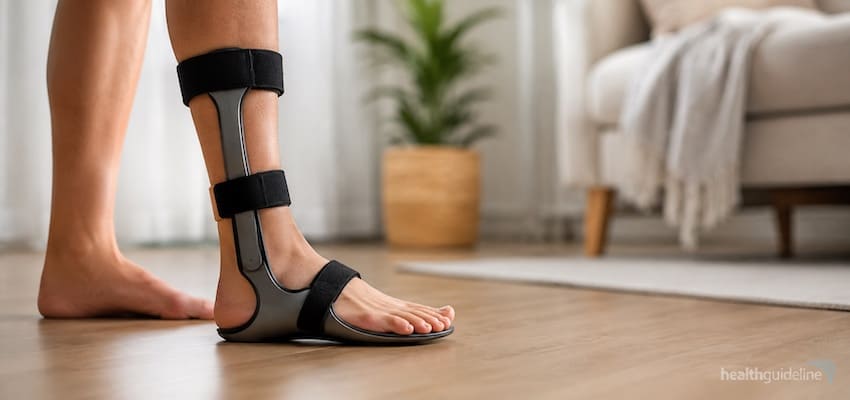
For most people who want everyday support that hides under normal shoes, the Össur Foot-Up is the best all-round pick. If you’re active or spend time on uneven ground, the TurboMed XTERN mounts outside the shoe so nothing rubs your foot. If your foot drop comes with more noticeable weakness, a structured Brace On S-Type gives firmer control.
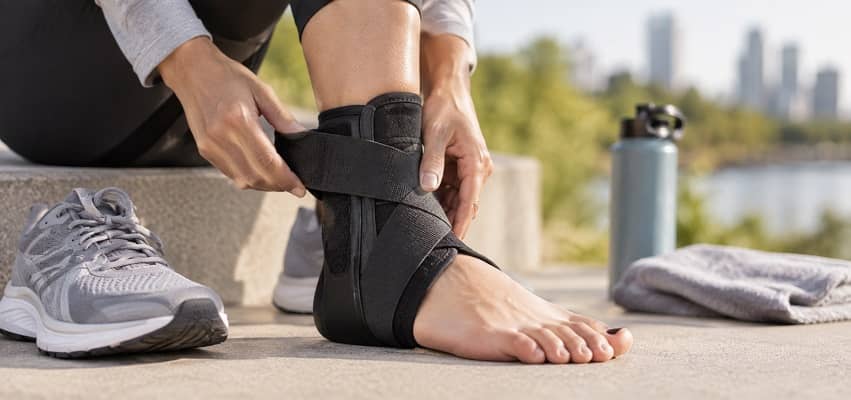
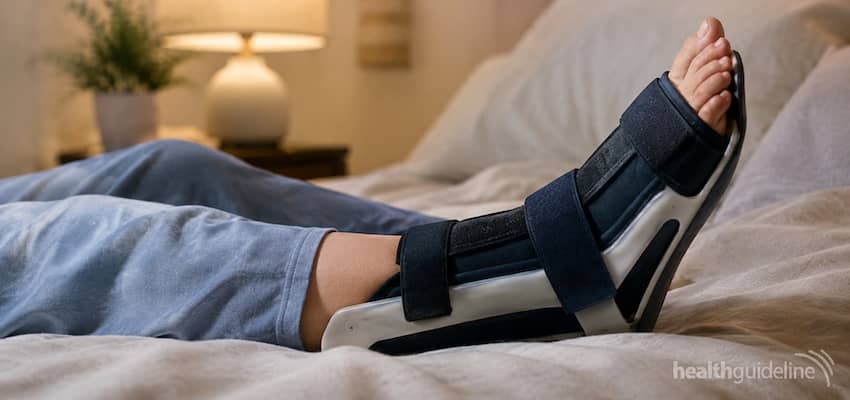
What a foot drop brace does: a foot drop brace (an ankle-foot orthosis, or AFO) holds or lifts the front of the foot so your toes clear the ground as you step, reducing tripping and the tiring high-stepping gait foot drop causes. It manages the symptom — it does not fix the underlying nerve or muscle problem, so getting a diagnosis still matters.
Foot drop makes it hard to lift the front of your foot, so the toes catch on the floor and you’re forced to swing the leg or lift the knee higher just to walk safely. A brace won’t cure what’s causing it, but the right one can restore steadier, more confident walking today. Below are six braces we’d genuinely recommend in 2026 — spanning discreet daily wear, adjustable lift, active use, and firmer structured support — with honest notes on who each one is (and isn’t) for.
JUMP TO A SECTION
How we chose
We compared foot drop braces currently sold on Amazon US, prioritizing established brands with clear, verifiable listings over generic look-alikes. Picks were chosen to match real-world needs — discreetness, adjustability, footwear compatibility, level of support, and active vs. everyday use — rather than to fill a list. We cross-checked the condition information against medical authorities including the Cleveland Clinic and Mayo Clinic. This is research-and-comparison based, not a physical field test, and it isn’t a substitute for a fitting by a clinician or orthotist — the right brace depends on the cause and severity of your foot drop.
The 6 best foot drop braces at a glance
| Brace | Best for | Support type | Approx. price* | Link |
|---|---|---|---|---|
| Össur Foot-Up | Discreet everyday wear | Soft strap + shoe inlay (dorsiflexion assist) | Mid-range | See below |
| Core Products FootFlexor | Adjustable lift, day to day | Soft cuff + tension cord (4 levels) | Mid-range | See below |
| NEOFECT Drop Foot Brace | Comfort & milder cases | Soft neoprene wrap | Budget–mid | See below |
| TurboMed XTERN Classic+ | Active & outdoor use | External dynamic exoskeleton | Premium | See below |
| Brace On AFO S-Type | Firmer, structured support | Semi-rigid moldable polyethylene AFO | Budget–mid | See below |
| Step-Smart (Insightful Products) | Natural, articulated stride | Hinged/articulated dynamic AFO | Mid–higher | See below |
01 / BEST OVERALL
Össur Foot-Up
The Össur Foot-Up pairs a soft, breathable ankle wrap with a plastic inlay that tucks between your shoe’s tongue and laces, gently lifting the toes as your foot swings forward. It’s one of the most discreet braces here — practically invisible under trousers — which makes it a strong everyday choice for mild-to-moderate foot drop when you want support that quietly disappears.
Key features
- cushioned 3-layer breathable wrap
- discreet plastic shoe inlay (a shoeless wrap version is available for sandals or bare feet)
- adjustable cuff strap
- works with laced shoes and sandals
- established orthopedics brand.
Pros
- very discreet
- quick and easy on/off
- light and breathable for long wear
- broad footwear compatibility.
Cons
- soft support only — not enough for significant instability or spasticity
- tension isn’t finely tunable
- the inlay relies on having laces (use the shoeless wrap otherwise).
Best for: people with mild-to-moderate foot drop who want a wear-with-normal-shoes brace nobody will notice.
02 / BEST FOR ADJUSTABLE LIFT
Core Products FootFlexor AFO
The FootFlexor uses a soft ankle cuff and an adjustable tension cord that clips to your shoelaces to lift the forefoot with each step. Four selectable tension levels let you dial in just enough assist for walking, errands, hiking, or golf, and it’s assembled in the USA — a flexible middle ground between a soft wrap and a rigid AFO.
Key features
- four levels of tubing tension
- clips to shoe eyelets
- low-profile and nearly invisible under clothing
- fits left or right foot
- XS/S size fits an 8–12 inch ankle
- replacement clips and tensioner straps sold separately.
Pros
- genuinely adjustable lift
- comfortable soft design
- low-profile
- replaceable wear parts extend its life.
Cons
- needs lace-up shoes with eyelets
- soft design won’t control significant side-to-side instability
- clips can wear and need replacing.
Best for: active people who want to fine-tune how much lift they get from one day to the next.
03 / BEST FOR COMFORT & MILDER CASES
NEOFECT Drop Foot Brace
NEOFECT’s drop foot brace is a soft neoprene wrap with fully adjustable straps that lifts the toes and keeps the ankle aligned. It’s aimed at milder cases and at stroke or traumatic-brain-injury recovery, prioritizing all-day comfort and natural movement over rigid control — which makes it an approachable, gentle first brace for a lot of people.
Key features
- breathable neoprene
- fully adjustable straps
- lightweight
- positioned for mild symptoms and rehab (stroke, TBI, neuropathy)
- from a brand focused on neuro rehabilitation.
Pros
- comfortable for all-day wear
- soft on skin
- approachable entry-level option
- established rehab brand.
Cons
- not built for significant weakness or rough terrain
- Velcro can lose grip over time
- limited rigid support.
Best for: first-time brace users and milder foot drop, especially during stroke or TBI rehabilitation.
04 / BEST FOR ACTIVE & OUTDOOR USE
TurboMed XTERN Classic+
The TurboMed XTERN is unusual: its flexible exoskeleton spring mounts entirely outside the shoe, so nothing presses against your foot to cause rubbing or pressure. It clips to the sole and lifts the foot dynamically while preserving ankle motion, so you can walk, hike, or even run on uneven ground. A premium option built for active users.
Key features
- mounts outside the shoe (nothing inside against the foot)
- flexible exoskeleton spring allows plantarflexion and calf push-off
- clips between different shoes in seconds
- fits athletic, hiking, winter and safety footwear
- multi-year warranty
- a carbon-fiber “Summit” version is also available. Listed under HCPCS code L1951, which may matter for U.S. insurance reimbursement.
Pros
- no in-shoe bulk or skin rubbing
- excellent for running, hiking and uneven terrain
- preserves ankle range of motion and calf strength
- durable and warrantied.
Cons
- premium price, well above strap-style braces
- more visible on the outside of the shoe
- needs correct fitting to your specific footwear and some setup.
Best for: active, on-your-feet, or outdoor users who don’t want anything sitting inside the shoe.
05 / BEST FOR FIRMER, STRUCTURED SUPPORT
Brace On AFO S-Type
The Brace On S-Type is a semi-rigid polyethylene AFO with a trimmable footplate and padded calf cuff that slides inside your shoe for firmer control than a soft strap. Its moldable frame and buckle closure add side-to-side stability, suiting foot drop that comes with more noticeable weakness or a tendency for the foot to roll inward.
Key features
- injection-molded polyethylene frame
- trimmable footplate
- padded calf cuff with buckle closure
- open-heel, low-profile design fits inside most shoes
- left/right and multiple sizes. Measure heel width and foot length (not shoe size alone) to size it.
Pros
- more structural support and stability than soft wraps
- trimmable and moldable for a better fit
- still low-profile enough for many everyday shoes.
Cons
- requires careful measuring
- firmer feel is less “natural” than dynamic braces
- usually needs a roomier shoe
- not custom-fit like a clinic-made orthosis.
Best for: more significant weakness or instability, where a soft strap simply isn’t enough.
06 / BEST FOR A NATURAL, ARTICULATED STRIDE
Step-Smart Drop Foot Brace (Insightful Products)
The Step-Smart is a fully articulated AFO that keeps your ankle, heel, and toes moving naturally while still lifting the foot for clearance during the swing phase. It ships with three compression-bumper levels so you can tune resistance, and at under a pound it balances genuine support with a smooth, energy-efficient stride. Made in the USA.
Key features
- fully articulated design that maintains ankle motion and toe flexibility
- shock absorption at heel strike plus swing-phase clearance
- three compression-bumper resistance levels
- about 11 inches high and under 1 lb
- designed to be worn with socks and shoes
- made in the USA by Insightful Products.
Pros
- preserves a natural gait and ankle movement
- tunable resistance
- energy-efficient
- a long-standing favorite among daily drop-foot users.
Cons
- pricier than simple straps
- needs socks and shoes to work properly
- bulkier than a discreet wrap
- sizing is side-specific.
Best for: daily walkers who want a natural, articulated stride with real support.
What to look for when buying a foot drop brace
Cause and severity
The best brace depends on why your foot drops and how weak the muscles are. Mild, flexible foot drop often does well with a soft dorsiflexion strap; more significant weakness, spasticity, or a foot that rolls usually needs a semi-rigid or articulated AFO for stability. If you don’t yet have a diagnosis, that’s the first thing to sort out — not the brace.
Support type: soft vs. structured
Soft braces (straps, cords, neoprene wraps) lift the toes but add little side-to-side control; they’re light, discreet, and comfortable. Structured AFOs (molded polyethylene, articulated hinges, external exoskeletons) add stability and are sturdier, but they’re bulkier and need more shoe room. Match the level of control to your needs rather than buying the most rigid option by default.
Footwear compatibility
Check how the brace attaches. Inlay- and cord-style braces need lace-up shoes with eyelets; molded AFOs need a slightly roomier shoe; the external TurboMed clips to the sole and even fits boots. If footwear is part of your challenge, our guides to Velcro shoes for easier on-and-off and shoes for balance problems are worth a look, since foot drop raises the risk of tripping.
Adjustability and comfort
Adjustable tension (like the FootFlexor’s four levels or the Step-Smart’s bumpers) lets you get enough lift without over-bracing. Because a brace only helps if you actually wear it, prioritize breathable materials, padding at contact points, and a secure but comfortable strap — skin irritation is one of the most common reasons braces end up in a drawer.
Fit and sizing
Measure as instructed — often ankle circumference for wraps, or heel width and foot length for molded AFOs — rather than guessing from shoe size. Whenever possible, have the fit checked by a physical therapist or orthotist. An off-the-shelf brace that fits well beats a poorly fitted one, but neither replaces professional fitting for complex cases.
About foot drop (and why a brace is only part of the picture)
Foot drop, also called drop foot, is a symptom rather than a disease — difficulty lifting the front of the foot because the muscles that raise it are weak or partly paralyzed. Because of that, people often drag their toes and may lift the knee higher than usual to avoid catching the floor, a pattern that raises the risk of tripping and falling, according to the Cleveland Clinic.
The Cleveland Clinic notes the two most common causes are injury to the peroneal (fibular) nerve and lumbar radiculopathy (a compressed nerve root in the lower back), though foot drop can also stem from neurological conditions such as stroke, multiple sclerosis, or ALS, and from muscle disorders. The Mayo Clinic points out that something as ordinary as sitting cross-legged for too long can compress the peroneal nerve and trigger temporary foot drop. It can affect one foot or both.
Crucially, foot drop is treatable in most, but not all, cases, and whether it resolves depends on the cause — a compression that’s relieved may recover, while permanent nerve or muscle damage may not. That’s why a brace is best thought of as a tool for walking safely now, alongside — not instead of — a proper diagnosis and treatment plan. Braces and splints, physical therapy, nerve (electrical) stimulation, and sometimes surgery are all options a clinician may consider depending on what’s driving it. (If a related tendon issue is part of your ankle picture, see our guide to peroneal tendonitis ankle braces.)
When to see a professional
See a doctor to find the cause of foot drop rather than self-treating with a brace alone — especially if it came on suddenly, followed an injury, or comes with back pain, leg weakness, numbness, or changes in bladder or bowel control. Sudden weakness on one side of the body can be a sign of a stroke and needs emergency care. A physician can identify the underlying problem, and a physical therapist or orthotist can make sure any brace fits and suits your situation. A brace supports walking; it doesn’t replace medical assessment.
Frequently asked questions
What is the best foot drop brace?
There’s no single best brace — it depends on the cause, severity, and your footwear. For discreet everyday support the Össur Foot-Up is a strong all-round pick; active users often prefer the external TurboMed XTERN; and more significant weakness usually calls for a structured AFO like the Brace On S-Type. Ideally, confirm the choice with a clinician.
Do foot drop braces actually work?
Yes — a well-fitted brace lifts or holds the front of the foot so the toes clear the ground, which reduces tripping and the tiring high-stepping gait foot drop causes. What a brace does not do is treat the underlying nerve or muscle problem. Think of it as managing the symptom while the cause is diagnosed and addressed.
Can you wear a foot drop brace with normal shoes?
Most can. Soft strap, cord, and neoprene braces work with ordinary lace-up shoes; molded AFOs usually need a slightly roomier shoe; and the external TurboMed clips to the sole and even fits boots. For sandals or bare feet, look for a “shoeless” wrap version. Always check the attachment style against the shoes you actually wear.
Should I see a doctor before buying a foot drop brace?
Ideally yes, particularly if the foot drop is new or sudden. A doctor can identify the cause — which determines whether it’s likely to improve — and a physical therapist or orthotist can ensure a brace fits correctly. Sudden foot drop, or foot drop with back pain or numbness, should be assessed promptly rather than managed with a brace alone.
Are foot drop braces covered by insurance?
Sometimes. Prescribed medical AFOs may be reimbursable under specific billing (HCPCS) codes — the TurboMed XTERN, for example, is listed under L1951 — but coverage varies by plan and usually requires a prescription. Over-the-counter braces bought online are often not covered. Check directly with your provider and insurer before assuming either way.
What’s the difference between an AFO and a foot drop brace?
They overlap. “AFO” (ankle-foot orthosis) is the clinical umbrella term for any brace that supports the ankle and foot; “foot drop brace” is the everyday name for AFOs used specifically for drop foot. They range from soft dorsiflexion straps to rigid molded shells, so two products called “foot drop braces” can offer very different levels of support.
Medical disclaimer: This article is for general information only and is not medical advice. Talk to a qualified healthcare professional about your specific situation before starting or changing any treatment, including the use of a brace.