The 7 Best Gloves for Raynaud’s Disease That Really Works
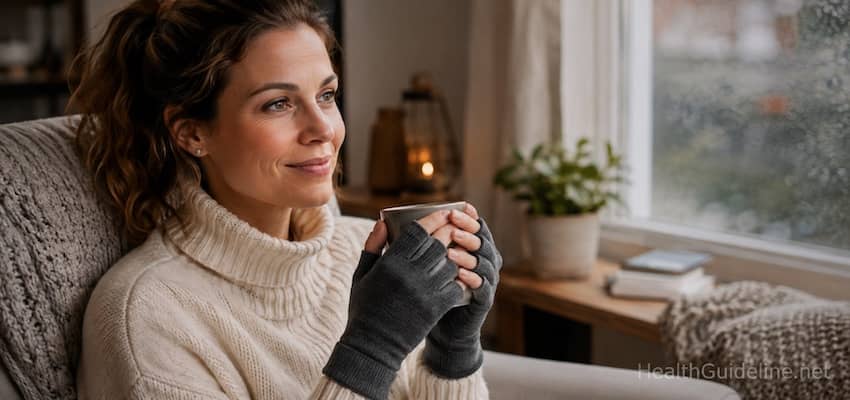
2026 buying guide · warmth, dexterity & cold protection
The best gloves for Raynaud’s disease are the ones that help you avoid getting cold before an attack starts. Medical guidance emphasizes keeping the whole body warm; mittens are generally warmer than gloves, and heated gloves or hand warmers can be useful. The five picks below are warming tools, not treatments or guarantees against attacks.
Quick picks
Best overall heated
Day Wolf 7.4V
A balanced heated glove with quick warm-up, multiple heat settings and enough insulation for everyday outdoor use.
Warmest format
SNOW DEER Mittens
Heated mittens trade some finger dexterity for the warmer shared-finger format recommended for cold protection.
Best thin liner
SAVIOR HEAT S13
A slim heated liner for people who need more dexterity or want to layer inside a separate winter glove.
How we chose these gloves for Raynaud’s disease
We treated warmth and cold prevention as the priority because Raynaud’s attacks are commonly triggered by cold. We verified current U.S. Amazon listings, checked manufacturer specifications, and used current independent heated-glove testing where available. We also favored distinct formats—heated gloves, mittens and liners—rather than filling the list with near-duplicates.
Which gloves for Raynaud’s are best at a glance?
For most people comparing battery-powered options, Day Wolf offers the most balanced all-around package. If maximum warmth matters more than finger independence, the SNOW DEER heated mittens are the stronger format. For variable weather, ORORO’s 3-in-1 system adds a removable shell; for low bulk, the SAVIOR HEAT S13 liner is easier to layer.
| Product | Our category | Format | Main trade-off | Price |
|---|---|---|---|---|
| Day Wolf 7.4V Heated Gloves | Best overall heated | Insulated heated glove | Less fingertip heat than back-of-hand heat in independent testing | About $100–$110; check current price |
| ORORO Twin Cities 3-in-1 2.0 | Best layered system | Heated liner + outer shell | Bulkier and pricier than a liner alone | About $150–$170; check current price |
| SNOW DEER Heated Ski Mittens | Best mitten option | Heated mitten | Less finger dexterity | About $100–$110; check current price |
| SAVIOR HEAT S01 | Best for wet, windy cold | Insulated heated ski glove | Bulky for indoor or fine-motor tasks | About $125–$140; check current price |
| SAVIOR HEAT S13 | Best thin liner | Heated glove liner | Needs an outer glove in harsher weather | About $120–$140; check current price |
Warmth first, not marketing labels. Raynaud’s guidance focuses on preventing cold exposure and keeping your whole body warm. A “medical,” “arthritis” or “compression” label does not automatically make a glove better for Raynaud’s.
The five best glove options for Raynaud’s disease
01 / BEST OVERALL HEATED
Day Wolf Unisex 7.4V Heated Gloves
Day Wolf is the best all-around heated pick here because it combines adjustable battery heat, an insulated water-resistant build and a broad size range without moving all the way to a bulky mitten. Travel + Leisure named this model its best overall heated glove for 2026 after long-term comparative testing.
Key features
- Rechargeable 7.4V battery system
- Three adjustable heat modes
- Water-resistant insulated construction
- Touchscreen-compatible fingertips
Pros
- Independent testing found fast warm-up and good heat retention
- Multiple heat levels for changing conditions
- Useful mix of warmth and everyday glove dexterity
Cons
- Independent testers found the battery indicator less intuitive
- Fingertips may feel less heated than the back of the hand
- Still thicker than a normal fleece glove
Best for: People who want one heated glove for commuting, errands and general cold-weather use.
Who it is not for: Anyone who wants the warmest possible mitten format or a very thin liner for typing and fine hand work.
Approx. price: about $100–$110 at research time — check the current Amazon price.
02 / BEST LAYERED SYSTEM
ORORO Twin Cities 3-in-1 Heated Gloves 2.0
ORORO’s Twin Cities system is the most adaptable option in this list. The heated inner glove can be worn alone, the insulated outer shell can be worn alone, or both can be combined. That flexibility is useful when your day moves between a car, indoor spaces, wind, snow and prolonged outdoor cold.
Key features
- Three-in-one heated liner and shell system
- 3M Thinsulate insulation
- Water- and wind-resistant outer shell
- Touchscreen-compatible fingertips
Pros
- Three ways to wear it as temperatures change
- Outer shell adds weather protection around the heated liner
- Independent testing highlighted strong battery life
Cons
- More pieces to manage and charge
- Bulkier when both layers are worn together
- Touchscreen performance was weaker than some rivals in testing
Best for: People who move through changing temperatures and want one system that can scale from a liner to a winter shell.
Who it is not for: Buyers who want the simplest, lowest-bulk glove or do not want to manage rechargeable batteries.
Approx. price: about $150–$170 at research time — check the current Amazon price.
03 / BEST MITTEN OPTION
SNOW DEER Heated Ski Mittens
SNOW DEER is the strongest pick here when warmth matters more than separate-finger dexterity. Cleveland Clinic specifically notes that mittens are warmer than gloves for Raynaud’s cold protection, and this model adds rechargeable heat to that naturally warmer format. Independent 2026 testing also selected it as a top heated mitten.
Key features
- Mitten design that keeps fingers together
- Three adjustable heat settings
- Windproof and water-resistant outer material
- Touchscreen-compatible thumb
Pros
- Warmer mitten format prioritizes heat retention
- Independent testers found the interior soft and the fit snug
- Useful for skiing, walking and prolonged outdoor cold
Cons
- Less dexterity than a five-finger glove
- Battery pack adds weight at the cuff
- Independent testing raised durability concerns about the strap and drawstring stitching
Best for: People who prioritize maximum hand warmth outdoors and can accept the dexterity trade-off of mittens.
Who it is not for: Anyone who frequently needs to type, handle small objects or perform precise tasks while keeping the gloves on.
Approx. price: about $100–$110 at research time — check the current Amazon price.
04 / BEST FOR WET, WINDY COLD
SAVIOR HEAT S01 Performance Heated Ski Gloves
The SAVIOR HEAT S01 is the more protective outdoor choice in this group. Its current specification lists a waterproof Hipora membrane, wind protection, leather palm, rechargeable 7.4V batteries and three heat levels. That makes it better suited to wet snow, wind and long outdoor sessions than a thin liner worn by itself.
Key features
- Three adjustable heat levels
- Hipora waterproof membrane and wind protection
- Leather palm for grip and durability
- Touchscreen-compatible fingertips
Pros
- More weather protection than a liner-style glove
- Rechargeable active heat plus insulation
- Designed for skiing, riding and other winter outdoor use
Cons
- Bulkier than a liner or everyday knit glove
- Battery runtime falls as heat output rises
- Overbuilt for most indoor tasks
Best for: Outdoor winter activities where cold, wind and moisture all matter.
Who it is not for: People mainly seeking a subtle indoor glove, office liner or maximum fine-finger dexterity.
Approx. price: about $125–$140 at research time — check the current Amazon price.
SAVIOR HEAT S01 Performance Heated Ski Gloves — view on Amazon
05 / BEST THIN HEATED LINER
SAVIOR HEAT S13 Thin Heated Glove Liners
The S13 is the dexterity-first option. It uses a slim, flexible heated liner rather than a ski-glove shell, so it can be worn alone in milder conditions or layered under a separate winter glove. That makes it practical for people who need to handle a phone, keys or other small objects more often.
Key features
- Thin Lycra-based liner construction
- Three adjustable heat settings
- Heating across the back of the hand and fingertips
- Touchscreen-compatible fingertips
Pros
- Lower bulk than insulated heated ski gloves
- Easy to layer under a separate outer glove
- Better suited to dexterity-heavy tasks than mittens
Cons
- Less wind and wet-weather protection when worn alone
- Needs room inside your outer glove for comfortable layering
- Battery pack still adds bulk around the wrist
Best for: People who value dexterity and want active heat they can layer under another glove.
Who it is not for: Anyone expecting a liner alone to provide the wind, rain and snow protection of a full winter glove.
Approx. price: about $120–$140 at research time — check the current Amazon price.
What should you look for in gloves for Raynaud’s disease?
Start with warmth, weather protection and how the glove fits your real daily tasks. Raynaud’s guidance does not identify one special “medical glove” as best. Instead, recognized medical sources emphasize avoiding cold, keeping the core warm and protecting the hands. The right product is therefore the warmest practical option you will consistently wear before exposure.
Mittens or gloves?
Mittens usually retain heat better, and Cleveland Clinic specifically notes that mittens are warmer than gloves. The trade-off is dexterity: five-finger gloves are easier for driving, using keys, operating tools and handling a phone.
Passive insulation or active heating?
Insulated gloves trap the heat your hands already produce; battery-heated gloves add active warmth. NIAMS says people with Raynaud’s can consider heated gloves or hand warmers. Active heating can be especially useful for prolonged outdoor exposure, but batteries add cost, weight and charging chores, so simple insulated mittens may still be the better everyday choice.
Wind and water protection
Cold wind and damp gloves can undermine insulation quickly. If you ski, shovel snow, commute in wet weather or spend long periods outdoors, prioritize a wind-resistant shell and meaningful water protection. A heated liner can work well under a weatherproof outer glove, but it should not be mistaken for a waterproof shell.
Dexterity and touchscreen use
The warmest glove is not useful if you repeatedly remove it for routine tasks. Think about driving, opening doors, typing, handling medication, using a phone and managing zippers. A slim heated liner or a glove with usable touchscreen fingertips can reduce how often your hands are exposed to cold air.
Fit and layering space
Use the exact brand’s size chart and check both palm circumference and finger length when available. If you plan to layer a liner under another glove, make sure the outer glove still closes comfortably and allows normal finger movement. Overly bulky layering can make ordinary hand tasks harder and tempt you to remove the gloves more often.
Battery life and spare power
Heated-glove runtime changes with heat setting, temperature, battery age and use. Treat manufacturer runtime as an estimate rather than a promise. For long winter days, make charging part of your routine and consider whether spare compatible batteries are available. Also ask whether the glove remains acceptably warm when the battery is empty.
Keep your core warm, too. NIAMS and Cleveland Clinic both emphasize that Raynaud’s prevention is not just about the fingers. Layers, a hat or hood, warm socks and limiting cold exposure can matter as much as the glove itself.
How should you use gloves to reduce cold-triggered Raynaud’s attacks?
The most useful strategy is prevention: put on gloves or mittens before your hands get cold, keep your whole body warm and avoid sudden temperature changes when possible. If an attack starts, move to a warmer place and gently rewarm the hands. Medical sources recommend warm—not hot—water rather than aggressive high heat.
- Put warmth on early. Wear gloves before going outdoors, entering a freezer area or handling refrigerated and frozen items.
- Warm more than your hands. Add layers, a hat or hood and warm footwear so your whole body is protected from the cold.
- If an attack begins, rewarm gently. Go indoors or to a warmer space. Mayo Clinic and NIAMS recommend warm, not hot, water; Mayo also suggests placing the hands under the armpits or making wide arm circles.
- Carry a backup. Chemical or rechargeable hand warmers can be useful when battery gloves are impractical or run out of power.
- Keep gloves dry and ready. A second pair can be useful on wet days or whenever your primary gloves become damp.
Do not try to “cook” numb hands back to warmth. Raynaud’s guidance recommends gentle rewarming with warm—not hot—water. Heated gloves should be used according to their instructions and for comfort/cold prevention, not as a substitute for medical care during a severe attack.
Can gloves treat or cure Raynaud’s disease?
No glove cures Raynaud’s phenomenon. Keeping warm can reduce attacks and help control mild symptoms, but secondary Raynaud’s can be more serious and may require treatment of an underlying condition or prescription medication. Think of gloves as part of cold management: they reduce exposure; they do not correct the blood-vessel response that causes Raynaud’s.
Compression or arthritis gloves are a different category. The NIAMS, Mayo Clinic and Cleveland Clinic guidance used for this update focuses on warmth and cold avoidance, not compression as a primary Raynaud strategy. If hand arthritis is your main concern, see our compression arthritis gloves guide instead.
Raynaud’s can also affect the toes. If cold feet are part of the problem, our foot warmers guide covers warming accessories for footwear. Treat toe sores, severe pain or other concerning symptoms as a medical issue rather than a shopping problem.
When should you see a healthcare professional for Raynaud’s?
See a healthcare professional if Raynaud’s symptoms are severe, worsening or not adequately controlled with cold avoidance. Prompt assessment is especially important if you develop a sore or signs of infection on a finger or toe. Secondary Raynaud’s is associated with other conditions and is more likely to cause serious complications than primary Raynaud’s.
Do not rely on gloves for tissue-damage warning signs
NIAMS notes that severe Raynaud’s can cause skin sores and, rarely, gangrene. Mayo Clinic advises contacting a healthcare professional right away if severe Raynaud’s is associated with a sore or infection. If you have these signs, the priority is medical assessment—not buying a warmer glove.
Frequently asked questions
What type of gloves are best for Raynaud’s disease?
Choose a glove system that keeps your hands warm before exposure and that you will actually keep on. Mittens are generally warmer than five-finger gloves; heated gloves can add active warmth; and heated liners offer more dexterity. The best format depends on temperature, wind, moisture, task demands and how much finger movement you need.
Are heated gloves good for Raynaud’s?
They can be useful for cold management. NIAMS specifically says people with Raynaud’s can consider heated gloves or hand warmers, while Mayo Clinic says gloves and warm clothing can help mild symptoms. Heated gloves do not cure Raynaud’s, and they should not replace evaluation or medication when symptoms are severe or secondary Raynaud’s is suspected.
Are mittens better than gloves for Raynaud’s?
For pure warmth, often yes. Cleveland Clinic specifically notes that mittens are warmer than gloves. Gloves still win for dexterity, so the practical choice is a trade-off. Some people use heated liners under mittens or choose convertible designs when they need both warmth and occasional finger access.
Do compression gloves help Raynaud’s disease?
The NIAMS, Mayo Clinic and Cleveland Clinic guidance used for this update focuses on avoiding cold and keeping the hands and whole body warm; it does not recommend compression gloves as a primary Raynaud strategy. If you also have arthritis or joint stiffness, compression gloves may be a separate comfort product, but they should not replace Raynaud-focused care.
What should I do when a Raynaud’s attack starts?
Move to a warmer place and gently warm the affected area. Mayo Clinic recommends warm—not hot—water, wiggling the fingers or toes, placing hands under the armpits and making wide circles with the arms. NIAMS also recommends warm water and prompt rewarming. Seek medical advice for severe attacks, sores or infection.
Does Raynaud’s disease go away?
Do not assume it will simply disappear because an individual attack ends. Raynaud’s is an episodic condition, and future attacks may recur with cold or stress. Primary Raynaud’s is often mild, while secondary Raynaud’s can be more serious. A healthcare professional can help determine which form you have and whether additional treatment is needed.
Can Raynaud’s happen in warm weather?
Yes. The trigger is not limited to winter weather. NIAMS notes that sudden temperature changes and air-conditioned environments can trigger attacks, and handling cold food or drinks can do the same. Keeping a light pair of gloves or another warming option nearby can be useful even when the outdoor temperature is warm.
Medical disclaimer: This article is for general information only and is not medical advice. Talk to a qualified healthcare professional about your specific situation.