Kerasal Intensive Foot Repair Review (2026): Does It Really Work on Cracked Heels?
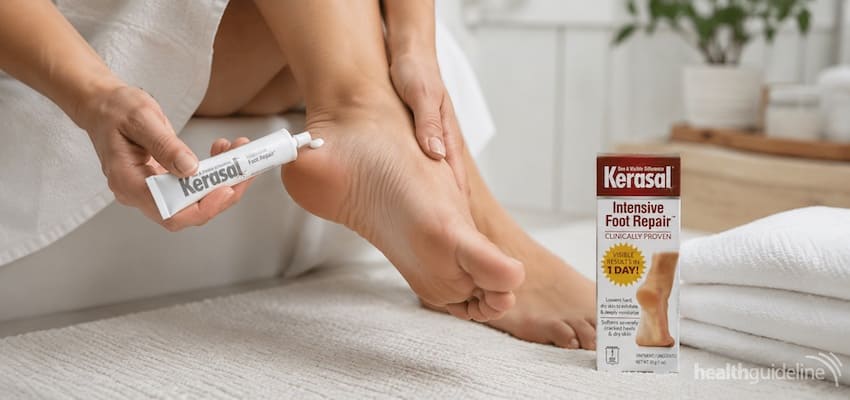
Kerasal Intensive Foot Repair is our top pick for most people with dry, cracked heels because its salicylic-acid-plus-urea ointment does two jobs at once — it loosens hard, dead skin and seals in moisture, often with visible smoothing within a day or two.
Best acid-free / everyday pick
O’Keeffe’s for Healthy Feet
Unscented, gentle, and marketed as safe for diabetic skin.
Best for thick, stubborn calluses
Flexitol Heel Balm (25% urea)
If your heels feel like sandpaper, snag your socks, or have started to split, you want something stronger than an everyday body lotion. This review looks at whether Kerasal Intensive Foot Repair lives up to its reputation, exactly how to use it, what the real side effects and safety cautions are, and three genuinely good alternatives so you can match a product to your feet rather than the other way around.
JUMP TO A SECTION
Does Kerasal Intensive Foot Repair actually work?
Yes — for the common problem of dry, thickened, cracked heels, Kerasal Intensive Foot Repair is one of the more effective drugstore options. It pairs salicylic acid (5%), which chemically loosens hard dead skin, with urea (10%) and white petrolatum to draw in and lock in moisture. Many people see noticeably smoother heels within a day or two of nightly use, though deep cracks take longer.
How we chose
We prioritized foot treatments that combine exfoliation (to remove the hard, built-up skin that causes cracks) with strong moisturization (to keep new skin soft), since dermatologists note that heel fissures start when thickened skin loses flexibility and splits. We compared active ingredients and their concentrations, texture and ease of use, scent and sensitivity, and third-party credibility such as the American Podiatric Medical Association (APMA) Seal. We only included products that are real and currently sold on Amazon US, and we avoided quoting exact prices because they change constantly — check the live listing for today’s price.
Top picks at a glance
| Product | Best for | Key active ingredients | Link |
|---|---|---|---|
| Kerasal Intensive Foot Repair (1 oz) | Fast results on dry, cracked heels | Salicylic acid 5% + urea 10% + petrolatum | View on Amazon |
| O’Keeffe’s for Healthy Feet (3.2 oz) | Daily use, sensitive / acid-free needs | Glycerin + allantoin (no acids) | View on Amazon |
| CeraVe SA Renewing Foot Cream (3 oz) | Exfoliation + barrier repair | Salicylic acid + ammonium lactate + ceramides + HA | View on Amazon |
| Flexitol Heel Balm (4 oz) | Thick, severely callused heels | Urea 25% + emollients (no salicylic acid) | View on Amazon |
01 / BEST OVERALL
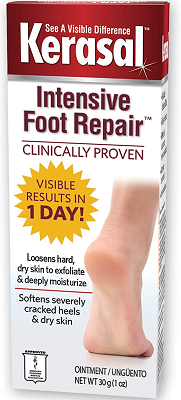
Kerasal Intensive Foot Repair
Kerasal Intensive Foot Repair is a concentrated ointment (not a light lotion) built specifically for rough, cracked, dry heels and feet. The salicylic acid gently dissolves the hard outer layer of dead skin, which lets the urea and petrolatum push moisture deeper — a one-step “exfoliate and moisturize” routine you use before bed. The brand cites a use study in which most people saw improvement in about a day; deep cracks realistically need consistent nightly use for a couple of weeks.
Key features
- Salicylic acid 5%, urea 10%, soft white petrolatum
- 1 oz (30 g) tube
- fragrance-free (a lavender-and-chamomile “Nighttime” version also exists)
- made by Advantice Health.
Pros
- Genuinely dual-action (exfoliates and deeply moisturizes)
- fast, visible smoothing for most users
- carries the APMA Seal of Acceptance
- inexpensive
- a little goes a long way.
Cons
- The 1 oz tube is small if you’re treating both whole feet
- thick, greasy texture (wear socks over it)
- contains salicylic acid, so it can sting sensitive or already-broken skin and isn’t the first choice if you’ve been told to avoid acids.
Best for: Anyone with typical dry, thick, or cracked heels who wants the fastest drugstore fix.
Who it isn’t for: Very sensitive skin, open/bleeding cracks, or people with diabetes or poor circulation without a doctor’s go-ahead (see safety below).
02 / BEST ACID-FREE EVERYDAY CREAM
O’Keeffe’s for Healthy Feet
If salicylic acid isn’t right for you — because your skin is sensitive, or because you simply want a gentle daily moisturizer — O’Keeffe’s for Healthy Feet is the standout. Instead of chemically exfoliating, it uses a high concentration of humectants (glycerin, allantoin) to instantly boost moisture and form a protective layer that stops further water loss. It’s unscented, non-greasy, hypoallergenic, and the brand markets it as safe for people with diabetes.
Key features
- Concentrated, allantoin- and glycerin-rich formula
- no salicylic acid or other exfoliating acids
- unscented and non-greasy
- available as a 3.2 oz jar or tube.
Pros
- Great for daily maintenance and sensitive skin
- absorbs cleanly
- explicitly formulated to be diabetic-friendly
- widely regarded as one of America’s most popular foot creams.
Cons
- Because it doesn’t exfoliate, very thick calluses may still need manual filing or a urea/acid product
- results build over days rather than overnight.
Best for: Everyday softening, sensitive skin, and anyone avoiding acids.
03 / BEST FOR EXFOLIATION PLUS BARRIER REPAIR
CeraVe SA Renewing Foot Cream
Developed with dermatologists, this cream is a smart middle ground between Kerasal’s intensity and O’Keeffe’s gentleness. Salicylic acid and ammonium lactate exfoliate rough skin, while three essential ceramides, hyaluronic acid, and niacinamide rebuild and hydrate the skin barrier. It’s fragrance-free, fast-absorbing, and less greasy than an ointment, which makes it easy to use in the morning as well as at night.
Key features
- Salicylic acid + ammonium lactate (exfoliants), plus ceramides, hyaluronic acid, and niacinamide
- MVE slow-release technology
- fragrance-free
- 3 oz tube.
Pros
- Exfoliates while actively supporting the skin barrier
- lightweight, non-greasy feel
- from the “#1 dermatologist-recommended” skincare brand
- good for sensitive skin that still needs exfoliation.
Cons
- Also contains salicylic acid (same diabetic caution applies)
- the lighter texture may not seal deep cracks as aggressively as a petrolatum ointment
- the acids can sting on very raw skin.
Best for: People who want daily exfoliation without heaviness, and anyone whose feet are both rough and easily irritated.
04 / BEST FOR THICK, SEVERELY CALLUSED HEELS
Flexitol Heel Balm
When heels are so thick and hard that a normal cream just sits on top, a high-urea balm works better. Flexitol packs 25% urea — more than double the urea in Kerasal — alongside emollients like shea butter, lanolin, aloe, vitamin E, and a touch of glycolic acid. The brand’s controlled studies report that its 25% urea formula moisturizes better than a 10% urea cream. It’s salicylic-acid-free, carries the APMA Seal of Approval, and is a long-standing podiatrist recommendation.
Key features
- 25% urea plus a rich emollient blend
- salicylic-acid-free and paraben-free
- APMA Seal of Approval
- 4 oz tube
- use twice daily on the toughest areas.
Pros
- Excellent for very thick, callused, or sandpapery heels
- high urea both softens and moisturizes
- non-greasy for how rich it is
- marketed as diabetes-friendly.
Cons
- Contains lanolin (a possible allergen for some) and has a mild tea-tree scent
- the higher urea level can sting if cracks are open.
Best for: Deep calluses and stubborn, long-neglected heels that need more than a standard moisturizer.
How does Kerasal work? The ingredients explained
Kerasal’s effectiveness comes down to three active ingredients doing complementary jobs:
- Salicylic acid (5%) is a keratolytic — it loosens the bonds between hard, dead skin cells so they slough away. This is what physically breaks down thick, cracked buildup.
- Urea (10%) is both a humectant (it pulls water into the skin) and a softener that helps break down tough keratin, so new skin stays supple.
- Soft white petrolatum is the most effective occlusive available — it sits on the surface and dramatically slows water loss, sealing the moisture in overnight.
Together, that’s why Kerasal is described as an ointment rather than a cream: it’s designed to exfoliate and moisturize in a single step. It also carries the APMA Seal of Acceptance, a mark the American Podiatric Medical Association grants to products it reviews as helpful for foot health. (Note: an OTC ointment like this is regulated under FDA over-the-counter drug rules rather than being “FDA-approved” in the way a prescription drug is.)
How do you use Kerasal Intensive Foot Repair?
Application is simple, and doing it correctly makes a big difference:
- Wash and fully dry your feet first — the ointment absorbs best into clean, dry skin.
- Use the pointed end of the cap to puncture the seal, then massage a small amount into the dry, rough areas until it’s absorbed.
- Cover with cotton socks to speed results and keep the ointment off your sheets. Overnight is ideal.
- Use daily. For deep cracks, keep going consistently — visible smoothing often starts within a day or two, but full repair can take a couple of weeks.
Keep it away from your eyes, and don’t apply it to irritated, infected, or broken/open skin.
What are the side effects and safety cautions?
Kerasal is for external use only, and for most people the main effects are mild and local. Because it contains salicylic acid and urea, the most common reactions are temporary stinging, redness, itching, or skin irritation, especially on sensitive skin or if applied to cracks that are already open. If that happens, stop using it and let the skin settle; if irritation is significant or persistent, check with a healthcare professional.
A few sensible precautions:
- Patch test a small area first if you have reactive skin.
- Don’t use it on broken, infected, or inflamed skin, and keep it out of your eyes.
- Diabetes or poor circulation: salicylic-acid products carry a standard warning to talk to a doctor before use. This isn’t a marketing formality — see the section below.
- A genuine allergic reaction to a topical product is rare, but if you ever notice swelling, a spreading rash, or trouble breathing, seek medical care promptly.
What to look for when buying a cracked-heel treatment
Exfoliation vs. pure moisturizing
If your heels are thick and hard, you need exfoliation — look for salicylic acid or a higher urea percentage (10–25%). If your skin is just dry, or sensitive, a rich humectant/occlusive moisturizer without acids may be gentler and enough.
Urea percentage
Roughly speaking, ~10% urea softens and hydrates, while ~20–25% urea does more heavy-duty callus softening. Higher isn’t always better for sensitive or fragile skin.
Texture and scent
Ointments (like Kerasal) seal moisture best but feel greasy, so socks help. Creams absorb faster for daytime use. Fragrance-free options reduce the odds of irritation.
Sensitivity and health conditions
Sensitive skin, or a condition like diabetes, should steer you toward gentler, acid-free formulas — and toward a conversation with your clinician.
About cracked heels (and why they happen)
According to the Cleveland Clinic, the most common cause of cracked heels is simply dry skin, and heels are especially prone because they take constant pressure and have no oil glands. That pressure thickens the skin, which then loses flexibility and can split into fissures. Those cracks matter for more than looks: they break the skin barrier and can create an opening for infection. Most cases respond well to at-home care — regular moisturizing and protecting the feet with socks — but persistently dry, cracked heels can occasionally signal an underlying issue such as diabetes, eczema, psoriasis, or a thyroid problem, which is worth having checked.
Building foot care into a routine also helps. Gentle exfoliation after a warm soak, a good treatment cream at night, and the occasional session with one of the best foot spa massagers can keep heels from getting to the cracked stage in the first place. If heel pain is part of the picture, supportive footwear matters too — see our guide to the best shoes for heel pain.
When to see a professional
Try a good OTC treatment first, but see a doctor or podiatrist if your heels are deeply cracked or bleeding, painful enough to affect walking, showing signs of infection (increasing redness, warmth, swelling, or discharge), or simply not improving after a couple of weeks of consistent care.
If you have diabetes, this is especially important. The Cleveland Clinic notes that people with diabetes face a higher risk of foot complications when nerve damage (neuropathy) or poor circulation is present — reduced sensation can hide a developing wound, and reduced blood flow slows healing, so small cracks can turn into serious problems. If you have diabetes, it’s safest to have cracked heels assessed by your care team rather than self-treating with a strong exfoliating product, and to check your feet regularly. An acid-free moisturizer such as O’Keeffe’s is generally the gentler OTC choice, but still confirm with your clinician first.
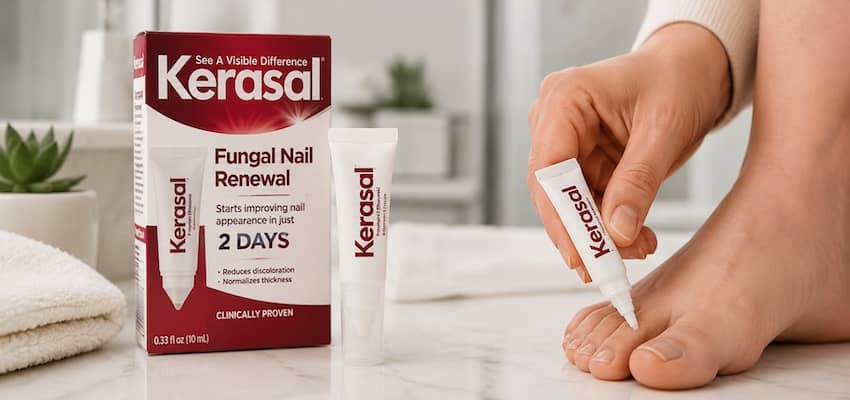
This kind of foot care also overlaps with other issues worth reading up on — if you’re dealing with discolored or damaged toenails, see our Kerasal Fungal Nail Renewal review, and you can browse more foot and body care guides in our Health Tools section.
Frequently asked questions
How long does Kerasal foot repair take to work?
Many people notice visibly smoother heels within about one to two days of nightly use, and the brand cites a use study where most users saw improvement in a day. Deeper, long-standing cracks take longer — plan on consistent daily application for a couple of weeks for full results.
Is Kerasal good for cracked feet?
Yes. It’s specifically formulated for dry, thickened, cracked heels and feet. The salicylic acid loosens hard dead skin while the urea and petrolatum restore and lock in moisture, which is exactly the combination cracked heels need. Just avoid applying it to open, bleeding cracks until they’ve begun to close.
Can Kerasal Foot Repair be used on hands?
Kerasal Intensive Foot Repair is formulated and tested for feet, so it’s best to use a product intended for hands elsewhere. Because it contains salicylic acid, don’t use it to self-treat an undiagnosed skin condition; if you’re unsure whether it’s appropriate for your situation, ask a pharmacist or doctor first.
Does Kerasal remove calluses?
It softens and helps control calluses rather than instantly removing them. The salicylic acid and urea gradually break down thick, hardened skin so it can be gently buffed away, and regular use helps prevent buildup. For very thick calluses, a higher-urea option like Flexitol (25%) may work faster.
Is Kerasal Intensive Foot Repair safe for people with diabetes?
Use caution and talk to your doctor first. Salicylic-acid products carry a standard warning advising people with diabetes or poor circulation to consult a clinician before use, because diabetes can reduce foot sensation and slow healing. Many people with diabetes are steered toward gentle, acid-free moisturizers (such as O’Keeffe’s for Healthy Feet) and toward having cracked heels checked by a podiatrist rather than self-treating. This isn’t medical advice — confirm with your own care team.
When should I stop using Kerasal?
Stop right away and check with a healthcare professional if you develop significant redness, stinging, itching, or irritation, or any sign of an allergic reaction. Otherwise, you can use it as directed until your heels are smooth, then continue occasionally (or switch to a daily moisturizer) to maintain results and prevent the dryness from returning.
Medical disclaimer: This article is for general information only and is not medical advice. Talk to a qualified healthcare professional about your specific situation, especially if you have diabetes, circulation problems, or a skin condition.