Plantar Fasciitis Night Splint: 7 Best Options in 2026
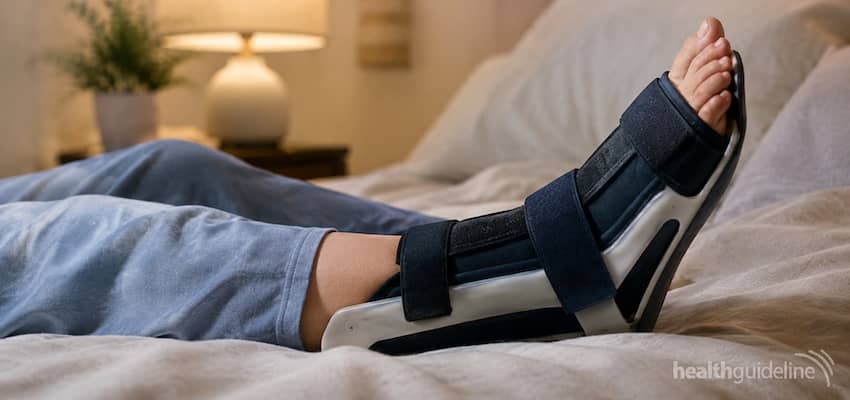
A plantar fasciitis night splint holds your foot in a gentle upward (dorsiflexed) position while you sleep so the plantar fascia and calf can’t tighten overnight — the main reason for stabbing “first-step” heel pain in the morning. The style you can actually sleep in matters more than the price.
Best overall
The Strassburg Sock
The most research-referenced sock-style design; light, low-profile, and the one most people keep wearing.
Best budget
BraceAbility Plantar Fasciitis Night Splint Sock
Soft sock-style stretch for around the price of a takeout meal.
Best for a firmer stretch
United Ortho Adjustable Leg Support Brace
Rigid boot for stubborn, chronic cases.
If your first steps out of bed feel like stepping on a nail, you’re feeling the plantar fascia — the thick band of tissue along the bottom of your foot — pulling tight after a night of your toes pointing down. A night splint is one of the few plantar fasciitis tools you use while doing nothing at all: you wear it asleep, and it keeps that tissue gently lengthened so morning pain has less of a grip. This guide compares seven night splints and stretch socks that are genuinely worth considering in 2026, who each one suits, and the honest trade-offs of each style.
What is the best night splint for plantar fasciitis?
For most people, the best plantar fasciitis night splint is a comfortable sock-style splint like the Strassburg Sock, because the biggest factor in whether a night splint works is whether you keep it on all night. Sock and dorsal (top-of-foot) styles are lighter and less bulky than rigid boot splints, so wear-time — and results — tend to be better. Choose a firmer boot-style splint only if a gentler splint hasn’t helped after several weeks.
How we chose
We focused on night splints and stretch socks that are currently sold on Amazon, come from established brands, and match how the condition is actually treated. We prioritized comfort and “wearability” (the main reason people abandon a splint), an adjustable degree of dorsiflexion, a breathable and washable liner, secure straps that don’t slip, and the ability to fit either foot. We deliberately included all three splint styles — sock, dorsal, and boot — because the right one depends on your case severity, how you sleep, and whether you get up in the night. Product features were checked against manufacturer listings, and the clinical background was checked against orthopedic sources including the American Academy of Orthopaedic Surgeons (AAOS). We don’t accept payment for placement, and prices/ratings change constantly, so we point you to the live listing rather than quoting a number that will be wrong next week.
Top picks at a glance
| Night splint | Style | Best for | Standout feature | Approx. price |
|---|---|---|---|---|
| The Strassburg Sock | Sock | Best overall / first-timers | Sleep in any position; most-studied design | ~$35–$45* |
| PowerStep UltraStretch Night Sock | Sock | Comfort / sensitive feet | Ultra-soft, podiatrist-designed | ~$20–$30* |
| BraceAbility Night Splint Sock | Sock | Best budget | Wide toe box + toe-stretch strap | ~$18–$25* |
| Vive Dorsal Night Splint | Dorsal | Best dorsal / runs hot at night | Low-profile, open-heel + massage ball | ~$20–$30* |
| BraceAbility Dorsal Night Splint | Dorsal | Padded comfort on a budget | Deluxe padded liner, breathable | ~$20–$30* |
| United Ortho Leg Support Brace | Boot | Firm stretch / chronic cases | Non-skid tread for night trips | ~$25–$35* |
| Vive Night Splint + Stretch Wedges | Boot | Adjustable, dial-in stretch | Two foam wedges to tune the angle | ~$25–$35* |
01 / BEST OVERALL
The Strassburg Sock
The Strassburg Sock is a soft, sleeve-style splint: a tube of knit fabric over the calf with an adjustable strap that gently pulls your toes toward your shin, holding the plantar fascia in a light stretch all night. Because it lets you sleep in any position and adds almost no bulk, it’s the night splint most people actually keep wearing — and consistency is what makes a splint work.
Key features
- Over-the-calf knit sleeve
- adjustable toe-pull strap
- gentle dorsiflexion
- sized by calf measurement
- machine washable.
Pros
- Very low-profile
- comfortable for side and stomach sleepers
- the most research-referenced night-splint design
- easy to travel with.
Cons
- Pulling on the toes feels odd at first
- pricier than generic socks
- provides a lighter stretch than a rigid splint.
Best for: First-time users and mild-to-moderate plantar fasciitis; anyone who couldn’t tolerate a boot splint.
02 / BEST FOR COMFORT
PowerStep UltraStretch Night Sock
PowerStep is a podiatrist-founded brand, and the UltraStretch is its answer to “I can’t sleep in a hard splint.” It’s an ultra-soft sock with a seamless toe and a fabric sole, plus an adjustable strap that pulls the toes up to stretch the calf and plantar fascia. If comfort is the thing standing between you and wearing a splint every night, start here.
Key features
- Soft breathable knit
- seamless toe box
- adjustable dorsiflexion strap
- latex-free
- two calf-based sizes.
Pros
- Among the most comfortable options
- barely noticeable once you’re used to it
- good for sensitive skin.
Cons
- Light stretch only
- the strap can loosen if not set snugly
- not for those who need aggressive dorsiflexion.
Best for: People with sensitive feet, light sleepers, and anyone who abandoned a bulkier splint.
03 / BEST BUDGET
BraceAbility Plantar Fasciitis Night Splint Sock
If you want to try the sock approach without spending much, BraceAbility’s soft night splint sock delivers the same idea — a toe-stretch strap that keeps the fascia lengthened overnight — at a budget price. The updated version adds a wider toe box and a longer ankle strap for a more secure fit, and it works on either foot.
Key features
- Soft fabric boot/sock
- wider toe box
- longer ankle strap
- toe-stretching strap
- fits left or right foot.
Pros
- Inexpensive
- lightweight
- easy to put on
- a low-risk way to test whether a night stretch helps you.
Cons
- Less durable than premium socks
- lighter stretch
- sizing runs snug for some — check the size chart.
Best for: Budget-conscious buyers and anyone trying a night splint for the first time.
04 / BEST DORSAL SPLINT
Vive Dorsal Night Splint
A dorsal splint supports the top of the foot and shin rather than cradling the whole foot in a boot, so it’s lighter and runs cooler. Vive’s version uses a bendable aluminum stay you can adjust up to a 90-degree angle, an open-heel design for airflow, and it ships with a small massage ball for rolling out your arch during the day.
Key features
- Adjustable aluminum splint (up to 90°)
- low-profile open-heel design
- padded and breathable
- fits ankles up to ~15.5″
- reversible
- includes a massage ball.
Pros
- Cooler and less bulky than a boot
- leaves the heel free
- firmer stretch than a sock
- good for back sleepers.
Cons
- Dorsal designs can slide down the foot
- some feel toe pressure
- harder to walk in than a sock.
Best for: People who overheat at night and want more stretch than a sock without a full boot.
05 / BEST PADDED DORSAL ON A BUDGET
BraceAbility Dorsal Night Splint
This is the middle ground between a bare sock and a rigid boot: a low-profile dorsal shell with a soft, deluxe padded liner and three adjustable straps, so it holds your foot upright for a consistent stretch while staying comfortable enough to sleep through. The open-heel design keeps it breathable.
Key features
- Low-profile dorsal shell
- deluxe padded liner
- three adjustable straps
- open-heel/breathable
- fits left or right foot
- worn with or without a sock.
Pros
- More padding than most dorsal splints
- adjustable fit
- reasonably priced
- doubles as support for foot drop.
Cons
- Can shift during the night
- toe strap may pinch if over-tightened
- bulkier than a sock.
Best for: Buyers who want a firmer stretch than a sock but prioritize a padded, comfortable fit.
06 / BEST BOOT FOR A FIRM STRETCH
United Ortho Adjustable Leg Support Brace
When a gentle sock or dorsal splint hasn’t moved the needle after a few weeks, a boot-style (posterior) splint applies a more assertive, controlled stretch to the plantar fascia and Achilles. United Ortho’s version has flexion straps to dial in the angle, a cool foam liner, padded calf and ankle straps, and — handy for midnight bathroom trips — a non-skid tread on the sole.
Key features
- Rigid posterior boot
- adjustable flexion straps
- non-skid tread
- cool foam liner
- padded straps
- fits left or right foot.
Pros
- Stronger, more controlled stretch
- stable and supportive
- tread lets you take a few steps safely
- long-standing brand.
Cons
- Bulky and warmer to sleep in
- takes real getting used to
- the most likely style to disrupt sleep at first.
Best for: Stubborn or chronic plantar fasciitis, or people who want the firmest overnight stretch.
07 / BEST ADJUSTABLE BOOT
Vive Plantar Fasciitis Night Splint + Stretch Wedges
Vive’s boot splint solves the “how much stretch is right?” question with two removable foam wedges and dual tension straps, so you can start gentle and increase the dorsiflexion as your foot tolerates more. A hard outer shell with a soft, breathable lining supports the calf, ankle, and foot, and the buckled straps mean you don’t have to re-thread them every night.
Key features
- Hard shell with padded lining
- two removable foam stretch wedges
- dual tension straps
- buckle straps
- fits left or right foot
- HSA/FSA-eligible.
Pros
- Highly adjustable stretch
- supportive
- grows with your recovery
- comfortable lining for a boot.
Cons
- Bulky like all boots
- warmer at night
- more straps to set up than a sock.
Best for: People who want to gradually increase their stretch, or share a splint household with different tolerances.
How does a night splint help plantar fasciitis?
Most people sleep with their feet pointed down, which lets the plantar fascia and calf shorten overnight. The moment you stand in the morning, that tightened tissue is stretched abruptly — the classic sharp “first-step” heel pain. A night splint holds your foot in slight dorsiflexion (toes pulled gently upward) so the fascia and Achilles stay lengthened while you sleep, easing that morning tightness. According to the American Academy of Orthopaedic Surgeons, a night splint stretches the plantar fascia during sleep and is an effective way to reduce plantar fasciitis heel pain, though it can take some getting used to. It works best as part of a plan rather than on its own.
Dorsal vs. boot vs. sock: which night splint style is right?
There’s no single “best” style — the right one depends on your case and how you sleep:
- Sock-style (e.g., Strassburg, PowerStep): A soft sleeve with a toe strap. Lightest and least intrusive, so wear-time is usually highest. Best for mild-to-moderate cases and first-timers. Trade-off: the gentlest stretch.
- Dorsal (e.g., Vive, BraceAbility dorsal): Supports the shin and top of the foot with the heel exposed. Cooler and less bulky than a boot, with a firmer stretch than a sock. Trade-off: can slide down and may cause toe pressure.
- Boot / posterior (e.g., United Ortho, Vive boot): A rigid brace cradling the whole lower leg and foot. The most aggressive, controlled stretch. Best for severe or chronic cases. Trade-off: bulkiest and warmest, and the hardest to sleep in at first.
What to look for when buying a plantar fasciitis night splint
Comfort and wearability
The best splint is the one you’ll actually keep on all night. If a rigid boot means you rip it off at 2 a.m., a sock or dorsal splint you tolerate will help more. Look for padded liners and breathable, low-profile designs.
Adjustable dorsiflexion
Being able to start with a light stretch and increase it gradually (via straps or foam wedges) makes a splint far easier to stick with and reduces morning soreness from overstretching.
Fit and sizing
Sock styles are usually sized by calf measurement; boots and dorsal splints by shoe size. Check the brand’s size chart — a splint that’s too tight causes numbness, and one that’s too loose won’t hold the stretch.
Breathability and washability
Feet get warm under a splint. A breathable, washable liner keeps things hygienic and comfortable over months of nightly use.
Getting up at night
If you’re up frequently, a sock or a boot with a non-skid tread is safer to take a few steps in. Most dorsal splints are not made for walking.
About plantar fasciitis
Plantar fasciitis is inflammation and irritation of the plantar fascia, the band of tissue connecting your heel to your toes. It’s the most common cause of heel pain, and more than two million people are treated for it in the United States each year. The hallmark symptoms are sharp heel pain with your first steps in the morning and after long periods of standing or sitting. It’s usually an overuse problem, linked to things like a rapid increase in activity, long hours on hard surfaces, tight calves, or unsupportive footwear.
The encouraging part: the vast majority of cases improve with simple, conservative care and time. The AAOS notes that more than 98% of people recover without surgery. A night splint is one piece of that care and tends to work best alongside daily calf and plantar-fascia stretching, supportive shoes or plantar fasciitis insoles, activity adjustments, and icing. For related options, see our guides to the best shoes for plantar fasciitis, best sandals for plantar fasciitis, compression socks for plantar fasciitis, and foot massagers for plantar fasciitis.
When to see a professional
A night splint is a self-care tool, not a diagnosis. See a doctor or podiatrist if your heel pain is severe, doesn’t improve after a few weeks of consistent home care, follows an injury, or comes with numbness, tingling, swelling, redness, or fever — or if the pain is worse at night or on both heels, which can point to a different problem. A professional can confirm the cause and tailor treatment to you.
Frequently asked questions
Do night splints actually work for plantar fasciitis?
Yes, for many people — especially for morning “first-step” pain. By holding the foot in gentle dorsiflexion, a night splint keeps the plantar fascia lengthened overnight so it isn’t stretched abruptly when you stand. Orthopedic sources consider it an effective option, though results depend on wearing it consistently and pairing it with stretching.
How long should you wear a night splint?
Most people wear a night splint overnight, but you don’t have to jump straight to a full night. It’s common to start with an hour or two while relaxing before bed, then build up as you get used to the stretch. Many people use one nightly for several weeks to a few months. Follow the instructions that come with your splint.
Can you walk in a night splint?
It’s generally not recommended. Splints are made to hold a stretch while you rest, and walking in most of them is awkward or unsafe. If you get up often at night, choose a sock style or a boot with a non-skid tread, and take only a few careful steps.
How do I choose a size?
It depends on the style. Sock splints are usually sized by your calf circumference, while dorsal and boot splints are sized by shoe size. Always check the specific brand’s size chart before buying — too tight causes numbness, too loose won’t maintain the stretch.
Do home remedies like Epsom salt baths or CBD cure plantar fasciitis?
They may feel soothing, but the evidence that Epsom salts or CBD treat plantar fasciitis is limited, and neither is an FDA-endorsed treatment for it. Stick to the approaches with better support — stretching, supportive footwear, night splints, activity changes, and icing — and see a professional if pain persists.
How much does a plantar fasciitis night splint cost?
Most fall roughly between $18 and $45. Soft sock splints and basic dorsal splints tend to be at the lower end, while premium socks and adjustable boot splints cost more. Prices change often, so check the current listing — and remember the most expensive option isn’t automatically the best one for you.
Will a night splint replace stretching and good shoes?
No. A night splint works best as one part of a plan. Daily calf and plantar-fascia stretches, supportive shoes or insoles, and easing off aggravating activity all matter. Think of the splint as protecting the overnight “healing window,” not as a stand-alone fix.
Medical disclaimer: This article is for general information only and is not medical advice. Talk to a qualified healthcare professional about your specific situation before starting any new treatment.