ASO Ankle Brace: The 6 Best Models Compared (2026 Guide)
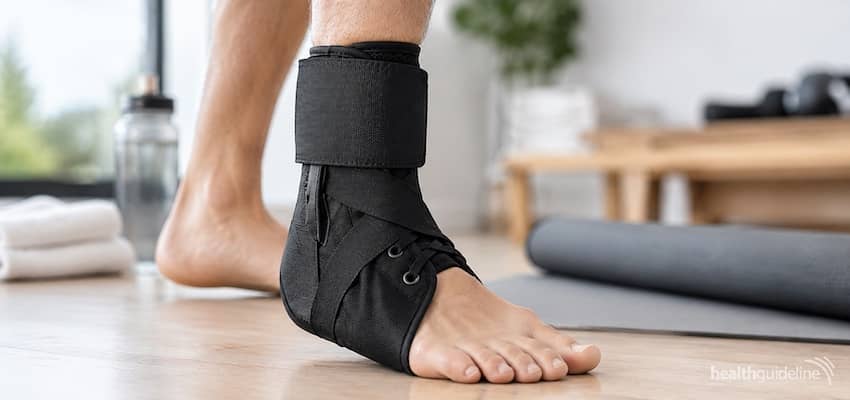
Best overall
ASO Ankle Stabilizer (Original)
The same figure-eight lace-up brace that peer-reviewed sports-medicine literature lists among its recommended braces, and the best balance of support, comfort, and price for most people.
Also great
ASO EVO and the ASO Flex Hinge
ASO EVO is Most comfortable for all-day wear and ASO Flex Hinge most supportive. The pick for high ankle sprains and serious instability.
The ASO — short for Ankle Stabilizing Orthosis, made by Med Spec — is one of the most widely recommended lace-up ankle braces among athletic trainers and orthopedic clinicians. Its ballistic-nylon boot and non-elastic figure-eight straps mimic the basket-weave of athletic taping, locking the heel and limiting the sideways rolling motion that causes most sprains. This guide compares the six ASO models still sold today, maps each to a specific use case, and gives you honest pros, cons, and sizing help so you can pick the right one the first time.
Do ASO ankle braces actually work?
Yes — within limits. Research shows lace-up braces like the ASO don’t do much to prevent a first ankle sprain, but they meaningfully reduce recurrent sprains and help support healing after an injury. One review found athletes were roughly two to three times more likely to sprain an ankle when not wearing a brace.
Here’s the fuller picture. Ankle sprains are the most common sports- and activity-related injury, and about a quarter of all sports injuries involve the ankle — roughly 85% of those being acute lateral (inversion) sprains. The real problem is recurrence: after one sprain you carry about double the risk of spraining again for at least a year, and up to half of those repeat injuries lead to lingering pain or chronic instability. That’s where a brace earns its place. Several systematic reviews find lace-up and semi-rigid braces reduce recurrent sprains, a landmark trial of high-school football players found lace-up braces lowered sprain rates, and a review in the Journal of Orthopaedic & Sports Physical Therapy specifically names the ASO among the lace-up braces it recommends for people with lower-grade residual instability. None of this means a brace guarantees protection — no brace can “prevent” an injury outright — but for recovery and for staying active after a previous sprain, the ASO is a well-supported choice. Always follow the guidance of a qualified clinician for your specific injury.
How we chose
We focused on the current Med Spec / ASO lineup available on Amazon US and matched each model to a specific job — best overall, most comfortable, most supportive, fastest to put on, and best for the acute phase of recovery. Features were cross-checked against manufacturer specifications and against peer-reviewed evidence on lace-up bracing. We prioritized genuine differences (support level, closure type, comfort) over near-duplicates, and we say so honestly where a pricier model mostly overlaps a cheaper one. We do not list discontinued models — the older ASO MAX and ASO Vortex no longer have a reliable Amazon listing, so they’ve been left out — and we don’t quote live prices, which change frequently. Always check the current listing before you buy.
ASO ankle braces at a glance
| Model | Best for | Standout feature | Support |
|---|---|---|---|
| ASO Ankle Stabilizer (Original) | Overall / most people | Proven figure-8 strap system | High |
| ASO EVO | All-day comfort | CoolFlex padding, contoured straps | High |
| ASO Flex Hinge | High ankle sprains, max stability | Internal articulated plastic shell | Maximum |
| ASO Speed Lacer | Quick, one-pull application | Speed-lace closure, knitted boot | High |
| ASO with Plastic Stays | Acute sprain recovery | Removable medial/lateral stays | High+ |
| ASO EVO Speed Lacer | Comfort + speed in one | EVO comfort with speed lacing | High |
01 / Best overall
1. ASO Ankle Stabilizer (Original) — Best overall
The original ASO is the model most people should start with. A ballistic-nylon boot, an elastic cuff, and two non-elastic figure-eight straps recreate the “basket-weave” of athletic taping to limit the inward roll that causes most sprains — and it’s the specific brace a peer-reviewed sports-medicine review lists among its recommendations for lower-grade instability. It’s the best mix of support, comfort, durability, and price in the ASO range.
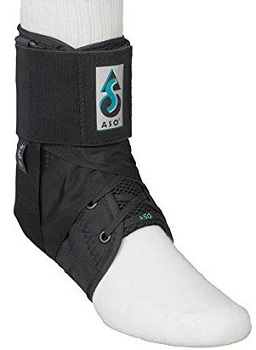
Key features:
- ballistic-nylon base
- figure-eight stabilizing straps
- elastic cuff closure to limit inversion
- low-profile fit inside most shoes
- bilateral (fits either foot)
- lace-up.
Pros:
the most-recommended, best-value model; straps can be re-tightened without taking your shoe off; durable and reusable; fits in athletic and casual shoes.
Cons:
laces plus straps take longer to put on than a slip-on sleeve; known to run large (size down if between sizes); not as rigid as a hinged brace for severe instability.
Best for: most people wanting dependable support for sprain recovery, chronic instability, or return to sport.
02 / Best for all-day comfort
2. ASO EVO — Best for all-day comfort
The EVO is the original re-engineered for comfort. Its stabilizing straps are re-angled to contour above the ankle bones, and CoolFlex material with added padding improves breathability and cushioning — with a SkinLoc lining that lets you wear it with or without a sock. If you’ll have a brace on for most of the day, or the original chafed, this is the upgrade to reach for.
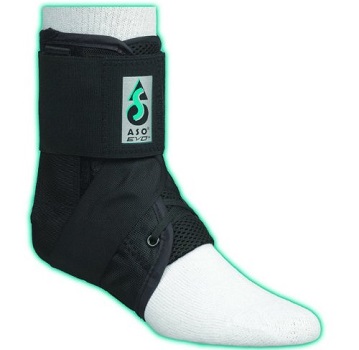
Key features:
- contoured figure-eight straps
- CoolFlex breathable material
- extra padding
- SkinLoc lining
- low-profile boot.
Pros:
noticeably more comfortable and breathable than the original; better strap contour for long wear.
Cons:
costs a bit more than the original; for occasional or short-session use, the comfort gains may not justify the price.
Best for: all-day wearers and anyone who found the original brace irritating over long periods.
03 / Best for high ankle sprains & maximum stability
3. ASO Flex Hinge — Best for high ankle sprains & maximum stability
The Flex Hinge is the most supportive brace in the ASO line. It builds an internal articulated plastic shell into the nylon boot, forming an inner cuff around the tibia and fibula that resists the two bones separating — which is what makes it suited to high (syndesmotic) ankle sprains. The hinge flexes with your ankle for comfort, while the figure-eight straps and elastic cuff still lock the heel. It’s the model built for aggressive cutting and pivoting sports.
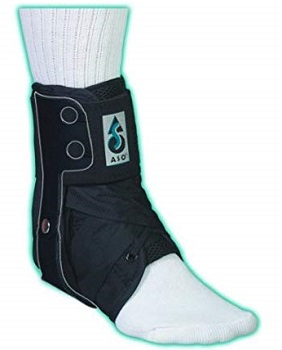
Key features:
- internal plastic shell with hinge
- inner cuff around the tibia/fibula
- figure-eight straps
- elastic cuff
- SkinLoc lining.
Pros:
highest support in the line; suited to high ankle sprains, significant instability, and football/soccer-style movement.
Cons:
the bulkiest and priciest model; more than most people need for a routine low sprain; the rigid shell trades away some mobility.
Best for: high (syndesmotic) ankle sprains, chronic instability, and high-demand pivoting sports.
04 / Best for quick, one-pull application
4. ASO Speed Lacer — Best for quick, one-pull application
The Speed Lacer keeps the ASO’s core support but swaps traditional lacing for a speed-lace closure you can cinch in one pull — a big help if hand dexterity, arthritis, or frequent on-and-off is an issue. Its knitted nylon boot is comfortable and breathes well for extended wear, and it’s often suggested for older users for exactly that reason.
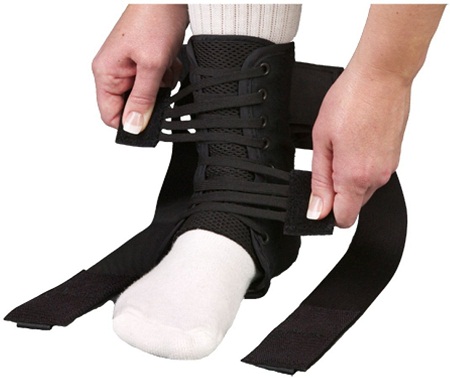
Key features:
- speed-lace (hook-and-loop) closure
- knitted nylon boot
- figure-eight straps
- elastic cuff
- low-profile fit.
Pros:
fast to put on and take off; easier for limited dexterity; breathable knitted boot.
Cons:
speed-lace hardware can wear over time; the fit feel differs slightly from traditional laces.
Best for: anyone who struggles with laces or needs to don and doff the brace quickly and often.
05 / Best for acute sprain recovery
5. ASO with Plastic Stays — Best for acute sprain recovery
This is the original ASO with removable medial and lateral plastic stays added for extra proprioceptive support — most useful during the acute phase right after a moderate sprain. The stays add rigidity and feedback when the joint is most vulnerable, and because they’re removable, you can dial the support down as you heal and transition back to the standard brace feel.
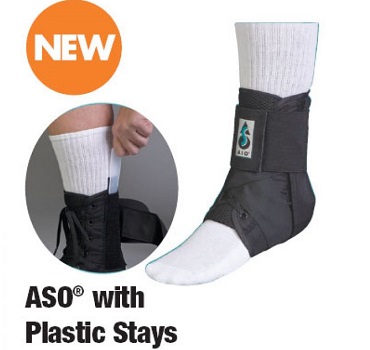
Key features:
- removable medial/lateral plastic stays
- figure-eight straps
- elastic cuff
- ballistic-nylon base.
Pros:
added rigidity and proprioception for early recovery; removable stays let you reduce support over time.
Cons:
more support than you need once healed; the stays add some bulk.
Best for: the acute phase after a moderate sprain, when extra side-to-side support helps.
06 / Best hybrid (comfort + speed)
6. ASO EVO Speed Lacer — Best hybrid (comfort + speed)
As the name suggests, the EVO Speed Lacer combines the EVO’s comfort updates — contoured straps and CoolFlex padding — with the Speed Lacer’s one-pull closure. It’s the pick if you specifically want both, and don’t mind paying for the combination.
Key features:
- EVO contoured straps and CoolFlex material plus a speed-lace closure.
Pros:
EVO-level comfort and fast application in a single brace.
Cons:
essentially the EVO plus speed lacing at a higher price — redundant if you don’t need both. If comfort matters more than speed, the standard EVO saves money; if speed matters more, the standard Speed Lacer does.
Best for: people who want the EVO’s comfort and speed lacing together and will use both.
How to choose an ASO ankle brace
All six share the same figure-eight strap system, so the decision comes down to a few practical factors:
Support level vs. mobility
More support usually means less freedom of movement. For a routine low sprain or general instability, the Original or EVO is plenty. Step up to the Plastic Stays for the acute phase, or the Flex Hinge for high ankle sprains and serious instability — accepting a little more bulk in return.
Closure type
Traditional laces (Original, EVO, Flex Hinge, Plastic Stays) give the most adjustable, dialed-in fit. Speed lacing (Speed Lacer, EVO Speed Lacer) is faster and far easier if grip strength or dexterity is limited.
Fit inside your shoes
Every ASO is low-profile and designed to fit inside most athletic and casual shoes, but a brace does take up room. If your shoes are already snug, consider going up a half size in footwear rather than sizing down the brace.
Sizing
ASO braces are sized by ankle circumference, not shoe size — see the sizing section below.
ASO ankle brace sizing guide
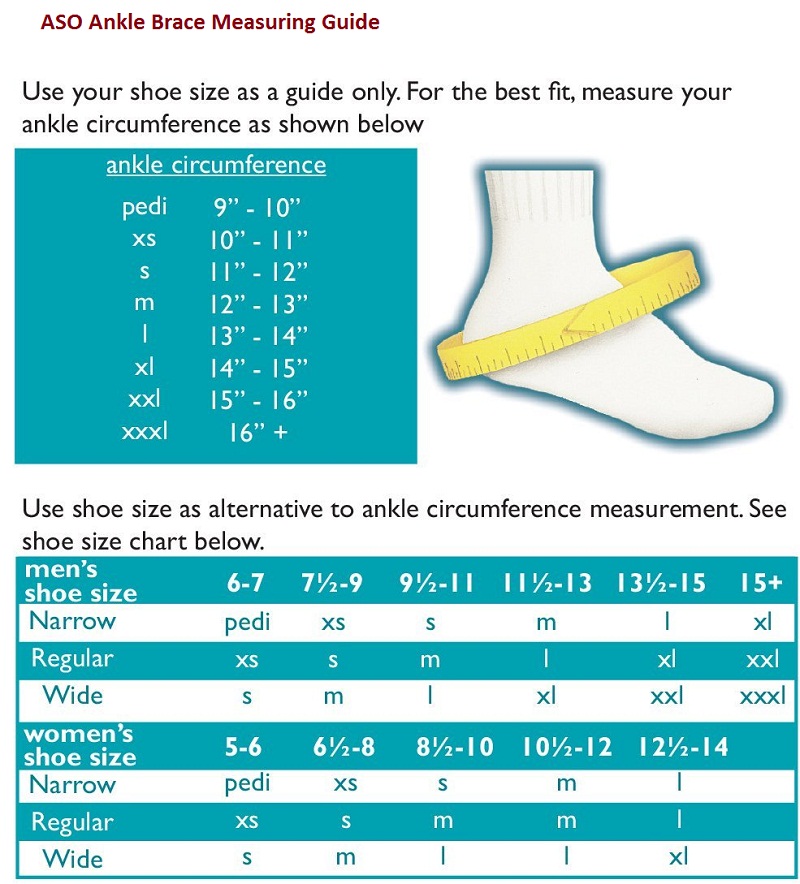
ASO braces are fitted by ankle circumference, not shoe size. Wrap a soft tape measure around your ankle, running it around the heel and across the top of the foot, and match the number to the model’s size chart. Two things worth knowing: ASO braces are known to run large, so if you fall between sizes, the smaller size usually gives a snugger, more supportive fit — but always confirm against the specific model’s chart, since sizing can vary slightly across the line. Because every brace is bilateral, one size fits either your left or right foot.
When to see a professional
A brace supports an ankle — it doesn’t diagnose or treat the underlying injury. See a doctor or physical therapist if you can’t bear weight on the ankle, if there’s significant swelling, bruising, numbness, or deformity, if the pain is severe or isn’t improving after a few days, or if you keep re-spraining the same ankle. Repeated sprains and lingering instability are worth a professional assessment, since they can point to ligament damage or chronic ankle instability that benefits from targeted rehab. This article is for general information only and is not medical advice.
Frequently asked questions
Do ASO ankle braces actually work?
They help most with recurrence, not first injuries. Evidence shows lace-up braces like the ASO don’t strongly prevent a first ankle sprain, but multiple reviews find they reduce repeat sprains, and one analysis reported athletes were two to three times more likely to sprain an ankle without a brace. A peer-reviewed review also names the ASO among its recommended lace-up braces.
What size ASO ankle brace should I get?
Measure your ankle circumference — not your shoe size — by wrapping a soft tape around the ankle, over the heel and across the top of the foot, then match the model’s size chart. ASO braces tend to run large, so if you’re between two sizes, the smaller size usually gives a snugger, more supportive fit. The brace fits either foot.
Which ASO model is best for a high ankle sprain?
The ASO Flex Hinge. Its internal articulated plastic shell forms a cuff around the tibia and fibula that resists the bones separating, which is the mechanism involved in high (syndesmotic) ankle sprains. It’s the most supportive model in the line — though a high ankle sprain should always be assessed and managed by a clinician.
Can I wear an ASO brace inside my shoe?
Yes. Every ASO model is low-profile and designed to fit inside most athletic and casual shoes, which is a big reason athletes prefer lace-up braces over bulkier stirrup designs. If your shoes are already tight, going up a half size in footwear is usually more comfortable than sizing down the brace itself.
How long should I wear an ankle brace after a sprain?
It depends on severity, so follow your clinician’s advice. As general context, functional bracing or taping for several weeks after a sprain tends to outperform prolonged immobilization for preventing re-injury, and some athletes wear a brace during high-risk sport for months after the injury while strength and balance recover. This is general information, not a treatment plan.
ASO brace vs. athletic tape — which is better?
A brace is reusable, adjustable, and doesn’t need a skilled hand to apply, whereas tape must be reapplied each session. Studies generally find comparable results over a full recovery, but bracing tends to be more cost-effective, and you can re-tighten an ASO’s straps mid-activity without removing your shoe.
How do I clean an ASO ankle brace?
Follow the label, but most ASO models are machine washable on a gentle cycle with no bleach, then air-dried — never tumble-dried, since heat can damage the nylon and straps. Washing it regularly helps with odor and hygiene during long-term daily wear.
Medical disclaimer: This article is for general information only and is not medical advice. Talk to a qualified healthcare professional about your specific situation.