Velcro Shoes for Elderly: 6 Best Picks for 2026
2026 buying guide · easy fastening, fit & walking support
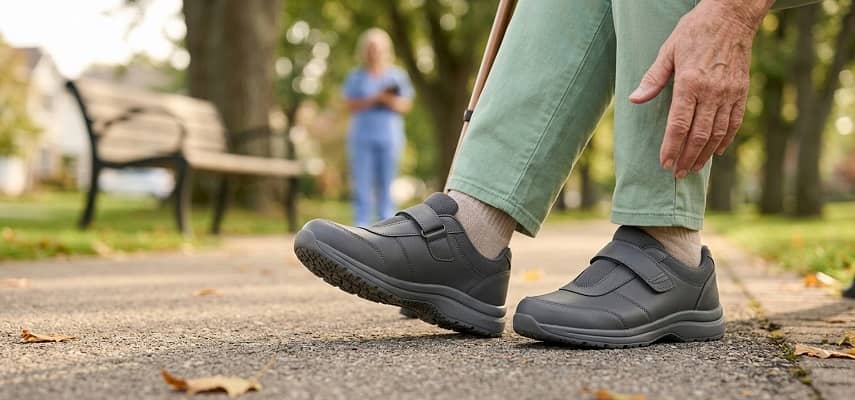
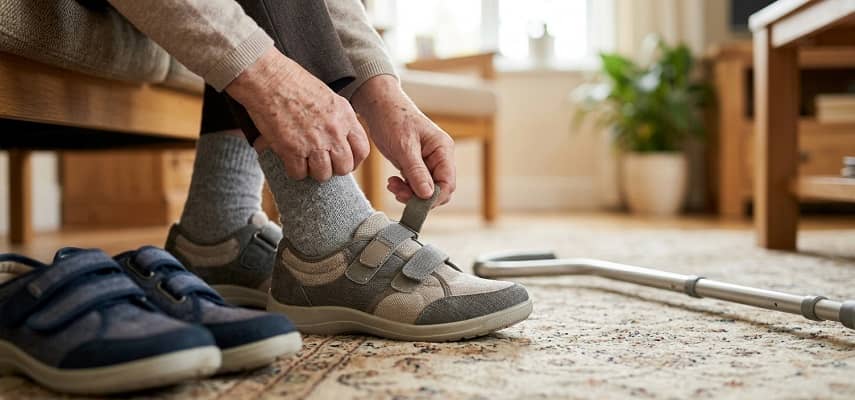
The best Velcro shoes for elderly adults are secure, well-fitting walking shoes that replace laces with an adjustable hook-and-loop closure. For most shoppers, start with a stable heel, grippy rubber outsole, enough toe room and a strap that can be tightened without pinching. The six picks below cover different widths, budgets and mobility needs.
Quick picks
Best stability-focused
New Balance 928v3
Hook-and-loop fastening plus ROLLBAR support, a removable footbed and a broad width range.
Best women’s classic
New Balance 813 V1
A straightforward leather walking shoe with hook-and-loop closure and a soft comfort collar.
Best for very wide feet
FitVille EasyTop Wings V2
A wide-opening adjustable shoe with 2E, 4E and 6E men’s width options and a roomy forefoot.
How we chose these Velcro shoes for elderly adults
We treated this as a footwear-fit problem, not a search for the shoe with the most cushioning. We looked for real hook-and-loop walking shoes with a secure heel, adjustable upper, rubber traction, useful width choices and enough structure for everyday walking. Manufacturer specifications were prioritized, with Amazon used to verify current U.S. product listings where accessible.
The categories are editorial judgments based on construction and fit features; they are not results of a clinical head-to-head trial. We also checked older-adult footwear guidance from the National Institute on Aging, APMA and NHS sources before framing the buying advice.
The closure alone does not make a shoe “safe.” A hook-and-loop strap can make fastening easier, but the shoe still needs to fit securely, stay on the heel and provide appropriate grip. Older-adult fall-prevention guidance emphasizes well-fitting, low-heeled, nonskid footwear rather than any single brand or closure type.
Best Velcro shoes for elderly adults at a glance
| Shoe | Best for | Closure / fit | Why it stands out |
|---|---|---|---|
| New Balance 928v3 | Stability-focused walking | Hook-and-loop; widths through 6E on the men’s model | ROLLBAR support, removable footbed, rubber outsole |
| New Balance Women’s 813 V1 | Women wanting a classic walking shoe | Hook-and-loop; multiple size/width options on Amazon | Leather upper, soft collar, simple fastening |
| New Balance Men’s 577 V1 | Value-focused everyday walking | Hook-and-loop; regular and wider options | ABZORB heel cushioning, leather upper, PU midsole |
| Propét Tour Walker Strap | Women needing more width choices | Twin straps; AA through 4E on current Propét page | Firm heel counter, removable footbed, herringbone outsole |
| Propét LifeWalker Strap | Men using orthotics or wider sizing | Dual straps; multiple widths | Removable orthotic, heel stabilizer, traction outsole |
| FitVille EasyTop Wings V2 | Very wide or swollen feet | Wide-opening strap; 2E, 4E and 6E | Roomy forefoot, seamless lining, rubber outsole |
The six best hook-and-loop walking shoes to compare
01 / BEST STABILITY-FOCUSED
New Balance Men’s 928 V3 Hook and Loop
The 928v3 is the most stability-oriented shoe in this shortlist. New Balance combines a hook-and-loop upper with its ROLLBAR rear-foot support system, ABZORB cushioning, a removable polyurethane footbed and a rubber outsole. The men’s hook-and-loop model is also offered across a notably broad width range.
Key features
- Adjustable hook-and-loop closure
- ROLLBAR stability post system
- ABZORB midsole cushioning
- Removable PU footbed and rubber outsole
- Men’s widths listed from narrow B through 6E
- Leather upper
Pros
- More structured rear-foot support than the simpler walking shoes here
- Excellent width range for difficult-to-fit feet
- Removable footbed leaves room to discuss orthotic use with a clinician
Cons
- Heavier and more structured than a lightweight mesh walker
- Leather construction is less airy than an open mesh upper
- Usually positioned above basic walking shoes in price
Best for: Older men who want easy fastening but still prefer a firm, stability-focused walking shoe. Not ideal for: someone who specifically wants a very light, flexible shoe.
02 / BEST WOMEN’S CLASSIC
New Balance Women’s 813 V1 Hook and Loop
The women’s 813 V1 is a straightforward option for shoppers who want a traditional leather walking shoe without laces. Its Amazon listing specifies a hook-and-loop closure, leather upper and soft comfort collar. The design is less elaborate than the 928v3, which may appeal to someone who simply wants familiar everyday footwear with easier fastening.
Key features
- Hook-and-loop closure instead of laces
- Leather upper
- Soft comfort collar
- Walking-shoe construction with rubber outsole
Pros
- Simple, familiar walking-shoe design
- Easy to adjust without tying knots
- Current Amazon listing includes multiple size and width selections
Cons
- Not as breathable as a mesh walking shoe
- Less specialized for strong motion control than the 928v3
- Fit still needs checking carefully if swelling changes through the day
Best for: Women who prefer a classic leather walking shoe and want to avoid laces. Not ideal for: shoppers looking for a soft, highly breathable knit sneaker.
03 / BEST VALUE-FOCUSED MEN’S PICK
New Balance Men’s 577 V1 Hook and Loop
The 577 V1 is the simpler New Balance option for men in this guide. Its current Amazon listing describes a leather walking shoe with hook-and-loop fastening, ABZORB cushioning in the heel and a polyurethane midsole. It makes sense for buyers who want an established walking-shoe shape without paying primarily for extra motion-control hardware.
Key features
- Hook-and-loop fastening
- Leather upper
- ABZORB heel cushioning
- Polyurethane midsole
- Rubber outsole
- Regular and wider size options on the listing
Pros
- Simple two-strap fastening
- Durable-looking leather construction for everyday wear
- Typically a more value-oriented choice than the 928v3
Cons
- Less motion-control structure than the 928v3
- Leather upper can feel warm in hot weather
- People with substantial swelling should check that the straps have enough overlap
Best for: Men seeking a practical everyday hook-and-loop walker at a more approachable price tier. Not ideal for: people who specifically need maximum width or stronger motion-control features.
04 / BEST WOMEN’S WIDTH RANGE
Propét Women’s Tour Walker Strap
The Tour Walker Strap is especially useful when width choice matters. Propét’s current page lists women’s widths from narrow AA through XX-wide 4E, along with twin hook-and-loop straps, a firm heel counter, removable cushioned footbed and herringbone rubber outsole. That gives fit-sensitive shoppers more variables to work with than a single “wide” option.
Key features
- Twin hook-and-loop straps
- Widths from AA through 4E on the current manufacturer page
- Firm heel counter
- Removable cushioned footbed
- Cushioned EVA midsole
- Herringbone rubber outsole
Pros
- One of the broadest women’s width ranges in this shortlist
- Two straps let you adjust forefoot and instep tension separately
- Removable footbed is useful when fitting prescribed inserts
Cons
- Classic orthopedic-style appearance will not suit every shopper
- Leather/suede construction is heavier than many mesh sneakers
- The correct width still needs to be measured rather than guessed
Best for: Women whose main challenge is finding a secure shoe in the right width. Not ideal for: someone who wants a modern lightweight knit sneaker.
05 / BEST ORTHOTIC-FRIENDLY MEN’S CLASSIC
Propét Men’s LifeWalker Strap
The LifeWalker Strap is another traditional leather walker, but its appeal is the combination of dual hook-and-loop straps, a removable cushioned orthotic and a built-in heel stabilizer. Current retail listings also show several width choices. It is a practical model to compare when a wearer already uses, or may need to accommodate, a professional shoe insert.
Key features
- Dual adjustable hook-and-loop straps
- Full-grain leather upper
- Removable cushioned orthotic
- Contoured heel stabilizer
- EVA midsole
- Rubber outsole designed for traction
Pros
- Dual straps are easy to reopen and retighten
- Removable insert makes orthotic fitting more practical
- Firm heel structure is preferable to a loose backless shoe
Cons
- Bulky compared with lightweight modern walking shoes
- Leather is less breathable than mesh
- Do not assume an A5500/therapeutic-shoe label means it is medically appropriate for every person with diabetes
Best for: Men who want a classic strap shoe with a removable insert and wider sizing. Not ideal for: shoppers prioritizing minimal weight or sneaker-like styling.
06 / BEST FOR VERY WIDE OR SWOLLEN FEET
FitVille Men’s EasyTop Wings V2
The EasyTop Wings V2 is the most accommodation-focused shoe here. FitVille lists men’s widths of 2E, 4E and 6E, a wide-opening adjustable strap, a spacious toe box, cushioned/seamless interior and a rubber outsole. That makes it worth comparing when ordinary hook-and-loop walkers still feel too narrow across the forefoot or instep.
Key features
- Wide-opening adjustable strap closure
- Men’s widths: 2E, 4E and 6E
- Roomy toe box
- Seamless, padded interior
- OrthoLite insole and dual-density EVA midsole
- Rigid rubber outsole
Pros
- More room than conventional “wide” walking shoes
- Large opening may be easier when the foot or instep is hard to fit
- Soft interior reduces prominent internal seams
Cons
- Too roomy for many narrow or average-volume feet
- Some sizes are periodically backordered on FitVille’s own site
- Severe or rapidly changing swelling should be medically assessed rather than managed only by sizing up
Best for: Men with genuinely wide, extra-wide or swollen feet who need a large opening and adjustable upper. Not ideal for: narrow feet or people whose swelling is new, painful or unexplained.
What should older adults look for in Velcro shoes?
A good hook-and-loop shoe should stay securely on the foot, not merely open easily. Prioritize a fastening that holds the heel, a nonskid rubber outsole, a low and stable heel, enough toe room and a fit that feels supportive immediately. If the wearer feels less steady in the shoe, choose a different pair even if the straps are convenient.
1. Secure fastening over the top of the foot
Hook-and-loop straps are useful because they can be opened wide and adjusted without tying a knot. But they still need enough overlap to stay fastened while walking. NHS footwear guidance specifically lists laces, Velcro straps and T-bar straps as acceptable ways to secure a shoe over the foot and heel.
2. A heel that does not slip or collapse
The rear of the shoe should hold the heel rather than letting it lift and slide. APMA recommends checking that the heel area is firm and does not collapse easily. Backless shoes and loose slippers are a poor substitute for a secure walking shoe when stability is a concern.
3. Grip and a stable sole
The National Institute on Aging advises older adults to choose nonskid, rubber-soled, low-heeled shoes. That does not mean every rubber sole is equally slip-resistant on every surface, but a textured rubber outsole is a better starting point than a smooth or badly worn sole. Replace shoes when the tread or structure is noticeably worn.
If balance is the primary problem rather than shoe fastening, also see our guide to shoes for elderly adults with balance problems.
4. Enough width and depth — not just a larger size
Feet can change in length, width and depth over time. A shoe that is too narrow can create pressure, while a shoe that is simply too large may allow the foot to slide. Measure both feet, fit the larger one and pay attention to width and instep volume instead of automatically going up a full size.
5. Removable insoles when orthotics are used
A removable footbed can make it easier to fit a prescribed orthotic without crowding the shoe. Bring the orthotic and the socks you plan to wear when testing footwear. APMA recommends trying shoes with any prescribed inserts rather than assuming they will fit later.
More cushioning is not automatically more stable. Comfort matters, but the wearer should also feel secure and controlled when standing, turning and walking. The best choice is the shoe that fits the person, activity and medical needs—not the softest midsole on the shelf.
How do you fit hook-and-loop shoes correctly?
Fit the shoes at the time of day the wearer’s feet are usually largest, with the same socks and inserts they will use. The heel should feel held, the toes should have room to move, and the strap should close securely without digging into the top of the foot. Walk indoors before deciding to keep the pair.
- Measure both feet. Length and width can differ. Fit the larger foot and re-measure periodically rather than relying on an old shoe size.
- Try them with real socks and inserts. Use the socks, compression garments or orthotics normally worn with the shoes.
- Check the heel. It should not pump up and down noticeably when walking.
- Check the toes. There should be comfortable length, width and depth without pressure over bunions or curled toes.
- Close the strap fully. It should have enough hook-and-loop overlap to stay secured without excessive tension.
- Walk and turn indoors. The wearer should feel steady during normal steps and direction changes, not as if the foot is sliding inside the shoe.
Shopping tip: NHS guidance suggests trying shoes later in the day because feet can swell. Do not buy a painful shoe expecting it to “break in.”
Are Velcro shoes safer for elderly people?
Hook-and-loop shoes can be easier to fasten securely for someone who struggles with laces, but the closure itself does not prevent falls. Safety depends on the whole shoe: fit, heel hold, sole grip, heel height and how steady the wearer feels. Fall prevention also includes strength, balance, vision, medications, home hazards and appropriate walking aids.
Why secure footwear matters
The National Institute on Aging notes that unsafe footwear such as backless shoes or high heels can increase fall risk and advises nonskid, rubber-soled, low-heeled footwear. Guy’s and St Thomas’ NHS guidance adds that good shoes should support the heel and top of the foot, with fastening from laces, Velcro straps or T-bar straps.
Someone who has had repeated falls, new unsteadiness or difficulty walking may need more than different shoes. Our best walkers for seniors guide explains common walker types, while our rollator walker with seat guide covers four-wheel options. A healthcare professional can help decide whether a mobility aid is appropriate.
When should an older adult get professional footwear advice?
Professional assessment is especially useful when shoe fit is affected by persistent swelling, deformity, major asymmetry, foot pain, loss of sensation, skin breakdown or repeated falls. A podiatrist, physical therapist or other qualified clinician can help determine whether standard retail footwear, an orthotic, therapeutic shoes or a different mobility plan is appropriate.
Extra caution with diabetes or neuropathy
If the wearer has diabetes with numbness or reduced sensation, do not rely on comfort alone to judge fit. NIDDK explains that neuropathy can make a person miss pressure, blisters or sores. Shoes should fit well, and new footwear should be introduced gradually while the feet are checked for redness or skin damage.
An A5500 or “diabetic shoe” designation does not mean every listed model is automatically right for every person with diabetes. People with ulcers, significant deformity, loss of feeling or circulation problems should get individualized foot-care advice.
Frequently asked questions
Are Velcro shoes good for elderly people?
They can be a good option when tying laces is difficult, provided the entire shoe fits securely. Look for a firm heel, adequate toe room, a low stable heel and a nonskid rubber outsole. Hook-and-loop fastening is helpful for convenience and adjustability, but it does not by itself make a shoe safer or more supportive.
Are slip-on shoes or Velcro shoes better for seniors?
A properly secured hook-and-loop shoe is often easier to adjust and less likely to feel loose than an unfastened slip-on. NHS footwear guidance favors shoes that hold the foot with laces, Velcro or T-bar straps and advises against shoes that do not have a proper fastening. Fit and stability still matter more than the label.
What are the best Velcro shoes for swollen elderly feet?
Look for a wide-opening upper, multiple width options and a strap with enough adjustment range. FitVille EasyTop Wings V2 is the most spacious men’s option in this comparison, while Propét Tour Walker Strap offers women’s widths from AA through 4E. New, painful or one-sided swelling should be medically assessed rather than handled only by sizing up.
Should elderly adults buy shoes a size larger?
Not automatically. A larger size can create heel slip if the real issue is width, depth or swelling. Measure both feet, fit the larger foot, and choose the correct width and instep volume. Shoes should feel secure when walking and turning. If swelling varies, try shoes later in the day when the feet are usually largest.
Which shoe features matter most for fall prevention?
No shoe can prevent every fall. Older-adult guidance consistently favors footwear that fits well, stays on the foot, has a low stable heel and uses a nonskid rubber sole. A firm heel area and secure fastening can also help the shoe stay controlled. Fall prevention additionally includes balance, strength, medications, vision and the home environment.
Can an older adult with diabetes wear ordinary Velcro shoes?
Sometimes, but diabetes-related neuropathy, poor circulation, ulcers or foot deformity can change the footwear needed. NIDDK recommends well-fitting protective shoes and regular foot checks. If sensation is reduced or there is a history of sores, a clinician or podiatrist should guide shoe choice rather than relying only on comfort or a “diabetic shoe” marketing label.
This article provides general information and product research, not medical advice. Talk to a qualified healthcare professional about persistent foot symptoms, balance problems, diabetes-related foot risk or prescribed orthotics.