Waterproof Bed Sheets: 6 Best Picks for 2026
2026 buying guide · mattress protection, bedwetting & easy cleanup
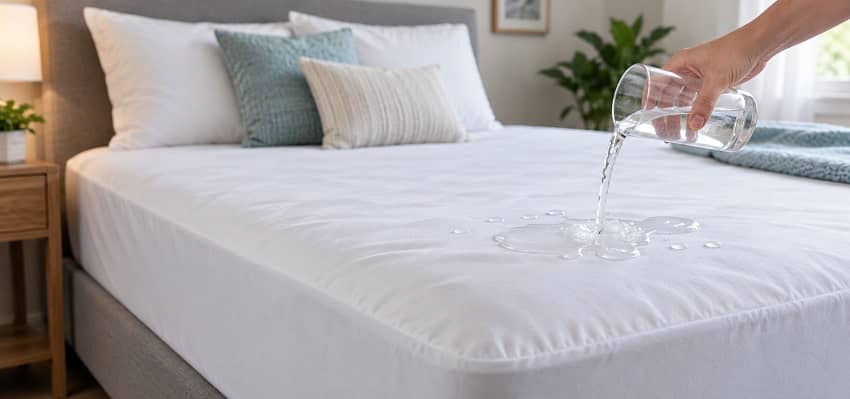
A waterproof bed sheet can mean three different things: a fitted waterproof mattress protector, a washable absorbent underpad, or a disposable bed mat. For most everyday beds, a fitted protector gives the broadest set-it-and-forget-it coverage; for frequent accidents, a washable pad is faster to swap; for travel or occasional child bedwetting, a disposable mat is the simplest cleanup.
Quick picks
Best overall
SafeRest Waterproof Protector
A fitted, machine-washable protector for people who want whole-bed top coverage without changing their sleep setup much.
Best reusable pad
GORILLA GRIP Underpad
A washable, slip-resistant pad that is easier to remove after an accident than stripping the entire mattress protector.
Best disposable
Goodnites Bed Mats
A no-laundry option for travel, sleepovers, or occasional childhood bedwetting, with adhesive strips to help hold the mat in place.
How we chose these waterproof bed sheets
We rebuilt the old list around products that are still identifiable and currently sold in the United States. Instead of treating every waterproof product as the same thing, we selected distinct formats: fitted mattress protectors, washable absorbent pads, and a disposable bed mat. We prioritized verified waterproof construction, practical fit, washability, ease of changing, and clear manufacturer instructions.
Category labels such as “best overall” are editorial judgments based on product design and use case, not results from a laboratory head-to-head test. We do not claim independent leak testing, sleep-temperature testing, or long-term durability testing.
Best waterproof bed sheets at a glance
| Product | Best for | Format | Key trade-off |
|---|---|---|---|
| SafeRest Waterproof Protector | Best overall | Fitted mattress protector | Protects the mattress top; accidents still wet the fitted sheet above it |
| SureGuard Waterproof Protector | Premium fitted option | Cotton-terry fitted protector | Costs more than many basic protectors |
| Linenspa Premium Smooth | Low-profile protection | Smooth fitted protector | Top-only waterproof coverage |
| GORILLA GRIP Underpad | Frequent accidents | Washable absorbent pad | Covers a zone, not the entire mattress |
| Epica Bed Pads | Caregiving and rotation | Washable 34 x 52 in pads | Bulkier laundry than a thin protector |
| Goodnites Bed Mats | Travel and occasional child bedwetting | Disposable adhesive mat | Ongoing waste and replacement cost |
Most useful buying shortcut: If the main problem is protecting the mattress from occasional spills, choose a fitted protector. If you expect repeated nighttime accidents and want faster changes, add a washable underpad on top of the sheet. A disposable mat makes the most sense when laundry access is limited.
The six best waterproof bed sheet options for 2026
01 / BEST OVERALL
SafeRest Waterproof Queen Size Mattress Protector
SafeRest Waterproof Queen Size Mattress Protector — view on Amazon is the easiest all-purpose choice in this list. It fits like a fitted sheet, uses a soft fabric sleep surface over a waterproof barrier, and can go through a normal wash routine. That makes it practical for spills, sweat, pets, guest beds, and bedwetting protection.
Key features
- Fitted-sheet-style mattress protector
- Waterproof protection for the sleep surface
- Machine-washable construction
- Stretchable pocket design for mattress fit
Pros
- Protects a broad area without needing to position a pad each night
- Thin enough to use under a regular fitted sheet
- Simple choice for guest rooms and everyday mattresses
Cons
- You still have to change the sheet above it after a nighttime accident
- A fitted protector is slower to remove than a small washable underpad
Best for: Most households that want continuous waterproof mattress protection.
Who it is not for: People who want a quick-change absorbent layer on top of the bedding after frequent accidents.
02 / PREMIUM FITTED OPTION
SureGuard Waterproof Mattress Protector
SureGuard Waterproof Mattress Protector — view on Amazon is a fitted protector with a cotton-terry sleep surface and a TPU waterproof backing. SureGuard states that the cover is machine washable and designed to protect the top of the mattress from liquids while maintaining a soft, low-noise feel.
Key features
- Cotton-terry top with TPU waterproof backing
- Fitted-sheet-style elastic skirt
- Machine washable and dryable according to the manufacturer
- Manufacturer lists GREENGUARD Gold certification
Pros
- Clear manufacturer information about materials and certifications
- Soft textile surface rather than exposed plastic
- Easy to keep installed under the regular sheet
Cons
- Usually sits above basic protectors in price
- Top protection only; the underside of the mattress remains open
Best for: Buyers who care about clearly documented materials and a cotton-terry surface.
Who it is not for: Anyone who specifically needs a six-sided zippered encasement rather than a fitted protector.
03 / LOW-PROFILE FITTED PROTECTOR
Linenspa Premium Smooth Mattress Protector
Linenspa Premium Smooth Mattress Protector — view on Amazon is a thin top-only protector designed to preserve the feel of the mattress. Linenspa lists a polyester surface with polyurethane backing, a fitted-sheet style, machine-washable care, and compatibility with mattresses up to 14 inches thick.
Key features
- Smooth polyester surface
- Polyurethane waterproof backing
- Fits like a fitted sheet
- Manufacturer lists a 10-year limited warranty
Pros
- Low-profile design adds little bulk
- Clear wash and dry instructions
- Useful for routine spill and sweat protection
Cons
- Waterproofing is on the top, not all six sides
- Less absorbent than a quilted reusable underpad placed on top of the sheet
Best for: People who want a simple, thin protector under the fitted sheet.
Who it is not for: Caregivers who need to remove a wet layer quickly without stripping the bed.
04 / BEST REUSABLE UNDERPAD
GORILLA GRIP Washable Reusable Underpad, 52 x 34
GORILLA GRIP Washable Reusable Underpad — view on Amazon is a better format than a fitted protector when the priority is quick cleanup. The pad sits on the part of the bed most likely to get wet, combines absorbent layers with a waterproof barrier, and uses a non-adhesive grip backing to reduce shifting.
Key features
- 52 x 34 inch coverage area
- Quilted top with waterproof inner barrier
- Slip-resistant, non-adhesive backing
- Reusable and machine washable
Pros
- Fast to pull off and replace after a leak
- Absorbent top helps contain fluid rather than only blocking it
- Useful for children, adults, and pets
Cons
- Does not cover the full mattress
- Can still shift if the sleeper moves aggressively
- Thicker than a fitted protector in the laundry
Best for: Frequent bedwetting or incontinence when a caregiver wants a quick-change layer.
Who it is not for: People who want invisible full-mattress coverage with no extra layer felt on top of the sheet.
05 / BEST FOR CAREGIVING ROTATION
Epica Washable Waterproof Bed Pads, 34 x 52, 2 Pack
Epica Washable Waterproof Bed Pads — view on Amazon are large reusable pads sold as a two-pack, which is useful when one pad is in the laundry and another needs to stay on the bed. The 34 x 52 inch format can protect a central sleeping zone without requiring the entire bed to be stripped.
Key features
- 34 x 52 inch reusable pads
- Two-pad pack for rotation
- Absorbent top with waterproof barrier
- Machine-washable design
Pros
- Two pads make laundry rotation easier
- Large enough to protect a broad central zone
- Reusable alternative to disposable underpads
Cons
- More fabric to wash and dry than a thin mattress protector
- The pad must be positioned where the leak is most likely to occur
Best for: Adults, seniors, children, or pet owners who want reusable protection and an extra pad ready for rotation.
Who it is not for: Someone looking for a barely noticeable protector that stays installed under the fitted sheet.
06 / BEST DISPOSABLE BED MAT
Goodnites Disposable Bed Mats
Goodnites Disposable Bed Mats — view on Amazon are designed for childhood bedwetting and use absorbent layers plus adhesive strips that hold the mat on top of the sheet. The big advantage is zero laundry: remove the used mat and dispose of it. The trade-off is recurring cost and more waste.
Key features
- Disposable, single-use format
- Absorbent layers with leakage barrier
- Adhesive strips help keep the mat in place
- Brand guidance recommends use on cotton or flannel sheets
Pros
- No washing or drying
- Easy to pack for travel and sleepovers
- Adhesive placement can be easier than relying on grip backing alone
Cons
- Single-use product creates recurring waste
- Not recommended by the brand for synthetic sheets or hard surfaces
- Less economical for frequent long-term use than washable pads
Best for: Occasional child bedwetting, travel, or situations where laundry access is limited.
Who it is not for: Adults needing a reusable long-term incontinence setup or households trying to minimize disposable products.
What should you look for when buying a waterproof bed sheet?
The most important decision is not brand; it is format. A fitted waterproof mattress protector protects a broad area and can stay on the bed. A washable underpad absorbs fluid and is much faster to replace. A disposable bed mat removes laundry from the equation. Choose the format that matches how often accidents happen and who will be changing the bed.
Waterproof barrier vs. absorbent pad
A thin fitted protector is mainly a barrier: it stops liquid from reaching the mattress, but the sheet above it may still become wet. An underpad adds absorbent layers above the barrier, so more of the liquid stays inside the pad. For frequent bedwetting or incontinence, many households use both.
Mattress size and depth
For a fitted protector, check both the mattress dimensions and the mattress depth, especially if you use a topper. An overly shallow skirt can pull loose at the corners. For an underpad, compare the pad width with the zone you need to protect; a larger pad gives more margin if the sleeper moves at night.
Noise, heat, and surface feel
Waterproof membranes can change the feel of bedding. Look for a textile top layer and a thin flexible barrier rather than exposed plastic if comfort and noise are priorities. “Breathable” is a manufacturer descriptor, not a guarantee that every sleeper will feel cooler, so keep expectations realistic.
Wash and dry instructions
Heat can damage some waterproof membranes, so follow the exact care label for the product you buy. Linenspa, for example, instructs users to tumble dry its Premium Smooth protector on low heat. Never assume every waterproof pad can tolerate bleach or a hot dryer simply because another brand can.
Grip backing, wings, or adhesive strips
If you choose an underpad, keeping it positioned matters almost as much as absorbency. Grip-dot backing, tuck-in wings, and adhesive strips use different methods. Adhesive disposable mats are convenient for temporary use; a reusable grip-backed pad avoids adhesive but may need occasional repositioning.
Do not generalize care or safety claims across products. Material blends, waterproof membranes, allowed dryer temperatures, bleach instructions, and suitable sheet surfaces vary. Use the current label for the exact model you own.
How do you layer a bed for easier nighttime cleanup?
For frequent accidents, the most practical setup is usually a fitted waterproof protector directly on the mattress, a regular fitted sheet, and a washable absorbent pad over the high-risk area. That way, a small accident may require changing only the pad, while the fitted protector remains the backup barrier underneath.
- Protect the mattress. Install a fitted waterproof protector that matches the mattress depth.
- Add the normal fitted sheet. This keeps the sleeping surface familiar and helps reduce direct contact with the waterproof membrane.
- Add a washable pad where it is needed. Position it across the hip/pelvic area for bedwetting or incontinence, or under the pet’s usual sleeping spot.
- Keep a clean spare nearby. For frequent nighttime changes, a second underpad and fitted sheet can reduce disruption.
For children: follow the product’s age and placement instructions. Avoid loose, poorly secured waterproof materials that could bunch up, and use age-appropriate sleep-safety guidance for infants and toddlers.
Can a waterproof bed sheet help with bedwetting or incontinence?
A waterproof bed sheet can make cleanup easier and protect the mattress, but it does not treat the reason someone is wetting the bed. The NHS specifically recommends waterproof mattress and duvet covers as a practical measure for childhood bedwetting, while also noting that bedwetting is common and often improves with age.
For adults, new or ongoing loss of bladder control deserves medical attention rather than being managed only with bedding. The U.S. National Institute of Diabetes and Digestive and Kidney Diseases (NIDDK) advises seeing a healthcare professional for bladder-control symptoms, which can have many different causes.
When to ask a healthcare professional
For a child, seek advice if bedwetting returns after a long dry period or occurs with symptoms such as painful urination, unusual thirst, blood-colored urine, constipation, or snoring. For adults, talk with a healthcare professional about new bedwetting, urine leakage, trouble urinating, pelvic pain, or other bladder symptoms.
More sleep and bedroom guides
If you are improving overall bed comfort, see our best reading pillow for bed guide, weighted blanket for restless legs guide, and under-knee pillow guide for back sleepers.
Frequently asked questions
What is the difference between a waterproof bed sheet and a mattress protector?
“Waterproof bed sheet” is a broad shopping term. A mattress protector usually fits over the mattress like a fitted sheet and blocks liquid from reaching it. A waterproof underpad is smaller, absorbent, and sits on top of or under the fitted sheet. For frequent accidents, using both can make cleanup easier.
Should a waterproof bed pad go over or under the fitted sheet?
Either can work if the manufacturer allows it. On top of the fitted sheet, an absorbent pad is easier to remove quickly after an accident. Under the fitted sheet, it is less noticeable but the sheet still becomes wet. Follow the pad’s placement instructions, especially if it uses grip backing or adhesive strips.
Are washable bed pads better than disposable bed mats?
Washable pads are usually better for frequent, long-term use because they can be reused and create less trash. Disposable bed mats are better when convenience matters more than laundry, such as travel, sleepovers, or occasional accidents. The better choice depends on how often the bed gets wet and how easily you can wash bedding.
Can I put a waterproof mattress protector in the dryer?
Many can go in a dryer, but the temperature matters. Waterproof barriers can be damaged by excessive heat. Linenspa, for example, instructs users to tumble dry its Premium Smooth protector on low. Always follow the care label for your exact protector rather than using one brand’s instructions for another.
Do waterproof mattress protectors make you sleep hotter?
Some sleepers notice a change in warmth or feel because a waterproof membrane reduces direct airflow through the mattress surface. Thin textile-topped protectors are generally less noticeable than exposed plastic barriers, but comfort is subjective. If you sleep hot, prioritize a thin protector, breathable bedding above it, and a return policy.
What size washable bed pad should I buy?
Choose a pad wide enough to cover the likely leak zone plus extra room for movement. A 34 x 52 inch pad is a common large format and can span much of a twin mattress when oriented lengthwise or cover a broad central zone on larger beds. Measure your bed before ordering.
Does a waterproof bed sheet stop bedwetting?
No. It protects bedding and the mattress; it does not prevent the bladder from emptying during sleep. For children, bedwetting is common and often improves with age, but persistent or newly returned bedwetting can deserve medical advice. Adults with new bladder-control problems should discuss symptoms with a healthcare professional.
Medical disclaimer: This article is for general information only and is not medical advice. Talk to a qualified healthcare professional about your specific situation.