Noise Cancelling Ear Muffs for Sleeping: 6 Picks (2026)
2026 sleep-noise guide · passive earmuffs, comfort & safety
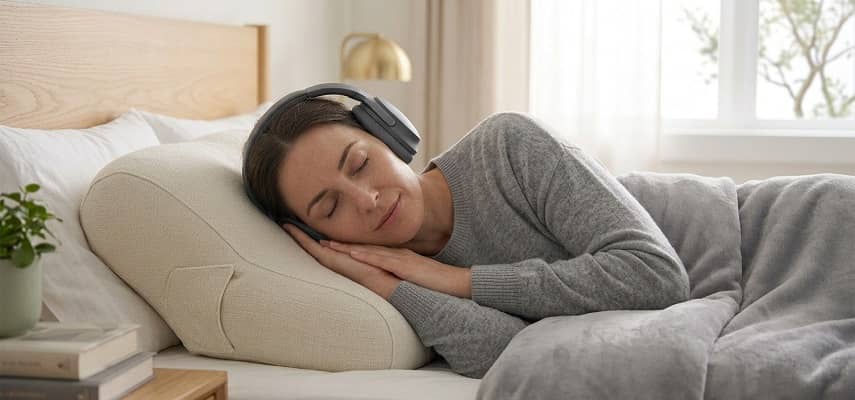
Noise cancelling ear muffs for sleeping can reduce unwanted sound without putting anything inside the ear canal, but most models are passive hearing protectors rather than true active-noise-cancelling devices. They tend to suit back sleepers, upright naps and travel better than side sleeping. For side sleepers, a soft sleep-headphone headband may be more comfortable, although it is not NRR-rated hearing protection.
Important distinction: “Noise cancelling” is often used loosely in product titles. Passive earmuffs reduce sound through their sealed cups and cushioning. Active noise cancellation uses electronics. The CDC/NIOSH notes that active-noise-cancelling headphones should not be treated as hearing protection unless they are labeled with a Noise Reduction Rating (NRR).
Quick picks
Sleep-specific design
ZOZZGO Sleep Earmuffs
One of the few current Amazon listings specifically shaped and marketed for sleeping rather than shooting or industrial work.
Compact passive option
Pro For Sho 34dB
A compact, foldable hearing-protection earmuff with a manufacturer-listed 34 dB NRR, better suited to back sleeping or naps than pillow-side pressure.
Side-sleeper alternative
MUSICOZY Headband
A soft Bluetooth headband that masks noise with audio instead of sealing the ears with rigid cups.
How we chose these sleep-noise options
This is a desk-research comparison, not a hands-on product test. We checked current U.S. Amazon product pages, manufacturer specifications where available, and safety guidance from CDC/NIOSH, the U.S. Fire Administration and the National Heart, Lung, and Blood Institute. We prioritized sleep position, cup bulk, adjustability, cushioning, passive-noise ratings where applicable, and whether the product is actually designed for sleep.
We also separated true earmuffs from soft audio headbands. That matters because a Bluetooth sleep headband can be comfortable and useful for masking noise, but it does not become hearing protection simply because its product title includes words such as “noise cancelling.”
Noise cancelling ear muffs for sleeping at a glance
| Option | Type | Best for | Noise approach | Main sleep caveat |
|---|---|---|---|---|
| ZOZZGO Sleep Earmuffs | Sleep-specific passive earmuff | Back sleepers, naps, travel | Padded cups and passive isolation | Seller notes side-sleeping comfort is still limited |
| Pro For Sho 34dB | Passive hearing protector | Compact high-NRR option | Manufacturer lists 34 dB NRR | Rigid cups and clamp force can press into a pillow |
| ProCase 28dB | Passive hearing protector | Budget/general-purpose use | Listing states NRR 28 dB / SNR 33 dB | Bulky for most side sleepers |
| Walker’s Razor Slim Passive | Passive hearing protector | Smaller heads, low-profile fit | 27 dB NRR | Designed for shooting, not overnight sleep |
| MUSICOZY Headband | Soft Bluetooth sleep headphones | Side sleepers and audio masking | Plays music, white noise or podcasts | Not NRR-rated hearing protection |
| TOPOINT Sleep Mask Headphones | Sleep mask + Bluetooth speakers | Light blocking plus audio masking | Plays audio while covering the eyes | Not a passive earmuff or rated hearing protector |
NRR is not a bedroom “silence score.” NIOSH says the NRR printed on hearing protection often does not equal the protection an individual actually receives. Fit changes performance, and low-frequency sounds such as bass or snoring may remain noticeable even when an earmuff reduces overall sound.
Four passive earmuffs to consider for sleeping
01 / SLEEP-SPECIFIC DESIGN
ZOZZGO Noise Reduction Ear Muffs
ZOZZGO stands out because its current listing is specifically aimed at sleeping rather than the range or workshop. The design uses padded ear covers and an adjustable elastic band, and the seller explicitly says it reduces rather than completely isolates sound. That honest limitation makes it easier to set realistic expectations.
Key features
- Sleep-focused over-ear design
- Adjustable elastic headband
- Multiple layers of sound-isolating material described by the seller
- Seller recommends adjusting band tension to avoid excessive ear pressure
Pros
- Designed around sleep rather than industrial use
- No in-ear plug required
- Seller is explicit that complete silence is not realistic
Cons
- Current Amazon offer availability can vary by seller
- Still creates pressure between ear cup and pillow when side sleeping
- No single NRR figure is used here because the listing/variants are not clear enough to treat one value as universal
Best for: Back sleepers, travelers and people who want a sleep-specific passive design without inserting earplugs.
Skip if: You are a committed side sleeper and pressure on the outer ear easily wakes you.
02 / COMPACT HIGH-NRR OPTION
Pro For Sho 34dB NRR Hearing Protection Ear Muffs
Pro For Sho’s 34dB model is a compact passive hearing protector rather than a sleep product. Its attraction for bedtime use is the relatively small, foldable construction compared with very bulky industrial muffs. The manufacturer and Amazon listing state a 34 dB NRR, but comfort on a pillow remains the deciding issue.
Key features
- Manufacturer-listed 34 dB NRR
- Compact, folding design
- Adjustable headband
- Passive construction with no battery or audio electronics
Pros
- Less bulky than many high-attenuation industrial earmuffs
- Foldable for travel or daytime naps
- No charging, pairing or audio needed
Cons
- Made for loud-event and hearing-protection use, not sleep
- Clamp force that helps create a seal can become tiring overnight
- Rigid cups are poor matches for most side sleepers
Best for: Back sleepers or upright nappers who value a compact passive earmuff with a clearly stated NRR.
Skip if: You are sensitive to headband pressure, sleep hot, or spend most of the night on your side.
03 / BUDGET GENERAL-PURPOSE OPTION
ProCase Hearing Protection Ear Muffs NRR 28dB
The ProCase model is a conventional passive earmuff with an adjustable headband, padded cushions and folding ear cups. The current Amazon listing states NRR 28 dB and SNR 33 dB. It can be a practical multipurpose choice if you also need daytime hearing protection, but the cup depth makes it less sleep-friendly than a purpose-built mask or soft headband.
Key features
- Listing states NRR 28 dB and SNR 33 dB
- Adjustable metal-frame headband
- Padded headband and soft ear cushions
- Foldable ear cups for storage
Pros
- Useful beyond sleep for study, yard work and other noisy settings
- Adjustable and foldable
- Soft cushion contact around the ears
Cons
- Not purpose-built for sleeping
- Bulky cups can push the head out of alignment on a pillow
- Warmth can build around the ears during long wear
Best for: Buyers who want one passive earmuff for several uses and only occasional sleep or naps.
Skip if: Your main goal is all-night comfort while side sleeping.
04 / SLIMMER FIT FOR SMALLER HEADS
Walker’s Razor Slim Passive Earmuff
Walker’s Razor Slim Passive has low-profile cups, a folding design and a 27 dB NRR. The Amazon listing says this version is intended for smaller heads, including youth and women shooters, so it is not a universal-fit sleep solution. Still, its slimmer shell makes it a more plausible nap option than deep industrial cups.
Key features
- 27 dB NRR
- Ultra-low-profile passive ear cups
- Comfort headband with metal wire frame
- Compact folding design
Pros
- Shallower-looking profile than many conventional safety muffs
- Clear manufacturer NRR specification
- Easy to fold and pack
Cons
- Designed for shooters, not sleep
- Smaller-head positioning may not suit larger adults
- Still too rigid for comfortable side sleeping for many people
Best for: Smaller heads and back-sleeping naps where a lower-profile passive earmuff is preferred.
Skip if: You need a roomy over-ear fit or want a product specifically engineered for overnight wear.
Two softer alternatives for side sleepers
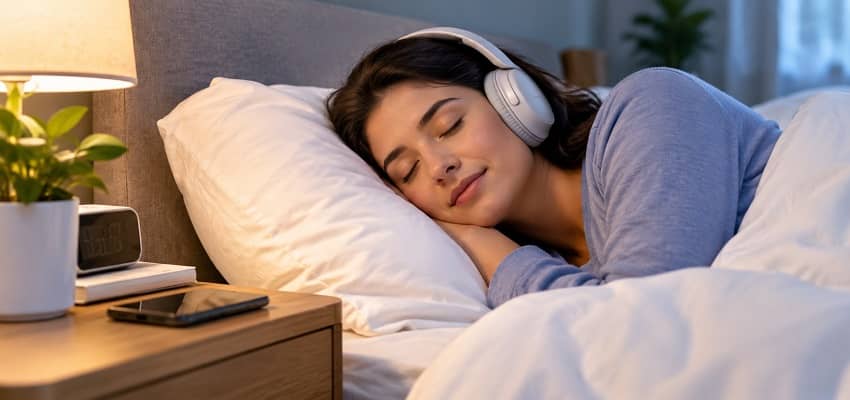
If rigid cups dig into the pillow, a soft sleep-headphone headband can be easier to tolerate. These products do not provide an NRR-rated seal. Instead, they can mask external noise by playing white noise, rain sounds, music, an audiobook or another low-volume audio track. For more options, see our noise cancelling headphones for sleeping guide.
05 / SOFT AUDIO-MASKING ALTERNATIVE
MUSICOZY Bluetooth 5.4 Sleep Headphones Headband
MUSICOZY replaces rigid earmuff cups with speakers inside a stretch-fabric headband. The current Amazon listing describes a spandex-nylon band, Bluetooth 5.4 and up to 14 hours of playback. It is the more sleep-shaped option here for side sleepers, but it masks noise with audio rather than providing rated hearing protection.
Key features
- Soft stretch-fabric headband
- Bluetooth 5.4 audio
- Seller states up to 14 hours of continuous playback
- No rigid over-ear safety cup
Pros
- More pillow-friendly than rigid earmuffs
- Lets you choose your own masking sound
- Useful for travel and workouts as well as sleep
Cons
- Not NRR-rated hearing protection
- Requires charging and Bluetooth pairing
- Speaker position can matter when your ear is pressed into a pillow
Best for: Side sleepers who prefer sound masking to rigid passive earmuffs.
Skip if: You specifically need certified hearing protection or you do not want electronics running overnight.
06 / LIGHT + AUDIO-MASKING ALTERNATIVE
TOPOINT Sleep Mask with Headphones Bluetooth 5.4
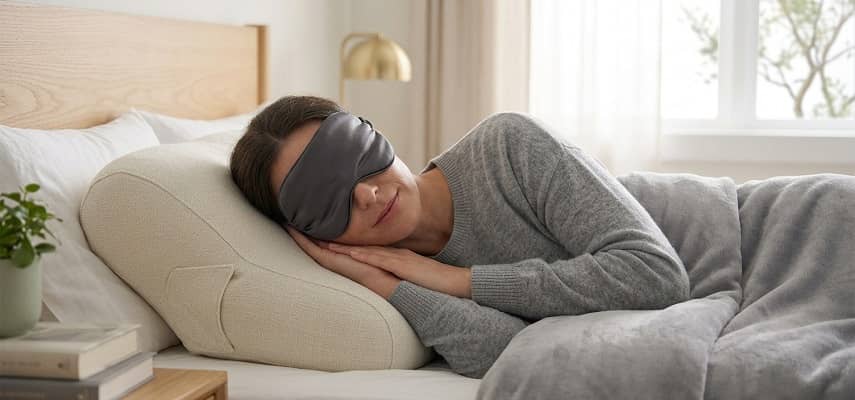
TOPOINT combines an eye mask with built-in Bluetooth speakers, so it targets two common bedroom distractions at once: light and noise. The current listing describes Bluetooth 5.4, adjustable speaker positions and a soft sleep-mask format. Treat its sound function as audio masking, not as equivalent to an NRR-rated earmuff.
Key features
- Blackout-style eye mask with built-in speakers
- Bluetooth 5.4 on the current listing
- Speaker positions can be adjusted inside the mask
- Soft fabric format for travel and sleep
Pros
- Addresses both light and sound masking
- Less rigid around the ear than safety earmuffs
- Useful for travel and meditation
Cons
- Not passive hearing protection
- Electronics and speakers need to be removed or handled correctly for cleaning
- Some sleepers dislike having a mask strap around the head
Best for: People bothered by both light and intermittent noise who want a soft mask/headphone combination.
Skip if: You need NRR-rated protection or prefer to keep your eyes uncovered.
If light is the bigger problem, compare dedicated options in our eye covers for sleeping guide.
Do noise-cancelling earmuffs actually cancel noise while you sleep?
Most “noise cancelling ear muffs” sold as hearing protectors are actually passive: the cup, seal and acoustic material reduce sound reaching the ear. Active noise cancellation (ANC) uses electronics to generate an opposing signal. NIOSH specifically warns that ANC headphones should not be considered hearing protection unless they are labeled with an NRR.
A 34 dB NRR does not mean your bedroom becomes 34 dB quieter
NRR is a laboratory hearing-protection rating. NIOSH says the number on the package often does not reflect the protection an individual wearer actually receives; fit testing gives a better estimate. For sleep, seal quality, pillow pressure, head shape and the frequency of the unwanted sound all affect what you perceive.
What should you look for in earmuffs for sleeping?
1. Start with your sleeping position
Back sleepers have the easiest time with earmuffs because the cups are not trapped between the ear and pillow. Side sleepers should treat cup thickness as a primary buying factor. A rigid cup can push the head sideways, increase pressure on the outer ear and create a new reason to wake up. A soft headband or earplug may be the more practical choice.
2. Do not chase the highest NRR automatically
Higher labeled attenuation is useful in genuinely loud environments, but nighttime comfort and awareness also matter. NIOSH cautions against overprotection in occupational settings because too much sound reduction can reduce awareness of surroundings. In a bedroom, that same principle is a reminder to think about alarms, children, dependents and other sounds you may need to hear.
3. Check clamp force and cushion depth
A passive earmuff needs contact around the ears to reduce noise, but an excessively tight headband can cause pressure discomfort. Look for an adjustable band and soft, replaceable cushions when possible. Try the product for a short period before using it for an entire night, and stop if you develop pain, numbness, skin irritation or a headache.
4. Consider heat and skin contact
Earmuffs enclose the outer ear and can feel warm over many hours. NIOSH notes that earmuffs are heavier than earplugs and may be uncomfortable in warm environments. If you sweat around the cushions, clean them according to the manufacturer’s instructions and allow them to dry fully before the next use.
5. Check compatibility with other sleep gear
Headbands, eye masks and CPAP straps can compete for the same space around the ears and back of the head. If you use positive-airway-pressure therapy, do not alter prescribed equipment just to fit an earmuff. Compare strap placement first and see our CPAP mask for side sleepers guide for sleep-position considerations.
How can you use sleep earmuffs more safely?
- Reduce noise at the source first. Close windows, address rattling appliances, move a noisy fan, or use steady background sound if appropriate. CDC sleep guidance recommends keeping the bedroom quiet and relaxing.
- Test comfort before an entire night. Wear the earmuffs while reading or resting. Check for pressure, heat, skin irritation and whether the headband stays in place without excessive force.
- Verify that emergency alerts can wake you. Do not assume your usual smoke-alarm or phone volume will still be sufficient with hearing protection on. Test your setup safely and use accessible alerting options when needed.
- Keep cushions clean and intact. Oils, sweat and worn cushions can affect comfort and the seal. Follow the maker’s cleaning and replacement instructions.
- Switch approaches if the product creates new sleep problems. If cups dig into the pillow, consider a soft audio headband or properly fitted sleep earplugs instead of tightening the earmuff harder.
Do not trade noise relief for alarm safety
The U.S. Fire Administration recommends smoke alarms in every sleeping room, outside each separate sleeping area and on every level of the home, and advises testing them monthly. If reduced hearing, earmuffs or another device could keep you from waking to an alarm, consider a redundant alerting setup; specialized strobe and bed/pillow-shaker devices are available for people who are deaf or hard of hearing.
When should sleep trouble be discussed with a professional?
Noise control can help when the environment is the problem, but it does not treat insomnia or another sleep disorder. The NHLBI advises talking with a doctor when inadequate sleep affects daily activities. Loud, frequent snoring with gasping or breathing pauses also deserves medical attention because a sleep evaluation may be appropriate.
Also seek professional advice for persistent ear pain, ringing in the ears, sudden hearing changes, repeated skin reactions from hearing devices, or uncertainty about hearing protection in a genuinely hazardous noise environment. An audiologist or occupational-hearing professional can help with protection and fit questions.
Frequently asked questions
Are noise cancelling earmuffs safe to sleep in?
For many adults, passive earmuffs can be used for short rest if they fit comfortably, but overnight use has practical risks: pressure, heat, skin irritation and reduced awareness of alarms. Test comfort first, do not overtighten the band, and verify that essential emergency alerts can still wake you.
Can earmuffs block snoring completely?
No earmuff can promise complete silence. Passive cups may reduce the perceived loudness of snoring, but the result depends on fit, seal, sound frequency and distance from the source. If the snoring is loud and accompanied by gasping or breathing pauses, medical evaluation is more important than simply masking the sound.
Are high-NRR earmuffs always better for sleeping?
No. A higher NRR is a hearing-protection rating, not a sleep-comfort score. High-attenuation muffs often use deeper cups and stronger seals, which can be awkward on a pillow. For bedtime, the best choice balances enough noise reduction with comfort, sleeping position and the need to hear important alerts.
Are earplugs or earmuffs better for side sleepers?
Side sleepers usually find low-profile earplugs or soft sleep headbands easier to position than rigid over-ear cups. Earmuffs avoid inserting anything into the ear canal, which some people prefer, but the cup can press against the pillow. Comfort, correct fit and the amount of noise reduction you need should guide the choice.
Can I wear earmuffs with a CPAP mask?
Possibly, but the headgear must not compromise the CPAP mask seal or create uncomfortable pressure. Earmuff bands and mask straps can overlap behind the ears and head. Put the prescribed CPAP system first, then test any sleep accessory without modifying therapy settings or cutting/re-routing mask components.
Is active noise cancellation the same as hearing protection?
No. Active noise cancellation uses electronics to reduce selected external sounds, while hearing protection is evaluated for attenuation and may carry an NRR label. CDC/NIOSH says ANC headphones or earbuds should not be considered hearing protection unless they are labeled with an NRR for that purpose.
This article provides general information and product-comparison guidance, not medical advice. Talk to a qualified healthcare professional about persistent sleep, hearing or ear symptoms.