Best Recliner for Back Pain: 7 Top Picks for Lumbar Support (2026)
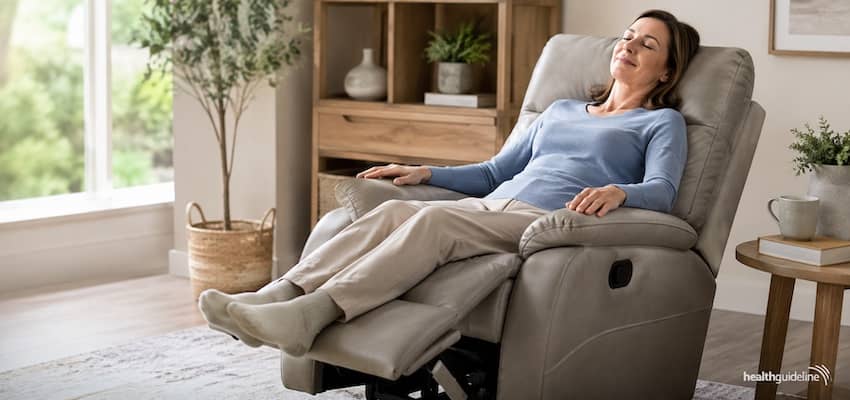
If back pain turns “sitting down to relax” into another source of ache, the right recliner can genuinely help. Reclining shifts weight off your lower spine and lets your back muscles rest — but only if the chair fits you and actually supports your lumbar curve. Below are seven recliners worth considering across every budget, from a chiropractor-favored zero-gravity chair to a simple, supportive pick under most budgets, plus exactly what to look for so you don’t waste money on a chair that makes things worse.
Quick picks
Best overall for back pain
Human Touch Perfect Chair PC-420
Puts your body in a near-neutral, legs-above-heart “zero-gravity” posture that takes pressure off the spine.
Best value power lift
Mcombo Dual Motor Power Lift Recliner
Heat, massage, and an easy stand-up assist without a premium price.
Best budget
Homall Manual Recliner
A simple, firm, supportive recliner that fits small spaces and small budgets.
Best lay-flat lift chair
Irene House 9188
Reclines nearly flat with a motorized lumbar cushion and stand-up assist.
Do recliners actually help back pain?
Yes, for many people. Reclining transfers upper-body weight from your lumbar spine onto the backrest and opens the angle between your torso and thighs, which eases pressure on the discs. Upright-MRI research found a roughly 135° reclined posture placed the least strain on the lower spine — noticeably less than sitting bolt upright at 90°. A recliner won’t cure back pain, but with real lumbar support it can meaningfully reduce day-to-day discomfort.
The often-cited evidence comes from a study led by Dr. Waseem Bashir using a “positional” MRI scanner that let volunteers sit and recline while being imaged. Researchers concluded that the 135-degree reclining position put the least stress on the spine and may reduce the risk of back pain, whereas a 135-degree body-thigh sitting posture, in which the hips are higher than the knees, causes less strain on the lumbar spine and most simulates the “relaxed” supine position. Importantly, this is best understood as load minimization rather than true medical decompression, and the researcher himself noted that leaning back a full 135° can risk sliding, so many people do best a little more upright with the lower back well supported. Whichever angle you land on, keeping your natural lumbar curve supported is what makes reclining feel good instead of stiffening you up.
How we chose
We prioritized four things that matter most for a sore back: genuine (ideally adjustable) lumbar support, a recline range that reaches the spine-friendly zone, seat firmness that supports the lower back rather than swallowing it, and correct sizing for different bodies. We cross-referenced current retail listings, owner feedback, and ergonomic research, then included honest trade-offs and a realistic price band for each. These links carry no affiliate tag — we don’t earn a commission on anything below, so the picks reflect fit, not payouts.
Top picks at a glance
| Recliner | Best for | Type | Lumbar support |
|---|---|---|---|
| Human Touch Perfect Chair PC-420 | Overall spinal relief | Manual zero-gravity | Neutral posture; optional power lumbar |
| Svago Newton (SV-630) | Zero-gravity + heat/massage | Power zero-gravity | Air lumbar + heat |
| Irene House 9188 | Lay-flat rest + stand-up help | Dual-motor lift | Lumbar heat + pillow |
| Irene House 9205 (Big Man) | Larger & taller bodies | Dual-motor lift, oversized | Lumbar heat + pillow |
| Mcombo Dual Motor (7890) | Best value power lift | Dual-motor lift | Lumbar heat cushion |
| Watson & Whitely Power Recliner | Small spaces / apartments | Wall-hugger power | Firm built-in + power headrest |
| Homall Manual Recliner | Tight budgets | Manual push-back | Firm built-in |
01 / Best overall for back pain
1. Human Touch Perfect Chair PC-420 — Best overall for back pain
The PC-420 is a manual zero-gravity recliner that uses your own body weight to tilt into a neutral posture with your legs raised above your heart — the position most associated with taking load off the lumbar spine. There are no motors to fail, the wooden base looks like real furniture, and optional add-ons (memory-foam cushioning, power lumbar, jade heat) let you tune it to your back.
Why it wins: Human Touch says the Perfect Chair line is endorsed by the World Federation of Chiropractic as a complement to chiropractic care, and the neutral, legs-elevated recline is exactly what the ergonomic research points to for spinal relief. It’s the pick if you want the most back-friendly position and are willing to invest.
Pros
- True zero-gravity, near-neutral spine posture
- Manual recline (nothing electronic to break)
- Optional power-adjustable lumbar & heat
- Furniture-grade wood base and materials
Cons
- Premium price; options add up quickly
- Large footprint; heavy to move
- Manual recline takes a little body effort
Best for: Chronic lower-back pain sufferers who want the most spine-friendly recline and will use it daily. Approx. price: Premium — check current price on Amazon. (For a powered version, look at the Perfect Chair PC-610.)
02 / Best zero-gravity with heat & massage
2. Svago Newton (SV-630) — Best zero-gravity with heat & massage
The Svago Newton is a powered zero-gravity recliner that pairs the legs-above-heart posture with air-cell lumbar support, soothing heat, and a smart dial that lets you fine-tune the angle rather than stopping at a few fixed points. It’s aimed at people who want spinal relief plus therapeutic extras in one premium chair.
Why we like it: The combination of memory-foam comfort, adjustable air lumbar, and heat targets the two things that make reclining work — a supported lumbar curve and relaxed back muscles — with infinite position control for dialing in exactly where your back settles.
Pros
- Powered, infinitely adjustable recline
- Air-cell lumbar support + heat therapy
- Elevates legs above the heart for circulation
- Premium build and materials
Cons
- Premium price
- Needs a power outlet
- Heavy; plan placement in advance
Best for: Buyers who want zero-gravity relief plus built-in heat and adjustable lumbar. Approx. price: Premium — check current price on Amazon.
03 / Best lay-flat lift chair
3. Irene House 9188 — Best lay-flat lift chair
The Irene House 9188 is a dual-motor lift recliner: the backrest and footrest move independently, so you can prop your feet up while staying upright, or recline to a near-flat 180° for a proper rest. A power lift gently raises the whole seat to help you stand, and it adds four-point back massage plus lumbar heating and a matching lumbar pillow.
Why it’s here: Independent back/leg control is a genuine win for lower-back tension, and the lift function protects your back and knees when getting up. The removable backrest makes it easy to move through doorways, and setup is quick.
Pros
- Dual motor: independent back & footrest
- Reclines nearly flat (about 180°)
- Power lift assist for easy standing
- Lumbar heat, back massage & lumbar pillow
- Removable backrest; ~15-minute assembly
Cons
- Vibration massage is light, not deep-tissue
- Faux leather runs warm for some
- Check seat dimensions against your height
Best for: Anyone who wants stand-up assistance plus a near-flat rest position. Supports up to about 300 lbs (confirm on the listing). Approx. price: Mid-range — check current price on Amazon.
04 / Best for larger & taller bodies
4. Irene House 9205 (Big Man) — Best for larger & taller bodies
The 9205 is Irene House’s extra-large, oversized take on the same dual-motor lift recliner, built wider and deeper for bigger and taller users with a higher weight capacity. It keeps the lay-flat recline, power lift assist, heat, and massage, but in a roomier overstuffed frame so larger bodies aren’t squeezed into a chair that’s too small to support them.
Why it matters: A recliner that’s too narrow forces the pelvis and spine out of alignment — the opposite of what you want. For heavier or taller frames, correct sizing is the single biggest factor in whether a recliner helps or hurts your back.
Pros
- Oversized, wide seat for big & tall users
- High weight capacity (check exact rating)
- Dual motor, lay-flat, power lift assist
- Heat + massage, overstuffed padding
Cons
- Large footprint — measure your space
- Heavier to reposition
- Confirm seat width/height suits you
Best for: Larger and taller users who need a wide seat and strong lift. Approx. price: Mid-to-upper — check current price on Amazon.
05 / Best value power lift
5. Mcombo Dual Motor Power Lift Recliner (7890) — Best value power lift
Mcombo’s dual-motor lift recliner delivers the features that matter for a bad back — independent back/footrest control, a lumbar heat cushion, vibration massage, and a smooth power stand-up assist — at a noticeably lower price than premium chairs. It adds practical extras like USB ports, cup holders, and side pockets, with a reinforced frame rated around 350 lbs.
Why it’s a value pick: Reviewers repeatedly note Mcombo’s lift speed is well-calibrated (no jolt), which is exactly what you want if standing up is what aggravates your back. You give up the plushness and warranty of premium brands, but you keep the back-friendly essentials.
Pros
- Dual motor with infinite positioning
- Lumbar heat + vibration massage
- Smooth, well-calibrated lift assist
- USB ports, cup holders, storage
Cons
- Faux leather less durable than top brands
- Assembly arrives in multiple boxes
- Shorter warranty than premium chairs
Best for: Shoppers who want lift + heat + massage without a premium price. Approx. price: Mid-range — check current price on Amazon.
06 / Best for small spaces
6. Watson & Whitely Leather Power Recliner — Best for small spaces
This is a wall-hugger power recliner: the seat glides forward as it reclines, so it needs only a few inches of wall clearance instead of the 12–15 inches a standard recliner demands. Dual motors control the recline and the power headrest independently, it reaches a spine-friendly recline in the ~135° range, and it’s finished in wipe-clean top-grain leather with built-in USB-A and USB-C ports.
Why it’s here: Apartment and small-room owners often can’t fit a big reclining chair — and a chair jammed against furniture never reclines properly. The wall-hugger design solves that while still delivering a supportive, adjustable recline and firm lumbar feel.
Pros
- Needs only inches of wall clearance
- Dual motor + independent power headrest
- Reaches the ~135° spine-friendly zone
- Wipe-clean top-grain leather; USB-A/C
Cons
- Firm cushioning — less “sink-in” plush
- Lumbar is firm/built-in, not motorized
- Best for average-height users
Best for: Apartments, condos, and rooms tight on space. Approx. price: Mid-to-upper — check current price on Amazon.
07 / Best budget
7. Homall Manual Recliner — Best budget
The Homall is a simple manual push-back recliner that consistently shows up as a top budget pick. It has no motors and no massage — just a firm, structured seat and a supportive back in a compact footprint, usually for well under the cost of a powered chair. If you want a more upright, posture-supporting feel and don’t need bells and whistles, it punches above its price.
Why it’s the budget choice: A firmer, structured recliner keeps your lower back from collapsing into the seat — a common cause of recliner-related aches — and the smaller size suits apartments. You give up power recline and adjustable lumbar, so add a small lumbar cushion if you need more lower-back fill.
Pros
- Very affordable
- Firm, supportive, posture-friendly feel
- Compact footprint for small rooms
- Steel frame; simple push-back recline
Cons
- No power, heat, or massage
- Fixed lumbar (add a cushion if needed)
- Runs small — check dimensions if tall
Best for: Tight budgets and smaller spaces. Approx. price: Budget — check current price on Amazon.
What to look for in a recliner for back pain
Lumbar support (the single most important feature)
Your lower back has a natural inward curve. A good recliner fills that gap so your spine stays neutral; a bad one lets the pelvis roll back and flatten the curve. Adjustable — ideally power-adjustable — lumbar support is best because you can match the fill to your body instead of settling for a fixed cushion. If a chair you love has fixed lumbar, a small lumbar pillow closes the gap.
Recline angle and zero-gravity
Aim for a chair that lets you stop where your back settles, generally somewhere in the 120–135° range for resting, with your legs elevated. Zero-gravity recliners take this further by raising your legs above your heart, which distributes weight evenly and can ease spinal pressure more than a simple backward tilt.
Seat firmness and foam
Overly soft, marshmallow-y seats feel great for five minutes and then let your lower back sink and round. High-density foam that supports without swallowing you keeps your spine aligned for the long haul.
Size and fit
A recliner is like a shoe — it has to fit. Too narrow and your hips and spine are forced out of alignment; too deep and your lower back loses contact with the backrest. Taller and larger users should look specifically at oversized or big-and-tall models and check seat width, depth, and weight capacity before buying.
Power vs. manual, and lift assist
Power recliners offer effortless, fine-tuned positioning — helpful if bending or twisting aggravates your back. Manual recliners are cheaper and have less to break. If standing up is the painful part, a power lift recliner that gently raises you to your feet can spare your back and knees.
Wall-hugger design for small spaces
Wall-hugger (zero-clearance) recliners glide the seat forward as they recline, needing only a few inches behind them. That matters in apartments — and a chair crammed against a wall or sofa can never recline into a supportive position anyway.
Materials and warranty
Leather and top-grain leather are durable and easy to wipe clean; quality faux leather and microfiber are budget-friendly alternatives. Because recliners are a real investment, check the warranty — premium brands often back frames and motors far longer than budget models.
About back pain and reclining
A recliner is a comfort and support tool, not a medical treatment. Used well — with your lumbar curve supported and your legs elevated — it can take real pressure off your spine and give strained muscles a rest. But no chair fixes an underlying problem, and staying in any one position for hours (even a good one) isn’t ideal; gentle movement still matters.
When to see a professional
See a doctor promptly if your back pain follows a fall or injury; comes with fever, unexplained weight loss, or numbness, tingling, or weakness in the legs; involves any loss of bladder or bowel control; or simply isn’t improving after a few weeks of self-care. Those can signal issues a chair can’t address. This article is general information, not medical advice.
Frequently asked questions
Can you sleep in a recliner every night?
It’s generally considered safe to sleep in a recliner now and then, and people with acid reflux, sleep apnea, or acute back pain often find it more comfortable than lying flat. For regular, long-term sleep, choose a recliner with full head, neck, and lumbar support and check with your doctor — for some people, sleeping reclined every night can stiffen joints or strain the neck.
What recliner has the best lumbar support?
Recliners with adjustable — ideally power-adjustable — lumbar support give the best results, because you can dial the fill to match your spine instead of accepting a fixed cushion. Zero-gravity recliners like the Human Touch Perfect Chair and lift chairs with a motorized lumbar cushion are common standouts. A firm, high-density seat also helps by keeping your lower-back curve from collapsing.
Is a recliner good or bad for your lower back?
A well-fitted recliner with lumbar support is generally good for your lower back: it offloads the spine and reduces disc pressure compared with rigid upright sitting. It becomes a problem only when the chair is too soft, too big, or lacks lower-back support, which lets the pelvis roll back and flatten the lumbar curve. Fit and support matter more than the chair type.
What’s the best recliner angle for back pain?
Upright-MRI research found a roughly 135° trunk-to-thigh angle placed the least load on the lumbar discs, versus a 90° upright posture. In practice, many people are most comfortable — and least likely to slide — somewhere between 120° and 135°, with the legs elevated near heart level and the lower back supported. Adjust to where your back naturally settles.
Are zero-gravity recliners worth it for back pain?
For chronic lower-back pain, sciatica, or disc issues, zero-gravity recliners are often worth it: elevating the legs above the heart and reclining into a neutral posture distributes weight evenly and eases spinal pressure more than a standard tilt. They cost more, though, so the value depends on how often you’ll use it and whether simpler lumbar support would be enough.
Can a recliner help with sciatica or a herniated disc?
Many people with sciatica or a herniated disc get relief from a reclined, legs-elevated position because it reduces pressure on the affected discs and nerve roots. A recliner is a comfort aid, not a treatment, so pair it with the plan your doctor or physical therapist recommends — and stop using any position that worsens leg pain, numbness, or weakness.
Medical disclaimer: This article is for general information only and is not medical advice. Talk to a qualified healthcare professional about your specific situation, especially before relying on a recliner to manage a back condition.