Theragun G3Pro & G2Pro Review + Best 2026 Picks
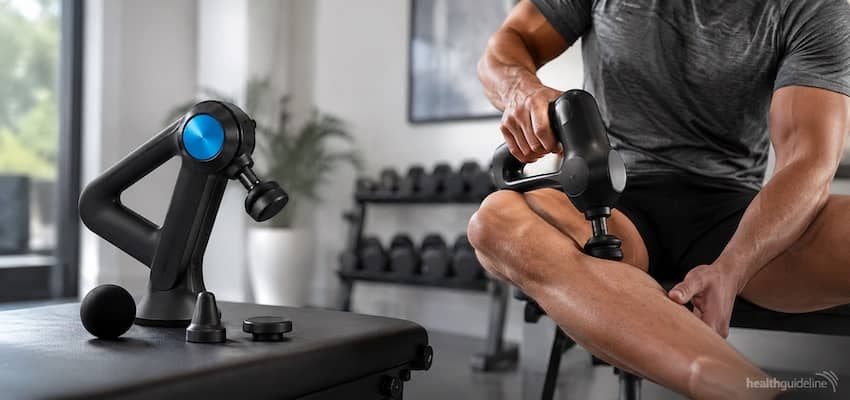
The Theragun G3Pro and G2Pro are discontinued and no longer sold new — you’ll only find them used. Their modern replacement is the Theragun Pro (5th Gen), which keeps the rotating arm and 16 mm amplitude but runs far quieter. For most people, the Theragun Prime (6th Gen) delivers genuine Theragun power at the best value.
If you searched for the Theragun G3Pro or G2Pro, here’s the honest situation in 2026: both models have been retired. Therabody (the company behind Theragun) discontinued its entire 3rd-generation line and replaced it with a current family of devices — the Pro, Pro Plus, Elite, Prime, Mini, and Relief. This guide explains how the old G3Pro and G2Pro compared, whether a used one is still worth buying, and exactly which current Theragun to choose instead.
Are the Theragun G3Pro and G2Pro still available?
No. Therabody discontinued the 3rd-generation Theragun line, including the G3Pro and G2Pro, and replaced it with the current Pro, Pro Plus, Elite, Prime, Mini, and Relief models. You can still find G3Pro and G2Pro units second-hand on marketplaces like eBay, but they are no longer manufactured or reliably sold new.
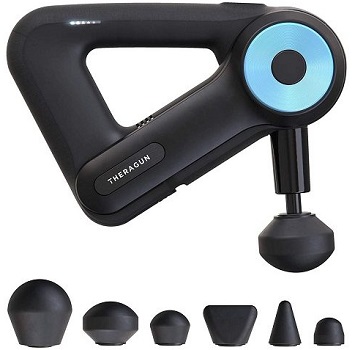
Because they’re only available used, buying one means no manufacturer warranty and, often, aging rechargeable batteries — an important drawback, since the G-series relied on swappable lithium-ion packs that degrade with age. The good news is that the core technology (16 mm amplitude, professional-grade percussion) lives on in today’s models, which are quieter, app-connected, and still covered by warranty.
Theragun G3Pro vs G2Pro: how the two legacy models compared
Both were flagship “Pro” devices in their day, sharing a 16 mm amplitude (stroke depth), a rotating adjustable arm for full-body reach, and two swappable batteries for continuous use. The G3Pro was the newer, more refined device; the older G2Pro traded refinement for raw stalling force.
| Feature | Theragun G2Pro (legacy) | Theragun G3Pro (legacy) |
|---|---|---|
| Amplitude | 16 mm | 16 mm |
| Speeds | Single (2,400 PPM) | Two (1,750 & 2,400 PPM) |
| Stall force | ~80 lb | ~60 lb |
| Attachments | 4 | 6 (added Wedge & Thumb) |
| Noise | Louder | ~50% quieter (redesigned gearbox) |
| Battery | 2 packs, ~45 min each | 2 packs, ~75 min each |
| Weight | ~2.5 lb | ~2.9 lb |
| Status in 2026 | Discontinued (used only) | Discontinued (used only) |
The verdict at the time: the G3Pro was the better all-around device for most people — quieter, with a second speed, two extra attachments, and longer battery life. The G2Pro’s one clear advantage was its higher ~80 lb stall force (it resisted stalling under heavy pressure), which appealed to users working very dense muscle. Today, that debate is mostly academic: both are discontinued, and every current Theragun is quieter and app-connected.
What replaced the G3Pro and G2Pro? The current Theragun lineup
Here are the current Theragun models worth considering in 2026, from the flagship down to the everyday option. Prices are approximate list prices and change often — always check the live price on Amazon before buying.
Top picks at a glance
| Model | Best for | Amplitude | Speeds | Standout feature | Approx. price |
|---|---|---|---|---|---|
| Theragun Pro (5th Gen) | Deep-tissue & athletes | 16 mm | 5 | Rotating arm + swappable batteries | ~$599 |
| Theragun Pro Plus (6th Gen) | All-in-one recovery | 16 mm | 5 | Heat, vibration, LED & HR sensor | ~$649 |
| Theragun Prime (6th Gen) | Best value | 16 mm | 5 | Rugged, durable design | ~$329 |
| Theragun Elite (5th Gen) | Quiet home use | 16 mm | 5 | Ultra-quiet + guided app | ~$399 |
| Theragun Mini (3rd Gen) | Travel & portability | Compact stroke | 3 | Pocket-sized, ~0.9 lb | ~$150–$180 |
| Theragun Relief | Beginners & everyday | Gentle stroke | 3 | Lightweight, simple, affordable | ~$149 |
How we chose
We started from Therabody’s current, officially listed lineup, then cross-referenced published specifications with independent hands-on reviews from outlets such as Garage Gym Reviews, Shape, and TechRadar. We prioritized amplitude and power, noise level, battery life, attachments, app guidance, portability, and overall value — and we verified that each recommended model is currently sold on Amazon. The discontinued G3Pro and G2Pro are covered for context but excluded from our “buy now” picks because they’re no longer sold new.
01 / BEST OVERALL AND THE TRUE G3PRO SUCCESSOR
Theragun Pro (5th Gen)
The Theragun Pro is the direct modern descendant of the G3Pro and G2Pro. It keeps the professional-grade 16 mm amplitude, the rotating adjustable arm, and two external swappable batteries for continuous use — then adds a second-generation motor that runs noticeably quieter, an OLED screen, and app-guided routines.
Key features
- 16 mm amplitude
- up to ~60 lb of no-stall force
- 5 speeds (1,750–2,400 PPM)
- rotating arm
- 2 swappable batteries (~150 min total)
- OLED screen
- Bluetooth + Therabody app
- 6 attachments.
Pros
- The most powerful, deepest-reaching Theragun
- the rotating arm reaches your own back and legs easily
- swappable batteries mean effectively unlimited runtime
- far quieter than the old G-series.
Cons
- The heaviest and most expensive standard model
- more power than casual users need.
Best for: Athletes, dense or large muscle groups, serious deep-tissue recovery — and anyone who specifically wanted the old G3Pro’s professional power.
02 / MOST ADVANCED ALL-IN-ONE
Theragun Pro Plus (6th Gen)
The Pro Plus is Therabody’s most feature-rich device, layering several recovery therapies into one tool: deep percussion plus integrated heat, vibration therapy, near-infrared LED light, a biometric heart-rate sensor, and guided breathwork on an OLED touchscreen. If you want the closest thing to an all-in-one recovery station, this is it.
Key features
- 16 mm amplitude
- 5 speeds (1,750–2,400 PPM)
- 3 heat levels
- 3 vibration frequencies
- near-infrared LED
- on-device heart-rate sensor
- guided breathwork
- ~150 min battery
- USB-C charging
- 7 attachments (cold attachment sold separately).
Pros
- Multiple therapies in a single device
- premium guided experience
- genuinely versatile for warm-up and recovery.
Cons
- The most expensive model
- the extra therapies are supportive, not miraculous, so it’s more than many people need.
Best for: Committed athletes and recovery enthusiasts who want every tool in one handheld.
03 / BEST VALUE FOR MOST PEOPLE
Theragun Prime (6th Gen)
The Prime is the value sweet spot. It delivers the same deep 16 mm amplitude as the flagship Pro in a rugged, impact-resistant body, with five speeds and Therabody app connectivity — but skips the rotating arm and swappable batteries to hit a much friendlier price. For most buyers who wanted “real” Theragun power, this is the smart choice.
Key features
- 16 mm amplitude
- 5 speeds
- durable impact-resistant design
- ~120 min battery
- Bluetooth + app
- ergonomic triangle grip.
Pros
- Full-depth Theragun percussion at a mid-range price
- tough build
- app-guided routines
- the best overall value in the lineup.
Cons
- No rotating arm and no swappable batteries
- fewer attachments than the Pro.
Best for: Most people — everyday athletes and anyone who wants genuine deep-tissue power without paying flagship money.
04 / BEST FOR QUIET HOME USE
Theragun Elite (5th Gen)
The Elite pairs the same 16 mm amplitude as the Pro with an ultra-quiet motor and a sleeker, lighter body. You get five speeds, an OLED screen, and app-guided routines, making it an excellent middle ground for people who want strong percussion and guidance but don’t need the Pro’s rotating arm or battery system.
Key features
- 16 mm amplitude
- 5 speeds
- very quiet operation
- OLED screen
- Bluetooth + app
- 5 foam attachments (Standard Ball, Dampener, Thumb, Cone, Wedge).
Pros
- Quiet enough for a shared living room
- powerful
- refined and comfortable to hold
- app guidance.
Cons
- No rotating arm or swappable batteries
- priced above the Prime for broadly similar power.
Best for: Home users who prioritize a quiet, guided experience and full-depth percussion.
05 / BEST FOR TRAVEL AND PORTABILITY
Theragun Mini (3rd Gen)
The Mini is Theragun’s ultra-portable option — around 0.9 lb and small enough for a gym bag or carry-on. It has a shorter stroke and fewer features than the full-size models, but it still delivers effective, quiet percussion with three speeds and one-button operation for fast relief on the go.
Key features
- Pocket-sized design (~0.9 lb)
- 3 speeds
- ~150 min battery
- Bluetooth
- single-button control
- foam attachment(s) included.
Pros
- Extremely light and travel-friendly
- genuinely useful percussion for its size
- quiet.
Cons
- Shorter, shallower stroke than full-size models
- fewer attachments
- limited reach.
Best for: Travel, the gym bag, and quick targeted relief when you’re away from home.
06 / BEST FOR BEGINNERS AND EVERYDAY TENSION
Theragun Relief
The Relief is the easiest, most affordable way into the Theragun family. It’s lightweight and ergonomic with simple single-button operation and three speeds, designed for everyday tension in the neck, shoulders, and back rather than intense athletic recovery. If you’re new to percussion massage, start here.
Key features
- Lightweight ergonomic design
- 3 speeds
- quiet operation
- simple one-button control
- gentler stroke tuned for comfort.
Pros
- Affordable
- comfortable and approachable
- quiet
- a great gift or first massage gun.
Cons
- The least powerful, with the shallowest stroke
- not built for deep-tissue athletic recovery.
Best for: Beginners, desk-related neck and shoulder tension, and anyone who wants gentle everyday relief.
Should you buy a used Theragun G3Pro or G2Pro?
It can make sense if you find one cheap and in good condition — the 16 mm amplitude is still competitive today. But weigh the trade-offs: no manufacturer warranty, aging swappable batteries that lose capacity over time, a louder motor than current models, and no app features. For most buyers, a current Prime or Pro is the safer value.
If you do buy used, ask the seller about battery health and cycle count, confirm both battery packs and the charger are included, and test that it runs at full power on both speeds. If any of that is uncertain, the money is usually better spent on a new Prime (6th Gen) — you get comparable depth, a warranty, quieter operation, and app guidance.
What to look for when buying a Theragun (or any massage gun)
Amplitude (stroke depth)
Amplitude is how far the head travels with each stroke, and it’s the single biggest factor in how “deep” a massage gun feels. Theragun’s full-size models use a deep 16 mm stroke; compact and entry devices use a shorter stroke that feels gentler and works closer to the surface.
Noise level
Older devices like the G2Pro were notoriously loud. Every current Theragun uses QuietForce technology and runs far quieter — worth prioritizing if you’ll use it near others, watch TV while recovering, or take it to a shared gym.
Battery and portability
The Pro uses two swappable batteries for effectively unlimited runtime; most other models have a built-in battery good for roughly 2–2.5 hours per charge. If you travel, the Mini’s size and weight matter more than raw runtime.
Attachments and app guidance
More attachments mean more targeted treatment (large muscles, trigger points, bone-adjacent areas). App connectivity adds guided routines that tell you where and how long to treat each area — genuinely helpful if you’re new to percussion therapy.
How to use a Theragun safely
Start on the lowest speed and let the device’s weight do the work — press gently rather than pushing hard. Move slowly across each muscle for roughly 60–90 seconds, and keep a full-body session under about 15 minutes. Avoid using it directly on bones, joints, the front of the neck, broken skin, or areas of inflammation or injury. If you’re pregnant, have a medical condition, or have blood-clotting concerns, talk to a healthcare professional before use. This article is for general information only and is not medical advice.
Frequently asked questions
Are the Theragun G3Pro and G2Pro still being made?
No. Therabody discontinued the entire 3rd-generation Theragun line, including the G3Pro and G2Pro. They’ve been replaced by the current Pro, Pro Plus, Elite, Prime, Mini, and Relief models. You can still find G3Pro and G2Pro units second-hand, but they are no longer manufactured or sold new.
What is the modern equivalent of the Theragun G3Pro?
The Theragun Pro (5th Gen) is the direct successor. It carries over the professional-grade 16 mm amplitude, the rotating adjustable arm, and two swappable batteries, while adding a quieter second-generation motor, an OLED screen, and app-guided routines. It’s the closest current match to the G3Pro’s power and design.
What’s the difference between the Theragun G3Pro and G2Pro?
The G3Pro added a second speed (1,750 and 2,400 PPM), two extra attachments, roughly 50% quieter operation, and longer battery life. The older G2Pro’s main advantage was a higher stall force of about 80 lb versus the G3Pro’s 60 lb, which helped it resist stalling under heavy pressure.
Is it worth buying a used Theragun G3Pro?
It can be, if it’s inexpensive and in good working condition, since the 16 mm amplitude still holds up. But there’s no warranty, the swappable batteries degrade with age, and it’s louder than current models. For most people, a new Theragun Prime or Pro is a safer, quieter, app-connected choice.
Which current Theragun is best for most people?
The Theragun Prime (6th Gen) is the best pick for most buyers. It offers the same deep 16 mm amplitude as the flagship Pro at a much lower price, in a rugged, app-connected body. Choose the Pro instead if you need the rotating arm, swappable batteries, or maximum stall force for heavy deep-tissue work.
Are Theraguns worth it compared with cheaper massage guns?
Theraguns stand out for their deep amplitude, build quality, quiet motors, and guided app ecosystem, and they’re backed by a warranty. Budget massage guns can absolutely provide relief for less money, but they often use shorter strokes and less durable motors. If longevity and depth matter to you, Theragun leads.
Disclaimer: This article is for general information only and is not medical advice. Talk to a qualified healthcare professional about your specific situation before starting any new recovery routine.