Back Support in Pregnancy: 6 Best Maternity Belts for 2026 (and How to Use Them Safely)
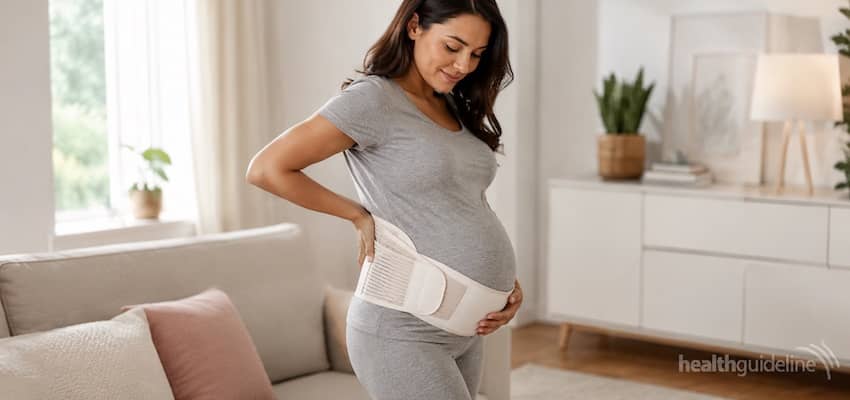
A maternity support belt won’t cure pregnancy back pain, but for many people it can take some load off the lower back and pelvis and make everyday movement more comfortable. Think of it as one helpful tool alongside gentle exercise, good posture and rest — not a treatment on its own.
Best overall / best value
AZMED Maternity Belt
Simple, one-size, breathable.
Best for staying active
KeaBabies Nurture 2-in-1
Light, breathable mesh.
Best for discreet all-day wear
Gabrialla MS-96
Cotton-lined, hot/cold pocket.
Always check with your provider first, especially if you have a high-risk pregnancy or any complications.
If your back aches as your bump grows, you’re in very good company. Back pain is one of the most common discomforts of pregnancy, and a well-fitted support belt is one of the simplest things many parents-to-be reach for. Below, we explain why pregnancy strains your back, what the evidence actually says about support belts, how to wear one safely, and six real belts currently sold on Amazon that are worth a look — with an honest note on who each one is (and isn’t) for.
How we chose these maternity belts
We focused on belts that are genuinely available on Amazon US right now and that address the real problem: taking weight off the lower back and pelvis without squeezing the belly. We prioritized adjustable fit (your body changes every few weeks), breathable materials, an under-belly support panel rather than tummy-flattening compression, and consistent, real-world feedback from pregnant users. We cross-checked how belts should be used against medical guidance, and we left out any product we couldn’t verify as currently sold. Prices and stock change constantly, so we link to each live listing instead of quoting a fixed price.
Why does pregnancy cause back pain?
Pregnancy back pain is usually caused by a mix of extra weight, a forward-shifting center of gravity, stretched-and-weakened abdominal muscles, and hormones (especially relaxin) that loosen the ligaments around your pelvis. Together these make the lower back and pelvic joints work harder — which is why the ache often builds as pregnancy progresses.
According to the Cleveland Clinic and the American College of Obstetricians and Gynecologists (ACOG), several normal changes stack up during pregnancy:
- Extra weight and a shifting center of gravity. As your uterus grows, weight moves to the front of your body, pulling you forward and straining the muscles of the lower back.
- Posture changes. To stay balanced you tend to lean back, increasing the curve of your lower spine and loading those back muscles.
- Weaker abdominal support. The abdominal muscles that normally stabilize your spine stretch and weaken — and can even separate down the middle (a common change called diastasis recti), leaving the back to pick up the slack.
- Hormones. The hormone relaxin loosens the ligaments in your pelvic joints to prepare for birth. That’s essential, but looser ligaments mean less stability in the pelvis and lower back.
Estimates of how many people this affects vary from around 40% to as high as roughly two-thirds or more, and pain is most common in the second and third trimesters — though it can start earlier. Some people feel it more as pelvic girdle pain (a deep ache around the pelvis, hips or the back of the thighs) rather than classic lower-back pain.
What can you do about back pain in pregnancy?
Beyond a support belt, the most widely recommended steps are staying gently active, minding your posture and lifting technique, using heat or cold, and sleeping on your side with a pillow between your knees. A support belt can complement these — but movement and good body mechanics do most of the work.
Mayo Clinic and ACOG suggest a combination of simple habits (check with your own provider before starting new exercises):
- Keep moving. Walking is generally safe in pregnancy and is good for the back. Gentle options like prenatal yoga, swimming or stretching can help too. Exercise shouldn’t hurt — if it does, stop.
- Lift with your legs. Bend at the knees, keep your back straight, and hold objects close to your body rather than bending at the waist.
- Mind your posture. Stand tall with a wide, stable stance; if you stand for a long time, rest one foot on a low stool. Sit in a chair that supports your back, or tuck a small lumbar cushion behind you.
- Use heat or cold. A warm compress or an ice pack on the sore area can ease muscle discomfort.
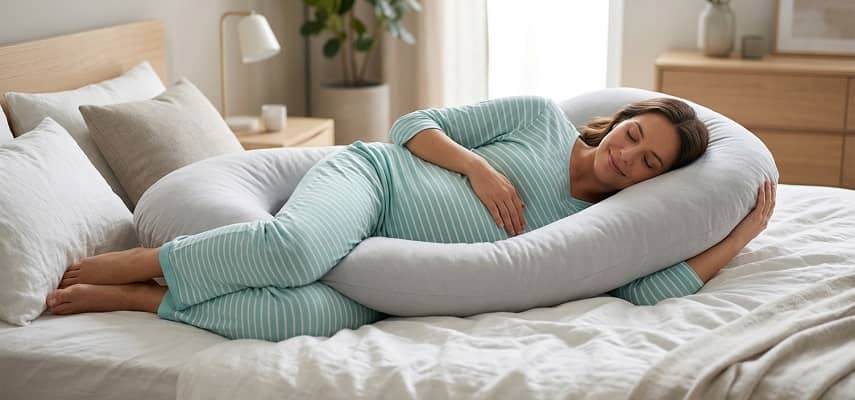
- Sleep on your side. Lying on your side with a pillow between your knees helps keep your spine aligned. A full-length pregnancy pillow can make this much easier.
- Ask about physical therapy. If pain persists, ACOG notes your provider may refer you to a physical therapist or recommend a maternity belt or brace.
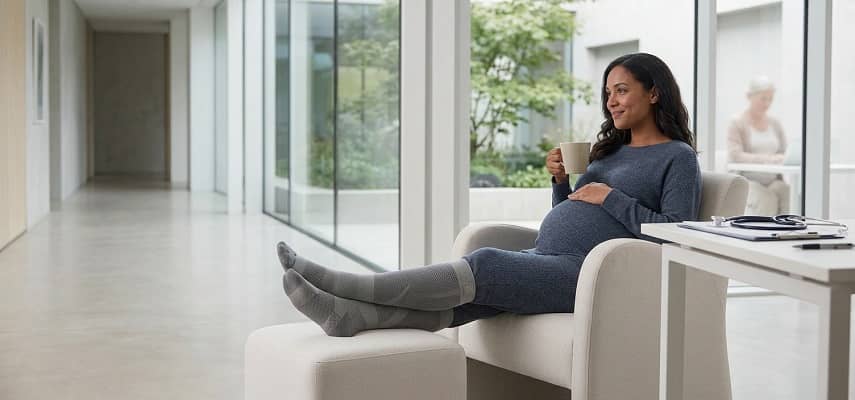
Swelling and leg discomfort often travel alongside back pain in later pregnancy; some people find maternity compression socks helpful for tired, heavy legs. And if pelvic-floor pressure is part of the picture, gentle pelvic-floor work (with your provider’s okay) may help.
Is it safe to wear a support belt while pregnant — and do belts actually work?
For most people, a maternity support belt is considered safe when it’s worn correctly: snug but never tight, positioned under the bump, and for limited stretches of time rather than all day. The honest catch is that high-quality evidence that belts reduce back pain is limited — many users find real short-term relief, but a belt is best treated as a comfort aid, not a proven cure.
Here’s the balanced picture. A review of the research on maternity support garments concluded there isn’t yet enough strong scientific evidence to say belts reliably reduce pregnancy-related low-back or pelvic girdle pain — although some studies do show a measurable stabilizing effect, and small trials plus a lot of everyday experience suggest genuine short-term relief for many people. That same research also flagged possible downsides when belts are misused, including increased pain, skin irritation, general discomfort, and — in some reports — changes in fetal heart rate. That’s exactly why fit and wear-time matter.
What a belt is designed to do: gently lift the weight of the bump so your spine isn’t compensating with an exaggerated arch, add light compression to a loosened, less-stable pelvis, and nudge you toward better posture. What it won’t do: strengthen your core, “fix” your back, or reduce stretch marks (a common marketing claim with no solid evidence behind it).
How to wear one safely:
- Snug, not squeezing. You want gentle support under the belly, not pressure on the belly itself. If it hurts, pinches or leaves deep marks, loosen it.
- Limit wear time. Many clinicians suggest wearing a support belt for only a couple of hours at a stretch — for example during walks, chores, standing or exercise — so you don’t over-rely on it or let your own muscles switch off. Avoid sleeping in it.
- Most people start in the second trimester, often around 20–24 weeks as the bump grows, but there’s no fixed rule — start when you feel you need the support, and stop if it’s uncomfortable.
- Clear it with your provider if your pregnancy is high-risk or you have any complications.
Top picks at a glance
| Belt | Best for | Support level | Approx. price* | Link |
|---|---|---|---|---|
| AZMED Maternity Belt | Best overall / value | Light–moderate | ~$20–25 | View |
| Gabrialla MS-96 | Discreet all-day wear | Moderate | ~$25–35 | View |
| KeaBabies Nurture 2-in-1 | Staying active / exercise | Light–moderate | ~$25–30 | View |
| NeoTech Care Belly Band | Budget pick | Moderate | ~$20–25 | View |
| CABEA Baby Belly Band | Targeted pelvic / SI support | Moderate–firm | ~$40–70 | View |
| Belly Bandit Upsie Belly | Premium comfort | Moderate | ~$50–70 | — |
01 / BEST OVERALL
AZMED Maternity Belt
The AZMED is a straightforward, one-size adjustable belt with a curved panel that sits under the bump and gently lifts it, easing the pull on your lower back. It’s breathable, low-profile enough to hide under clothes, and one of Amazon’s best-selling maternity belts — a sensible, affordable place to start for most people.
Key features
- one-size, fully adjustable hook-and-loop closure
- curved under-belly support panel
- lightweight, breathable fabric.
Pros
- excellent value
- easy to put on
- adjusts as your bump grows
- discreet under clothing.
Cons
- can feel warm in hot weather
- light-to-moderate support may not be enough for significant pelvic girdle pain.
Best for: a first belt, everyday support, and anyone who wants simple and affordable.
Who it’s not for: people who need firm, structured pelvic bracing.
02 / BEST FOR DISCREET ALL-DAY WEAR
Gabrialla MS-96 Elastic Maternity Support Belt
Gabrialla’s MS-96 is a long-standing, US-made belt built for comfortable daily wear. Dual side pulls let you fine-tune compression as your shape changes, and a back pocket holds a hot or cold gel pack for targeted relief. A cotton-lined version (MS-96i) is designed to sit comfortably against the skin under clothes.
Key features
- adjustable dual-pull straps
- 6″ back tapering to 3″ in front
- hot/cold therapy back pocket
- cotton-lined option for under-clothing wear
- multiple sizes and colors.
Pros
- comfortable for long days
- genuinely discreet
- the therapy pocket is a nice touch
- a favorite of active moms.
Cons
- pricier than basic bands
- some users find the Velcro doesn’t stay put late in pregnancy
- you’ll need to choose a size.
Best for: desk days, being on your feet, and anyone who wants a proven, low-profile option.
Who it’s not for: those who prefer a simple one-size band with no sizing decisions.
03 / BEST FOR STAYING ACTIVE
KeaBabies Nurture 2-in-1 Maternity Support Belt
KeaBabies’ Nurture belt uses breathable mesh and a soft padded under-belly panel to distribute your bump’s weight across the hips, pelvis and lower back. It stays cool on a walk or during a workout and is machine washable — a good match if you want to keep moving through your pregnancy.
Key features
- lightweight breathable mesh
- padded under-belly support
- 360° weight distribution
- machine washable
- adjustable fit.
Pros
- cool and comfortable during activity
- soft against the skin
- easy to clean
- stays put over a thin layer.
Cons
- offers moderate rather than rigid support
- check the size range against your belly measurement before ordering.
Best for: walkers, gym-goers and anyone active who wants light, breathable support.
Who it’s not for: runners with significant pelvic-girdle pain who need firmer bracing.
04 / BEST BUDGET PICK
NeoTech Care Pregnancy Belly Band
NeoTech Care’s belly band pairs a wide back panel with an adjustable front for solid, no-frills support of the belly, lower back and pelvis. Reinforced hook-and-loop fastening is built to hold up through a full pregnancy, and it’s usually one of the more affordable options from an established support-brace brand.
Key features
- wide back-support panel
- adjustable hook-and-loop closure
- breathable fabric
- several sizes and colors.
Pros
- good support for the price
- reinforced fastening
- from a company that specializes in braces and supports.
Cons
- a bit more structured/less invisible under fitted clothes
- you’ll need to pick the right size.
Best for: shoppers who want dependable back support without spending much.
Who it’s not for: anyone after the slimmest possible under-clothing profile.
05 / BEST FOR TARGETED PELVIC AND SI-JOINT SUPPORT
CABEA Baby Belly Band
Designed by a female health professional, the CABEA Baby Belly Band is a more configurable system: a maternity abdominal/hip band with add-on back and compression groin straps. That makes it worth considering if your pain is centered on the pelvis, sacroiliac (SI) joint or groin rather than just the lower back.
Key features
- adjustable abdominal/hip support band
- optional back and groin compression straps
- durable neoprene-blend construction
- targeted lift.
Pros
- flexible, targeted support for pelvic, SI-joint and groin discomfort (including vulvar varicosities)
- can double for C-section or hernia support
- adjustable as you change.
Cons
- costs more than a basic band
- the extra straps mean a small learning curve
- can feel like a lot in hot weather.
Best for: pelvic girdle pain, SI-joint pain, or groin/pelvic-floor pressure that a simple belly band doesn’t reach.
Who it’s not for: anyone who just wants a quick, minimal band for mild backache.
06 / BEST PREMIUM PICK
Belly Bandit Upsie Belly
Belly Bandit’s Upsie Belly is a more premium band made from a stretchy “SecureStretch” material that molds to your shape, with an anti-dig closure and several inches of adjustability. It includes a fitted hot/cold gel pack and can be worn during pregnancy and afterward — a comfortable splurge if the basics aren’t cutting it.
Key features
- soft SecureStretch fabric
- anti-dig closure
- wide adjustability
- included hot/cold gel pack
- usable pre- and post-delivery.
Pros
- very comfortable and forgiving
- adjusts across a wide range
- the gel pack is genuinely useful
- well-regarded brand.
Cons
- the priciest option here
- sizing runs by measurement, so check the chart
- premium price for what is still a comfort aid.
Best for: anyone prioritizing comfort and materials, or who wants one band for pregnancy and early recovery.
Who it’s not for: budget shoppers, or those who need firm SI-joint bracing.
What to look for when buying a maternity support belt
Adjustability
Your body changes every few weeks, so a belt that expands with you beats one you’ll outgrow. Look for a wide hook-and-loop range or side-pull straps.
Under-belly support, not belly compression
The goal is to lift and offload the bump, not squeeze it. A curved under-belly panel does this; avoid anything that puts firm pressure directly on the abdomen.
Breathable material
You’ll run warm in pregnancy. Lightweight mesh or breathable elastic keeps a belt wearable for the hours you actually need it.
The right support level
Light-to-moderate bands suit general backache; if your pain is pelvic or SI-joint focused, a firmer or more targeted design (like a configurable band or a sacroiliac belt) may serve you better.
Comfort and ease of use
If it’s fiddly to put on or digs in, you won’t wear it. Soft edges, an easy closure and a low profile under clothes all matter for something you’ll wear daily.
When to see a professional
Mild, activity-related back pain is a normal part of pregnancy, and it’s worth mentioning at your next prenatal visit. But back pain can occasionally signal something that needs prompt attention.
Contact your OB-GYN, midwife or obstetric provider promptly if your back pain comes with any of these:
- Pain that is severe, comes on suddenly and sharply, or stops you doing normal activities
- Pain that feels like rhythmic cramping or tightening, or a dull low backache with pelvic pressure — possible signs of preterm labor (especially before 37 weeks)
- Fever, chills, burning when you urinate, or cloudy/foul-smelling urine — possible urinary tract infection
- Any vaginal bleeding, fluid leaking, or a change in vaginal discharge
- A decrease in your baby’s usual movements
- Numbness, tingling, weakness, or pain shooting down one leg
- Pain, redness, warmth or swelling in one leg (can signal a blood clot)
Regular contractions, cramping or pelvic pressure before 37 weeks warrants a call. When in doubt, call — your care team would far rather reassure you than have you wait.
Frequently asked questions
Is it safe to wear a maternity support belt during pregnancy?
For most people, yes — when it’s worn correctly. Keep it snug but never tight, positioned under the bump for gentle lift, and wear it for limited stretches rather than all day. Skip it while sleeping, loosen it if it hurts, and check with your provider first if your pregnancy is high-risk or you have complications.
When should I start wearing a pregnancy belly band?
There’s no fixed start date. Many people begin in the second trimester, often around 20–24 weeks, when the growing bump starts to strain the back and pelvis. If you feel you need support earlier — for example in a second pregnancy, or if you’re on your feet a lot — that’s fine. Start when it helps and stop if it’s uncomfortable.
How long can I wear a maternity belt each day?
Many clinicians suggest wearing a support belt for only a couple of hours at a stretch — for instance during walks, standing, chores or exercise — then taking it off. This gives real relief when you need it while keeping your own core and back muscles working, so you don’t become dependent on the belt. Avoid wearing one overnight.
Do maternity support belts actually help with back pain?
Many people get genuine short-term relief, and belts can improve stability and posture. That said, high-quality scientific evidence that belts reliably reduce pregnancy back or pelvic pain is still limited. The sensible approach is to treat a belt as one comfort aid alongside gentle exercise, good posture and rest — not as a standalone treatment.
Can a support belt hurt my baby?
A properly fitted belt that supports under the bump — rather than compressing it — is generally considered fine. Problems come from wearing one too tightly or for too long, which can cause discomfort and, in some reports, other effects. Keep it gentle, take it off regularly, and if anything feels wrong, loosen or remove it and check with your provider.
What’s the difference between a maternity belt and a postpartum belly wrap?
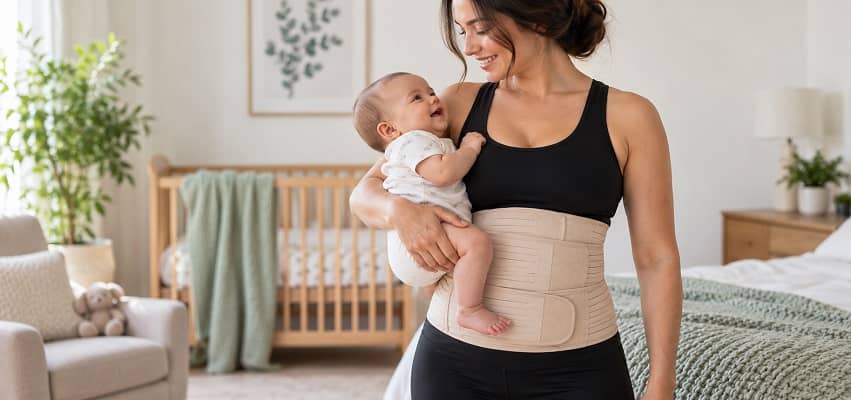
A maternity belt supports your growing bump during pregnancy, lifting weight off your back and pelvis. A postpartum wrap is worn after delivery to gently support the abdomen and back during recovery. Some products convert between the two, but they’re designed for different jobs. See our guide to postpartum belly wraps for after the birth.
Medical disclaimer: This article is for general information only and is not medical advice. It doesn’t replace care from a qualified professional. Talk to your OB-GYN, midwife or healthcare provider about your specific situation before starting to use a support belt or a new exercise, and seek prompt care if you notice any of the warning signs above.