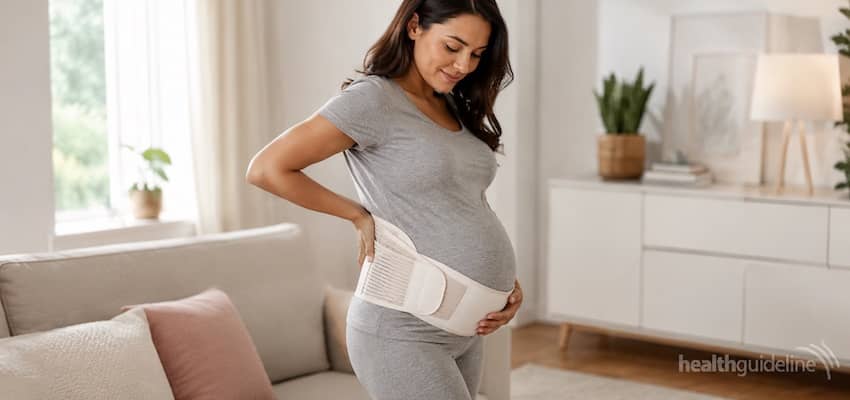
Best Postpartum Belly Wraps: 5 Support Picks (2026)
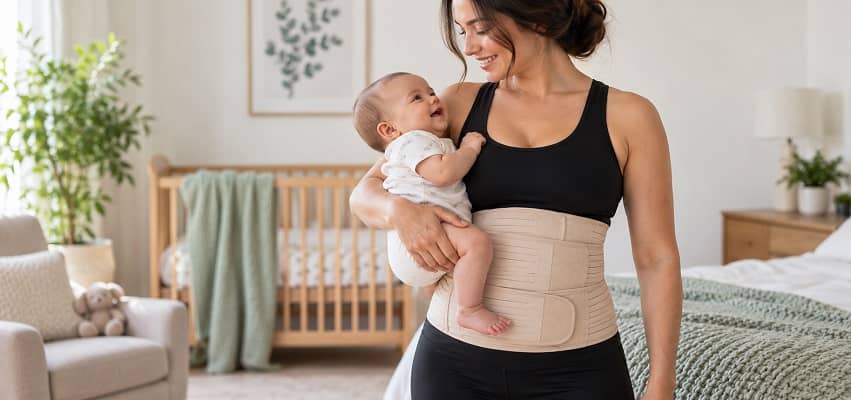
2026 postpartum support guide · comfort, fit & evidence
A postpartum belly wrap can provide temporary abdominal support and may make movement more comfortable, especially after a cesarean birth. It is not a waist-loss tool, does not permanently “shrink” the stomach, and cannot heal diastasis recti by itself. This guide compares five current support options and explains how to use a wrap without over-compressing a recovering body.
Best postpartum belly wraps: quick picks
Best overall
Frida Mom Binder
Three independently adjustable straps make it easier to change compression as comfort and swelling change.
Simple one-piece wrap
Belly Bandit Original
A 9-inch, latex-free wrap with one main closure for people who prefer fewer layers and pieces.
Most customizable
KeaBabies Revive 3-in-1
Three separate pieces let you choose stomach, waist and pelvic-area coverage instead of wearing one tall panel.
How we chose these postpartum belly wraps
This is a desk-research comparison, not a hands-on clinical or product test. We looked for products that are currently identifiable in the US market, have clear sizing or adjustment information, and represent meaningfully different designs: targeted multi-strap support, a simple one-piece wrap, a three-piece system, a lower-cost three-piece option, and a wider-size abdominal binder. We then checked health claims against obstetric guidance and published research rather than repeating marketing language.
How to read our “best” labels: They are editorial judgments about construction, adjustability and use case — not proof that one brand heals faster than another. Research on abdominal binders generally studies the intervention as a category, especially after cesarean delivery, not these five products head-to-head.
Postpartum belly wraps at a glance
| Wrap | Our category | Construction | Best fit for | Main trade-off |
|---|---|---|---|---|
| Frida Mom Postpartum Abdominal Support Binder | Best overall | 9-inch binder with 3 adjustable straps | People who want targeted, easy-to-change compression | One-size range will not fit every body |
| Belly Bandit Original Belly Wrap | Simple one-piece wrap | 9-inch 360° wrap with hook-and-loop closure | People who prefer one panel rather than multiple belts | Correct size matters; firm wrap can feel warm or restrictive |
| KeaBabies Revive 3-in-1 | Most customizable | Separate stomach, waist and pelvis belts | People who want to mix and match coverage | Bulkier and more complicated under clothing |
| ChongErfei 3-in-1 | Budget three-piece option | Three independent wrap sections | Budget-conscious buyers who want adjustable sections | More pieces to position correctly |
| BraceAbility Plus Size Abdominal Binder | Wider-size option | Latex-free elastic binder; 9- or 12-inch height | People who need XL–4XL sizing or taller coverage | General abdominal binder, not postpartum-specific |
The five postpartum belly wrap profiles
01 / BEST OVERALL
Frida Mom Postpartum Abdominal Support Binder
Why it stands out: Frida’s binder uses three independently adjustable straps instead of one large closure. That makes it easier to change pressure across the upper, middle and lower abdomen as your comfort changes. Frida lists a 29- to 46-inch waist range, a 9-inch height, a keep-cool mesh outer layer and a soft knit inner layer.
Key features
- Three self-adjusting compression straps
- 9-inch-high coverage
- Keep-cool mesh outer fabric and soft knit inner fabric
- Manufacturer-listed fit range: 29–46 inches at the waist
Pros
- Targeted adjustment at three points
- Designed to be self-adjusted
- Breathable mesh is practical for warm postpartum days
Cons
- The stated 29–46 inch range excludes some smaller and larger bodies
- Multiple straps can take a few tries to position evenly
Best for: Someone who wants a straightforward postpartum-specific binder with finer control than a single-closure wrap.
Skip if: Your waist measurement falls outside the listed range, or a tall 9-inch panel presses on a sensitive incision, ribs or short torso.
02 / SIMPLE ONE-PIECE WRAP
Belly Bandit Original Postpartum Belly Wrap
Why it stands out: The Original Belly Wrap is a single 9-inch-high compression panel with a broad hook-and-loop closure. Belly Bandit currently describes the material as 80% polyester and 20% latex-free spandex, with sizes based on the largest part of the postpartum belly. It is simpler than three-piece systems and has a relatively low-profile construction.
Key features
- Single wraparound panel
- 9-inch product height
- Latex-free polyester/spandex construction
- Multiple sizes rather than one universal fit
Pros
- Fewer pieces to manage
- Latex-free material
- Thin profile compared with layered three-belt systems
Cons
- One-piece pressure is less targeted than a multi-strap binder
- A firm 9-inch wrap can feel restrictive when sitting
Best for: Someone who wants simple 360-degree compression without layering multiple belts.
Skip if: You need very localized adjustment around an incision, or you are between sizes and cannot get a secure but comfortable closure.
03 / MOST CUSTOMIZABLE
KeaBabies Revive 3-in-1 Postpartum Recovery Support Belt
Why it stands out: Revive uses three separate sections — a stomach belt, waist belt and pelvis belt — rather than a single tall panel. That gives you more options for coverage, but it also means more pieces to position. KeaBabies describes the fabric as breathable elastic mesh and currently lists M/L, XL and 2XL options.
Key features
- Three separate support belts
- Adjustable hook-and-loop fastening
- Breathable elastic-mesh construction
- M/L, XL and 2XL sizes listed by the manufacturer
Pros
- Choose one, two or three sections depending on comfort
- Broad coverage for abdomen and lower back
Cons
- Bulkier under clothing than a one-piece wrap
- More closures can be awkward when tired, sore or frequently feeding a newborn
Marketing-claim check: KeaBabies makes claims about shrinking the belly and helping organs return to position. We do not treat those as established medical benefits. A support belt may feel supportive, but it cannot force permanent body reshaping or substitute for normal postpartum healing and rehabilitation.
Best for: Someone who values mix-and-match coverage more than minimal bulk.
Skip if: You want a discreet under-clothing option or prefer the simplicity of one closure.
04 / BUDGET THREE-PIECE OPTION
ChongErfei 3-in-1 Postpartum Belly Wrap
Why it stands out: ChongErfei follows the same three-section concept — separate stomach, waist and pelvic-area wraps — at a typically lower price than premium postpartum brands. The brand’s current information emphasizes adjustable hook-and-loop fastening and breathable fabric. Because Amazon carries multiple size and color ASINs, verify the circumference range on the exact listing you choose.
Key features
- Three independently fastened sections
- Adjustable hook-and-loop closure
- Breathable fabric construction
- Multiple size/variant listings
Pros
- Flexible coverage at a budget-oriented price point
- Can be loosened or re-positioned section by section
Cons
- Three pieces create more bulk and more room for fit error
- Different Amazon variants can have different measurement ranges
Best for: Price-conscious buyers who specifically want a three-piece system.
Skip if: You want a simple binder you can put on quickly with one closure.
05 / WIDER-SIZE OPTION
BraceAbility Plus Size Abdominal Binder
Why it stands out: This is a general abdominal binder rather than a postpartum-only product, but BraceAbility includes postpartum and post-surgical support among its listed uses. The current plus-size model comes in XL through 4XL, uses latex-free elastic, and offers 9- or 12-inch heights — useful when standard one-size postpartum wraps are too limited.
Key features
- XL through 4XL size range
- 9- and 12-inch height options
- Latex-free premium-panel elastic
- Broad hook-and-loop adjustment area
Pros
- More inclusive sizing than many postpartum-specific wraps
- Two height choices for torso coverage
- Latex-free material
Cons
- Not designed specifically around postpartum anatomy or feeding routines
- The 12-inch version may be too tall for shorter torsos
Best for: People who need a larger circumference or taller abdominal binder and have their clinician’s approval for this type of compression.
Skip if: You want a postpartum-specific multi-strap design or need a smaller size.
Do postpartum belly wraps really work?
They can help with support and short-term comfort, particularly after cesarean delivery, but they do not permanently reshape the waist. ACOG lists an abdominal binder as one option that may help relieve C-section incision pain. Cleveland Clinic likewise notes that a wrap may provide stability, posture support and comfort, while emphasizing that it will not make your waist smaller or cause weight loss.
What the newer cesarean evidence shows
A 2025 meta-analysis included 13 randomized controlled trials of abdominal binders after cesarean delivery. It found statistically significant reductions in postoperative pain at 6, 12, 24 and 48 hours, with no significant difference in postoperative complications between binder and control groups. Earlier trials and reviews have been mixed, so the most accurate conclusion is that binders may improve short-term comfort for some patients rather than guaranteeing a faster recovery.
Can a belly wrap flatten the postpartum stomach?
A wrap can temporarily compress soft tissue, so your silhouette may look different while you are wearing it. That is not the same as permanent fat loss, a smaller waist, or “putting organs back in place.” If your goal is body composition change, a wrap does not replace nutrition, gradual activity and time. If your goal is comfort and a more supported feeling while healing, that is a more realistic use.
This distinction also matters if you are comparing a postpartum support wrap with a waist trimmer belt. Postpartum support should prioritize comfort, breathing and mobility — not aggressive compression or sweating.
Can a belly wrap fix diastasis recti?
No. An elastic binder can help you feel supported and may cue better posture, but Cleveland Clinic specifically notes that binders cannot heal diastasis recti or strengthen core muscles. Diastasis treatment usually centers on appropriate exercise and, when needed, pelvic-health or physical-therapy guidance. A 2025 systematic review also found abdominal exercise outperformed binding for reducing inter-recti distance below the umbilicus in the included trials.
What to look for when buying a postpartum belly wrap
1. Enough adjustment — without chasing maximum tightness
Your abdominal size and swelling can change quickly after delivery. Look for a closure that has room to loosen and tighten while still lying flat. More compression is not automatically more therapeutic. The useful fit is the one that feels supportive while you can breathe fully, sit, stand and feed your baby without pain or numbness.
2. The right height for your torso and incision
Most wraps in this guide are around 9 inches high, while some abdominal binders also come in taller versions. A tall binder can distribute pressure over a larger area, but it can also dig into the ribs, fold at the waist or press on a healing incision. Measure your circumference and consider torso height rather than relying only on pre-pregnancy clothing size.
3. Breathable, non-irritating fabric
Postpartum skin can be sensitive, and hook-and-loop edges can scratch. Smooth linings, breathable mesh and latex-free materials are useful if you are prone to irritation. If the wrap sits near a cesarean incision, ask your care team where the edge should sit and check the skin regularly.
4. A closure you can manage while sore or sleep-deprived
A three-piece system offers more customization but also more fastening steps. A single wrap is faster, while Frida’s three-strap design sits between those extremes. Think about how easily you can reach, pull and release the closure by yourself.
5. Your actual purpose
If your goal is temporary abdominal support or comfort while walking, a standard elastic binder may be reasonable. If your goal is treatment for significant back pain, pelvic-floor symptoms, a hernia, wound problems or diastasis recti, buy only after the problem is assessed. During pregnancy rather than postpartum, a different support design may be appropriate; see our back support in pregnancy guide.
How should a postpartum belly wrap fit?
A postpartum wrap should feel snug and supportive, not rigidly cinched. You should be able to take a full breath, change position and walk without new pain, numbness, tingling, dizziness or pressure on the incision. There is no benefit to tightening a binder until movement or breathing feels restricted.
- Get postpartum-specific advice first. If you had a C-section, significant tearing, a wound complication, a clotting problem, pelvic-floor symptoms or another medical issue, ask your obstetric or surgical team whether a binder is appropriate and when to start.
- Measure your current body. Use the brand’s exact measurement location. Do not choose a size from your pre-pregnancy jeans or from the size you hope to reach.
- Apply even, gentle support. Smooth the fabric and avoid folds. Start looser than you think you need, then adjust only enough to feel supported.
- Move and breathe before deciding the fit is right. Sit down, stand up, take several deep breaths and walk a short distance. A wrap that feels fine while standing may dig in when feeding or sitting.
- Inspect your skin and incision. Remove the wrap if it causes pain, chafing, numbness, tingling, color change, breathing difficulty or increasing wound discomfort.
There is no universal “10 hours a day for 8 weeks” rule. Wear time should be individualized to the device, your comfort, your birth and your clinician’s advice. Cleveland Clinic cautions against prolonged overnight wear and recommends removing a band that causes pain or seems to impair circulation.
When should you stop using a belly wrap or call a professional?
Stop the wrap and get medical advice if it makes symptoms worse
Remove or loosen the wrap if it causes increasing pain, pressure on the incision, numbness, tingling, skin discoloration, breathing difficulty, dizziness or marked discomfort. A support garment should not be used to “push through” pain or to hide a wound problem.
After a C-section, the NHS advises contacting a midwife or doctor for severe pain, heavy vaginal bleeding, a wound that becomes more red, painful or swollen, pus or foul-smelling drainage, shortness of breath, or swelling/pain in the lower leg. These symptoms need medical assessment rather than tighter compression.
ACOG includes an abdominal binder among comfort options that may help incision pain after cesarean birth, but it also emphasizes individualized postpartum pain management. A binder is an add-on, not a replacement for prescribed pain relief, wound care, gradual mobility or follow-up.
For other pregnancy and postpartum comfort topics on Health Guideline, see our guides to compression socks for pregnancy and maternity compression leggings. These products serve different purposes and should not be treated as substitutes for abdominal support.
Frequently asked questions
Do postpartum belly wraps make your stomach flat?
They can temporarily compress the abdomen, so clothing may fit differently while the wrap is on. They do not permanently burn fat, shrink the waist or force the body back to a pre-pregnancy shape. Cleveland Clinic specifically advises that long-term waist reduction and weight loss are not benefits of postpartum belly bands.
Is a belly binder helpful after a C-section?
It may be helpful for comfort. ACOG lists an abdominal binder as one option that may relieve incision pain, and a 2025 meta-analysis of 13 randomized trials found lower pain scores at several time points after cesarean delivery. Ask your obstetric team when to start and how the binder should sit relative to your incision.
Can I use a belly wrap after a vaginal birth?
Some people like the feeling of abdominal support after a vaginal birth, but the strongest clinical evidence for binders is from cesarean recovery studies. If you have significant pelvic-floor pressure, pain, tearing or other postpartum symptoms, ask your clinician before adding compression rather than assuming a wrap will treat the problem.
Can a postpartum belly band heal diastasis recti?
No. A band can provide support and may remind you to use better posture, but it does not heal the separation or strengthen the core. Cleveland Clinic recommends appropriate exercise and, when necessary, physical therapy. If you notice persistent bulging, weakness, back pain or pelvic-floor symptoms, ask for an assessment.
How tight should a postpartum belly wrap be?
Snug enough to feel supported, but never so tight that it hurts, limits a full breath, causes numbness or tingling, changes skin color, or presses painfully on an incision. Start with lighter tension, test the fit while sitting and walking, and remove or loosen it if symptoms appear.
Can I sleep in a postpartum belly wrap?
Do not assume that overnight wear is necessary. Cleveland Clinic advises against prolonged use while sleeping, and manufacturers give different recommendations. Your clinician’s advice should take priority after surgery or if you have medical complications. If a wrap is uncomfortable, painful or restricts breathing, remove it.
How long should I wear a postpartum belly wrap?
There is no single evidence-based schedule that fits every postpartum recovery. Duration depends on your delivery, symptoms, incision, comfort and the device. Some brands suggest weeks of use, but those schedules are not universal medical rules. Ask your obstetric clinician what makes sense for you, especially after a C-section.
This article is for general information only and is not medical advice. Talk to a qualified healthcare professional about your delivery, incision, pain, pelvic-floor symptoms, diastasis recti and whether abdominal compression is appropriate for you.