Best Shoes for Achilles Tendonitis (2026): 7 Top Picks
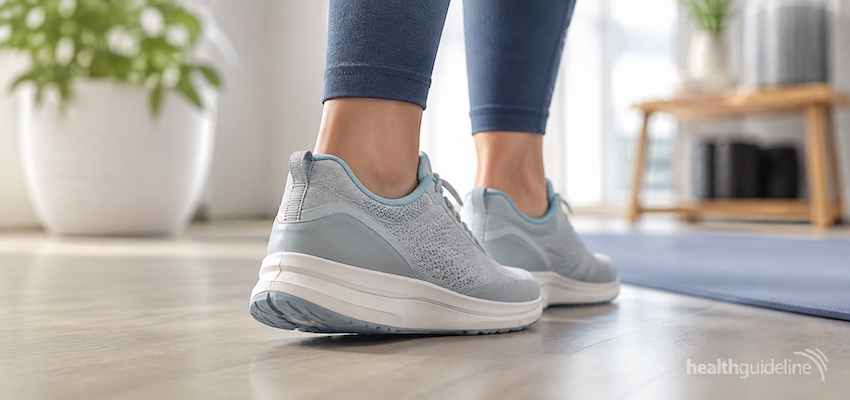
The Brooks Ghost 17 is the best all-round shoe for most people with Achilles tendonitis — balanced cushioning, a 10 mm heel drop, and a heel tab that flares away from the tendon. Want a plush, rolling ride? The HOKA Clifton 10. Need stability and the gentlest option for the tendon? The Brooks Adrenaline GTS 24 (12 mm drop).
The best shoes for Achilles tendonitis combine a higher heel-to-toe drop (about 8–12 mm), a cushioned midsole, and a firm, well-padded heel counter to reduce strain on the tendon. Strong 2026 options include the Brooks Ghost 17, HOKA Clifton 10, and Brooks Adrenaline GTS 24. Avoid flat, worn-out, or zero-drop shoes while symptoms last.
If your heel or the back of your ankle aches after walking, running, or standing all day, the shoes on your feet may be helping or quietly making it worse. This guide is for anyone managing Achilles tendonitis who wants to stay active comfortably. The single most useful takeaway: look for a shoe with a slightly raised heel (a higher drop), plenty of cushioning, and a heel that holds your foot securely without digging into the tendon.
How we chose these shoes
We prioritized the footwear features that podiatrists consistently recommend for Achilles tendinopathy: an adequate heel-to-toe drop, a cushioned midsole, a firm but comfortable heel counter, and — where possible — a rocker sole that smooths the push-off phase of your stride. We cross-checked the current 2026 models and their published specifications against multiple independent running-shoe reviews, favored shoes that come in more than one width, and called out honest trade-offs for each pick rather than only the positives. This is general information to help you shop, not medical advice.
Top picks at a glance
| Shoe | Best for | Heel drop | Standout feature | Approx. price* |
|---|---|---|---|---|
| Brooks Ghost 17 | Best overall | 10 mm | Heel tab flares away from the Achilles | ~$140 |
| HOKA Clifton 10 | Cushioning & smooth ride | 8 mm | Meta-Rocker eases push-off | ~$150 |
| Brooks Adrenaline GTS 24 | Stability + most tendon offload | 12 mm | GuideRails support, highest drop here | ~$90–140 |
| ASICS Gel-Kayano 32 | Premium stability | 8 mm | 4D Guidance System for overpronation | ~$165 |
| New Balance 1080v14 | Everyday wear & wide feet | 6 mm | Multiple widths, plush collar | ~$165 |
| HOKA Bondi 9 | Standing, walking & recovery | 5 mm | Max cushioning for all-day comfort | ~$170 |
| OOFOS OOriginal | Recovery sandal (off your feet) | n/a | OOfoam absorbs impact around the house | ~$60–70 |
Why the right shoes matter for Achilles tendonitis
The Achilles tendon connects your calf muscles to your heel bone and absorbs large forces every time you walk, run, or push off the ground. When it is irritated, footwear can either aggravate or relieve it. A higher heel-to-toe drop raises the heel slightly, which slackens the tendon and reduces how hard it has to work with each step. A cushioned midsole softens impact, a firm heel counter keeps the heel stable, and a rocker sole helps you roll smoothly through your stride so the tendon does less work at toe-off. Flat, worn-out, or zero-drop shoes do the opposite: they keep the heel low and increase the stretch on the tendon, which is why podiatrists generally advise against them while symptoms are active.
The 7 best shoes for Achilles tendonitis in 2026
01 / Best overall
1. Brooks Ghost 17 — Best overall
The Brooks Ghost 17 is a neutral, well-cushioned daily trainer that suits most people with Achilles tendonitis. Its 10 mm heel drop helps offload the tendon, the nitrogen-infused DNA LOFT v3 midsole softens impact, and a redesigned heel tab flares away from the Achilles to reduce irritation. It works equally well for walking and easy running.
Key features:
- 10 mm drop
- DNA LOFT v3 cushioning
- firm heel counter
- broad stable base
- available in narrow/regular/wide/extra-wide.
Pros
- Balanced, versatile cushioning
- secure heel hold
- Achilles-friendly flared heel tab
- great daily walker and runner.
Cons
- Neutral shoe, so it offers only light stability
- not the plushest option if you want maximum softness.
Best for: Most people who want one reliable shoe for daily wear, walking, and running.
02 / Best cushioning and smoothest ride
2. HOKA Clifton 10 — Best cushioning and smoothest ride
The HOKA Clifton 10 pairs a tall, plush 42 mm stack with an 8 mm drop and HOKA’s signature Meta-Rocker, which rolls the foot forward and eases push-off — the point in the stride that stresses the Achilles most. Reviewers note its flexible heel counter is comfortable for people with Achilles sensitivity, and it stays surprisingly light for a max-cushion shoe.
Key features:
- 8 mm drop
- 42 mm cushioned stack
- Meta-Rocker geometry
- CMEVA foam
- flexible heel counter.
Pros
- Deep, protective cushioning
- smooth rolling ride that reduces push-off load
- lighter than it looks.
Cons
- Tall stack feels less stable than a firmer trainer
- softer heel counter offers less structure for heavy overpronators.
Best for: Runners and walkers who want a soft, smooth ride that takes pressure off the tendon.
03 / Best for stability and offloading the tendon
3. Brooks Adrenaline GTS 24 — Best for stability and offloading the tendon
If overpronation or flat feet contribute to your Achilles pain, the Brooks Adrenaline GTS 24 adds GuideRails support and a medial post to control excess motion. Its 12 mm heel drop is the highest on this list, which offloads the tendon most effectively. Worth knowing: the newer GTS 25 lowers the drop to 10 mm, so for Achilles tendonitis the GTS 24 is actually the gentler choice — and it is often discounted.
Key features:
- 12 mm drop
- GuideRails holistic support
- medial post
- DNA LOFT v3 midsole
- APMA Seal of Acceptance.
Pros
- Highest heel drop here for maximum tendon offloading
- excellent stability
- frequently on sale as last season’s model.
Cons
- Firm, rigid heel counter may irritate a sensitive or bony heel (e.g. Haglund’s deformity)
- more shoe than neutral runners need.
Best for: People who overpronate or want the most tendon offloading from a supportive shoe.
04 / Best premium stability
4. ASICS Gel-Kayano 32 — Best premium stability
The ASICS Gel-Kayano 32 is a plush stability shoe with an 8 mm drop, FF Blast+ cushioning, a PureGEL heel insert for shock absorption, and a 4D Guidance System that gently controls overpronation. It is a refined, supportive pick for longer walks or runs when your foot mechanics contribute to Achilles strain.
Key features:
- 8 mm drop
- FF Blast+ cushioning
- PureGEL heel insert
- 4D Guidance System
- plush heel padding.
Pros
- Smooth, supportive ride
- strong shock absorption
- comfortable for long distances and all-day wear.
Cons
- Firm heel counter needs a short break-in
- premium price
- heavier than a neutral trainer.
Best for: Overpronators who want premium cushioning with structured support.
05 / Best for everyday wear and wider feet
5. New Balance Fresh Foam X 1080v14 — Best for everyday wear and wider feet
The New Balance Fresh Foam X 1080v14 is a comfortable, rockered daily shoe that comes in multiple widths, making it a strong choice for wider feet or all-day wear. Its drop is lower at 6 mm, so if you want more tendon offloading you can add a small heel lift. The padded heel collar is plush and secure.
Key features:
- 6 mm drop
- Fresh Foam X cushioning
- rockered midsole
- generously padded heel collar
- multiple width options.
Pros
- Roomy width choices
- comfortable for standing and walking
- smooth, stable ride.
Cons
- Lower 6 mm drop offloads the Achilles less than a 10–12 mm shoe
- firmer than the ultra-soft previous version.
Best for: Wider feet, all-day comfort, and everyday walking.
06 / Best for standing, walking, and recovery
6. HOKA Bondi 9 — Best for standing, walking, and recovery
The HOKA Bondi 9 is HOKA’s max-cushion shoe, now best suited to walking, standing all day, and easy recovery rather than fast running. Its deep supercritical foam and Meta-Rocker soak up impact so your heel and tendon take less of a pounding. The drop is a lower 5 mm, so it shines as an everyday comfort shoe; pair it with a heel lift if you want extra offloading.
Key features:
- 5 mm drop
- maximum cushioning
- supercritical foam
- Meta-Rocker
- very protective platform.
Pros
- Outstanding impact protection
- excellent for long hours on your feet and recovery days.
Cons
- Lower 5 mm drop
- tall, firmer forefoot feels less flexible and less nimble for faster running.
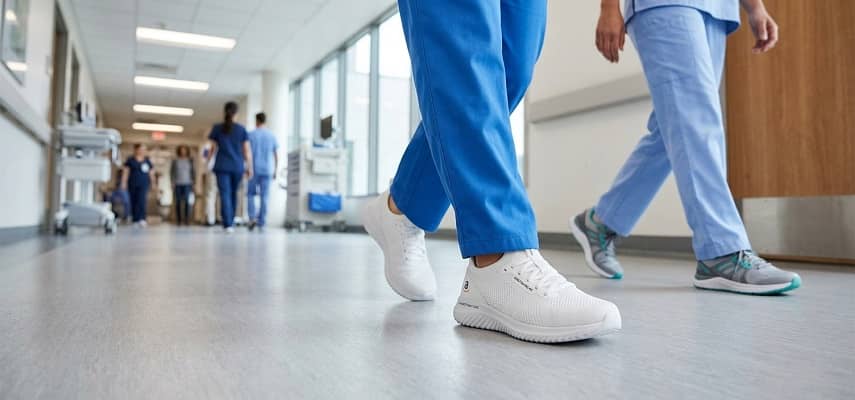
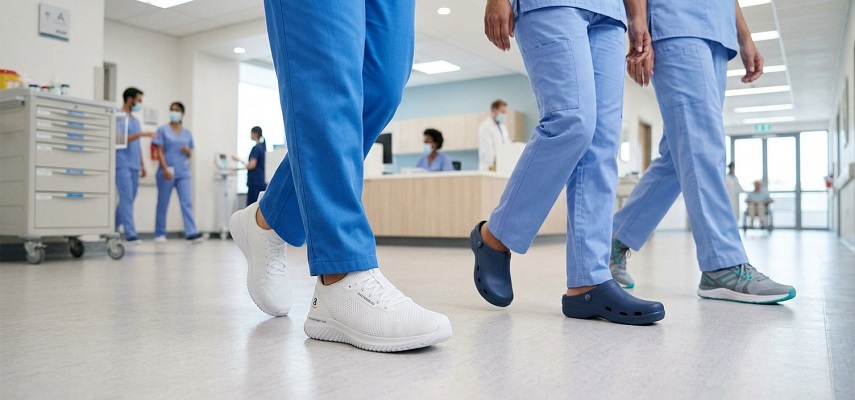
Best for: Nurses, retail and warehouse workers, and anyone on hard floors all day, plus post-run recovery.
07 / Best recovery sandal for off your feet
7. OOFOS OOriginal — Best recovery sandal for off your feet
The OOFOS OOriginal is a recovery sandal designed for time off your feet — around the house, after workouts, or post-run. Its OOfoam absorbs a large share of impact and its contoured footbed supports the arch, which can take pressure off the heel and Achilles. It is a far more comfortable choice than padding around barefoot on hard floors, a common way to aggravate the tendon at home.
Key features:
- Impact-absorbing OOfoam
- contoured arch-supporting footbed
- easy slip-on thong design
- machine washable.
Pros
- Cushioned support at home when you would otherwise be barefoot
- great for recovery after activity.
Cons
- A sandal, not a walking or running shoe
- open design offers no toe protection and limited outdoor use.
Best for: Recovery and around-the-house wear to keep the heel supported off your feet.
Budget tip: Running brands update their shoes every year, and last season’s model is usually near-identical for a lot less money. If price matters, look for the previous version of any pick above — the Brooks Ghost 16 (which actually has a higher 12 mm drop), HOKA Clifton 9, ASICS Gel-Kayano 31, or ASICS Gel-Nimbus 26 — often at a steep discount once the new model lands.
What to look for in shoes for Achilles tendonitis
Heel-to-toe drop (aim higher)
Drop is the height difference between the heel and forefoot. A higher drop, roughly 8–12 mm, raises the heel and reduces the stretch and workload on the Achilles tendon, which is why it is the single most important feature for this condition. If you love a lower-drop shoe, a removable heel lift can add the same effect.
Cushioning
A well-cushioned midsole absorbs impact so less shock travels up to the heel and tendon. Look for generous, protective foam — but the heel should still feel supportive rather than collapsing under you.
A firm, well-padded heel counter
The heel counter is the structured cup at the back of the shoe. It should hold your heel securely to limit excess movement, while being padded enough not to press or rub directly on the tendon. If you have an insertional or bony heel, avoid a very rigid, sharp-edged counter.
A rocker sole or smooth transition
A curved, rockered sole (like HOKA’s Meta-Rocker) helps you roll from heel to toe, reducing how hard the Achilles has to work at push-off. A smooth heel-to-toe transition is gentler than an abrupt, flat one.
Arch support and the right width
Good arch support keeps the foot aligned and helps control inward rolling (overpronation) that can add strain to the tendon. Just as important, choose the correct width — a shoe that is too tight or too loose changes how your foot loads. Several picks above come in multiple widths.
What to avoid
While symptoms are active, avoid flat shoes, zero-drop and minimalist footwear, unsupportive flip-flops, and worn-out shoes with compressed heels. All of these keep the heel low or unstable and increase the load on the Achilles tendon.
About Achilles tendonitis
Achilles tendonitis (also called Achilles tendinopathy) is an overuse irritation of the Achilles tendon, the thick band that connects your calf muscles to your heel bone. It commonly shows up as pain and stiffness along the tendon or at the back of the heel, often worst first thing in the morning or after activity. There are two common forms: mid-portion tendinopathy, a few centimeters above the heel, and insertional tendinopathy, right where the tendon meets the heel bone — insertional cases tend to be more sensitive to pressure and to stiff heel counters.
Frequent triggers include a sudden increase in training or activity, tight or weak calf muscles, and unsupportive or worn-out footwear. Commonly recommended self-care, according to medical authorities such as the Mayo Clinic, Cleveland Clinic, and the American Academy of Orthopaedic Surgeons, includes easing off aggravating activity, calf stretching and gradual strengthening, ice, and supportive footwear or heel lifts. The right shoes are one helpful piece of that picture — not a cure on their own. This is general information, not a treatment plan for your specific situation.
When to see a professional
See a doctor, podiatrist, or physical therapist if your pain is severe, does not improve after a few weeks of self-care, or comes with noticeable swelling, redness, or warmth. Seek urgent care if you feel a sudden pop or sharp pain in the back of the ankle along with weakness or difficulty walking or pushing off — this can signal an Achilles tendon tear or rupture and needs prompt evaluation.
Frequently asked questions
What heel drop is best for shoes for Achilles tendonitis?
For most people with Achilles tendonitis, a higher heel-to-toe drop of about 8–12 mm is gentler, because a raised heel slightly shortens the tendon and reduces the load it carries with each step. Very low or zero-drop shoes place more stretch on the Achilles and are usually best avoided while symptoms persist.
Are HOKA or Brooks shoes better for Achilles tendonitis?
Both work well; the better choice depends on your needs. Brooks models like the Ghost 17 (10 mm) and Adrenaline GTS 24 (12 mm) offer higher drops that offload the tendon. HOKA models like the Clifton 10 add a rocker sole and plush cushioning that smooths push-off. Try both and pick whichever feels most comfortable.
Should I wear zero-drop or barefoot-style shoes with Achilles tendonitis?
Generally no, at least while symptoms are active. Zero-drop and minimalist shoes keep the heel low, which increases the stretch and workload on the Achilles tendon and can worsen pain. Podiatrists typically recommend switching to a cushioned shoe with a higher heel drop until the tendon has fully settled.
Can the right shoes cure Achilles tendonitis?
No single shoe cures Achilles tendonitis. Supportive footwear with cushioning and a higher heel drop can reduce strain and ease symptoms, but recovery usually also involves load management, calf stretching and strengthening, and time. If pain is severe or persistent, see a healthcare professional for a tailored plan.
Do heel lifts help Achilles tendonitis?
Heel lifts can help some people by raising the heel and reducing tension on the Achilles tendon, especially during a flare-up. They are often used short-term alongside supportive shoes. Because they change your foot position, it is best to introduce them gradually and check with a professional if you are unsure.
Are cushioned or firm shoes better for Achilles tendonitis?
A cushioned midsole helps absorb impact and reduce stress on the tendon, so well-cushioned shoes are usually preferred. That said, the heel area should still feel supportive and stable rather than collapsing. The ideal shoe pairs generous cushioning with a firm heel counter that holds the heel securely.
If you are also using a brace or support to manage flare-ups, see our guide to the best ankle braces for Achilles tendonitis.
Medical disclaimer: This article is for general information only and is not medical advice. Talk to a qualified healthcare professional about your specific situation.