Best Sneakers With Ankle Support in 2026
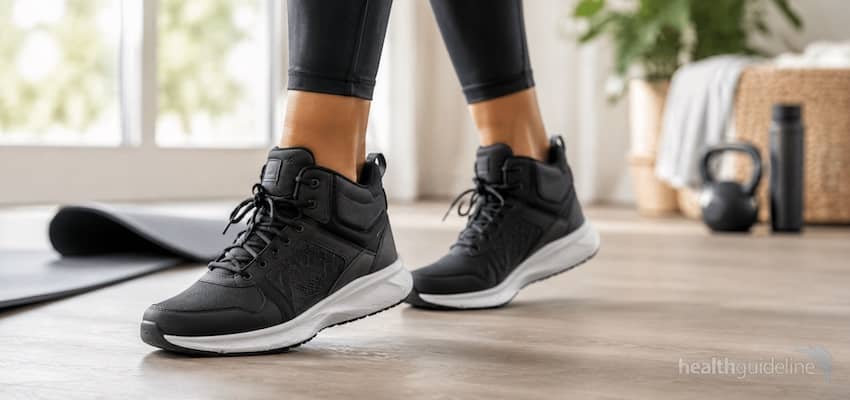
If you want the best sneakers with ankle support, the honest short version is this: the shoe matters, but not the way most people assume. Below are eight pairs we rate highly for 2026 — split into court/basketball shoes built for lockdown and everyday and walking shoes built for stability — followed by the part most “best of” lists skip: what the research actually says about preventing ankle sprains, so you can spend your money where it counts.
Quick Picks
Best overall (court)
Nike LeBron NXXT Genesis
A rigid, structured shoe that wraps and steadies the whole foot.
Best all-around (court)
adidas Anthony Edwards 2
The most balanced mix of stability, cushioning and lockdown.
Best budget (court)
Under Armour Lockdown 6
A padded collar and secure fit for well under most signature shoes.
Best for everyday/weak ankles
New Balance Fresh Foam X 860
Podiatrist-favorite stability that controls the inward roll (overpronation).
The honest bit: in a study of 622 players, high-tops and low-tops had no significant difference in sprain rates. Fit, whole-foot stability and stronger ankles matter more than collar height.
What are the best sneakers with ankle support in 2026?
The best sneakers with ankle support in 2026 are the Nike LeBron NXXT Genesis (best overall for containment), the adidas Anthony Edwards 2 (best all-around court shoe) and the Nike Sabrina 2 (best lightweight guard option), with the Under Armour Lockdown 6 and AND1 Revel Mid as budget picks. For everyday wear, the New Balance Fresh Foam X 860, Hoka Arahi 8 and ASICS Gel-Kayano lead for all-day stability.
Top picks at a glance
| Sneaker | Best for | Cut | Standout support feature | Approx. price |
|---|---|---|---|---|
| Nike LeBron NXXT Genesis | Best overall / containment | Mid | Carbon shank + stiff heel counter | ~$140–$160 |
| adidas Anthony Edwards 2 | Best all-around court shoe | Low/Mid | Structured build + stable base | ~$110–$130 |
| Nike Sabrina 2 | Guards / lightweight lockdown | Low | Secure midfoot cage, low to ground | ~$130 |
| Under Armour Lockdown 6 | Best budget | Mid | Padded collar + secure fit | ~$65–$90 |
| AND1 Revel Mid | Budget mid-top / outdoor | Mid | Molded heel counter + support harness | ~$40–$60 |
| New Balance Fresh Foam X 860 | Everyday / overpronation | Low | Stability Plane (anti-roll) | ~$135–$145 |
| Hoka Arahi 8 | Lightweight stability | Low | Firm H-Frame guidance | ~$145 |
| ASICS Gel-Kayano | Cushioned all-day stability | Low | Wide stable base + structure | ~$160 |
How we chose these sneakers
We prioritized the features that sports-medicine and footwear testers agree actually stabilize the foot: a secure, true-to-size fit, a firm heel counter, torsional rigidity (resistance to twisting) and a wide, stable base — not simply a tall collar. Court picks were drawn from recent hands-on and lab testing by specialist reviewers; everyday picks lean on models podiatrists repeatedly recommend for weak ankles and overpronation. Every shoe listed is a real product currently sold in the US, and we flag honest trade-offs for each. We deliberately included budget and premium options so there’s a genuine fit for different players and needs.
Best basketball & court sneakers with ankle support
On the court, “ankle support” really means lockdown and whole-foot stability — a shoe that holds your foot in place through hard cuts, landings and changes of direction. These five do that best right now.
01 / Best overall for support & containment
Nike LeBron NXXT Genesis — Best overall for support & containment
The LeBron NXXT Genesis is our top pick for players who want to feel bolted in. A rigid upper, an internal carbon-fiber shank and a stiff heel counter wrap the foot and resist twisting, while a forefoot Zoom Turbo unit adds bounce. It’s a support-first shoe that keeps your foot planted and contained.
Key features:
- rigid structured upper
- carbon-fiber midfoot shank
- stiff/structured heel counter
- forefoot Zoom Turbo cushioning
- padded mid-cut collar.
Pros
- excellent containment and lockdown
- shank and heel counter resist rollover forces
- strong impact protection.
Cons
- upper and collar feel stiff until broken in
- heavier and less nimble than guard shoes
- premium price.
Best for: forwards and physical players who value stability over top-end speed.
02 / Best all-around court shoe
adidas Anthony Edwards 2 (AE 2) — Best all-around court shoe
The Anthony Edwards 2 is the best all-rounder here: a solid, structured build with a stable base, a stiff well-padded heel counter and a secure lockdown, paired with responsive Light BOOST cushioning. It balances containment and comfort better than most, making it a safe, versatile pick for guards and wings alike.
Key features:
- structured supportive build
- stable platform
- stiff padded heel counter
- Light BOOST + propulsion-plate cushioning
- secure lacing.
Pros
- strong all-around stability and lockdown
- balanced cushioning with good energy return
- durable.
Cons
- not the lightest option
- styling is polarizing.
Best for: all-position players who want one versatile, stable shoe.
03 / Best lightweight lockdown for guards
Nike Sabrina 2 — Best lightweight lockdown for guards
For quick guards, the Sabrina 2 delivers elite lockdown without the bulk. It trims weight over the first model while keeping a secure fit, a supportive midfoot and dual-density Cushlon 3.0 plus forefoot Zoom. You get containment and court feel in a light, low-to-the-ground package that stays planted on cuts.
Key features:
- lightweight build
- secure midfoot cage
- Cushlon 3.0 + forefoot Zoom
- low-to-ground stable platform
- grippy indoor traction.
Pros
- excellent lockdown and stability for a light shoe
- responsive
- great indoor grip.
Cons
- low-top, so no collar “wrap” (though research suggests that matters little)
- traction is indoor-focused.
Best for: guards and fast players who want stability without added weight.
04 / Best budget
Under Armour Lockdown 6 — Best budget
The Lockdown 6 is the best value pick: a padded collar, tough exterior and breathable mesh give real support for well under the price of most signature shoes. Traction is reliable indoors and out. It won’t match premium cushioning, but for casual players and everyday wear it delivers stable, secure support on a budget.
Key features:
- padded ankle collar
- durable upper
- breathable mesh
- full rubber outsole
- budget-friendly price.
Pros
- genuinely affordable
- padded collar and secure fit
- dependable traction
- widely available.
Cons
- basic cushioning
- less refined than premium models.
Best for: recreational players and budget shoppers who want reliable support.
05 / Best mid-top on a budget
AND1 Revel Mid — Best mid-top on a budget
If you like the wrapped feel of a mid-top, the AND1 Revel Mid is a lot of shoe for the money. A molded heel counter, an external support harness and a padded collar create a locked-in, custom feel around the midfoot and ankle, with a full rubber outsole that grips indoor and outdoor courts.
Key features:
- mid-top cut
- molded heel counter
- external support harness
- padded collar
- full rubber outsole.
Pros
- very affordable
- secure, locked-in midfoot
- comfortable out of the box
- handles outdoor courts.
Cons
- durability can be inconsistent
- not a performance-cushioning shoe.
Best for: outdoor/blacktop players who want a supportive mid-top cheaply.
Best everyday & walking sneakers with ankle support
Not everyone is on a court. If you have weak or previously sprained ankles and want support for walking, standing and daily wear, “stability” shoes are what you’re after — they resist the inward roll (overpronation) that stresses the ankle, without the mushy cushioning that can actually make an unstable ankle worse. If you’re unsure of your foot type, our guide to neutral vs. stability running shoes explains the difference.
06 / Best for overpronation & all-day wear
New Balance Fresh Foam X 860 — Best for overpronation & all-day wear
Off the court, the Fresh Foam X 860 is a podiatrist favorite for weak or rolling ankles. Its Stability Plane counters overpronation — the inward roll that stresses your ankles and lower legs — and a supportive heel keeps the foot aligned. Plush-but-controlled Fresh Foam X cushioning makes it easy to wear all day.
Key features:
- Stability Plane for pronation control
- supportive structured heel
- Fresh Foam X cushioning
- multiple width options.
Pros
- strong pronation control and alignment
- comfortable for long days
- frequently podiatrist-recommended.
Cons
- heavier than neutral shoes
- running-shoe aesthetic.
Best for: overpronators and anyone wanting all-day, ankle-friendly stability.
07 / Best lightweight stability
Hoka Arahi 8 — Best lightweight stability
The Arahi 8 proves stability doesn’t have to mean heavy. Hoka’s firm frame guides the foot and resists inward roll, while a moderate (not mushy) midsole keeps you connected to the ground — important, because too much squish reduces the feedback your ankles rely on. An early-stage rocker smooths every step.
Key features:
- firm supportive frame for pronation control
- balanced firm cushioning
- early-stage rocker
- light for a stability shoe.
Pros
- light and stable
- controls pronation without feeling clunky
- rocker aids walking comfort.
Cons
- firmer feel than plush trainers
- the rocker takes some getting used to.
Best for: walkers and light runners who want stability at low weight.
08 / Best cushioned stability for long days
ASICS Gel-Kayano — Best cushioned stability for long days
The Gel-Kayano is the long-haul stability standard. Its structured support and wide, stable platform steady the foot through each step, and grippy outsole rubber holds well on slick surfaces. Cushioning is supportive rather than soft, giving you comfort for all-day standing and walking without a wobbly ride.
Key features:
- structured stability system
- wide stable base
- supportive (not soft) cushioning
- grippy durable outsole.
Pros
- excellent all-day stability and traction
- supportive without being mushy
- long-lasting.
Cons
- on the heavier and pricier side
- more shoe than casual users need.
Best for: people on their feet all day who want steady, cushioned support.
Do sneakers actually support your ankle? What the research says
Not as much as the marketing suggests. In a classic randomized study of 622 college basketball players published in the American Journal of Sports Medicine, researchers found no significant difference in ankle-sprain rates between players wearing high-tops and those in low-tops. A high collar feels protective, but it doesn’t meaningfully stop your ankle from rolling — especially in the split-second you land awkwardly or come down on someone’s foot.
There’s more to it. Analyses summarized by sports-medicine clinicians note that a taller collar can even delay the activation of the muscles that stabilize your ankle when it starts to roll, and that sprain prevention is driven far more by warm-up, ankle and core strengthening, and balance training than by collar height. Under Armour’s own coaching resources reach the same conclusion: what matters is how well a shoe supports and stabilizes the whole foot — heel support, a secure fit and good cushioning — not how high it sits on your ankle.
The practical takeaway: choose a shoe for lockdown, a firm heel, torsional stiffness and a stable base, then treat the shoe as one layer of protection — not the whole plan.
What actually helps prevent ankle sprains
If you’re serious about protecting your ankles, put your effort here — roughly in order of impact:
- Strengthen and train balance. Calf raises, single-leg balance work and proprioception (balance-board) drills build the reflexes that fire before your ankle rolls. This is the most evidence-backed step, and it’s free.
- Use an ankle brace if you’re higher-risk. If you’ve sprained an ankle before or play cutting sports, a lace-up or semi-rigid brace adds measurable support. See our guides to the best lace-up ankle braces, the best ankle brace for basketball, the top-rated ASO ankle brace, and semi-rigid ankle braces.
- Nail the fit. A loose shoe lets your foot shift, which undermines every other feature. Lace it snugly (no in-shoe sliding) but not so tight you cut off circulation.
- Mind the surface and warm up. Dusty courts, uneven ground and cold muscles all raise sprain risk — a quick dynamic warm-up matters.
Recovering from a sprain? Don’t rush back into normal shoes. Our guide to walking boots for sprained ankles covers protected recovery.
What to look for in a sneaker with ankle support
Secure lockdown and a true-to-size fit
This is the single most important factor. The shoe should hold your foot without heel slip or midfoot sliding. If your foot moves inside the shoe, no amount of collar height will help.
A firm heel counter
Squeeze the back of the shoe (the heel cup). A stiff, structured heel counter keeps your rearfoot aligned on landings and cuts. If it collapses easily under a pinch, the shoe won’t do much for stability.
Torsional rigidity
Hold the toe and heel and try to wring the shoe like a towel. A supportive shoe resists the twist. That resistance is what stops the midfoot from buckling when you plant hard and change direction.
A wide, stable base
A broad, flat platform — sometimes wider than your foot — lowers your effective center of gravity and gives the foot more surface to lever against. A narrow sole feels tippy and less stable.
Balanced cushioning (not too soft)
It’s tempting to buy the squishiest shoe on the wall, but for an unstable ankle, excessive cushioning reduces the ground feedback your muscles use to react — which can increase the risk of a roll. Aim for supportive, controlled cushioning rather than maximum plush.
Match the shoe to your foot type
If your ankles roll inward when you walk or run (overpronation, common with flat feet), choose a stability shoe. If you have high arches or roll outward, a cushioned neutral shoe usually suits better. Dealing with heel or Achilles issues too? See our picks for the best shoes for Achilles tendonitis.
When to see a professional
Talk to a doctor, podiatrist or physical therapist if you have recurring sprains, a sense that your ankle “gives way,” pain or swelling that doesn’t settle, or you can’t bear weight after an injury. Chronic instability is very treatable, and a clinician can tailor bracing and strengthening to your ankle.
Frequently asked questions
Are high-top sneakers better for ankle support?
Not measurably. A randomized study of 622 basketball players found no significant difference in ankle-sprain rates between high-tops and low-tops. High collars feel protective, but they don’t reliably stop a roll. A secure fit, firm heel counter, stable base and stronger ankles do far more than collar height.
What actually prevents ankle sprains?
The best-evidenced steps are strengthening and balance training — calf raises, single-leg balance and proprioception drills — plus an ankle brace if you have a history of sprains or play cutting sports. A snug, stable shoe and a proper warm-up help too. The shoe is one layer of protection, not the whole solution.
Do I need basketball shoes, or are stability walking shoes fine?
It depends on your activity. For basketball you want court traction and lockdown, so a performance basketball shoe wins. For daily wear, standing and walking with weak ankles, a stability shoe that controls overpronation — like the New Balance 860, Hoka Arahi 8 or ASICS Gel-Kayano — is the better, more comfortable choice.
Are ankle braces better than supportive sneakers?
For preventing sprains, braces generally add more measurable support than shoe design alone, especially if you’ve been injured before — and you can wear a brace with your sneakers for the best of both. A supportive shoe still matters for fit and stability, but it’s not a substitute for a brace when risk is high.
What sneakers are best for weak ankles for everyday wear?
Look for stability shoes with a firm heel counter and controlled (not mushy) cushioning. The New Balance Fresh Foam X 860, Hoka Arahi 8 and ASICS Gel-Kayano are strong choices that resist the inward roll while staying comfortable all day. Pair them with simple ankle-strengthening exercises for the best results.
Medical disclaimer: This article is for general information only and is not medical advice. Talk to a qualified healthcare professional about your specific situation.