Best Cloth Diapers for Newborns: 7 Top Picks for 2026
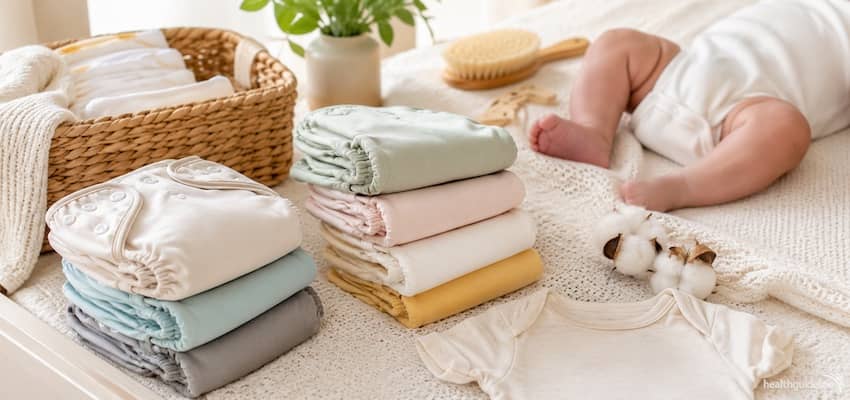
The best cloth diapers for newborns fit tiny bodies (roughly 4–15 lbs), leave room for the healing umbilical cord, and are quick to change during the 8–12 daily changes newborns need. For simplicity, the Rumparooz Lil Joey and Thirsties Newborn all-in-ones are excellent; for value, ALVABABY newborn pockets; and for the most economical, flexible setup, OsoCozy prefolds paired with a Thirsties Duo Wrap cover.
Key takeaways & quick picks
Best overall for a snug newborn fit & leak control
Rumparooz Lil Joey
Easiest all-in-one
bumGenius Littles
Trimmest under clothes
GroVia Newborn AIO
Best value multipack
ALVABABY Newborn pockets
Most economical & flexible
OsoCozy prefolds And Thirsties Duo Wrap
Reality check: babies are usually in a newborn size only ~2–3 months, so weigh the per-diaper cost against how long you’ll use it. Prices and stock change constantly — always check the current price on Amazon.
JUMP TO A SECTION
How we chose
We focused on diapers that are actually sized for newborns (most fit from about 4–5 lbs up to 12–15 lbs), that address the two things new parents struggle with most — leaks and the umbilical cord stump — and that are currently sold on Amazon in the US. We prioritized honest fit range, ease of use during frequent changes, absorbency, closure type, and value across a spread of budgets and diaper styles (all-in-one, pocket, and prefold-plus-cover). Every product below was verified as a real, listed product at the time of writing. We don’t accept payment for placement, and none of the links carry an affiliate tag.
Newborn cloth diaper comparison chart
| Diaper | Type | Fits (approx.) | Closure | Umbilical cord feature | Best for |
|---|---|---|---|---|---|
| Rumparooz Lil Joey | All-in-one | 4–12 lbs | Snap | Snap-down front | Leak control & snug fit |
| bumGenius Littles | All-in-one | ~6–12 lbs | Hook-and-loop / snap | Sits below the navel | Easiest to use |
| GroVia Newborn AIO | All-in-one | 5–12+ lbs | Snap | Trim rise sits low | Trimmest fit |
| Thirsties Newborn AIO | All-in-one | 5–14 lbs | Snap or hook-and-loop | Snap-down (snap version) | Longer wear range; USA-made |
| ALVABABY Newborn Pocket | Pocket (inserts incl.) | Under ~12 lbs | Snap | Adjust rise / fold | Budget starter set |
| OsoCozy Prefolds | Prefold (needs cover) | Newborn/Infant sizes | Snappi/pins + cover | Fold below cord | Most economical |
| Thirsties Duo Wrap (cover) | Cover for prefolds/fitteds | 6–18 lbs (Size One) | Snap or hook-and-loop | Adjustable low rise | Pairs with prefolds |
The 7 best cloth diapers for newborns
01 / BEST OVERALL FOR FIT & LEAK CONTROL
Kanga Care Rumparooz Lil Joey
Best overall
The Lil Joey is a purpose-built newborn all-in-one designed to fit from roughly 4–12 lbs, with a snap-down front for the umbilical cord and Kanga Care’s signature double inner leg gussets — a second barrier inside each leg that does an unusually good job of containing the runny, frequent messes of a breastfed newborn. The four-layer microfiber soaker is sewn in, so there’s nothing to stuff, and the waterproof outer means no separate cover. It’s one of the trimmest true-newborn diapers available, which is why it’s a favorite for the first weeks (and newborn photos).
Pros
- Double leg gussets contain blowouts exceptionally well
- Snap-down front keeps the cord stump uncovered
- Genuinely trim, true newborn fit
- All-in-one simplicity, no stuffing
Cons
- Sold in 2-packs, so a full stash gets expensive
- Microfiber inner (not a natural fiber)
- Short usable window before baby outgrows it
- Can get snug on chunkier babies near 12 lbs
Who it isn’t for: families who want one diaper that lasts to potty training, or who prefer natural fibers against the skin.
02 / EASIEST ALL-IN-ONE FOR FIRST-TIME PARENTS
bumGenius Littles
From Cotton Babies, the bumGenius Littles is about as close to a disposable as cloth gets: an all-in-one that fits below the navel to keep the umbilical area dry, with a soft stay-dry lining that wicks moisture away from delicate skin. The hook-and-loop version is quick for tired hands and gives a dialed-in fit on tiny babies; a snap version is also available. It’s a widely trusted brand with strong resale value, which softens the sting of the short newborn window.
Pros
- Very easy on/off (hook-and-loop) with a snug adjustable fit
- Stay-dry lining helps keep skin comfortable
- Trim; sits below the navel for the cord
- Well-known brand with good resale value
Cons
- Hook-and-loop can wear or snag over time
- Bigger babies may outgrow it fast
- Microfiber inner rather than natural fiber
- Pack sizes/availability vary by seller
Who it isn’t for: heavy wetters who need long stretches between changes, or parents who want snaps only.
03 / TRIMMEST FIT UNDER CLOTHES
GroVia Newborn All-in-One
GroVia’s newborn AIO is a fan favorite for its slim, hourglass shape and soft feel. The internal soaker is sewn in (organic cotton in the current versions), the rise snaps let you shorten it for the tiniest babies, and there’s no cover to fuss with. It’s one of the trimmest options here, so it fits nicely under newborn clothes, and you can tuck a booster in for a bit more absorbency when needed.
Pros
- Very trim and soft; easy snaps
- Adjustable rise for a low, cord-friendly fit
- Organic cotton soaker
- Add a booster for extra absorbency
Cons
- Per-diaper price adds up for a full stash
- Sewn-in soaker means longer drying time than a pocket
- Short newborn window
- Stock can be intermittent
Who it isn’t for: budget-focused parents trying to build a big stash cheaply.
04 / LONGEST WEAR RANGE & USA-MADE
Thirsties Newborn All-in-One
Best AIO value (in a 5-pack)
Thirsties’ Newborn AIO stretches its fit to about 14 lbs — a slightly higher ceiling than most, which buys you a bit more wear time. The snap version has an umbilical cord snap-down and an adjustable rise, and the leg gussets are excellent at controlling newborn messes. It’s manufactured in the USA, and the sewn-on-one-side soaker dries quickly and lets you add layers. Buying the multi-pack bundle is the most sensible way to get several at a better per-diaper price. Thirsties also offers a Natural version with eight layers of organic cotton and hemp; just note that natural fibers feel less “stay-dry” against the skin and can leave baby feeling damp sooner, so you may change a bit more often.
Pros
- Fits up to ~14 lbs for a longer usable window
- Strong leg gussets; cord snap-down (snap version)
- Made in the USA; fast-drying soaker
- Natural-fiber option available
Cons
- Natural version wicks less and can feel damp against skin
- Soaker adds some bulk
- Individual colors go in and out of stock
Who it isn’t for: parents who want the maximum stay-dry feel from a natural-fiber diaper — those goals pull in opposite directions.
05 / BEST VALUE STARTER SET
ALVABABY Newborn Pocket Diapers
Best budget
If you want to try cloth without a big outlay, ALVABABY’s newborn pocket set is the easy on-ramp: one box gets you six newborn-sized pocket shells plus twelve microfiber inserts. A suede-style stay-dry inner keeps baby feeling drier, hip and crossover snaps fight “wing droop” on skinny newborn legs, and you can add or double up inserts to tune absorbency. It’s not as trim or refined as the boutique AIOs, and there’s no dedicated cord notch (use the lowest rise or fold the front), but for the price it’s a genuinely useful way to start — and it’s usually reliably in stock.
Pros
- Low cost per diaper; inserts included
- Adjustable absorbency (add/swap inserts)
- Stay-dry inner; snap-adjustable fit
- Complete starter set in one purchase
Cons
- Bulkier and less refined than premium newborn diapers
- Microfiber inserts, no natural-fiber option
- No dedicated umbilical snap-down
- Pockets add a stuffing step
Who it isn’t for: parents set on the trimmest possible fit, natural fibers, or a true cord snap-down.
06 / MOST ECONOMICAL & FLEXIBLE (NEEDS A COVER)
OsoCozy Prefolds
Most economical
Prefolds are the old-school, penny-wise backbone of many cloth stashes, and OsoCozy’s are diaper-service-quality 100% cotton in true newborn and infant sizes (rather than a bulky “one size” that fits a newborn poorly). You fold one into a cover and fasten with a Snappi or pins — a small learning curve that pays off in the lowest cost per change, excellent durability, and a breathable natural fiber. When the diapering days are done, prefolds live on as burp cloths and cleaning rags. Prep them first: wash and dry a few times to strip the natural cotton oils and build absorbency. Pair with the Thirsties Duo Wrap below.
Pros
- Lowest cost per diaper
- Durable natural cotton; breathable
- True newborn/infant sizing, not bulky one-size
- Reusable across kids; repurposes as burp cloths
Cons
- Needs a separate cover + fastener
- Requires prepping (multiple washes) before use
- Folding/fastening has a learning curve
- You’ll size up as baby grows
Who it isn’t for: parents who want grab-and-go simplicity, or caregivers who won’t be comfortable folding and fastening.
07 / BEST COVER FOR PREFOLDS & FITTEDS
Thirsties Duo Wrap (Size One)
A cover is what makes prefolds and fitteds work, and the Duo Wrap is a reliable, USA-made choice. Size One spans 6–18 lbs with an adjustable rise, so it carries a newborn well past the earliest weeks, and the leg gussets add a real second line of defense against leaks. Because you can wipe the inside and reuse it between changes, you only need one cover for every three or four diapers, which keeps the whole system affordable. Lay in a prefold, flat, or fitted (or a Thirsties insert to make an easy all-in-two) and snap it on.
Pros
- Wide 6–18 lb range grows with baby
- Leg gussets for strong leak protection
- Reusable between changes; fewer needed
- Made in the USA; works with any absorbent layer
Cons
- It’s only a cover — you still need prefolds/inserts
- Hook-and-loop can wear over time
- Keep a few in rotation
Who it isn’t for: anyone who wants a single grab-and-go all-in-one rather than a cover-plus-insert system.
What types of cloth diapers work best for newborns?
There’s no single “right” system — just trade-offs between simplicity, cost, and how much folding or stuffing you want to do. The main styles:
- All-in-one (AIO): the absorbent layer is sewn into the waterproof shell. Easiest to use (like a disposable) and best for daycare or grandparents; highest cost per diaper and slowest to dry.
- Pocket: a stay-dry shell with a pocket you stuff with inserts. Affordable, customizable absorbency, dries fast; adds a stuffing step.
- Prefold or flat + cover: a cotton absorbent layer folded into a waterproof cover. Cheapest and very durable; steepest learning curve.
- Fitted + cover: a shaped, fully absorbent diaper that still needs a cover. Excellent containment and great for overnight; bulkier and slower to dry.
- Hybrid: a cover that takes either a reusable insert or a disposable one — handy for travel.
A common newborn approach is to keep a few AIOs for convenience and a set of prefolds or pockets for everyday economy.
Do I need newborn-size cloth diapers, or will one-size work?
One-size diapers are designed to fit from roughly 8–10 lbs up to 30+ lbs, which means they’re often bulky and leak-prone on a small newborn, especially one under 8 lbs. A snug newborn-size diaper simply fits better in the first weeks and leaks less. The honest downside is that most babies wear a dedicated newborn size for only about two to three months, so it’s worth deciding whether you’ll buy a small newborn stash, borrow or buy secondhand, rent, or skip newborn-specific diapers and use prefolds with a cover — which fit newborns well and keep working as baby grows.
How many cloth diapers do newborns need?
Newborns are changed a lot. If you wash every two days, plan for about 20–30 diapers, plus a few spares for the inevitable back-to-back blowouts. With a prefold or flat system you need fewer covers than absorbent layers — roughly one cover per three to four diapers — because covers can usually be wiped and reused between changes. Whatever you choose, having enough on hand is what keeps cloth from feeling overwhelming in the newborn fog.
How do cloth diapers work with the umbilical cord stump?
The cord stump needs to stay dry and get air so it can heal, and it typically falls off one to three weeks after birth. Mayo Clinic advises keeping the front of the diaper folded down so it doesn’t cover the stump. Cleveland Clinic similarly recommends folding the front of the diaper down below the stump and notes that some newborn diapers have a special cut-out for the cord. That’s exactly what the snap-down front on diapers like the Rumparooz Lil Joey and Thirsties Newborn is for. Call your pediatrician if you see spreading redness, swelling, pus, or a foul smell around the belly button — possible signs of infection.
Tip on those first messy days: a newborn’s first stools (meconium) are sticky, tar-like, and can stain cloth. Some families use a disposable liner, or disposables, for the first day or two, then switch to cloth once feeding is established. This is a practical choice, not a rule.
How often should I change a newborn’s cloth diaper?
Frequently. The American Academy of Pediatrics notes that newborns typically need changing about 8 to 12 times a day — roughly every two to three hours — and right away after a bowel movement (via HealthyChildren.org). Because cloth holds less liquid than a modern superabsorbent disposable and doesn’t wick as aggressively, staying on top of changes matters even more for comfort and skin health. Checking before and after feedings is an easy habit that catches most wet and dirty diapers early.
Do cloth diapers cause diaper rash?
Cloth doesn’t inherently cause diaper rash, but any wet fabric left against the skin too long can contribute to it. The AAP says changing every three to four hours — or whenever the diaper is soiled — helps prevent most diaper rashes, and a little air-dry time between changes helps too. One cloth-specific note: many traditional diaper-rash creams contain ingredients that can coat and “waterproof” cloth fibers, reducing absorbency. Use a cloth-safe balm, or place a disposable liner between the cream and the diaper. If a rash doesn’t improve in a few days, or looks severe, check with your pediatrician.
How much money do cloth diapers save?
Over the full diapering period, cloth usually comes out ahead — sometimes substantially. It helps to see the scale of the disposable habit first: HealthyChildren.org notes families go through roughly 3,000 diapers in the first year alone, and around 6,000–8,000 from birth to potty training. Estimates vary by brand and how long your child is in diapers, but published cost breakdowns commonly put disposables at roughly $2,000–$3,500 over that period, versus a few hundred dollars up to around $1,000 or more upfront for a reusable stash. The biggest savings come when the same diapers are reused for a second child. Be honest about the extra costs cloth advocates sometimes gloss over — a modest bump in your water, electricity, and detergent for a couple of extra loads a week, plus wet bags and liners. Even so, for most families the math favors cloth, especially prefold-and-cover systems.
How do I wash newborn cloth diapers?
Routines vary by machine and water, but the reliable pattern is: knock or rinse solids off, run a cold rinse or short cycle to remove the bulk of the mess, then a hot wash with a full dose of a cloth-friendly detergent, and finish with an extra rinse. Tumble dry on low or line dry according to the manufacturer’s instructions (sun is a natural stain-brightener). Skip fabric softener and most stain additives such as chlorine bleach, oxygen boosters, or “bac-out” style enzymatic sprays unless the maker specifically allows them, because residue and harsh additives can cut absorbency or void warranties. Exclusively breastfed newborn poop is water-soluble, so it can go straight in the wash without rinsing; once baby starts solids, you’ll shake or spray solids into the toilet first. Always defer to each diaper’s own care guide.
Frequently asked questions
Do I really need newborn-size cloth diapers, or will one-size work?
One-size diapers are usually bulky and leak-prone on babies under about 10 pounds, so a snug newborn size fits better in the first weeks. That said, prefolds or flats with a cover are an economical middle ground that fit newborns well and grow with baby, so many families skip dedicated newborn diapers entirely.
How many cloth diapers do I need for a newborn?
Because newborns are typically changed 8 to 12 times a day, plan for roughly 20 to 30 diapers if you wash every two days, plus a few spares. With prefolds and covers you need fewer covers — about one per three to four diapers — since covers can usually be wiped and reused between changes.
What type of cloth diaper is easiest for newborns?
All-in-one (AIO) diapers are the easiest because the absorbent layer is sewn in — you put them on and take them off just like a disposable, with nothing to stuff or fold. They cost more per diaper than prefolds or pockets, but many parents find the simplicity worth it during the sleep-deprived newborn stage.
Can I use cloth diapers over the umbilical cord stump?
Yes. Keep the front of the diaper folded down below the stump so it stays dry and exposed to air, which helps it heal. Many newborn cloth diapers have a snap-down front or cut-out for this. Watch for redness, swelling, pus, or a foul smell and call your pediatrician if they appear.
How often should I change a newborn’s cloth diaper?
The American Academy of Pediatrics notes newborns need changing roughly 8 to 12 times a day — about every two to three hours, and right away after a bowel movement. Cloth holds less than modern disposables and doesn’t wick as aggressively, so changing promptly is important for comfort and to help prevent diaper rash.
Do cloth diapers cause diaper rash?
Cloth doesn’t inherently cause rash, but wet fabric against skin can if it’s left on too long. The AAP says changing every three to four hours (or whenever soiled) prevents most diaper rashes, and letting skin air-dry helps. Note that many diaper-rash creams can coat cloth fibers, so use a cloth-safe balm or a liner.
Are cloth diapers cheaper than disposables for a newborn?
Over the whole diapering period they usually are. Estimates vary, but families often spend roughly $2,000 to $3,500 on disposables from birth to potty training, versus a few hundred dollars up to around $1,000 or more upfront for a reusable stash — and that stash can be reused for a second child, which increases the savings.
How do I wash newborn cloth diapers?
A common routine is a cold rinse to remove waste, then a hot wash with a full dose of a cloth-friendly detergent, followed by an extra rinse; tumble dry low or line dry per the maker’s instructions. Skip fabric softener and most stain additives, which can reduce absorbency, and always follow the manufacturer’s care guide.
Medical disclaimer: This article is for general information only and is not medical advice. Every baby is different — talk to a qualified healthcare professional about your child’s specific needs, and about any concerns with the umbilical cord, skin, or diaper rash.