The 8 Best Shoes for Nurses With Plantar Fasciitis (2026)
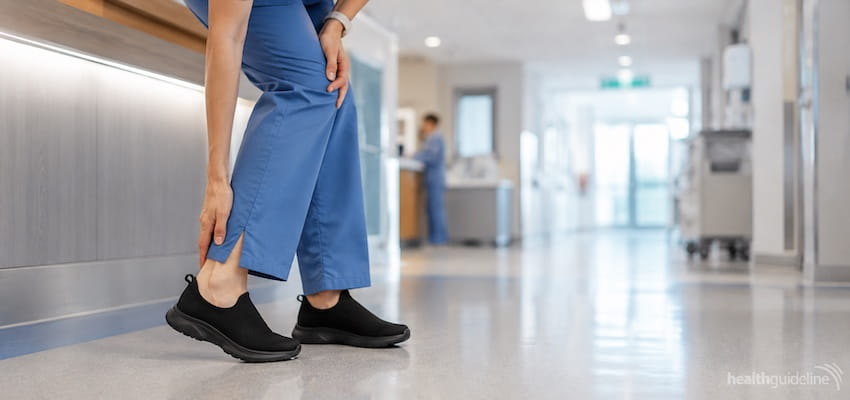
For most nurses with plantar fasciitis, the HOKA Bondi 9 is the top choice — maximum heel cushioning and a rocker sole take pressure off the plantar fascia through a 12-hour shift. Also great: the Brooks Ghost Max 2 (best all-rounder and the most orthotic-friendly, with the APMA Seal of Acceptance) and the Skechers Arch Fit 2.0 (best budget pick).
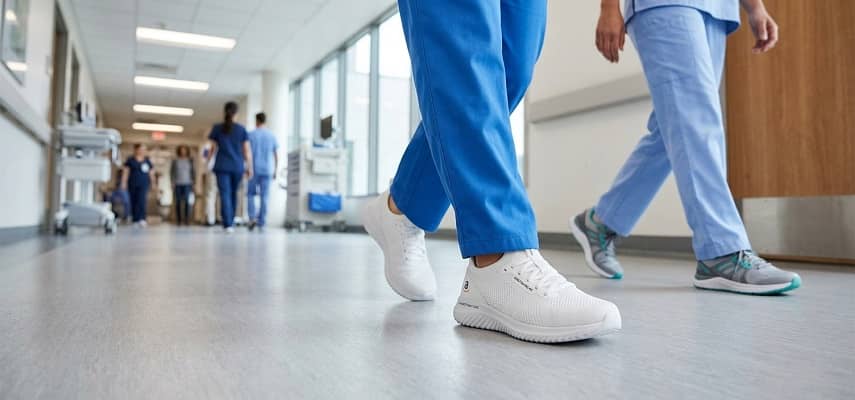
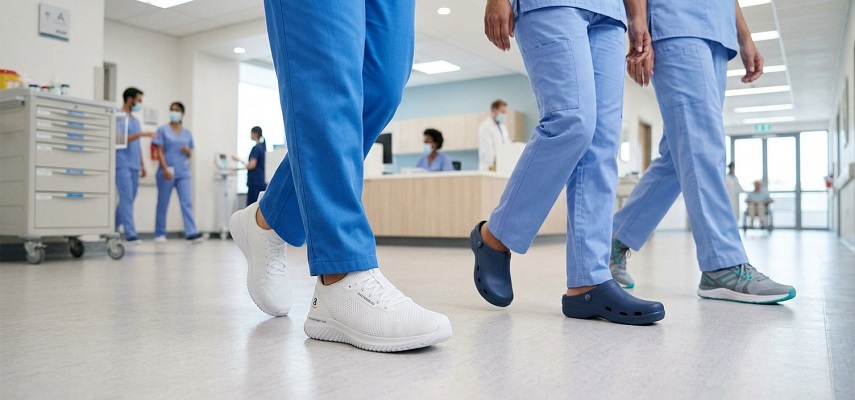
Nurses spend most of a shift on their feet, often walking several miles across hard hospital floors — exactly the kind of repetitive, high-load standing that aggravates plantar fasciitis. The right shoe won’t cure the condition, but firm arch support, a cushioned shock-absorbing midsole, and a stable heel can meaningfully reduce the stress on your plantar fascia and keep you comfortable for longer. Below are eight shoes — sneakers, clogs, and slip-ons across a range of budgets — chosen for that job, with honest notes on who each one is not for.
How we chose
We prioritized the shoe features podiatrists most consistently recommend for plantar fasciitis: firm arch support, a well-cushioned shock-absorbing midsole, a rigid heel counter, and stable construction — plus the extras nurses specifically need, namely slip resistance for wet floors, easy cleaning, and durability over long shifts. We cross-referenced 2026 recommendations from nursing publications and a board-certified podiatrist, confirmed every model is a real product currently listed on Amazon, and included widths and honest drawbacks so you can match a shoe to your own foot. We did not include star ratings or review counts, because those change constantly — check the live listing for current numbers.
Top picks at a glance
| Shoe | Best for | Standout feature | Widths | Approx. price* |
|---|---|---|---|---|
| HOKA Bondi 9 | Best overall | Max cushion + rocker sole | Medium, Wide (to 2E) | ~$170 |
| Brooks Ghost Max 2 | Best all-around / orthotics | APMA-accepted; roomy last fits inserts | Narrow–X-Wide | ~$150 |
| New Balance Fresh Foam X 1080v14 | Best plush cushioning | Soft Fresh Foam X, rocker profile | Narrow–X-Wide | ~$150–165 |
| ASICS Gel-Kayano 31 | Best for flat feet / overpronation | 4D Guidance System stability | Narrow–X-Wide | ~$160 |
| Dansko XP 2.0 | Best clog | Slip-resistant; removable arch footbed | Medium, Wide | ~$140 |
| Vionic Walker Classic | Best built-in arch support | Podiatrist-designed orthotic footbed | Medium, Wide | ~$130 |
| Skechers Arch Fit 2.0 | Best budget | Podiatrist-certified insole; washable | Medium, Wide | ~$70–90 |
| Crocs On The Clock (closed-back) | Best easy-clean | Wipe-clean; ASTM slip-resistant | Relaxed unisex fit | ~$55–60 |
01 / BEST OVERALL
HOKA Bondi 9
The Bondi 9 is the shoe podiatrists reach for most often for plantar fasciitis. Its ultra-thick, soft midsole and Meta-Rocker sole cushion the heel and “roll” your foot forward, offloading the plantar fascia at every step — ideal for long shifts on concrete. It also comes in wide widths (up to 2E) that accept an orthotic.
Key features
- Maximum-stack cushioned midsole
- early-stage Meta-Rocker
- breathable knit upper
- durable rubber in high-wear zones.
Pros
- Best-in-class heel cushioning
- rocker reduces forefoot and heel pressure
- lightweight for its size
- wide options.
Cons
- The tall, soft platform can feel tippy if you want a firm, planted feel
- premium price
- not a wipe-clean shoe for messy units.
Best for: Nurses who want the most heel relief possible and don’t mind a plush, “pillowy” ride.
02 / BEST ALL-AROUND AND BEST FOR ORTHOTICS
Brooks Ghost Max 2
If you use custom orthotics — or think you might — the Ghost Max 2 is the smartest pick. Its “linear last” adds volume so inserts fit without cramping, and it carries the APMA Seal of Acceptance. A high stack of DNA Loft v3 foam plus a GlideRoll rocker give protective cushioning with a more stable, planted feel than the Bondi.
Key features
- Nitrogen-infused DNA Loft v3 midsole
- GlideRoll rocker
- broad stable base
- orthotic-friendly last
- APMA-accepted and certified as a PDAC A5500 diabetic shoe.
Pros
- Excellent cushion with real stability
- roomy fit for orthotics or swelling
- wide and extra-wide widths
- very durable.
Cons
- Tall stack takes a day or two to adjust to
- not slip-rated for wet floors
- understated looks.
Best for: Nurses wanting one do-everything shoe, especially anyone using arch-support inserts.
03 / BEST PLUSH CUSHIONING
New Balance Fresh Foam X 1080v14
The 1080v14 delivers New Balance’s softest Fresh Foam X ride with a gentle rocker, making it a strong plush alternative to the Bondi — and it comes in the widest range of widths here, which matters if standard shoes pinch. A gusseted tongue and breathable jacquard upper add day-long comfort.
Key features
- Soft Fresh Foam X midsole
- rocker profile
- breathable engineered mesh upper
- durable rubber outsole
- multiple widths from narrow to X-wide.
Pros
- Plush, smooth ride
- excellent width range
- frequently discounted below list price.
Cons
- Some wearers find the tall, soft stack feels unstable at first
- thin sockliner means the cushioning is fixed (limited insole tuning).
Best for: Nurses who want maximum softness plus a precise width fit.
04 / BEST FOR FLAT FEET AND OVERPRONATION
ASICS Gel-Kayano 31
If your feet roll inward (overpronate) or you have flat arches, a stability shoe can help control the motion that strains the plantar fascia. The Gel-Kayano 31 pairs soft FF Blast Plus Eco foam and PureGEL heel cushioning with a 4D Guidance System that adds support without feeling rigid, plus a firm external heel counter.
Key features
- 4D Guidance System stability
- PureGEL heel cushioning
- FF Blast Plus Eco midsole
- external heel counter
- available in wide widths.
Pros
- Genuine motion control with a plush feel
- supportive for flat feet
- durable outsole built for high mileage.
Cons
- Heavier than the other sneakers here
- stability features are unnecessary (and can feel firm) if you have high, rigid arches.
Best for: Nurses with flat feet or overpronation who need support as well as cushioning.
05 / BEST CLOG
Dansko XP 2.0
Clogs remain a nursing staple, and the XP 2.0 is the supportive version. A dual-density footbed with Dansko’s Natural Arch technology, an EVA midsole, and a firm TPU heel counter deliver real arch support and shock absorption, while a SATRA-tested slip-resistant outsole handles wet, oily floors. The footbed is removable, so you can swap in a custom orthotic.
Key features
- Dual-density PU footbed with Natural Arch support
- EVA midsole
- TPU heel counter
- removable footbed
- slip-resistant rubber outsole
- APMA-accepted.
Pros
- Strong arch support and stability for a clog
- excellent slip resistance
- easy on/off
- wipe-clean leather.
Cons
- Open back and stiff sole aren’t for everyone
- heavier than a sneaker
- less cushioned underfoot than max-stack shoes for very long walking.
Best for: Nurses who prefer a slip-on clog but still need arch support and grip.
06 / BEST BUILT-IN ARCH SUPPORT
Vionic Walker Classic
Vionic footwear is podiatrist-designed around a firm orthotic footbed, so the arch support is built in rather than added. The Walker Classic’s “Three-Zone Comfort” pairs a deep heel cup with a contoured arch and forefoot cushioning, and the leather upper wipes clean — a good option if you don’t want to buy separate inserts.
Key features
- Podiatrist-designed removable orthotic footbed
- deep heel cup
- contoured arch support
- leather upper
- durable traction outsole
- medium and wide widths.
Pros
- Genuine built-in arch support
- supportive deep heel cup
- wipe-clean leather
- classic look.
Cons
- The firm, pronounced arch can feel too high at first (or if you have very flat feet)
- needs a short break-in
- more “walking shoe” than “running shoe” in cushioning.
Best for: Nurses who want support without adding aftermarket orthotics.
07 / BEST BUDGET
Skechers Arch Fit 2.0
For nurses who don’t want to spend six figures in cents on shoes, the Arch Fit line offers a podiatrist-certified insole (developed from 120,000 foot scans) at roughly half the price of the premium picks. This hands-free slip-in version is machine washable and has a removable insole you can replace with a custom orthotic.
Key features
- Podiatrist-certified Arch Fit insole
- Ultra Go cushioned midsole
- breathable mesh upper
- machine washable
- removable insole
- medium and wide options.
Pros
- Excellent value
- genuine molded arch support
- light and easy to clean
- easy slip-in entry.
Cons
- Not rated slip-resistant for wet hospital floors (choose Skechers’ Work “SR” line if grip is critical)
- the fixed arch shape suits some feet better than others — try before committing to long shifts.
Best for: Budget-conscious nurses, or anyone wanting a light everyday shoe with arch support.
08 / BEST EASY-CLEAN
Crocs On The Clock (closed-back)
When shifts get messy, a shoe you can rinse in the sink has real value. The closed-back On The Clock work clog is fully molded Croslite foam with an enclosed toe and heel, and it’s ASTM-tested for slip resistance on wet floors. Just know the trade-off: Crocs offer only minimal arch support, so for significant plantar fasciitis, add a supportive insole.
Key features
- Molded Croslite foam
- enclosed toe and heel
- Crocs Lock slip-resistant tread (ASTM F2913-certified)
- wipe-clean and quick-drying
- relaxed unisex fit.
Pros
- Extremely easy to clean
- genuinely slip-resistant
- very light
- low price
- protects the foot from spills.
Cons
- Minimal built-in arch support and a soft heel counter — not enough on their own for serious heel pain
- runs large (size down)
- best paired with an orthotic insole.
Best for: Nurses in spill-prone units who want a rinseable backup shoe (ideally with an added insole).
What to look for in shoes for plantar fasciitis
Whichever shoe you choose, these are the features that matter most when you’re managing plantar fasciitis on your feet all day. If you’re comparing beyond nursing shoes, our guide to the best shoes for plantar fasciitis covers more everyday options.
Firm arch support
Support under the arch reduces the strain that overstretches the plantar fascia. Look for a contoured, supportive footbed — or a shoe with a removable insole so you can add a custom orthotic. If your current shoes lack it, a dedicated insole can help; see our picks for the best plantar fasciitis insoles.
Cushioning and shock absorption
A thick, shock-absorbing midsole softens the repeated impact of walking on hard floors. Max-cushion shoes (like the Bondi 9 or 1080v14) excel here. A rocker-shaped sole adds to the relief by rolling your foot forward and reducing pressure at the heel and forefoot.
A firm heel counter
Press the back of the shoe: it should resist collapsing. A rigid heel counter cradles and stabilizes the heel, limiting the excess motion that irritates the fascia.
Slip resistance
Hospital floors and spills are a fall risk. If you work somewhere wet, prioritize an outsole rated for slip resistance — the Dansko XP 2.0 and Crocs On The Clock are both certified, and many brands make dedicated slip-resistant work versions.
The right width
A shoe that’s too narrow adds pressure and can worsen foot pain. Several picks here (Brooks, New Balance, ASICS) come in wide and extra-wide — worth it if standard shoes ever pinch or if your feet swell across a shift.
Replace them regularly
Cushioning breaks down long before a shoe looks worn out — a midsole can lose a large share of its shock absorption within a few months of full-time nursing. Many podiatrists suggest replacing shoes roughly every 500 miles or every six months of heavy use, and rotating between two pairs so each can decompress between shifts.
About plantar fasciitis (a quick, non-prescriptive primer)
Plantar fasciitis is one of the most common causes of heel pain, affecting an estimated 10%+ of people at some point. The plantar fascia is a thick, ligament-like band that runs from your heel to the base of your toes and supports the arch of your foot. According to the Mayo Clinic and Cleveland Clinic, repeated stress and strain cause small tears and irritation in the fascia, producing pain.
Common symptoms
The hallmark is a stabbing pain near the heel that’s typically worst with your first steps in the morning or after sitting, eases as you move, and can flare again after long periods of standing — a pattern many nurses will recognize. It usually affects one foot but can affect both.
Why nurses are prone to it
Risk rises with prolonged standing and walking on hard surfaces, unsupportive footwear, a higher body weight, very flat feet or high arches, and tight calf muscles. Nursing checks several of those boxes at once, which is why supportive footwear — the focus of this guide — is such a practical first line of defense.
When to see a professional
Supportive shoes are a helpful self-care step, not a substitute for medical care. Consider seeing a doctor or podiatrist if your heel pain is severe, lasts more than a few weeks despite rest and better footwear, follows an injury, or comes with numbness, tingling, significant swelling, or signs of infection. A clinician can confirm the diagnosis, rule out other causes, and tailor treatment such as stretching, physical therapy, night splints, or orthotics to your situation. This article is for general information only and is not medical advice.
Frequently asked questions
What shoes are best for nurses with plantar fasciitis?
The best options combine firm arch support, a cushioned shock-absorbing midsole, and a stable heel. Maximum-cushion running shoes with a rocker sole — like the HOKA Bondi 9 or Brooks Ghost Max 2 — are popular first choices, while supportive clogs such as the Dansko XP 2.0 suit nurses who prefer slip-ons. The best pick is the one that fits your foot and arch.
Are HOKA or Brooks better for plantar fasciitis?
Both are excellent; the difference is feel. HOKA (Bondi 9) offers the softest, tallest cushioning and the most aggressive rocker, so it’s ideal for maximum heel relief. Brooks (Ghost Max 2) gives a slightly firmer, more stable ride and a roomier last that fits orthotics well. If you use inserts, lean Brooks; if you want pure plushness, lean HOKA.
Are clogs like Dansko good for plantar fasciitis?
They can be, if the clog has genuine arch support and a firm heel counter — the Dansko XP 2.0 has both, plus a slip-resistant sole and a removable footbed for orthotics. Basic unsupported clogs are a poorer choice. Clogs also let you slip shoes on and off easily, which some nurses prefer over lace-up sneakers.
How often should nurses replace their shoes?
Cushioning wears out before the shoe looks old. A midsole can lose much of its shock absorption within a few months of full-time nursing, so many podiatrists suggest replacing shoes roughly every 500 miles or every six months of heavy use. Rotating two pairs and swapping them between shifts helps each pair last longer.
Do I need arch support or cushioning for plantar fasciitis?
Ideally both. Arch support reduces the strain that overstretches the fascia, while cushioning absorbs the repeated impact of hard floors. The most effective plantar fasciitis shoes combine a supportive, contoured footbed with a well-cushioned midsole — and letting you add a custom orthotic is a bonus if your arch needs are specific.
Can the right shoes cure plantar fasciitis?
No — shoes don’t cure plantar fasciitis, but they’re one of the most useful ways to manage it by reducing stress on the fascia so it can recover. Most cases improve with conservative care such as supportive footwear, stretching, rest, and ice. If pain persists despite these steps, see a healthcare professional for personalized treatment.
Medical disclaimer: This article is for general information only and is not medical advice. Talk to a qualified healthcare professional about your specific situation.