Cryo Cuff Knee Review 2026: Aircast Buying Guide
2026 product guide · cold therapy + knee compression
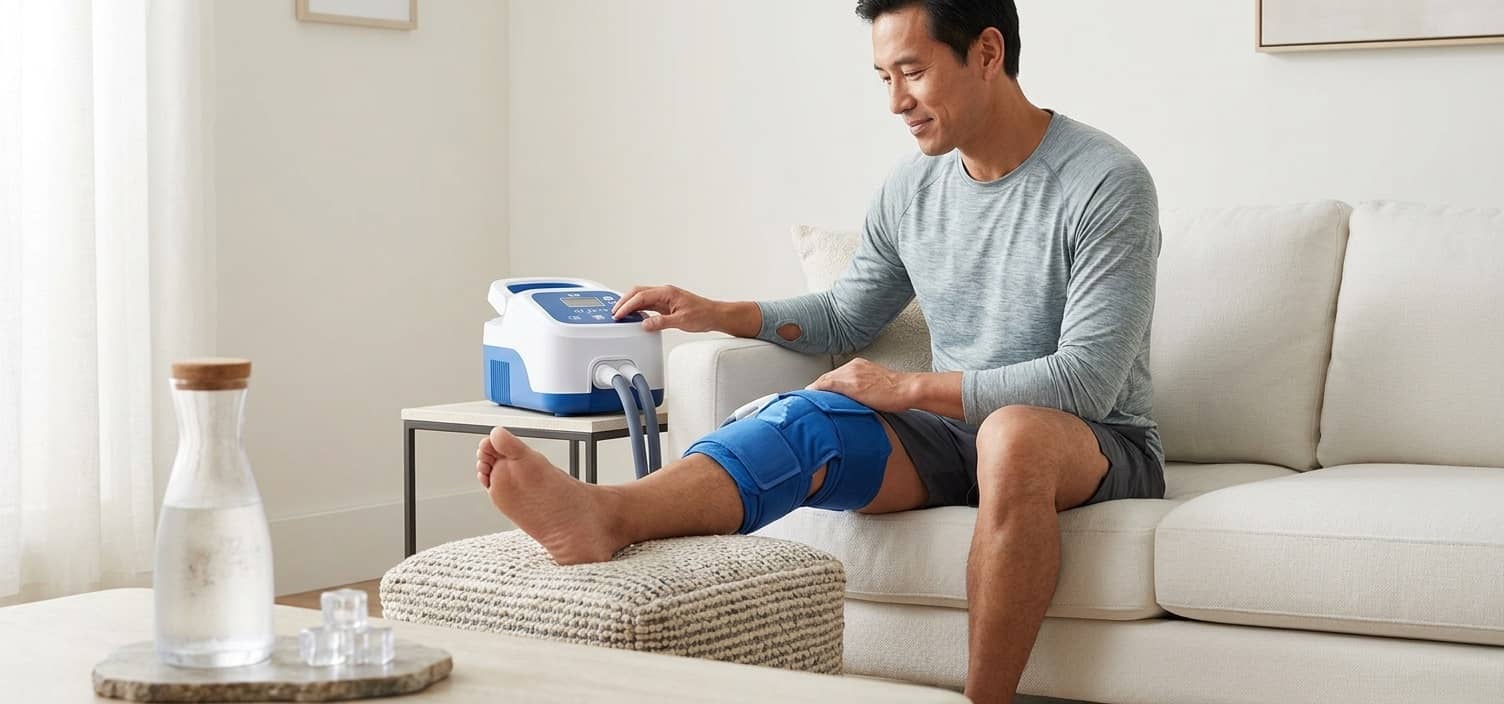
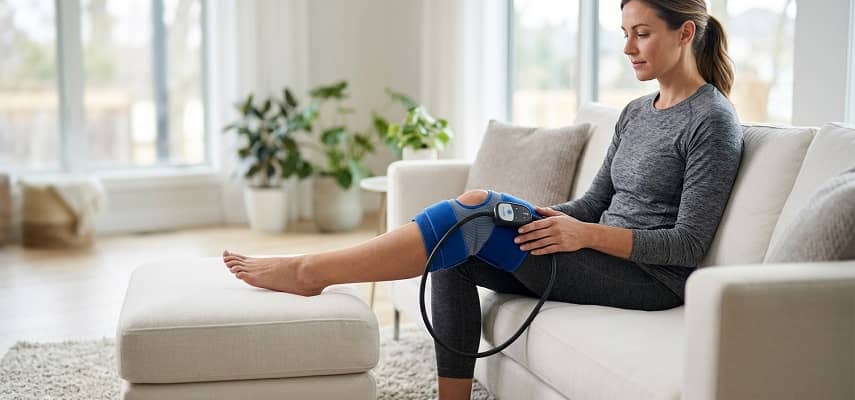
Cryo Cuff Knee usually refers to the Aircast Knee Cryo/Cuff used with either a gravity-fed cooler or the motorized Cryo/Cuff IC. The cuff wraps around the knee while chilled water circulates through it, combining cold with focal compression. For most buyers, the key decision is not “Does it get cold?” but which cooler you need, whether the listing includes the cuff, and which knee size fits you.
Cryo Cuff Knee verdict
Best simple setup
Aircast Gravity Cryo/Cuff
No electricity, knee-specific coverage, and built-in focal compression. Best if you are comfortable with a manual gravity-fed routine.
More automated
Cryo/Cuff IC
Adds an integrated pneumatic pump and motorized cold/compression cycles while retaining a gravity option.
Pump-based alternative
DonJoy IceMan CLASSIC3
A motorized recirculating cold-therapy system if you want steady pad circulation rather than Aircast’s gravity-first design.
JUMP TO A SECTION
How we researched this Cryo Cuff Knee guide
We checked current Aircast/Enovis product pages for the Knee Cryo/Cuff, Gravity Cooler and Cryo/Cuff IC; verified two competing cold-therapy systems against their manufacturers; and reviewed recent systematic reviews of cryotherapy after knee replacement. We did not treat Amazon ratings, review counts or prices as fixed facts because they change, and we do not claim independent hands-on testing.
What is a Cryo Cuff for the knee?
A knee Cryo/Cuff is an anatomically shaped cold-therapy cuff that fills with chilled water and applies focal compression around the knee. Aircast sells the knee cuff in multiple sizes and pairs it with either a simple gravity cooler or a motorized Cryo/Cuff IC cooler. The manufacturer positions the system for post-operative recovery, trauma, rehabilitation and sports injuries.
The most common shopping mistake is assuming every “Cryo/Cuff Knee” listing is a complete system. Some listings are cuff only; others bundle a cuff with the Gravity Cooler; and the Cryo/Cuff IC is a different cooler with an integrated pneumatic pump. Check the exact part description before ordering.
Useful distinction: The Aircast Gravity Cooler can hold enough ice and water for roughly 6–8 hours of cold supply according to Enovis product information. That does not mean the cuff should be worn continuously for 6–8 hours. Treatment time and skin checks should follow the device instructions and your clinician’s protocol.
Cryo Cuff Knee systems compared
| System | Cold delivery | Compression | Best reason to choose it | Buying note |
|---|---|---|---|---|
| Aircast Knee Cryo/Cuff + Gravity Cooler | Gravity-fed chilled water | Focal compression through the cuff | Simple setup with no electrical power | Confirm cuff size and whether the cooler is included |
| Aircast Cryo/Cuff IC | Gravity or motorized circulation | Integrated intermittent pneumatic compression | More automated Aircast system | Medium and large knee bundles are listed by Enovis |
| DonJoy IceMan CLASSIC3 | Motorized recirculating cold water | No Aircast-style pneumatic compression claim | Steady powered cold circulation | Choose the correct knee/wrap-on pad bundle |
| Breg Polar Care Cube | Motorized recirculating cold water | WrapOn pad uses elastic straps to hold the pad | Compact pump-based alternative with dedicated knee pads | Manufacturer states an insulation barrier is required |
Do not assume the more expensive or more automated system is medically better. A 2024 meta-analysis found continuous cold-flow devices produced outcomes comparable with ordinary cold packs for pain, opioid use, blood loss, range of motion, swelling and length of stay after total knee arthroplasty.
01 / MAIN PICK — SIMPLE COLD + COMPRESSION
Aircast Knee Cryo/Cuff with Gravity Cooler
Aircast Cryo/Cuff Knee with Gravity Cooler — view on Amazon is the version we would start with if the goal is a straightforward knee-specific cold-and-compression system without a powered pump. Enovis describes the cooler as a simple gravity-fed system that delivers chilled water to anatomically specific cuffs, while the Knee Cryo/Cuff provides complete knee coverage and measured compression.
Key features
- Gravity-fed system; no electrical outlet required
- Anatomically shaped cuff designed to cover the knee
- Focal compression integrated with cold therapy
- Three adult knee sizes plus a pediatric option
- Cooler includes a tube assembly and insulation disk
- Compatible with Aircast Cryo/Cuff and Arctic Flow pads
Pros
- No motor noise, battery or wall power for the gravity version
- Knee-specific cuff gives broader coverage than a small gel pack
- Combines cooling and focal compression in one system
- Replaceable cuffs and cooler components make the system modular
Cons
- Gravity setup requires more manual attention than a motorized pump
- Cooler height and setup affect filling/pressure, so instructions matter
- Cuff-only and complete-system listings are easy to confuse
- Cold plus compression can cause injury if used incorrectly
Best for: Someone whose clinician has recommended cold therapy and who wants a reusable, knee-specific system with compression but does not need automated pumping.
Who it is not for: Anyone who needs a hands-off automated cycle, cannot safely monitor their skin, or has a medical reason to avoid cold/compression. A clinician should guide use after surgery or for a significant knee injury.
What is the Cryo/Cuff IC, and is it worth the upgrade?
The Cryo/Cuff IC is the automated version of the Aircast system. Its cooler lid contains an integrated pneumatic pump, and Enovis says it can provide both gravity and motorized cold/compression therapy. For knee use, the current ordering table lists a medium bundle for 18–23 inches and a large bundle for 20–31 inches.
The upgrade makes the most sense when convenience and automated intermittent compression are priorities. It should not be presented as automatically more effective than a simpler cold pack or gravity cooler: comparative research after knee replacement has not consistently shown superior clinical results for continuous-flow cold devices.
02 / POWERED ALTERNATIVE
DonJoy IceMan CLASSIC3
DonJoy IceMan CLASSIC3 is a credible powered alternative if your priority is recirculating cold water rather than Aircast’s gravity-first cold plus focal-compression approach. Enovis says the CLASSIC3 uses recirculation technology to deliver consistent cold throughout the pad and sells a dedicated McGuire knee Wrap-On Pad bundle.
Key features
- Powered recirculating cold-water system
- Multiple pad options, including a knee-specific Wrap-On configuration
- Designed for extended cold therapy under a medical protocol
- Manufacturer instructs use only with prescription and physician direction
Pros
- Powered circulation reduces the manual gravity routine
- Current manufacturer support and replacement accessories
Cons
- Requires electrical power
- Does not provide the same integrated pneumatic compression mechanism as Cryo/Cuff IC
Best for: People comparing established motorized cold-therapy systems and who have a clinician-directed cold-therapy plan.
03 / COMPACT PUMP ALTERNATIVE
Breg Polar Care Cube with Knee Pad
Breg Polar Care Cube is another established pump-based cold-therapy system. Breg offers a Cube combo with a WrapOn Knee Pad, and the pad’s elastic straps hold it around the joint. The company describes the system as suitable for post-operative, post-trauma and physical-therapy use and says a proper insulation barrier is required between the pad and skin.
Key features
- Motorized pump with compact cooler design
- Dedicated WrapOn Knee Pad option
- Multiple knee-pad sizes available
- Manufacturer requires an insulation barrier during use
Pros
- Simple powered circulation
- Broad pad ecosystem for other body areas
Cons
- Powered system requires an outlet
- Not the same focal pneumatic-compression design as Aircast Cryo/Cuff
Best for: Buyers who want a compact circulating cold-therapy machine and a dedicated knee pad rather than a gravity-fed system.
What size Aircast Knee Cryo/Cuff do you need?
Aircast sizes the Knee Cryo/Cuff by measuring the leg circumference 6 inches above the patella. The current Enovis chart lists three adult sizes. Because the ranges overlap, use the manufacturer’s exact measurement method and check with the fitting professional if you sit near a boundary.
| Size | Circumference | Where to measure | Cuff part number |
|---|---|---|---|
| Small | 10–19 in | 6 in above the patella | 11C01 |
| Medium | 18–23 in | 6 in above the patella | 11A01 |
| Large | 20–31 in | 6 in above the patella | 11B01 |
Measure first. Do not choose only by height, weight or pants size. A cuff that is too tight can create excessive pressure; one that is too loose may not sit or fill as intended.
What should you check before buying a Cryo Cuff Knee?
- Confirm whether it is cuff-only or a complete system. Aircast sells the Knee Cryo/Cuff by itself and in cooler bundles. A low price can simply mean you are looking at a replacement cuff.
- Choose gravity or motorized operation. The Gravity Cooler is simpler and does not require power. Cryo/Cuff IC automates cold and intermittent compression with an integrated pneumatic pump.
- Measure the knee correctly. Use the Aircast chart and measure 6 inches above the patella rather than guessing the size.
- Check the exact included accessories. Verify the cooler, lid/power supply if applicable, tubing and knee cuff are all included in the offer you intend to buy.
- Match the device to your treatment plan. Do not buy a motorized system because it sounds “stronger.” Your clinician may prefer a simple cold pack, a different brace, or another recovery plan depending on the diagnosis.
If you are still comparing cooling formats, see our knee icing-machine guide and ice packs for knees guide. If support rather than cooling is your main need, start with our knee brace guide.
Does Cryo Cuff cold therapy actually work after knee surgery?
Cryotherapy can help with short-term postoperative pain, but the evidence does not show that a circulating cold device is always superior to a basic cold pack. That distinction matters when deciding whether a Cryo/Cuff, IC cooler or another machine is worth the extra cost and setup.
31 randomized trials in a 2024 meta-analysis
A 2024 systematic review and meta-analysis included 31 randomized controlled trials after total knee arthroplasty. Cryotherapy reduced pain scores on postoperative days 1–3 compared with no cryotherapy and also showed some benefits for opioid consumption, blood loss and range of motion in pooled analyses.
However, when continuous cold-flow devices were compared with traditional cold packs, the review found comparable outcomes for pain, opioid use, blood loss, range of motion, swelling and length of stay. In other words, a machine may be easier to use for some recovery routines, but the current evidence does not justify claiming that it is clinically superior in every case.
A separate 2023 systematic review also described the literature as mixed: it found lower opioid use during the first postoperative week, while improvements in pain, swelling and range of motion were inconsistent or of uncertain clinical importance. This is another reason to describe Cryo/Cuff as a symptom-management tool within rehabilitation, not as something that independently speeds tissue healing.
How do you use a Cryo Cuff Knee safely?
Use the exact Aircast instructions and the treatment schedule given by your clinician. Enovis warns that the Cryo/Cuff can become cold enough to cause serious injury. Device-based cold and compression should not be treated like an ordinary comfort accessory, especially after surgery when sensation, dressings and swelling may be changing.
- Verify the prescribed device and size. Make sure the cuff and cooler are the exact products your recovery plan calls for.
- Follow the device-specific setup sequence. Gravity systems and powered systems are not operated the same way. Do not improvise cooler height, pressure or cycle timing.
- Inspect your skin as directed. Stop and seek guidance if you develop burning, worsening pain, unusual numbness, marked color change, blistering or another concerning skin reaction.
- Do not assume “longer is better.” The cooler’s ability to keep water cold for hours is not a recommended continuous-wear duration.
- Ask before use if cold sensation or circulation is impaired. People with poor circulation, reduced skin sensation or other conditions that increase cold-injury risk need individualized guidance.
Do not sleep in a Cryo/Cuff unless your treating clinician and the exact device instructions specifically allow it. Cold injury can occur when exposure is too intense or goes unnoticed, and compression adds another variable that should be monitored.
For a new knee injury, the American Academy of Orthopaedic Surgeons recommends medical assessment when there is severe pain, inability to move the knee, limping or notable swelling. A cold-therapy device should not be used to delay evaluation of a potentially serious injury.
Frequently asked questions
What does a Cryo Cuff do for the knee?
A Knee Cryo/Cuff circulates chilled water through an anatomically shaped wrap while applying focal compression around the knee. Aircast markets it for post-operative recovery, trauma, rehabilitation and sports injuries. It may help manage pain and swelling, but it is supportive care rather than a treatment for the underlying cause of knee pain.
Does the Aircast Cryo Cuff need electricity?
The standard Cryo/Cuff Gravity Cooler does not need electricity; it moves chilled water using gravity. The Cryo/Cuff IC adds a powered pneumatic pump for automated cold and intermittent compression while retaining a gravity option. Check the exact cooler model because “Cryo Cuff Knee” listings can refer to either system or to the cuff alone.
What size Knee Cryo/Cuff should I buy?
Enovis says to measure the leg circumference 6 inches above the patella. Current adult sizes are Small 10–19 inches, Medium 18–23 inches and Large 20–31 inches. Because the ranges overlap, use the manufacturer’s fitting method and ask the fitting clinician or supplier if your measurement falls near a size boundary.
Is a Cryo Cuff better than an ice pack?
Not necessarily. A 2024 meta-analysis after total knee arthroplasty found cryotherapy helpful compared with no cryotherapy, but continuous cold-flow devices did not produce better pooled outcomes than traditional cold packs. A Cryo/Cuff may still be preferable for convenience, knee coverage and compression when those features fit the prescribed recovery plan.
How long should you use a Cryo Cuff on the knee?
Use the duration and cycle specified for the exact device and your medical situation. Do not convert the cooler’s multi-hour ice capacity into a continuous-treatment schedule. After surgery or significant injury, the safest timing depends on the procedure, skin condition, sensation, swelling and your clinician’s instructions.
Can you sleep with a Cryo Cuff on?
Do not assume overnight use is safe. Aircast warns that the device can become cold enough to cause serious injury, and a sleeping person may not notice excessive cold, pressure or skin changes promptly. Only use it during sleep if your treating clinician and the exact product instructions explicitly provide an overnight protocol.
Does the Cryo Cuff Knee come with the cooler?
It depends on the listing. Aircast sells the Knee Cryo/Cuff as a cuff-only product and also offers bundles with the Gravity Cooler or Cryo/Cuff IC. Before buying, confirm the description includes the cooler, tube assembly, correct knee cuff size and any required power supply rather than assuming every listing is a complete kit.
Medical disclaimer: This article is for general information only and is not medical advice. Talk to a qualified healthcare professional about your knee injury, surgery, cold-therapy protocol, compression level and device choice.