Ice Packs for Knees: 7 Best Options in 2026
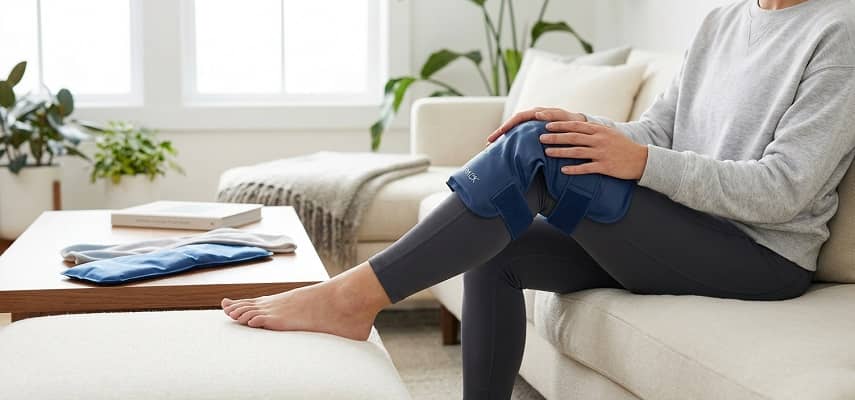
2026 buying guide · cold therapy, coverage & fit
Quick answer: The best ice pack for a knee should stay flexible when cold, cover the part of the joint that actually hurts, and remain secure without excessive compression. ActiveWrap is our best all-round wrap, REVIX is a simpler value pick, and TheraICE is the easiest slip-on option. For any new injury or after surgery, follow your clinician’s cold-therapy instructions.
Quick picks
Best overall
ActiveWrap Knee Wrap
Two removable gel packs, adjustable compression and broad placement options make it the most versatile knee-specific wrap here.
Best value wrap
REVIX Knee Ice Pack
A flexible, cold-only wrap with two straps and a soft side for people who want straightforward hands-free cooling.
Easiest slip-on
TheraICE Knee Sleeve
A one-piece gel sleeve for 360-degree contact without straps; sizing matters more than with adjustable wraps.
JUMP TO A SECTION
How we chose these ice packs for knees
This is a desk-research buying guide. We verified that each featured model has a current U.S. Amazon listing, then checked stable specifications against manufacturer pages or current product documentation where available. We prioritized knee coverage, frozen flexibility, ability to stay in place, sizing, skin-contact design, reusability and simplicity. The category labels below are editorial judgments, not results from a head-to-head clinical trial.
What we did not use to rank products: changing Amazon star counts, review totals, temporary coupons, “best seller” badges or fixed prices. Those can change quickly. Always confirm the exact size, variant, seller and current price before ordering.
Best ice packs for knees at a glance
| Product | Best for | Design | Coverage / fit | Price band* |
|---|---|---|---|---|
| ActiveWrap Knee Ice & Heat Wrap | Best overall | Fabric wrap + 2 removable packs | Adjustable, broad placement | Premium |
| Vive Knee Ice Wrap | Front + back coverage | Wrap + 3 removable packs | Up to 21-inch knee circumference | Mid-range |
| REVIX Knee Ice Pack Wrap | Value knee-specific wrap | One-piece gel wrap + 2 straps | 9.6 x 12.2-inch active area | Mid-range |
| TheraICE Hot & Cold Knee Sleeve | Easy slip-on use | Gel compression sleeve | 360° contact; multiple sizes | Mid-range |
| FlexiKold Large Gel Cold Pack | Simple flat pack | Flexible nylon gel pack | 10.5 x 14.5 inches | Budget |
| Chattanooga ColPac Standard | Clinic-style cold pack | Reusable vinyl gel pack | 11 x 14 inches | Budget |
| KingPavonini XXL Wrap | Large coverage | Oversized gel wrap + straps | About 19 x 10.6 inches | Mid-range |
The seven product profiles
01 / BEST OVERALL
ActiveWrap Knee Ice & Heat Wrap
ActiveWrap Knee Ice & Heat Wrap — view on Amazon is our most versatile pick because its removable packs can be positioned around the knee rather than locking you into one cold zone. The wrap is adjustable, supports compression, and can also be used with heat-capable packs when appropriate.
Key features
- Includes two large 7 x 10-inch removable gel packs
- Adjustable wrap provides hands-free positioning and compression
- Packs remain flexible when frozen
- Can target the front, sides or back of the knee and nearby leg areas
Pros
- More placement flexibility than a fixed sleeve
- Two packs make broad coverage easier
- Wrap-and-pack system is reusable and modular
Cons
- Costs more than a basic flat gel pack
- Bulkier than a one-piece compression sleeve
- More straps and parts to position
Best for: People who want a reusable knee-specific system with adjustable pack placement. Skip it if: you want the cheapest or fastest-to-put-on option.
02 / BEST FRONT + BACK COVERAGE
Vive Knee Ice Wrap
Vive Knee Ice Wrap — view on Amazon uses three removable gel packs: two at the front and one behind the knee. That layout is useful when you want cold contact on more than one side of the joint without buying a circulating cold machine.
Key features
- Three removable hot/cold Arctic Flex gel packs
- Two front pockets and one rear pocket
- Universal left/right design for knees up to 21 inches around
- Latex-free neoprene-blend wrap with adjustable fastening
Pros
- Cold packs can cover front and back simultaneously
- Removable packs simplify re-freezing and cleaning
- Can be used for hot or cold therapy when appropriate
Cons
- Heavier and more structured than a simple flat pack
- May be too small if your knee circumference is well above the stated range
- Three packs take more freezer space
Best for: Broad front-and-back coverage in an adjustable wrap. Skip it if: you want a lightweight sleeve you can pull on in seconds.
03 / BEST VALUE KNEE-SPECIFIC WRAP
REVIX Knee Ice Pack Wrap
REVIX Knee Ice Pack Wrap — view on Amazon is a straightforward cold-only wrap with a flexible gel body and two adjustable straps. The 9.6 x 12.2-inch active area is compact enough to handle easily while still covering the front and sides of many knees.
Key features
- 9.6 x 12.2-inch flexible gel wrap
- Two elastic securing straps
- Soft plush side plus a nylon side
- Reversible shape for either knee; cold therapy only
Pros
- Simple one-piece setup
- Flexible gel conforms better than a rigid freezer pack
- Straps free your hands while sitting or resting
Cons
- Not a hot/cold dual-purpose pack
- Standard size may not wrap a larger knee completely
- Two-strap design offers less precise compression control than more elaborate wraps
Best for: A simple knee-specific ice wrap for short cold sessions. Skip it if: you need truly full-circumference coverage or want heat therapy too.
04 / EASIEST SLIP-ON
TheraICE Hot & Cold Knee Compression Sleeve
TheraICE Hot & Cold Knee Compression Sleeve — view on Amazon replaces straps and loose packs with a single gel-filled sleeve. It is the easiest design here to put on, and it surrounds the knee instead of concentrating cold on one flat surface.
Key features
- One-piece stretchable gel compression sleeve
- 360-degree hot/cold contact around the knee
- Available in multiple sizes
- No Velcro straps or removable gel inserts
Pros
- Fastest product here to apply
- Full-circumference contact without loose straps
- Hot and cold capability
Cons
- Sizing is less forgiving than an adjustable wrap
- Compression level cannot be fine-tuned with straps
- One-piece sleeve takes dedicated freezer space
Best for: People who prioritize quick application and even wraparound contact. Skip it if: your knee size falls between sizes or you need to move cold packs to a very specific spot.
05 / BEST SIMPLE FLAT PACK
NatraCure FlexiKold Large Gel Cold Pack
FlexiKold Large Gel Cold Pack — view on Amazon is the no-fuss choice: a 10.5 x 14.5-inch flexible pack that can lie across the knee, thigh or other sore areas. It does not lock you into a knee-only design, which makes it more useful around the house.
Key features
- 10.5 x 14.5-inch reusable gel pack
- Flexible construction designed to conform when frozen
- Durable nylon exterior
- General-purpose shape works for knees and other body areas
Pros
- Simple and versatile
- Large enough to drape across much of the knee
- Useful for multiple body areas
Cons
- Standard version has no built-in knee straps
- Does not wrap the entire knee on its own
- Needs a cloth barrier unless the product instructions say otherwise
Best for: Buyers who want one reusable cold pack for the knee and other areas. Skip it if: hands-free use is essential.
06 / BEST CLINIC-STYLE PACK
Chattanooga ColPac Standard 11 x 14
Chattanooga ColPac Standard — view on Amazon is a classic reusable vinyl cold pack rather than a wearable brace. The 11 x 14-inch size gives broad surface coverage, and its simple format is useful if you mainly ice while resting rather than moving around.
Key features
- Standard 11 x 14-inch reusable cold pack
- Vinyl exterior with gel filling
- Designed to remain pliable for body contours
- Stores in a freezer or cold-pack chilling unit
Pros
- Large, uncomplicated cold surface
- Clinic-style design with no straps to wear out
- Useful beyond the knee
Cons
- No hands-free fastening
- Needs a protective layer between pack and skin
- Less convenient if you want cold behind and in front of the knee at once
Best for: People who prefer a durable flat pack for use while sitting or lying down. Skip it if: you need a wearable wrap.
07 / BEST XXL COVERAGE
KingPavonini XXL Knee Ice Pack Wrap
KingPavonini XXL Knee Ice Pack Wrap — view on Amazon is the oversized option in this list. Its roughly 19 x 10.6-inch gel area is meant to cover more of the knee and nearby leg than standard compact wraps, with straps to hold the pack in place.
Key features
- Approximately 19 x 10.6-inch oversized gel wrap
- Two adjustable securing straps
- Dual-sided surface for gentler or more direct cold contact
- Reusable design for knee and other larger body areas
Pros
- Much broader surface than compact knee packs
- Straps support hands-free placement
- Useful when you want coverage above and below the joint
Cons
- Heavy compared with smaller wraps
- Takes substantial freezer space
- Oversized design is unnecessary for a small, localized sore spot
Best for: Larger coverage needs or people who find standard packs too small. Skip it if: low weight, compact storage or precise spot cooling matters more.
What should you look for when buying an ice pack for your knee?
The most important buying question is not “Which pack gets coldest?” but which design makes safe, even contact with the part of your knee you need to cool. A flexible pack that fits your body and stays in position is usually more useful than a very cold pack that becomes rigid, slides away or presses painfully on the kneecap.
Wrap, sleeve or flat pack?
Wraps are easiest to secure and often let you adjust compression. Slip-on sleeves are faster and can cool around the joint, but sizing is critical. Flat gel packs are inexpensive and versatile, but they usually need a towel and your hand, gravity or a separate wrap to stay in place.
How much knee coverage do you need?
If discomfort is concentrated at the front of the knee, a medium flexible pack may be enough. If you have been advised to cool both the front and back after a procedure, a multi-pack wrap such as the Vive or a full-circumference sleeve may be more convenient. More surface area is not automatically better; oversized packs are heavier and harder to store.
Does the gel stay flexible when frozen?
The knee is curved, so a pack that freezes into a hard slab creates poor contact. Flexible gel can drape over the front and sides of the joint more evenly. Manufacturer claims about “long-lasting” cold are difficult to compare because test conditions vary, so we give more weight to shape, dimensions and materials than to marketing claims about exact cooling duration.
How much compression is appropriate?
A strap should keep the pack secure, not squeeze as tightly as possible. Excessive compression can cause discomfort or circulation problems. After surgery, compression level and cold schedule should follow your surgeon or physical therapist’s instructions rather than a product’s marketing language.
If you are comparing other knee-support products, see our guides to compression sleeves for knees and knee braces. For powered cold therapy, compare our knee icing machine guide and Cryo Cuff knee guide.
How do you use an ice pack on a knee safely?
For a minor acute knee injury, major medical sources generally recommend short cold sessions rather than prolonged exposure. Mayo Clinic advises using an ice pack wrapped in a thin towel and limiting a session to no more than 20 minutes. AAOS similarly advises cold packs for about 20 minutes at a time and warns against placing ice directly on the skin.
- Follow the pack instructions. Freeze or chill the product for the stated time and inspect it for leaks, damaged seams or exposed gel before use.
- Protect your skin. Use a thin cloth barrier unless the exact product has a built-in protective layer and its instructions specifically permit direct contact.
- Keep the session short. A common upper limit is about 20 minutes. Remove the pack sooner if the skin becomes painful, very numb, unusually pale or discolored.
- Do not overtighten straps. The wrap should stay secure without causing tingling, numbness, color change or increasing pain.
- Follow your surgical plan. After knee replacement, ACL repair or another procedure, your surgeon’s instructions take priority over general product directions.
Ask before using cold if sensation or circulation is reduced
People with poor circulation, reduced skin sensation, neuropathy, cold-sensitivity conditions, broken or infected skin, or an uncertain diagnosis should ask a healthcare professional before using cold therapy. Johns Hopkins advises extra caution when sensation is impaired. Never fall asleep with an ice pack on your knee.
Do ice packs for knees actually help?
Cold therapy can reduce pain temporarily and is commonly used for acute knee injuries and after knee surgery, but the size of the benefit depends on the condition and the protocol. It should be viewed as a symptom-management tool, not a diagnosis or a substitute for rehabilitation and medical treatment.
What does knee-replacement research show?
A 2024 systematic review and meta-analysis included 31 randomized controlled trials after total knee arthroplasty. It reported lower early postoperative pain scores with cryotherapy and found that continuous cold-flow devices were not consistently superior to traditional cold packs for outcomes such as pain, opioid use, swelling, range of motion and length of stay.
That does not mean every ice pack performs the same way. A later reassessment of systematic reviews found that much of the evidence for cryotherapy after knee arthroplasty was low or very low quality, which is a good reason to avoid claims that any consumer pack “speeds healing” or guarantees a better recovery.
When should knee pain be checked by a professional?
An ice pack can make a sore knee feel better without telling you why it hurts. Seek medical assessment after a significant injury if you have severe pain, cannot move or bear weight on the knee, develop major swelling, heard a pop with the knee giving way, or symptoms are worsening instead of settling.
Do not use cold to “push through” a serious injury. New deformity, a locked knee, major instability, spreading redness/heat with fever, or changes in foot color, temperature or sensation warrant prompt medical attention.
Frequently asked questions
What is the best ice pack for knee pain?
There is no single best design for every knee. For broad adjustability, we prefer the ActiveWrap. For a simpler knee-specific wrap, REVIX is easier and usually less expensive. TheraICE is the most convenient slip-on style. Match the pack to the location of your symptoms, your knee size and any instructions from your clinician.
How long should you keep an ice pack on your knee?
A common limit is about 15 to 20 minutes per session. Mayo Clinic advises not using ice for longer than 20 minutes at a time because prolonged exposure can damage skin and nerves. Use a protective layer unless the product instructions specifically allow otherwise, and stop sooner if the skin becomes painful or numb.
Is an ice pack good for a swollen knee?
Cold may temporarily reduce pain and can be part of self-care for an acutely swollen knee, but swelling has many causes. A new large effusion, swelling after a significant injury, inability to bear weight, or a hot red knee with fever should be assessed rather than repeatedly iced without knowing the cause.
Can I use an ice pack after knee replacement surgery?
Cold therapy is commonly used after total knee replacement, and research suggests it can help with early postoperative pain. However, your surgeon’s instructions should determine when to start, how long to use it, whether to place a barrier over dressings, and whether compression is appropriate. Do not apply a consumer wrap over an incision against medical advice.
Is a cold-therapy machine better than a regular knee ice pack?
Not necessarily. A 2024 meta-analysis after total knee arthroplasty found continuous cold-flow devices did not show consistently better results than cold packs across several recovery outcomes. Machines may offer convenience and controlled circulation, but they cost more. See our knee icing machine guide for the practical differences.
Should I choose a wrap or a flat gel pack?
Choose a wrap if you want hands-free use or need the pack to stay positioned on the front, sides or back of the joint. Choose a flat pack if you want the simplest, most versatile option and normally ice while resting. In either case, flexibility when frozen and comfortable skin protection matter more than extreme cold.
This article is for general information only and is not medical advice. Talk to a qualified healthcare professional about your specific knee symptoms, treatment plan and safe use of cold therapy.