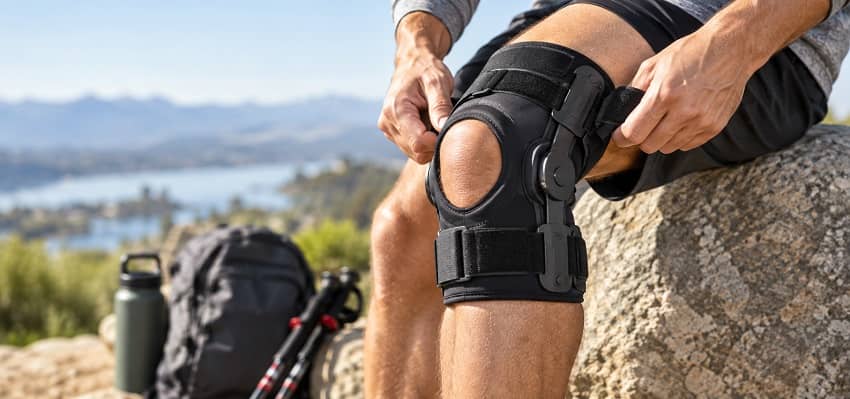
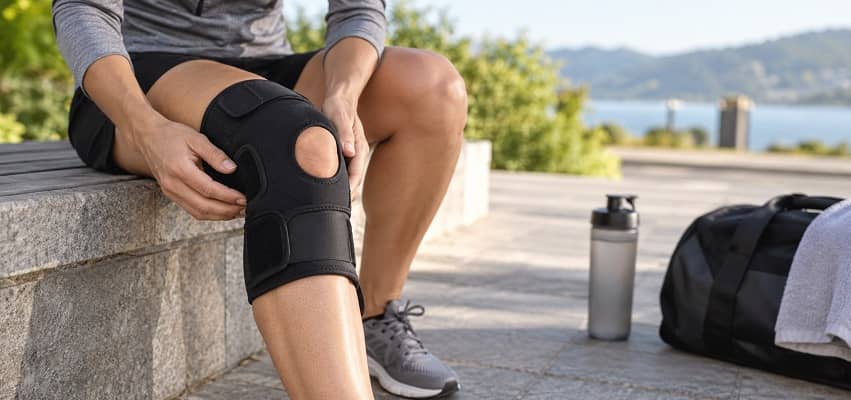
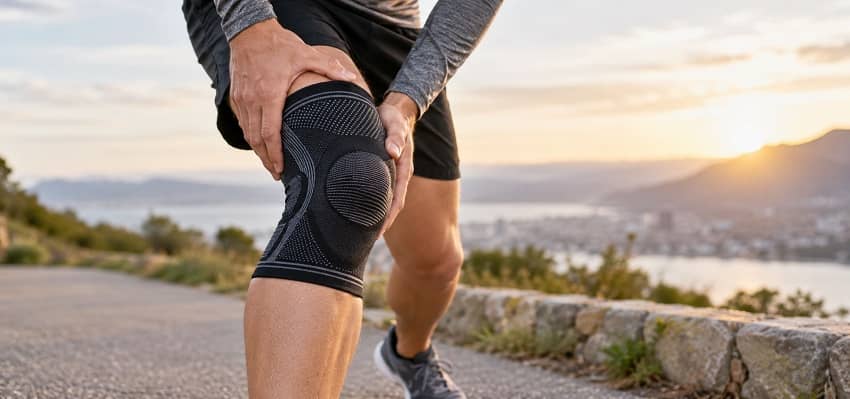
Best Compression Sleeves for Knees: 5 Picks for 2026
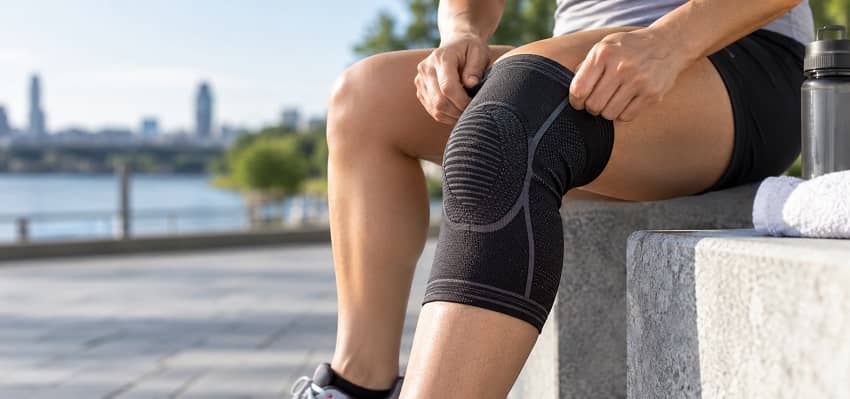
2026 buying guide · fit, materials & support
The best compression sleeves for knees should stay in place, feel comfortable through movement, and match the amount of support you actually need. For most everyday workouts, POWERLIX is the most balanced low-profile pick here; Bauerfeind Sports Knee Support is the premium option, while CAMBIVO offers a lower-cost two-pack. A sleeve can provide compression and warmth, but it does not replace a hinged or unloader brace when more mechanical stability is required.
Quick picks
Best overall
POWERLIX
A flexible knit sleeve with silicone grip strips and a straightforward sizing system for general training.
Premium support
Bauerfeind Sports Knee Support
AirKnit fabric, an Omega pad around the kneecap, and manufacturer-stated 20–30 mmHg compression.
Budget two-pack
CAMBIVO
A basic 3D-knit two-pack at a lower price point; note that the listed material blend contains latex.
How did we choose the best compression sleeves for knees?
We compared current manufacturer specifications and verified that each featured model had a U.S. Amazon listing at the time of research. We prioritized fit instructions, anti-slip design, material disclosures, pack quantity, construction, and distinct use cases. We did not rank products from unverified star ratings or claim that we personally tested them.
We also separated compression sleeves from more supportive braces. A soft sleeve may suit light support, warmth, or exercise comfort; a hinged, rigid, or unloading brace serves a different purpose and should be chosen for the condition and level of instability rather than simply for “more compression.”
Best knee compression sleeves at a glance
| Sleeve | Our category | Construction | Pack | Before you buy |
|---|---|---|---|---|
| POWERLIX | Best overall | 4-way knit + silicone grip strips | 1 | Measure 5 inches above the kneecap |
| Bauerfeind Sports Knee Support | Premium support | AirKnit + Omega pad; 20–30 mmHg stated by manufacturer | 1 | More structured and more expensive than a basic sleeve |
| MODVEL 2-Pack | Best value | Stretch knit compression sleeve | 2 | No standardized mmHg level stated on the current product collection page |
| CAMBIVO 2-Pack | Budget two-pack | 3D knit; nylon/latex/spandex blend listed on Amazon | 2 | Contains latex |
| Copper Compression PowerKnit | Dense knit option | Polyester + copper-infused nylon + rubber + spandex | 1 or 2 | Choose for fit and compression, not for copper as a pain treatment |
Use the right category of support. A compression sleeve can feel snug and supportive, but it does not mechanically stabilize the knee the way side hinges, rigid stays, or an unloading brace can. If your knee gives way, locks, or is recovering from a significant injury, get the cause assessed before buying a stronger sleeve.
The five knee compression sleeve profiles
01 / BEST OVERALL
POWERLIX Compression Knee Sleeve
POWERLIX is the most balanced general-purpose choice in this list because it combines a flexible 4-way knit with dual silicone gel strips designed to reduce slipping. Its sizing instructions use a thigh measurement 5 inches above the kneecap, which is more useful than choosing from shoe size or a generic small/medium label alone.
POWERLIX Compression Knee Sleeve — view on Amazon
Key features
- 4-way knit compression construction
- Dual silicone gel grip strips
- Sizes from S through XXL on the current manufacturer page
- Measure the thigh 5 inches above the kneecap for sizing
Pros
- Low-profile design for running, gym work and daily movement
- Silicone strips add grip without external straps
- Clear model-specific measurement instructions
Cons
- One sleeve per package
- The manufacturer does not publish a standardized mmHg compression level on this model page
- No hinges or rigid side support for true instability
Best for: Runners, gym users and active adults who want a straightforward knit sleeve with anti-slip grip.
Who it is not for: Someone who needs prescribed immobilization, hinged support, or an unloading brace.
For more running-focused options, see our knee sleeves for running guide and our POWERLIX knee sleeve review.
02 / PREMIUM SUPPORT
Bauerfeind Sports Knee Support
Bauerfeind’s Sports Knee Support is more structured than a plain elastic sleeve. The current manufacturer page combines breathable AirKnit fabric with an Omega pad around the kneecap and lists 20–30 mmHg compression. That makes it the premium pick here for buyers who want a defined compression range and more targeted support without moving to a hinged brace.
Bauerfeind Sports Knee Support — view on Amazon
Key features
- AirKnit breathable, moisture-wicking fabric
- Omega pad positioned around the kneecap
- Manufacturer-stated compression range of 20–30 mmHg
- One support fits either knee when correctly sized
Pros
- Published compression range makes comparison easier
- Patellar pad adds more structure than a plain knit tube
- Breathable sports-oriented construction
Cons
- Substantially more expensive than basic knit sleeves
- More structured feel may be unnecessary for light everyday compression
- One support per package
Best for: Active users willing to pay more for targeted patellar padding and a manufacturer-specified compression range.
Who it is not for: Budget shoppers who simply need light compression, or people who need a rigid or hinged brace.
03 / BEST VALUE
MODVEL Compression Knee Sleeves 2-Pack
MODVEL is the value pick because the current product line is sold as a two-pack, making it practical for people who want sleeves for both knees or a spare. Its design is a straightforward stretch-knit compression sleeve rather than a brace with hinges or a patellar pad, so its appeal is simplicity and quantity rather than maximum structure.
MODVEL Compression Knee Sleeves 2-Pack — view on Amazon
Key features
- Two compression sleeves per pack
- Stretch-knit, pull-on construction
- Designed as a low-profile sleeve rather than a hinged brace
- Multiple sizes available on current listings; use the current chart before ordering
Pros
- Two sleeves make sense for bilateral use or a backup
- Simple pull-on design with no external straps
- Less bulky than many padded or hinged supports
Cons
- No standardized mmHg compression level published on the current collection page
- Less targeted support than a sleeve with a patellar pad
- Fit and grip still depend heavily on choosing the right size
Best for: Buyers who want two basic sleeves without paying premium single-sleeve pricing.
Who it is not for: Someone who specifically needs a published compression pressure, side hinges, or an unloading brace.
04 / BUDGET TWO-PACK
CAMBIVO Knee Compression Sleeves 2-Pack
CAMBIVO is the lower-cost two-pack in this comparison. The current model uses a 3D-knit sleeve construction and comes in sizes S through XXL on the manufacturer page. Amazon product information for this listing gives the material blend as 65% nylon, 20% latex and 15% spandex, which matters if you have a latex sensitivity or allergy.
CAMBIVO Knee Compression Sleeves 2-Pack — view on Amazon
Key features
- Two sleeves per pack
- 3D-knit pull-on construction
- Sizes S through XXL on the current manufacturer page
- Amazon product information lists 65% nylon, 20% latex and 15% spandex
Pros
- Two sleeves for a budget-oriented purchase
- Lightweight knit design for exercise and everyday wear
- Broad basic size range
Cons
- Contains latex according to the current Amazon material listing
- No hinges or rigid side support
- Does not publish a standardized medical compression class on the current manufacturer page
Latex warning: The current Amazon product information for this CAMBIVO listing includes latex in the material blend. If you have a latex allergy, choose a product whose exact material labeling is appropriate for you and confirm the current variant before buying.
Best for: Price-conscious buyers who want a pair of basic knit sleeves for light exercise or everyday compression.
Who it is not for: People with a latex allergy or anyone who needs a stabilizing brace rather than a sleeve.
05 / DENSE KNIT OPTION
Copper Compression PowerKnit Knee Sleeve
Copper Compression’s PowerKnit is the dense-knit alternative in this list. The manufacturer currently lists a blend of 41% polyester, 39% copper-infused nylon, 18% rubber and 2% spandex, with three combined size bands and one- or two-pack options. The useful buying distinction is the knit density and fit—not an expectation that copper itself treats knee pain.
Copper Compression PowerKnit Knee Sleeve — view on Amazon
Key features
- Dense seamless-knit sleeve construction
- Manufacturer lists 41% polyester, 39% copper-infused nylon, 18% rubber and 2% spandex
- Current sizes: S/M, L/XL and 2XL/3XL
- Available in one- or two-pack configurations from the manufacturer
Pros
- Dense knit for users who prefer a firmer sleeve feel
- One- and two-pack choices
- Full material percentages are disclosed by the manufacturer
Cons
- Only three combined size bands on the current manufacturer page
- Contains rubber
- No standardized mmHg compression level is stated on the current product page
About the copper: Treat copper-infused fibers as a material feature, not a reason to expect superior pain relief. For knee symptoms, fit, comfort, the amount of compression, and the correct type of support are more useful selection factors.
Best for: Buyers who prefer a denser knit and want clear material percentages or a choice of one- and two-pack configurations.
Who it is not for: Anyone sensitive to the listed materials or someone who needs a brace with hinges, straps, or unloading mechanics.
What should you look for in a knee compression sleeve?
Start with the exact model’s sizing method, then decide how much structure you need. A good sleeve should stay up without cutting into the skin, allow comfortable bending, and use materials you can tolerate. Compare published compression information when available, but do not assume that a thicker or tighter sleeve is automatically better.
1. Use the model-specific size chart
Different brands measure in different places. POWERLIX, for example, asks for a thigh measurement 5 inches above the kneecap. Other brands may use a different location. Measure where the manufacturer tells you to measure, and re-check the current chart if a product has been redesigned.
2. Separate compression from stability
A sleeve compresses soft tissue and may improve comfort for some people, but it does not provide the same movement control as rigid stays or hinges. If you are comparing support after a ligament or meniscus injury, see our knee brace for a torn meniscus guide and hinged knee brace guide for different brace categories.
3. Check the actual materials
Material labels matter if you react to latex, rubber, silicone or certain fabrics. CAMBIVO’s linked Amazon listing currently includes latex in the blend; Copper Compression lists rubber in the PowerKnit sleeve. Do not assume that “breathable,” “copper,” or “compression” tells you what the product is made from.
4. Match the sleeve to your activity
For running or everyday gym work, a flexible low-profile sleeve is usually easier to move in. Lifters may prefer a thicker, stiffer knee sleeve for a different kind of support and rebound. If lifting is your main use case, compare our CrossFit knee sleeve guide rather than assuming a thin compression sleeve will feel the same.
5. Look at anti-slip design and comfort
Silicone grip bands can help a sleeve stay up, but they can also irritate some skin. A sleeve that rolls, bunches behind the knee, or leaves painful pressure marks is not a good fit. Comfort during the movements you actually perform matters more than how supportive the sleeve feels while standing still.
Do knee compression sleeves actually help knee pain?
They can help some people, especially in knee osteoarthritis, but the evidence is limited and does not show that every sleeve treats every cause of knee pain. Small clinical studies have found short-term pain and function improvements with soft knee braces or simple sleeves. That supports trying an appropriate sleeve for comfort—not using one as a diagnosis or cure.
What the studies actually found
In a 44-person study of knee osteoarthritis, wearing a soft knee brace immediately reduced average pain ratings during level walking by about 0.60 points and during perturbed walking by about 0.80 points, while also improving several functional measures. A separate six-week study included only 17 people with early knee osteoarthritis and reported pain improvement with both sleeve designs tested.
These are small studies in people with osteoarthritis; they do not prove that compression sleeves prevent sports injuries, repair cartilage, heal ligaments, or work equally well for other causes of knee pain.
A review of clinical practice guidelines likewise described the evidence for knee sleeves in osteoarthritis as modest or low-level, with pain reduction more consistently supported than disability improvement. For arthritis that significantly affects stability or function, a clinician may recommend a different brace. See our knee braces for osteoarthritis guide for those alternatives.
What can a knee compression sleeve not do?
A compression sleeve cannot tell you why your knee hurts, and it should not be expected to repair a torn ligament, meniscus, tendon, or cartilage. It also does not provide the same stabilization as a hinged brace or the same load-shifting mechanics as an unloader brace. Use the device that matches the diagnosis and activity—not simply the tightest one you can tolerate.
Do not use a sleeve to push through a new injury. If your knee is locking, giving way, very swollen, or difficult to bear weight on, assessment is more important than adding compression.
How should a knee compression sleeve fit?
A knee sleeve should feel evenly snug without causing pain, numbness, tingling, coldness, or a change in skin color. It should stay in place through bending and walking without rolling into a tight band. Follow the exact manufacturer’s chart, because measuring points and size boundaries are not standardized across brands.
- Measure first. Use a soft tape and the exact location stated by the manufacturer; do not reuse a size from another brand.
- Center the sleeve. Pull it on smoothly so seams, pads or knit zones sit where the instructions show.
- Move in it. Bend, walk, squat lightly or perform the activity you plan to do. The sleeve should not roll, bunch or pinch behind the knee.
- Check circulation and skin. Remove or loosen the sleeve if you develop numbness, tingling, increasing pain, unusual coldness, color change or persistent pressure marks.
- Recheck after washing. Follow care instructions and make sure the sleeve still fits and grips as intended over time.
When should you see a professional for knee pain?
Seek medical assessment when knee pain follows a significant injury, is severe, keeps worsening, prevents normal weight-bearing or bending, or comes with major swelling or repeated instability. A hot, red or unusually warm swollen knee can also need prompt evaluation. The purpose is to identify the cause before choosing a support that could mask symptoms.
Get urgent help for red flags
Get prompt medical care for severe pain or swelling, inability to bear weight, a visibly deformed knee, a knee that becomes hot or red, or symptoms that are worsening rather than settling. Emergency assessment is appropriate after major trauma when there is numbness, a cold or discolored foot, or another sign of impaired circulation or nerve function.
Frequently asked questions
What is the difference between a knee compression sleeve and a knee brace?
A compression sleeve is usually a flexible pull-on garment that provides circumferential pressure, warmth and light support. A brace can add straps, rigid stays, hinges or unloading components that control movement or shift load. The terms are sometimes used loosely in product listings, so compare the actual construction rather than the product name alone.
How tight should a knee compression sleeve be?
It should feel snug enough to stay in place without pain, numbness, tingling, coldness or skin-color change. The best guide is the exact manufacturer’s measurement chart, not how difficult the sleeve is to pull on. If it rolls into a tight band or leaves painful pressure marks, recheck the size and fit.
Can I wear a knee compression sleeve all day?
Some people comfortably use a light sleeve for several hours, but there is no single wear schedule that suits every condition or product. Follow the manufacturer’s instructions and any plan from your clinician. Remove the sleeve if it causes increasing pain, skin irritation, numbness, tingling, unusual coldness or a color change.
Are copper knee compression sleeves better for pain?
Copper-infused fibers are a material feature, but they are not a reason to assume a sleeve will relieve pain better than a well-fitting non-copper sleeve. Choose based on fit, comfort, compression, material tolerance and the type of support you need. Persistent or significant knee pain should be evaluated rather than treated based on fabric marketing.
Can you run in a knee compression sleeve?
Many sleeve-style supports are designed for movement and can be worn while running if they fit correctly and do not alter your stride or cause symptoms. A sleeve should not be used to run through an undiagnosed injury. If pain is new, worsening, or associated with swelling or instability, get the knee assessed first.
Can a compression sleeve help knee arthritis?
Some small studies in knee osteoarthritis have found short-term pain or function improvements with soft knee supports, but the evidence is limited and does not mean every sleeve will help every person. If arthritis significantly affects walking, stability or pain, a clinician may suggest a more specific brace or a broader treatment plan.
This article is for general information only and is not medical advice. Talk to a qualified healthcare professional about persistent knee symptoms, a recent injury, your diagnosis, and the type of support that is appropriate for you.