6 Best Slippers With Arch Support for 2026 (Podiatrist-Informed Picks)
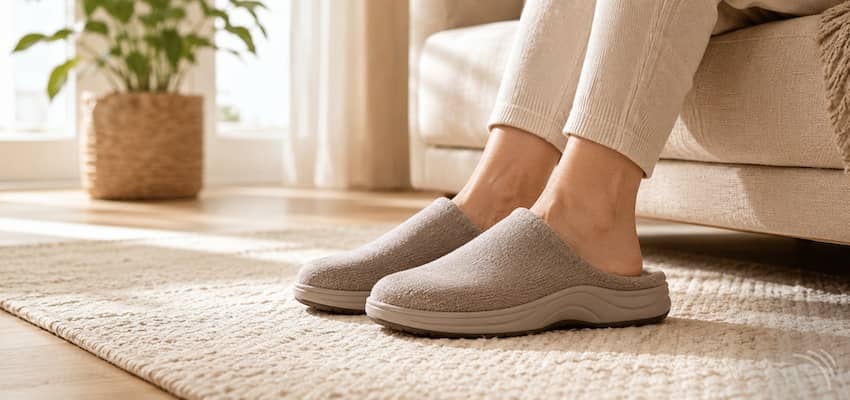
For most people, the Vionic Gemma Mule is the best all-round slipper with arch support — a firm, APMA-accepted orthotic footbed wrapped in a cozy terry mule. Need room for wide or swollen feet, or your own orthotics? Go with the Orthofeet Charlotte (women) or Orthofeet Asheville (men). On a budget? The Cushionaire Feather gives gentle cushioned support for under $35.
If your first steps out of bed feel like a bruise under the heel, walking barefoot on hard floors is probably making it worse. A supportive slipper keeps a consistent arch under your foot the moment you stand up — which is exactly when the plantar fascia is at its tightest. Below are six pairs that offer genuine arch support (not just a soft footbed), chosen to cover different feet, budgets, and needs — from firm orthotic house shoes to plush recovery clogs.
A quick, honest caveat before the picks: slippers are a comfort aid, not a cure. They can reduce strain and make hard floors easier on your feet, but heel and arch pain that persists deserves a proper look from a professional. More on that — with sources — near the end.
JUMP TO A SECTION
How we chose
We prioritized real arch support — a firm, contoured footbed or a removable orthotic insole — over marketing language, then weighed heel security, non-slip traction, width and toe-box room, materials, and value. We favored brands with a track record in orthopedic and podiatrist-recommended footwear (Vionic, Orthofeet, OOFOS, Haflinger), cross-checked picks against podiatrist-reviewed roundups from Prevention and SheKnows, and confirmed every product is currently listed on Amazon in the US. We also list honest cons and a clear “who it isn’t for” on each pair, because the most supportive slipper for one foot is the wrong one for another.
Top picks at a glance
| Slipper | Best for | Arch style | Key feature | Approx. price* |
|---|---|---|---|---|
| Vionic Gemma Mule (women) | Best overall | Firm, built-in | APMA Seal; deep heel cup | ~$80–95 |
| Orthofeet Charlotte (women) | Wide/swollen feet & custom orthotics | Firm, removable | Wide toe box; insole lifts out | ~$90–120 |
| Orthofeet Asheville (men) | Best for men | Firm, removable | Dual straps; wide widths | ~$100–120 |
| Haflinger Grizzly (unisex) | Natural, breathable materials | Firm, molding cork-latex | Boiled wool; year-round | ~$120–150 |
| OOFOS OOcloog (unisex) | All-day recovery cushioning | Soft cradle | High-impact OOfoam; washable | ~$100–120 |
| Cushionaire Feather (women/men) | Best budget | Gentle, molded | Waterproof; under $35 | ~$25–35 |
01 / BEST OVERALL
Vionic Women’s Gemma Mule
The Vionic Gemma is a plush terry mule hiding a firm, built-in orthotic footbed with a contoured arch and a deep heel cup — the reason it carries the American Podiatric Medical Association (APMA) Seal of Acceptance. For most women who want real support without giving up cozy warmth around the house, it’s the best all-round pick here.
Key features
- Semi-rigid built-in orthotic arch (Vionic’s Vio Motion footbed) with a deep, stabilizing heel cup
- Adjustable hook-and-loop strap for a snug, customizable fit
- Soft terry / faux-shearling upper and lining; flexible EVA midsole for shock absorption
- Durable outsole that handles quick trips outside; carries the APMA Seal of Acceptance
Pros
- Genuinely firm arch support
- podiatrist-vetted (APMA)
- adjustable fit
- warm and cozy
- light indoor/outdoor use.
Cons
- The supportive footbed is firm — some find it hard underfoot
- as a backless mule it can slip at the heel if you don’t cinch the strap
- tends to run slightly large
- medium width only.
Best for: Overpronation and first-thing-in-the-morning heel soreness; anyone who wants warmth and structure.
Not for: Very narrow feet, people who want a soft pillowy step, or anyone who needs a closed back.
02 / BEST FOR WIDE FEET, SWELLING & CUSTOM ORTHOTICS (WOMEN)
Orthofeet Charlotte
The Charlotte pairs a faux-fur-lined suede upper with Orthofeet’s removable orthotic insole, a roomy wide toe box, and an adjustable strap. The insole lifts out (about 3/8″), so you can drop in custom or diabetic orthotics, and a built-in heel lip keeps the slipper on. It’s the pick for wide or swollen feet — and for anyone who already wears prescribed inserts.
Key features
- Removable anatomical arch-support insole — swap in your own custom or diabetic orthotics
- Wide, roomy toe box that eases pressure on bunions and hammertoes; available in medium and wide widths
- Adjustable side strap plus a heel lip for easy on/off and a secure fit over swelling
- Ergonomic “rocker” sole and rubber outsole for smooth, cushioned steps indoors or out
Pros
- Accommodates custom orthotics
- genuinely wide and roomy
- easy to get on and off
- secure heel
- indoor/outdoor sole
- consistently high owner ratings.
Cons
- Runs narrow for some feet — Orthofeet suggests ordering a half size down, or choose the wide width
- bulkier, orthopedic look
- premium price.
Best for: Wide or swollen feet, bunions/hammertoes, custom-orthotic users, and people managing diabetes or neuropathy (with their clinician’s guidance).
Not for: Narrow feet wanting a sleek profile, or bargain shoppers.
03 / BEST FOR MEN
Orthofeet Asheville
The Asheville is the men’s counterpart to the Charlotte: a suede, faux-fur-lined slipper with a removable orthotic insole, dual adjustable straps, and a gentle rocker sole. The footbed lifts out for custom orthotics, and it comes in medium and wide widths — making it the most supportive, adjustable house slipper here for men.
Key features
- Removable anatomical orthotic insole (about 3/8″ depth) that fits custom orthotics
- Dual hook-and-loop straps that open both sides for step-in ease and a dialed-in fit
- Wide toe box and medium/wide widths; suede upper with a warm faux-fur lining
- Ergonomic rocker sole and rubber outsole for cushioned steps and quick trips outdoors
Pros
- Firm, real orthotic support
- very adjustable
- true wide widths
- accepts custom orthotics
- sturdy enough to grab the mail.
Cons
- Chunky, orthopedic look
- premium price
- the faux-fur lining runs warm in summer.
Best for: Men with plantar fasciitis, overpronation, wide or swollen feet, or prescribed orthotics.
Not for: Anyone wanting a slim, minimal slipper or a bargain price.
04 / BEST NATURAL, BREATHABLE MATERIALS
Haflinger Grizzly Wool Clog
Haflinger’s Grizzly is a boiled-wool clog over a cork-latex footbed that molds to your foot and holds a genuine arch. Wool breathes — warm in winter, cool in summer — and the tough sole handles quick trips outside. It’s the natural-materials pick, and the arch here is firm and supportive rather than soft and plush.
Key features
- Boiled-wool upper that’s breathable and moisture-managing year-round
- Cork-latex footbed that molds to your foot over time and supports the arch (a Haflinger signature)
- Durable outsole suited to indoor use and short trips outdoors; unisex sizing
Pros
- Breathable natural wool that won’t overheat
- supportive, foot-molding footbed
- very durable
- genuinely four-season.
Cons
- The firm footbed needs a break-in period
- the cork benefits from an occasional sealant to last
- tends to run slightly large (size down unless you have wide feet)
- premium price
- wool needs gentle laundering.
Best for: People whose feet sweat in synthetic slippers, who prefer natural materials, and who like a firm, structured footbed.
Not for: Anyone after a soft, cushioned step or toss-in-the-washer convenience.
05 / BEST FOR ALL-DAY RECOVERY CUSHIONING
OOFOS OOcloog
The OOcloog is a closed recovery clog built from OOFOS’s springy OOfoam, with a footbed that cradles the arch. OOFOS says the foam absorbs about 37% more impact than traditional footwear foam. It’s the pick for sore, tired feet and long days on hard floors — think of it as a soft, supportive cradle rather than a firm orthotic.
Key features
- OOfoam closed-cell foam that’s machine washable and designed to minimize odor
- Patented footbed that cradles and supports the arch for a low-effort, springy step
- Closed-toe clog for warmth; lightweight; unisex sizing
Pros
- Outstanding shock absorption for standing and recovery
- easy to clean (machine washable)
- closed-toe warmth
- very light.
Cons
- It’s a soft cradle, not a rigid orthotic arch — high-arch and heavy-overpronation users are split on it
- the foam can get slippery when wet
- unisex sizing means you should check the size chart carefully.
Best for: Recovery after standing or exercise, general foot fatigue, and people who find firm arches uncomfortable.
Not for: Anyone who specifically needs rigid arch control for significant overpronation.
06 / BEST BUDGET
Cushionaire Feather
The Cushionaire Feather is a soft EVA “cloud” slide with a lightly molded arch, usually under $35. It’s waterproof, wipes clean, and works indoors or out. Treat it as a comfortable, affordable everyday slide rather than a therapeutic orthotic — the support is gentle, not the firm arch of the picks above. There’s a men’s version too.
Key features
- Thick, molded EVA footbed with a gentle arch contour and a cushioned platform
- Fully waterproof and easy to wipe clean; non-slip outsole
- Indoor/outdoor use; available in women’s and men’s sizes
Pros
- Very affordable
- soft, cushioned feel
- waterproof and low-maintenance
- fine indoors or out.
Cons
- Gentle arch support, not firm control
- open backless slide
- the tall platform can feel a little unstable to some
- not built for serious plantar fasciitis or overpronation.
Best for: Budget shoppers, warm-weather house wear, shower/pool duty, and easygoing all-day comfort.
Not for: Anyone needing firm arch control, or who wants a closed, warm slipper.
What to look for in slippers with arch support
The word “arch support” gets stamped on almost every slipper listing, so it helps to know which features actually matter — and which ones only sound good.
Firm orthotic vs. soft cushion
This is the biggest decision. A firm, contoured footbed (Vionic, Orthofeet, Haflinger) actively supports the arch and limits how far your foot rolls inward — better for overpronation and plantar-fasciitis-type pain. A soft cushioned footbed (OOFOS, Cushionaire) absorbs shock and feels plush but gives less structural control. Match the slipper to what your feet need, not to whichever feels softest in the first ten seconds.
Heel security: mule/slide vs. closed-back
Backless mules and slides are easy to step into, but they can slip at the heel and make you grip with your toes — which some people with heel pain find counterproductive. If that’s you, choose a style with an adjustable strap you can cinch, or a closed-back clog.
A removable insole (if you use orthotics)
Already have custom or over-the-counter orthotics? Pick a slipper whose insole lifts out, like the Orthofeet Charlotte and Asheville, so your inserts sit flat with enough depth. A fixed footbed you can’t remove won’t fit your orthotics properly.
Width and toe box
Bunions, hammertoes, or swelling call for a wide, roomy toe box and ideally a true wide width. Orthopedic brands often offer medium and wide; many fashion slippers only come in one width.
Non-slip outsole
Hard floors — especially wood and tile — get slippery. A rubber outsole with real tread is a safety feature, not a nicety, particularly for older adults or anyone unsteady on their feet.
Indoor-only vs. indoor/outdoor
If you like to grab the mail or take out the trash without changing shoes, look for a durable outsole rated for outdoor use. Soft-soled slippers are cozier but wear quickly outside.
Materials, break-in, and care
Wool and cork breathe well and mold to your foot, but they’re firm at first and need a short break-in; some cork footbeds last longer with an occasional sealant. Foam and terry are soft right away and often machine washable. And a fit note that applies to most of this category: supportive slippers frequently run large, while orthopedic pairs can run narrow — read the brand’s specific sizing advice before you order.
Why arch support matters — and where slippers fit in
Plantar fasciitis is the most common cause of heel pain, according to the Cleveland Clinic. The plantar fascia is a strong, ligament-like band that runs from your heel to your toes and forms the arch of your foot; when it’s overloaded or overstretched, it can become inflamed and painful. Estimates cited in a University of Pittsburgh research summary suggest more than two million people are treated for plantar fasciitis in the U.S. each year.
The classic sign is sharp pain in your first steps in the morning that eases as you move around. That’s because the fascia tightens while you rest overnight, so loading it suddenly — often by walking barefoot on a hard floor — is what triggers the stab. This is exactly the moment a supportive slipper helps: it keeps a consistent arch under your foot from the first step, instead of dropping you onto an unsupported surface.
Here’s the honest framing, though. Mayo Clinic Health System notes that adequate arch support is important when managing plantar fasciitis, and advises discussing whether over-the-counter or custom orthotic inserts are right for you with a podiatrist. A slipper is one small, helpful piece — alongside stretching, supportive daytime shoes, avoiding barefoot walking, and sometimes night splints or professional care. It is not a treatment or a cure, and results vary from person to person.
When to see a professional
See a healthcare provider if heel or foot pain doesn’t improve on its own within a week or two of gentle self-care, or sooner if you notice any of the following: severe or sharp pain, numbness, tingling or loss of feeling in the foot (particularly if you have diabetes), significant swelling, an inability to put weight on the foot, pain at night, or pain that follows an injury. Not all heel pain is plantar fasciitis — stress fractures, nerve issues, and Achilles problems can mimic it — so the right diagnosis matters before you commit to weeks of self-treatment. The Cleveland Clinic suggests talking to a provider about heel pain that doesn’t get better on its own.
Frequently asked questions
Do slippers with arch support actually help plantar fasciitis?
They can help reduce the strain that comes from walking barefoot on hard floors, especially in those painful first steps of the day, by keeping a consistent arch under the foot. They aren’t a cure. Think of supportive slippers as one comfort measure alongside stretching, supportive daytime shoes, and, when needed, professional care.
Are backless mule slippers or closed-back styles better for arch support?
The footbed matters more than the back, but heel security affects how well that footbed works. Backless mules and slides are easy to wear yet can slip off, making some people grip with their toes. If your heel feels unstable, choose an adjustable strap you can tighten or a closed-back clog for a more locked-in fit.
Can I put my own orthotics in slippers?
Only if the slipper’s insole is removable and deep enough. Styles like the Orthofeet Charlotte and Asheville have insoles that lift out (roughly 3/8″ of depth), leaving room for custom or over-the-counter orthotics to sit flat. A slipper with a fixed, glued-in footbed won’t fit your inserts properly.
What slippers are best for hardwood or tile floors?
Look for a rubber outsole with real tread, since smooth floors get slippery. The Orthofeet, Vionic, and Haflinger picks here have grippy, durable soles suited to hard floors and even short trips outside. Traction is a genuine safety feature — especially for older adults or anyone unsteady on their feet.
How often should I replace supportive slippers?
Replace them once the footbed compresses, the arch flattens, or the tread wears smooth — often somewhere around six to twelve months of heavy daily wear. A good tell is your feet: if aches or heel pain start creeping back, the support has likely broken down even if the slippers still look fine.
Should people with diabetes wear arch-support slippers?
Roomy toe boxes and seam-free linings (as on the Orthofeet styles) are designed to reduce pressure and friction, which many people find helpful. But if you have diabetes, neuropathy, or reduced feeling in your feet, footwear should be chosen with your clinician’s guidance, and it’s wise to avoid going barefoot. Check your feet regularly for irritation.
This article is for general information only and is not medical advice. Footwear may ease discomfort but cannot diagnose or treat any condition. Talk to a qualified healthcare professional about your specific situation — especially if you have diabetes, neuropathy, or reduced sensation in your feet, where footwear choices should be guided by your clinician.