TENS Unit for Neck Pain: 5 Best Units and Safe Pad Placement (2026)
Best wire-free for desk work:
Omron Avail Wireless
— app-controlled pods you can wear under a shirt.
Safety first: never place pads on the front or sides of your neck or throat. Put them on the muscles between your neck and shoulders instead.
A TENS unit is one of the most popular drug-free tools for easing a stiff, aching neck at home — but the right device and, just as importantly, the right pad placement make a big difference. Neck pain is extremely common: the Global Burden of Disease Study estimated that neck pain affected roughly 203 million people worldwide in 2020, a number projected to climb to about 269 million by 2050 (The Lancet Rheumatology, 2024). This guide covers five real, currently-available TENS units, how to place the electrodes safely, and what the evidence actually says — so you can choose sensibly rather than guess.
Does a TENS unit help neck pain?
For many people, yes — a TENS unit can provide temporary relief from neck pain during and shortly after use. It sends mild electrical pulses through pads on the skin, which are thought to block pain signals and prompt the body to release its own pain-relieving chemicals. Cleveland Clinic notes it works well for a lot of people but better for some than others, and it is not a cure.
How we chose these TENS units
We prioritized devices that are genuinely suited to the neck and upper shoulders: units with dual channels (so you can surround a sore area with four pads), adjustable intensity, useful preset modes, and — for desk workers — a wire-free option. Every product below is a real model currently listed on Amazon US at the time of writing. We cross-checked how TENS works and its safety limits against medical sources including Cleveland Clinic, the NHS, the University of Iowa Health Care pain-medicine guidance, and the StatPearls clinical reference, and we’ve flagged honest downsides for each pick rather than only the good points. We don’t earn a commission on the links in this article.
Best TENS units for neck pain at a glance
| TENS unit | Best for | Type & channels | Standout feature | Approx. price* |
|---|---|---|---|---|
| TENS 7000 Digital | Best overall | Wired · dual channel | Strong, fully adjustable output (up to 100 mA) | ~$30–$40 |
| AUVON Dual Channel | Best budget | Wired · dual channel | Rechargeable, 20 modes, independent A/B control | ~$30 |
| iReliev TENS + EMS (ET-7070) | Best TENS + EMS combo | Wired · dual channel | FDA-cleared; adds muscle-recovery (EMS) modes | ~$80–$90 |
| Omron Pocket Pain Pro (PM400) | Best simple / most portable | Wired · single channel | Easiest controls from a trusted brand | ~$45–$55 |
| Omron Avail Wireless (PM601) | Best wire-free for desk work | Wireless · dual channel (2 pods) | App-controlled pods; wear under a shirt | ~$100–$130 |
01 / Best overall
1. TENS 7000 Digital — Best overall
The TENS 7000 is the workhorse of home TENS units: a simple, durable, wired dual-channel device with manual controls and a genuinely strong output of up to 100 mA. That headroom is its biggest advantage — it’s powerful enough for people who find cheap units too weak, while still letting you dial the intensity down to a gentle level for the neck.
Key features:
- Dual channels (up to 4 pads at once), 5 modes, adjustable pulse rate and width, runs on a 9V battery
- over 3 million units sold since 2008.
Pros
- Strong, precisely adjustable output
- simple and reliable
- inexpensive
- widely compatible replacement pads.
Cons
- Wired (dangling leads are less convenient at a desk)
- base model uses a disposable 9V battery
- manual dials have a slight learning curve
- no dedicated “neck” preset — you set it yourself.
Best for: Anyone who wants maximum control and clinical-strength intensity at a low price and doesn’t mind wires.
02 / Best budget
2. AUVON Dual Channel TENS Unit — Best budget
If you want rechargeable convenience without spending much, the AUVON Dual Channel is the easy pick. It offers 20 preset modes and independent control of channels A and B, so you can run a gentle setting on your neck and a different one across your shoulders at the same time — handy when tension spreads.
Key features:
- Rechargeable battery, dual channels, 20 modes, independent A/B intensity, both 2″×2″ and 2″×4″ reusable pads, belt clip, long manufacturer warranty.
Pros
- Very affordable
- no batteries to buy
- lots of presets
- two pad sizes included
- can treat two areas at once.
Cons
- Wired
- maximum intensity feels milder than the TENS 7000 to some users
- small buttons
- preset-focused with less manual fine-tuning.
Best for: Budget buyers who want rechargeable, preset-driven simplicity.
03 / Best TENS + EMS combo
3. iReliev TENS + EMS Combination (ET-7070) — Best TENS + EMS combo
This credit-card-sized, FDA-cleared unit does double duty: TENS modes for pain plus EMS (electrical muscle stimulation) modes that contract the muscle to aid recovery and conditioning. That’s useful if your neck pain comes bundled with tight, deconditioned shoulder muscles from desk posture.
Key features:
- 14 modes (8 TENS + 6 EMS), dual channels, 25 intensity levels (up to 80 mA), backlit display, belt clip, dedicated arthritis mode.
Pros
- Pain relief and muscle recovery in one device
- FDA cleared
- compact and wearable with the clip
- clear display.
Cons
- Pricier than budget units
- still wired
- use EMS gently and keep strong contractions to the shoulders/upper back rather than the neck itself
- more modes mean a steeper learning curve.
Best for: Active people who want both pain relief and muscle recovery from a single unit.
04 / Best simple, most portable
4. Omron Pocket Pain Pro (PM400) — Best simple, most portable
Want the least fiddly option? The Omron Pocket Pain Pro keeps things simple: choose a body-area program, set the intensity, and go. It’s genuinely pocket-sized and comes from Omron, which markets itself as the #1 pharmacist-recommended TENS brand in the U.S. — a reassuring choice for first-time users.
Key features:
- 3 preset pain programs plus 2 massage-like modes, 10 intensity levels, reusable long-life pads, AAA batteries, very compact.
Pros
- Extremely easy to use
- trusted brand
- truly portable
- low learning curve
- reusable pads.
Cons
- Single channel and one pad pair, so it can’t cover the neck and both shoulders at once
- fewer modes
- disposable batteries
- sessions capped at 15 minutes
- lower peak intensity than the TENS 7000.
Best for: Beginners who want the simplest, most portable over-the-counter option.
05 / Best wire-free for desk work
5. Omron Avail Wireless (PM601) — Best wire-free for desk work
Wires are the single most annoying thing about using TENS at a desk. The Omron Avail removes them: two wireless pods stick to your neck and shoulders and are controlled from a free smartphone app, so you can run a discreet session under a shirt while you work. It’s the priciest option here, but for wire-free convenience it’s the standout.
Key features:
- Wireless Bluetooth pods (dual channel), free companion app, 6 pain modes + 4 massage modes with 20 intensity levels, rechargeable (up to ~500 uses).
Pros
- No dangling leads
- discreet and wearable
- app control
- rechargeable
- treats two areas at once.
Cons
- Most expensive here
- depends on Bluetooth, the app and charged pods
- replacement wireless pads cost more
- the pods are bulkier than plain electrode pads.
Best for: Desk workers who want discreet, wire-free neck and shoulder relief with phone control.
Where do you place TENS pads for neck pain?
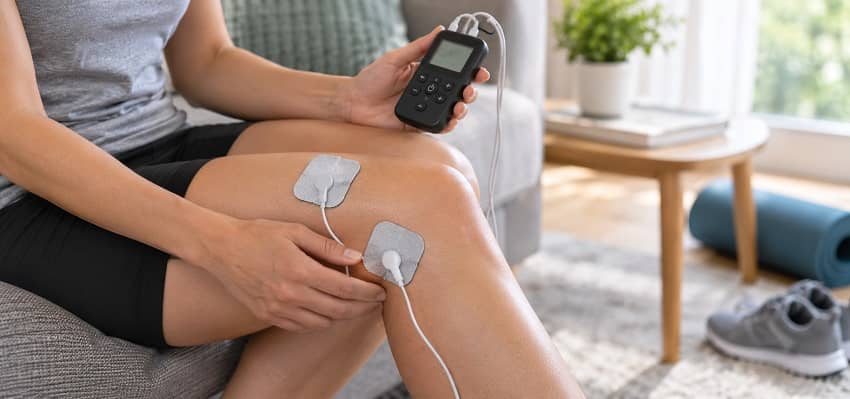
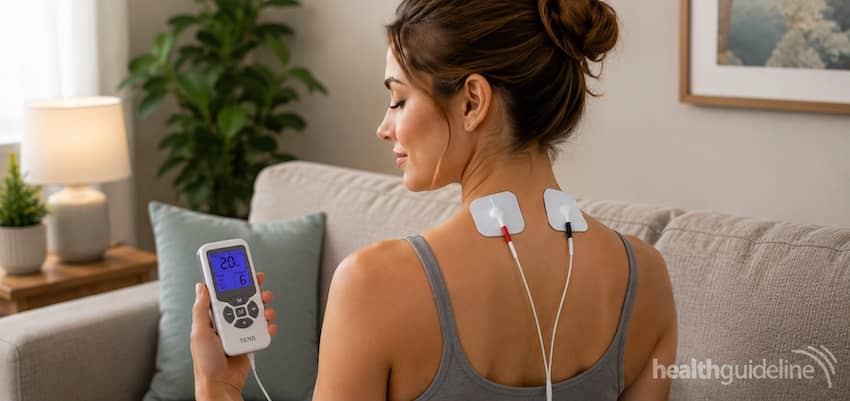
For neck pain, place the pads on the muscles between your neck and shoulders (the trapezius) and on either side of your spine — never on the front or sides of your neck. Use at least two pads (four for wider pain), keep them at least an inch apart, and apply them to clean, dry, unbroken skin with the unit switched off.
A few practical placement points, drawn from clinical guidance such as the University of Iowa Health Care pain-medicine handout and the StatPearls reference:
- Target the trapezius and upper back. Put one pad on each side of the sore area — for example, on the muscle ridge between the neck and each shoulder. If pain runs down the spine, place pads vertically on the left and right of the spine (on muscle, not directly over the bony spine).
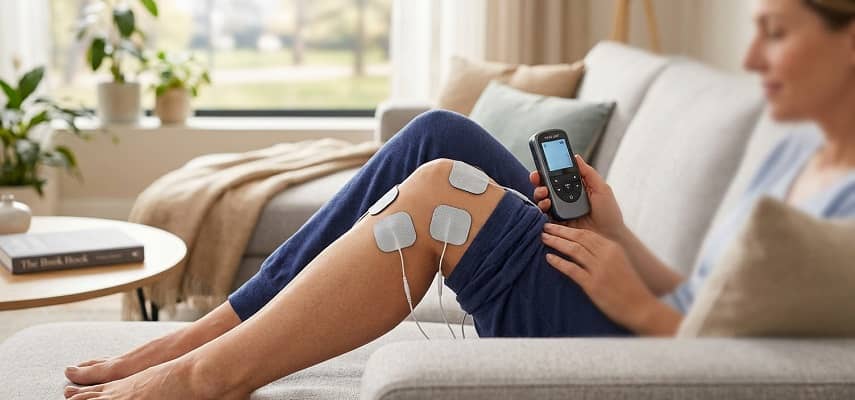
- Two pads minimum. A single pad won’t complete the circuit. Two pads suit a small area; four (dual channel) let you surround a wider band of pain.
- Keep pads about an inch apart and never let them touch.
- Apply to clean, dry, intact skin with normal sensation — not over broken, irritated, or numb skin.
- Switch the unit off before placing or removing pads, then start at the lowest intensity and increase slowly to a strong-but-comfortable tingle.
- Use it while you’re active. Guidance from University of Iowa Health Care notes TENS tends to work best when used during activity — light chores, walking, or gentle movement — for around 30 minutes, and less well while lying completely still.
Important safety rule: Do not place TENS pads on the front or sides of your neck or throat, or on your head or face. Electrical stimulation there can affect the nerves that regulate your heartbeat and blood pressure. Keep the pads on the back of the neck, the trapezius, and the upper shoulders only.
What to look for when buying a TENS unit for neck pain
Single vs dual channel
Dual-channel units power four pads, so you can “surround” a sore neck-and-shoulder area or treat two spots at once. Single-channel units (like the Omron Pocket Pain Pro) are simpler and cheaper but only run one pad pair.
Wired vs wireless
Wired units are cheaper and reliable; wireless pods (like the Omron Avail) are far more convenient for wearing under clothing at a desk. Choose based on how and where you’ll actually use it.
Preset modes vs manual control
Presets make things easy for beginners; manual control of pulse rate and width (as on the TENS 7000) lets experienced users fine-tune the sensation.
Rechargeable vs disposable batteries
Rechargeable units save money and hassle over time; battery-powered units are ready the moment you need them.
Intensity, pads and a timer
Look for enough adjustable intensity that you’re not maxed out, comfortable reusable pads in a size that fits the neck/shoulder area, and a built-in timer to keep sessions sensible.
About neck pain, and when a TENS unit can (and can’t) help
Neck pain has many causes — poor posture, prolonged screen and keyboard use, sleeping awkwardly, muscle strain, whiplash, stress-related muscle tension, and conditions like arthritis. A TENS unit doesn’t treat the underlying cause; it’s a tool for managing the symptom of pain, and the relief is generally temporary. Medical sources are candid that the evidence is mixed: research hasn’t definitively proven TENS works, but many people report real relief while using it, and it’s considered a low-risk option to try.
Think of TENS as one part of a broader plan that might include posture changes, gentle stretching and strengthening, heat or ice, and advice from a clinician or physical therapist — not a replacement for them.
Who should not use a TENS unit
TENS is not right for everyone. Avoid it, or speak to a healthcare professional first, if any of the following apply:
- You have a pacemaker, implanted defibrillator, spinal cord stimulator, or any implanted electronic or metallic device or pump.
- You are pregnant (use only if your doctor or midwife approves, and avoid the abdomen and pelvis).
- You have epilepsy — pads on the head or neck may trigger a seizure, which is an added reason to be cautious with neck use.
- You have heart problems, cancer, diabetes, or reduced skin sensation — check with your provider first.
- You have a nickel or adhesive allergy — the pads may irritate your skin.
- Don’t use TENS in the bath or shower, while sleeping, or while driving, and don’t combine it with a heating pad or cold pack on the same area.
When to see a professional
See a doctor promptly if your neck pain follows a significant injury or accident, or if it comes with any of these red flags: pain that radiates down an arm with numbness, tingling or weakness; a severe headache, fever, or stiff neck; dizziness, trouble with balance or coordination; problems with bladder or bowel control; or pain that is severe, steadily worsening, or not improving after a couple of weeks. These can signal something that needs assessment beyond home care. This article is for general information only and is not medical advice.
Frequently asked questions
Does a TENS unit really work for neck pain?
It helps some people and not others. High-quality evidence is limited, and researchers can’t yet say for certain how well it works. That said, many users get temporary relief while the device is running, and Cleveland Clinic describes it as effective for a lot of people. It eases symptoms rather than curing the cause.
Is it safe to use a TENS unit on your neck?
Yes, when placed correctly. Keep the pads on the muscles at the back of the neck and across the upper shoulders, and never on the front or sides of the neck, the throat, the head, or the face. Start at a low intensity, use a built-in timer, and stop if anything feels painful rather than a comfortable tingle.
How long and how often can I use a TENS unit?
Follow your device’s manual, but most people keep individual sessions to under about 60 minutes and take breaks between them. Overusing TENS or setting it too high can leave the skin sore or irritated. Rotate pad positions slightly to avoid repeatedly stimulating the exact same spot, and stop if pain worsens.
What’s the difference between TENS and EMS?
TENS (transcutaneous electrical nerve stimulation) targets sensory nerves to reduce pain and usually feels like a tingle. EMS (electrical muscle stimulation) targets motor nerves to make muscles contract, which supports recovery and conditioning. Combination units like the iReliev do both; for the neck itself, keep any strong EMS contractions to the shoulders and upper back.
Can a TENS unit help tension headaches?
It may help indirectly. Tension headaches are often driven by tight neck and upper-shoulder muscles, so easing that tension with correctly placed pads on the shoulders and base of the neck can sometimes help. Never place pads on your head or face. If headaches are frequent or severe, see a healthcare professional.
Do I need a prescription to buy a TENS unit?
No. Over-the-counter TENS units like the ones in this guide are sold without a prescription. Clinicians can also prescribe units, and physical therapists often use TENS in the clinic. If you have a medical condition or an implanted device, check with a professional before buying one.
Medical disclaimer: This article is for general information only and is not medical advice. Talk to a qualified healthcare professional about your specific situation, especially before using a TENS unit if you have a medical condition, an implanted device, or are pregnant.