SBD Knee Sleeves Review: 7mm vs 5mm (2026)
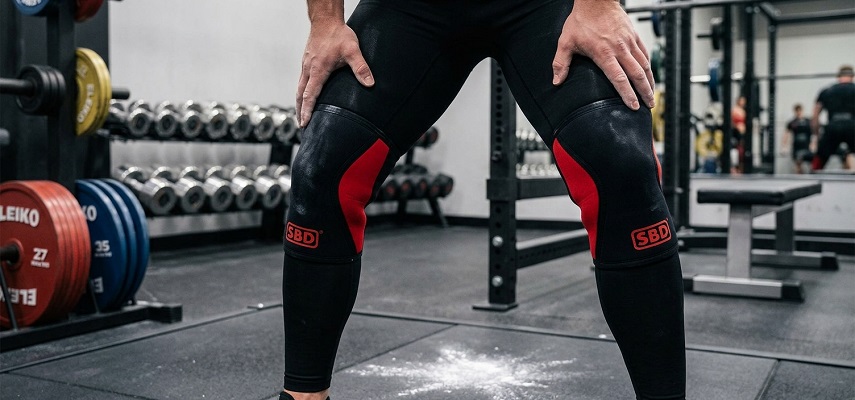
2026 SBD knee sleeves review · fit, compression & sizing
SBD knee sleeves now come in three clearly different performance-focused versions: the 7mm Training Knee Sleeves for versatile strength work, the denser 7mm Powerlifting Knee Sleeves for maximal compression, and the 5mm Weightlifting Knee Sleeves for more mobility. For most lifters, the standard 7mm Training model is the best all-round choice; competitive powerlifters may prefer the Powerlifting version, while Olympic-style lifters may be better served by the 5mm model.
Quick picks: which SBD knee sleeve should you buy?
Best overall
SBD 7mm Training
The most versatile option: high compression, a 30cm competition-legal length, and a snug fit that is easier to live with than the Powerlifting model.
Maximum compression
SBD 7mm Powerlifting
Built for competitive powerlifters and maximal attempts, with a denser, tighter construction than the standard 7mm Training sleeves.
Best mobility
SBD 5mm Weightlifting
A thinner, more flexible SBD sleeve for Olympic lifting, functional fitness, accessories, and lifters who dislike very stiff 7mm compression.
How we reviewed the current SBD knee sleeves
We compared the current SBD knee-sleeve lineup using SBD Apparel USA specifications, sizing and care guidance, competition-compliance information, and current Amazon US listings. We also checked published research on neoprene knee sleeves to separate plausible performance effects from claims that go beyond the evidence. We did not independently laboratory-test these sleeves, so comments about compression, fit and intended use are based on documented construction and manufacturer positioning rather than pretending we performed a hands-on comparison.
What changed from the old article? The old page treated a discontinued seasonal colorway as a separate sleeve and made broad claims about injury prevention and blood flow. The current SBD range is better understood as three constructions—7mm Training, 7mm Powerlifting and 5mm Weightlifting. Color collections may change, but the underlying sleeve type matters more than the color.
SBD knee sleeves compared at a glance
| Sleeve | Best for | Construction | Fit / compression | Approx. SBD price* |
|---|---|---|---|---|
| 7mm Training | Most strength training | 7mm high-grade neoprene; 30cm | High compression; moderate fitting | About $110 |
| 7mm Powerlifting | Meets and maximal squat attempts | Dense 7mm neoprene; 30cm | Maximal compression; tight fitting | About $145 |
| 5mm Weightlifting | Olympic lifting and dynamic training | 5mm high-grade neoprene | Moderate compression; easier fitting | About $110 |
Same thickness does not mean the same sleeve. The standard 7mm Training and 7mm Powerlifting models are both 7mm neoprene, but SBD positions the Powerlifting version as the denser, tighter, maximal-compression design. Choose based on the kind of lifting you do, not the “7mm” label alone.
SBD knee sleeves reviews: the three current options
01 / BEST OVERALL
SBD 7mm Training Knee Sleeves
SBD 7mm Training Knee Sleeves — view on Amazon are the best starting point for most people specifically shopping for SBD. They combine high compression with a less aggressive fit than SBD’s Powerlifting model, so they make more sense for regular squat sessions, heavy lower-body training and lifters who want one pair for both training and federation-compliant competition use.
Key features
- 7mm high-grade neoprene
- Full 30cm length
- Reinforced seam construction
- Antimicrobial inner lining
- Abrasion-resistant exterior
- Eleven sizes: 3XS to 5XL
- Manufactured by SBD in the United Kingdom
- IPF approved; USAPL/USPA and IWF compliant
Pros
- Most versatile SBD construction for everyday strength training
- Competition-legal dimensions and approvals for major lifting federations
- Wide size range
- More manageable fit than SBD’s maximal-compression Powerlifting sleeve
Cons
- Premium price compared with generic 7mm sleeves
- Still thick and warm for high-rep conditioning or long sessions
- Pull-on neoprene can be awkward if you choose an excessively tight size
Best for: Powerlifters, strength athletes and gym lifters who want one durable SBD sleeve for squats and general lower-body training.
Who should skip it: Olympic lifters who prioritize deep-knee-flexion mobility may prefer the 5mm version, while lifters chasing the most aggressive competition fit should compare the 7mm Powerlifting model.
02 / MAXIMUM COMPRESSION
SBD 7mm Powerlifting Knee Sleeves
SBD 7mm Powerlifting Knee Sleeves — view on Amazon are SBD’s most supportive current sleeve. The key difference is not thickness—both this model and the Training model are 7mm—but the denser, tighter construction designed to maintain maximal compression through knee flexion. That makes this the specialist option for powerlifting competition, heavy squat singles and lifters who deliberately want a demanding fit.
Key features
- Dense 7mm high-grade neoprene
- Maximal compression in SBD’s lineup
- Full 30cm length
- Reinforced seams and abrasion-resistant construction
- Antimicrobial inner lining
- Sizes 3XS to 5XL
- Manufactured by SBD in the United Kingdom
- IPF approved; USAPL/USPA and IWF compliant
Pros
- Highest-compression SBD option
- Purpose-built for powerlifting competition and maximal attempts
- Competition-compliant dimensions and approvals
- Reinforced construction for repeated aggressive fitting
Cons
- Most expensive of the three main SBD sleeve types
- Tightest and hardest to put on
- Overkill for many general gym sessions
- Less appealing if comfort and mobility matter more than maximal compression
Do not confuse “tighter” with “medically safer.” This is strength-sport equipment, not a treatment for knee pain or instability. If you have an injury, swelling, locking, giving-way episodes or unexplained pain, get appropriate clinical advice instead of simply sizing down for more compression.
Best for: Experienced powerlifters who specifically want maximal compression for heavy squats, competition attempts and meet preparation.
Who should skip it: Beginners, conditioning-focused athletes and anyone who dislikes fighting with very tight neoprene before a set.
03 / BEST FOR MOBILITY
SBD 5mm Weightlifting Knee Sleeves
SBD 5mm Weightlifting Knee Sleeves — view on Amazon trade some stiffness for easier movement. SBD positions them for Olympic weightlifting and dynamic training, where deep receiving positions, repeated transitions and a larger range of motion can make a dense powerlifting sleeve feel unnecessarily restrictive. They are also a sensible choice for lifters who want SBD build quality without the full feel of a 7mm sleeve.
Key features
- 5mm high-grade neoprene
- Moderate, movement-focused compression
- Reinforced seam construction
- Antimicrobial inner lining
- Abrasion-resistant exterior
- Sizes 3XS to 5XL
- Made by SBD in the United Kingdom
- IPF approved; USAPL/USPA and IWF compliant
Pros
- Easier to fit than the 7mm models
- More suitable for dynamic and technical lifting
- Still offers a structured neoprene feel and broad size range
- Useful for accessory work when 7mm sleeves feel too aggressive
Cons
- Less compression than either 7mm SBD option
- Not the obvious choice if your priority is maximum squat support
- Premium price for a thinner sleeve
Best for: Olympic weightlifting, functional-fitness sessions, accessories and lifters who want more knee mobility than a 7mm sleeve provides.
Who should skip it: Powerlifters buying specifically for the strongest possible compression on maximal squats.
Are SBD knee sleeves worth it?
SBD knee sleeves are worth considering when you care about strength-sport-specific construction, federation compliance, a very broad size range and the choice between mobility, general training compression and maximal powerlifting compression. They are harder to justify for casual lifters who only want inexpensive warmth or light compression, because there are much cheaper generic sleeves that can cover that simpler use case.
The strongest reason to choose SBD is not that the sleeves magically protect an injured knee. It is that SBD gives strength athletes three purpose-built constructions with clear differences in thickness and compression. If you compete, the current approvals are also practical: SBD lists the main sleeve models as IPF approved and compliant with USAPL/USPA and IWF rules.
If you are still comparing brands, see our Rehband knee sleeves review, RockTape knee sleeves review, compression knee sleeves guide, and knee sleeves for CrossFit guide.
How to measure for SBD knee sleeves
SBD’s current instructions are more specific than the old version of this article. With your leg straight and muscles relaxed, measure around the center of the kneecap and around the widest part of the calf. Use the larger measurement to select a size. SBD also says that if the calf is more than 1.6 inches (4cm) larger than the knee, sizing up may produce a better fit.
| Size | Knee joint (cm) | Knee joint (inches) |
|---|---|---|
| 3XS | 23–25.5 | 9–10 |
| 2XS | 25.5–28 | 10–11 |
| XS | 28–30.5 | 11–12 |
| S | 30.5–33 | 12–13 |
| M | 33–35.5 | 13–14 |
| L | 35.5–38 | 14–15 |
| XL | 38–40.5 | 15–16 |
| 2XL | 40.5–43 | 16–17 |
| 3XL | 43–45.5 | 17–17.9 |
| 4XL | 45.5–48 | 17.9–18.9 |
| 5XL | 48–51.5 | 18.9–20.3 |
Recommended fit or size down?
SBD says a regular fit should feel snug and suggests that people who are new to knee sleeves start with the recommended size rather than automatically sizing down. Experienced powerlifters sometimes choose a tighter fit, but a smaller size makes sleeves harder to put on and is not automatically better for training. If you are between sizes, your calf measurement and the exact sleeve model matter.
Practical sizing tip: Measure both the kneecap and the widest part of the calf with the leg straight and relaxed. Do not choose a size from body weight or pants size. If a sleeve causes numbness, tingling, marked color change or pain, remove it rather than assuming extreme tightness is desirable.
How should you wash SBD knee sleeves?
SBD recommends hand washing its knee sleeves with water and a mild detergent or neoprene/wetsuit detergent, then air drying them upright. The company specifically warns against machine washing and high heat because a spin cycle can damage bulky wet sleeves and heat can degrade neoprene, potentially making it brittle or causing shrinkage.
- Rinse after sweaty sessions. Do not leave damp neoprene sealed in a gym bag.
- Hand wash. Use cool or lukewarm water with a small amount of mild detergent.
- Air dry. Keep them away from a dryer, radiator or other high heat.
- Inspect the seams. Replace or repair a sleeve if the structure is damaged enough that it no longer holds its intended fit.
Do knee sleeves improve squat performance or prevent injury?
Research suggests neoprene knee sleeves can change how some lifters perform or perceive a squat, but the evidence is small, mixed and not specific to SBD. A 2021 study of 15 resistance-trained men found that normal and tighter neoprene sleeves were associated with a higher squat 1RM than a minimally supportive control sleeve, while other tested strength, power and endurance measures did not improve. A 2024 exploratory study of 17 male CrossFit participants found only small biomechanical changes but reported greater perceived knee stability while wearing 7mm sleeves.
What the studies actually show
In the 2021 randomized crossover study, squat 1RM averaged 166kg with the normal-size neoprene sleeve and 166kg with the tighter sleeve, versus 161kg with the minimally supportive control sleeve. The authors did not find improvements in the other tested performance measures.
The 2024 CrossFit study found that 7mm knee sleeves produced only limited changes in measured knee biomechanics. Most participants reported feeling more stable, but perception of stability is not proof that a sleeve prevents injury.
Do not treat knee sleeves as injury-prevention insurance. The available studies are small and do not show that SBD sleeves prevent ACL tears, meniscus injuries, tendinopathy or other knee problems. Sleeves also do not replace appropriate technique, load management, strength development or medical assessment when symptoms are present.
Should you wear SBD knee sleeves for knee pain or an injury?
SBD knee sleeves are strength-training equipment, not a diagnosis or treatment. If you have new or worsening knee pain, substantial swelling, locking, repeated giving way, inability to bear weight, a recent traumatic injury, numbness or other concerning symptoms, get advice from a qualified healthcare professional. A sleeve that feels supportive during squats should not be used to mask symptoms that need assessment.
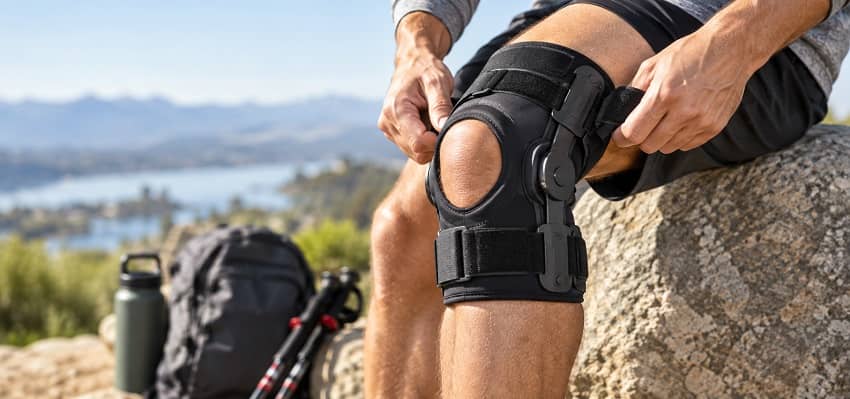
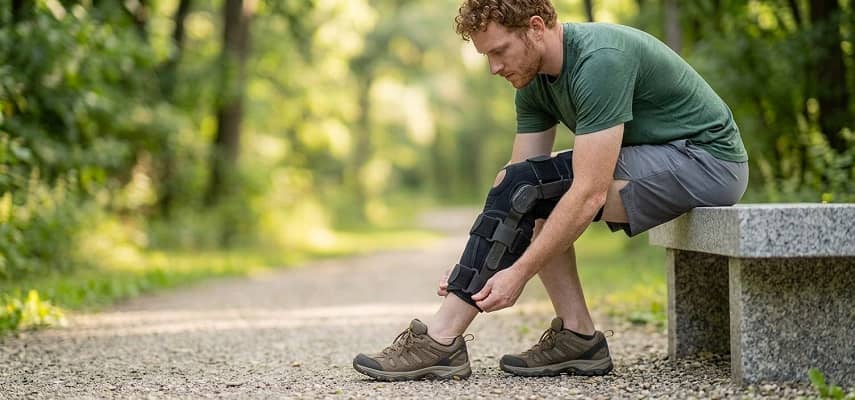
For broader support options, see our knee brace guide. A brace and a lifting sleeve are not interchangeable: medical braces may use hinges, straps or specific movement control, while SBD sleeves are neoprene pull-on supports designed for strength sports.
Frequently asked questions about SBD knee sleeves
Which SBD knee sleeves are best for most lifters?
The 7mm Training Knee Sleeves are the best all-round SBD option for most strength athletes. They offer high compression and competition-compliant dimensions without the maximal tightness of the Powerlifting model. Choose the 7mm Powerlifting sleeves when maximum compression is the priority, or the 5mm Weightlifting sleeves when mobility matters more.
What is the difference between SBD 7mm Training and 7mm Powerlifting sleeves?
Both are 7mm neoprene, but SBD describes the Powerlifting version as denser, tighter and designed for maximal compression during competition lifts. The standard 7mm Training sleeve is positioned as the more versatile, moderately fitting option for regular strength training. Thickness alone therefore does not tell you how aggressive the sleeve will feel.
Are SBD knee sleeves sold as a pair?
Current SBD product documentation describes its knee sleeves as pairs. Still, confirm the exact Amazon or retailer listing before checkout because marketplace listings can vary by seller, bundle and size selection.
Are SBD knee sleeves IPF approved?
Yes. As checked in September 2026, SBD lists its 7mm Training, 7mm Powerlifting and 5mm Weightlifting sleeves as IPF approved. The company also lists them as compliant with USAPL/USPA and IWF requirements. Competition rules can change, so verify the current federation equipment list before a meet.
Should I size down in SBD knee sleeves?
Not automatically. SBD says a regular fit should be snug and recommends that new sleeve users choose the charted size rather than immediately sizing down. A tighter fit can be useful for some experienced powerlifters, but it is harder to put on and is not necessarily better for every session or athlete.
Can I machine wash SBD knee sleeves?
SBD recommends hand washing and air drying. The company warns that machine spin cycles can damage heavy wet sleeves and that high heat can degrade neoprene. Use water with mild detergent or a neoprene/wetsuit detergent, then let the sleeves dry naturally.
Do SBD knee sleeves prevent knee injuries?
There is not enough evidence to say SBD sleeves prevent knee injuries. Small studies of neoprene sleeves have found some performance or biomechanical effects and improved perceived stability, but those findings do not establish protection from ACL, meniscus, tendon or other injuries. Use sleeves as training equipment, not as a substitute for assessment or rehabilitation.
This article provides general information and product research, not medical advice. Talk to a qualified healthcare professional about persistent pain, injury, rehabilitation or whether a sleeve is appropriate for your situation.