Best Osgood Schlatter Knee Braces: 6 Support Picks for 2026
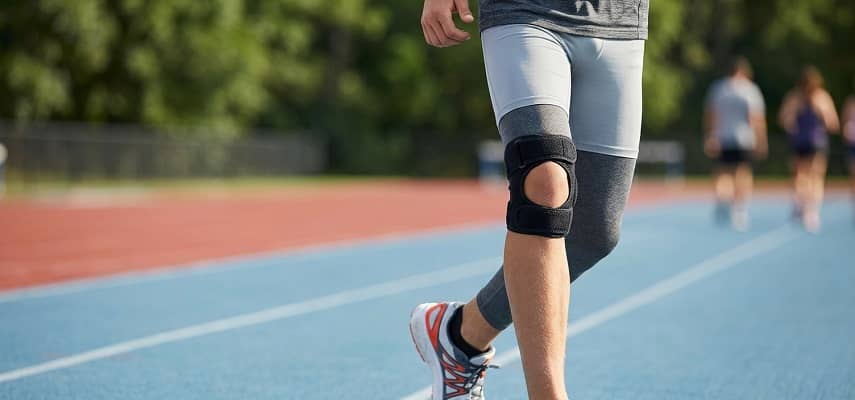
2026 buying guide · Osgood-Schlatter support for active kids & teens
The best Osgood Schlatter knee brace is usually a well-fitting patellar tendon strap rather than a bulky hinged brace. A strap sits below the kneecap and may reduce strain or discomfort around the patellar tendon during activity. It does not cure Osgood-Schlatter disease, and the right size matters especially for children and teens.
What are the best Osgood Schlatter knee braces?
For most people with a confirmed diagnosis, a simple strap that applies adjustable pressure below the kneecap is the most practical starting point. Our top choices emphasize smaller size options, targeted patellar-tendon compression, low bulk for sports, and clear fitting instructions. A full knee brace is usually unnecessary unless a clinician recommends one for another knee problem.
Best overall
Cho-Pat Original Knee Strap
Multiple measured sizes, including a small 10–12.5 inch range, make it easier to fit a smaller leg than many one-size straps.
Best size range for teens
ZAMST JK Band
Five sizes from XS through XL, with the US/EU XS range starting at about 9.5 inches below the knee.
Best budget 2-pack
Bodyprox 2 Pack
A simple adjustable two-strap set for families who want a spare or need support for both knees, provided the fit works.
How we chose these Osgood Schlatter supports
This is a desk-research comparison, not a hands-on clinical test. We checked current manufacturer information, US availability, Amazon listing identifiers, sizing, closure design and whether the product is intended for pressure below the kneecap or patellar tendon. We gave extra weight to products with smaller measured sizes because Osgood-Schlatter disease mainly affects growing children and adolescents.
We did not rank products by star rating, review count or marketing claims. A brace that fits poorly is a poor choice even if it is popular. Category labels below are editorial judgments about design and fit, not proof that one device treats the condition better than another.
Most important buying rule: measure the leg before ordering. “Youth,” “adult” and “one size” labels are less useful than the manufacturer’s actual circumference chart.
Osgood Schlatter knee braces compared
| Support | Our category | Design | Sizing note | Price position |
|---|---|---|---|---|
| Cho-Pat Original Knee Strap | Best overall | Single infrapatellar strap with support tubing | Small starts at 10–12.5 in. | Lower-cost strap |
| Pro-Tec Knee Pro-Tec | Best easy-adjust strap | Neoprene-style strap with front closure and compression tubing | Multiple measured sizes; check exact variant | Lower-cost strap |
| ZAMST JK Band | Best size range for teens | Low-profile band with internal PT pad | XS–XL; XS starts around 9.5 in. | Lower-to-mid range |
| Mueller Jumper’s Knee Strap | Best wide adjustment range | Adjustable strap with tubular insert | One size; manufacturer range 10–22 in. | Lower-cost strap |
| Bodyprox Patella Tendon Strap 2 Pack | Best budget 2-pack | Adjustable strap with silicone gel padding | One-size design; confirm fit on smaller legs | Budget 2-pack |
| CAMBIVO Patella Tendon Straps 2 Pack | Best spare-pair option | Adjustable patellar bands with padded pressure point | One-size design; verify circumference before buying | Budget 2-pack |
Six Osgood Schlatter knee brace and strap picks
01 / BEST OVERALL
Cho-Pat Original Knee Strap
Cho-Pat Original Knee Strap — view on Amazon is our best overall starting point because it combines a simple below-kneecap design with unusually practical sizing for smaller legs. The manufacturer lists a Small size for a 10–12.5 inch circumference measured below the kneecap, then progressively larger sizes.
Key features
- Low-profile single-strap design
- Support tubing applies targeted pressure below the kneecap
- Five listed size ranges from Small through XXLarge
- Can be worn on either knee
Pros
- Smaller measured size option than many one-size bands
- Minimal bulk for running, basketball, soccer and similar sports
- Simple to remove if it becomes uncomfortable
Cons
- Single strap gives less whole-knee compression than a sleeve
- The Amazon link may open a specific size, so re-check the variant
- Not suitable when a clinician has recommended immobilization or a different brace
Best for: A child, teen or adult whose below-knee circumference matches one of the Cho-Pat sizes and who wants a simple infrapatellar strap.
Not ideal for: Anyone who needs side-to-side ligament support, a hinged brace or full-knee stabilization for a separate diagnosis.
02 / EASY-ADJUST STRAP
Pro-Tec Athletics Knee Pro-Tec Patellar Tendon Strap
Pro-Tec Athletics Knee Pro-Tec — view on Amazon is built around direct compression below the kneecap. Pro-Tec specifically lists Osgood-Schlatter disease among its intended applications, and its front hook-and-loop placement makes compression easy to adjust without reaching directly behind the knee.
Key features
- Compression focused on the patellar tendon
- Front fastening reduces closure pressure at the back of the knee
- Side loop helps with leverage during adjustment
- Multiple sizes based on circumference below the kneecap
Pros
- Manufacturer specifically references Osgood-Schlatter disease
- Easy to fine-tune compression
- Low-profile design for activity
Cons
- Amazon ASINs may differ by size
- A measured fit is still essential for a growing child
- Provides targeted pressure, not ligament stabilization
Best for: People who want a traditional patellar strap with a closure that is easy to adjust during activity.
Not ideal for: Someone who dislikes neoprene-style sports supports or whose circumference falls outside the available size chart.
03 / BEST SIZE RANGE FOR TEENS
ZAMST JK Band
ZAMST JK Band — view on Amazon stands out for a broad XS-to-XL size range. ZAMST’s US page lists the band for below-kneecap strain and specifically mentions growing pains/Osgood-Schlatter disease. The internal PT pad applies pressure below the kneecap without using a hard side frame.
Key features
- XS, S, M, L and XL size options
- Internal PT pad for focused below-kneecap pressure
- Low-profile band design with no rigid side hardware
- Fits either left or right knee
Pros
- XS range begins around 9.5 inches below the knee
- Easy to put on without removing shoes
- Purpose-built for pressure below the kneecap
Cons
- Light support only; not a stabilizing brace for a ligament injury
- Different regional versions can use different size labels
- Must be positioned accurately to avoid ineffective pressure
Best for: Teens and smaller-legged users who want more size choice than a typical one-size patellar band.
Not ideal for: A knee that feels unstable, gives way or has a suspected acute injury requiring assessment.
04 / WIDE ADJUSTMENT RANGE
Mueller Jumper’s Knee Strap
Mueller Jumper’s Knee Strap — view on Amazon uses a tubular insert to apply mild pressure below the kneecap. Mueller’s current US product page lists Osgood-Schlatter disease among the conditions the strap is intended to support and gives a broad 10–22 inch one-size range.
Key features
- Adjustable below-kneecap strap
- Tubular insert for uniform tendon pressure
- Manufacturer range of 10–22 inches around the knee
- Fits left or right knee
Pros
- Broad adjustment range
- Simple, low-profile construction
- Current manufacturer listing specifically mentions Osgood-Schlatter
Cons
- One-size designs can still fit poorly at either end of the range
- Contains a neoprene blend, which may irritate sensitive skin
- Does not stabilize the whole knee
Skin sensitivity: Mueller lists a neoprene blend and warns that it may cause allergic reactions. Stop using the strap if it causes a rash or significant irritation.
Best for: Buyers who want a simple one-size strap but still need a relatively broad adjustment range.
Not ideal for: Anyone with a known neoprene sensitivity or a child whose leg is too small for a secure fit.
05 / BUDGET 2-PACK
Bodyprox Patella Tendon Knee Strap 2 Pack
Bodyprox Patella Tendon Knee Strap 2 Pack — view on Amazon is a budget-friendly option with silicone gel padding and adjustable hook-and-loop fastening. The two-pack is convenient for bilateral symptoms or for keeping a spare in a sports bag, but the one-size format deserves extra scrutiny for younger users.
Key features
- Two straps per Amazon listing
- Silicone gel padding beneath the strap
- Adjustable hook-and-loop fastening
- Vented interior intended to release heat
Pros
- Two-pack can cover both knees
- Low-profile compared with a full sleeve
- Easy to tighten or loosen during activity
Cons
- One-size design may be too large for a small child
- Padding can feel bulky if positioned directly over a tender bony bump
- Manufacturer marketing is broader knee support, not an Osgood-specific clinical device
Best for: Older teens or adults whose leg size works with the strap and who value a two-pack.
Not ideal for: Small children or anyone who cannot position the padded section comfortably below the kneecap.
06 / SPARE-PAIR OPTION
CAMBIVO Patella Tendon Knee Straps 2 Pack
CAMBIVO Patella Tendon Knee Straps 2 Pack — view on Amazon is another inexpensive two-pack that appears in current Amazon US patellar-strap listings and is marketed for Osgood-Schlatter, jumper’s knee and tendon discomfort. It is most useful when its one-size adjustment range matches the wearer comfortably.
Key features
- Two patellar straps in the Amazon listing
- Adjustable pressure below the kneecap
- Padded contact area
- Designed for running, jumping and court-sport use
Pros
- Low upfront cost for two straps
- Quick to adjust
- Low bulk for sports
Cons
- One-size fit is less precise than Cho-Pat or ZAMST sizing
- Exact strap design may change by listing version
- Not a substitute for diagnosis or rehabilitation
Best for: A value-focused buyer who wants a spare pair and can verify that the adjustment range suits the wearer.
Not ideal for: Small legs that need a precisely sized pediatric support.
How can a knee strap help Osgood-Schlatter disease?
A patellar tendon strap may make activity more comfortable by applying gentle pressure just below the kneecap and changing how force is distributed through the tendon. Johns Hopkins notes that some athletes with Osgood-Schlatter disease find a patellar tendon strap helpful. The strap is symptom support, not a cure for the irritated growth area.
What Osgood-Schlatter actually is
Osgood-Schlatter disease causes pain and swelling where the patellar tendon attaches to the tibial tubercle, the bony area below the kneecap. It commonly appears during growth spurts and is aggravated by repeated running, jumping, squatting and similar loading in active children and adolescents.
Cleveland Clinic explains the general mechanism of a patellar band as gentle pressure on the patellar tendon, which can redistribute force during high-impact activity. That mechanism is one reason these straps are commonly considered for pain below the kneecap. It does not mean a strap will work for every child or that wearing one makes painful activity automatically safe.
If you are comparing similar devices, see our patellar tendon strap guide and patellar tendonitis brace guide.
What should you look for in an Osgood Schlatter knee brace?
Look first at the diagnosis and the size chart, not the number of straps. For classic Osgood-Schlatter pain below the kneecap, a targeted patellar band is often more practical than a bulky hinged brace. The best choice should stay in place without numbness, pinching, skin irritation or pressure directly on a painfully swollen bump.
1. Measure the leg, especially for a child or teen
Growth makes sizing tricky. Measure exactly where the brand instructs, usually just below the kneecap. A “one-size” adult strap may technically close around a smaller leg but still slide, twist or place its pad in the wrong location. Cho-Pat and ZAMST are stronger choices when a small measured size is needed.
2. Prefer targeted pressure over unnecessary rigidity
Osgood-Schlatter disease is not a ligament-instability problem. A rigid hinged brace is not automatically better and may add bulk without targeting the painful area. If the knee also gives way, locks, swells substantially or was injured suddenly, the issue may be something else and should be assessed before choosing a brace.
For broader support categories, see our general knee brace guide and chondromalacia knee brace guide.
3. Check skin-contact materials
Many straps use neoprene, rubber, silicone or elastic blends. Sweat, friction and repeated use can irritate sensitive skin. Check the exact material list, especially with a known latex or neoprene allergy, and stop using a strap that causes a persistent rash, burning or swelling.
4. Keep the brace low-profile for sports
A strap should not interfere with knee bending, sprinting or landing mechanics. Low-profile bands are easier to wear under shorts and are less likely to bunch behind the knee. If a strap changes how the athlete runs or jumps, reassess the fit instead of simply tightening it harder.
5. Choose adjustability without over-tightening
The goal is gentle, secure pressure. More compression is not necessarily better. Excessive tightness can cause numbness, tingling, color change, skin marks or discomfort. A strap should never be used as a tourniquet or as a way to force participation through significant pain.
How do you fit a patellar strap for Osgood-Schlatter?
Position the strap according to the exact manufacturer instructions, usually just below the kneecap over the patellar tendon rather than directly across the kneecap. Tighten only until it feels secure and supportive. The wearer should be able to bend and straighten the knee comfortably without numbness, tingling or color change in the lower leg.
- Measure before the first wear. Use the brand’s own size chart rather than guessing from age, height or shoe size.
- Find the patellar tendon. It runs from the bottom of the kneecap toward the tibial tubercle. Follow the product instructions for the exact pressure point.
- Tighten gradually. The strap should feel supportive, not painful. Do not chase more relief by repeatedly tightening it.
- Test normal movement. Walk, bend and straighten the knee. If the band slides, pinches or changes movement mechanics, refit it or try a different size.
- Recheck after activity. Look for persistent redness, rubbing or swelling and ask the wearer whether there was numbness, tingling or increased pain.
Do not place extra pressure directly on a very tender, swollen tibial tubercle just because the condition is called Osgood-Schlatter. Follow the device instructions and a clinician’s fitting advice if the correct position is unclear.
What else helps Osgood-Schlatter besides a brace?
A brace is only one optional tool. Medical guidance emphasizes reducing or modifying activities that clearly worsen pain, using ice after aggravating activity, and maintaining flexibility and strength with appropriate exercises or physical therapy. Symptoms generally improve as growth finishes, though the tender bony bump can remain.
- Activity modification: reduce running, jumping, deep squatting or other movements that cause substantial pain or limping.
- Cold therapy: use ice or a cold pack wrapped in cloth after activity as directed by a healthcare professional or trusted medical source.
- Flexibility: hamstring and quadriceps stretching is commonly included in rehabilitation plans.
- Strength and movement control: a physiotherapist can tailor exercises to the athlete’s age, sport, symptoms and growth stage.
- Kneepad protection: useful when direct contact with the tender bump is a problem in sports that involve kneeling or falls.
Sports participation is symptom-guided, not brace-guided. A strap does not prove that the knee is ready for full practice or competition. If activity causes a limp or pain that is clearly worsening, reduce the load and get professional advice.
For athletes who prefer compression rather than a narrow strap, our knee compression sleeve guide explains the differences. Compression sleeves provide a different type of support and should not be assumed to work the same way as an infrapatellar strap.
When should knee pain be checked by a professional?
Osgood-Schlatter is usually diagnosed from the history and physical examination, but not every painful bump below the knee is Osgood-Schlatter. Seek assessment if the diagnosis is uncertain, symptoms persist despite sensible load reduction, or pain is interfering with walking, sleep, school or sport. Sudden injury symptoms need a different level of caution.
Get prompt medical help for red flags
- Inability to put weight on the leg
- Severe pain after a fall, jump, collision or other injury
- Marked swelling or a knee that has changed shape
- A locked knee or inability to fully bend or straighten it
- Fever with a red, hot, swollen knee
- Persistent numbness, unusual color change or worsening symptoms
If the pain followed a different knee injury, you may also find our medial meniscus tear guide useful for background, but a new injury should be assessed rather than self-diagnosed from an article.
Frequently asked questions
Does a knee brace cure Osgood-Schlatter disease?
No. A patellar strap may make activity more comfortable for some people, but it does not remove the underlying growth-related irritation. Osgood-Schlatter usually improves as growth finishes. Activity modification, flexibility, strength work and time are more important than relying on a brace alone.
Is a patellar strap or full knee brace better for Osgood-Schlatter?
For classic pain at the tibial tubercle, a simple patellar tendon strap is often the more targeted and less bulky option. A full brace may be useful when there is another diagnosis or when a clinician specifically recommends broader support. More coverage does not automatically mean better Osgood-Schlatter relief.
Where should an Osgood-Schlatter strap sit?
Most patellar straps are positioned just below the kneecap over the patellar tendon, but you should follow the exact instructions for the device. The pressure should be gentle and comfortable. Do not simply tighten a strap directly over the most painful bony bump without checking the intended placement.
Can a child play sports while wearing an Osgood-Schlatter brace?
Often yes, if symptoms remain mild and activity does not cause a limp or a clear worsening afterward. The brace itself is not clearance to play through significant pain. A sports medicine clinician or physiotherapist can help adjust training load and decide when full practice and competition are appropriate.
How tight should a patellar tendon strap be?
It should feel secure with gentle pressure, not constricting. Loosen or remove it if the wearer develops numbness, tingling, color change, increasing pain or significant skin irritation. A tighter strap is not necessarily more effective, and excessive compression can create new problems.
Can adults have Osgood-Schlatter pain?
Osgood-Schlatter begins while the growth plate is active, so it is primarily a childhood and adolescent condition. Some adults who had it when younger can remain tender around the tibial tubercle or have pain with kneeling. New adult knee pain should be assessed rather than assumed to be active Osgood-Schlatter disease.
What size knee brace should I buy for a teen?
Measure the circumference exactly where the manufacturer instructs and choose from that chart. Age alone is not a reliable size guide. For smaller legs, products with multiple measured sizes such as Cho-Pat or the ZAMST JK Band can be easier to fit than a generic one-size strap.
Medical disclaimer: This article is for general information only and is not medical advice. Talk to a qualified healthcare professional about a child’s or teen’s knee pain, diagnosis, brace choice and return to sport.