Women’s Non Slip Restaurant Shoes: 5 Best in 2026
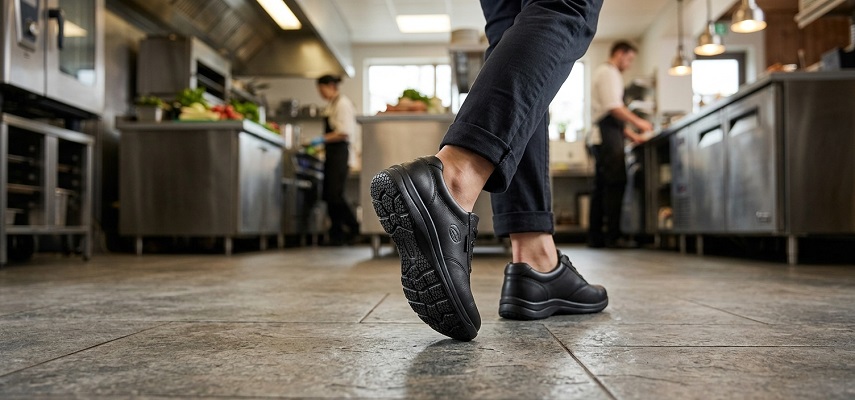
2026 restaurant footwear guide · traction, comfort & cleanup
Women’s non slip restaurant shoes should combine verified work-shoe traction, a secure fit and enough comfort for hours of standing and walking. For most servers and front-of-house workers, the Skechers Work Squad SR is our best all-around pick. The Shoes For Crews Everlight is lighter, while the Crocs Bistro Pro LiteRide is easier to clean after messy back-of-house shifts.
“Non-slip” is not an absolute guarantee. Footwear is more accurately described as slip-resistant. Traction changes with floor material, water, oil, grease, tread wear and contamination. Your employer’s footwear policy should come first.
Quick picks
Best overall
Skechers Work Squad SR
A relaxed-fit work sneaker with a slip-resistant rubber outsole and cushioned insole. Strong fit for servers and front-of-house roles.
Lightest option
Shoes For Crews Everlight
A very light, water-resistant work sneaker with an easy-clean tread and a current ASTM F3445-24 SRO claim from the manufacturer.
Best for cleanup
Crocs Bistro Pro LiteRide
A fully molded work clog with an enclosed toe, Crocs Lock tread and soap-and-water cleanup for messy kitchen environments.
JUMP TO A SECTION
How we chose these women’s non slip restaurant shoes
We looked for women’s work shoes that are currently represented on Amazon US and that have specific slip-resistant features documented by the brand or current product listing. We prioritized restaurant-relevant details: traction on wet or oily surfaces, closed-toe coverage, cleanability, cushioning, width or fit options, and whether the upper makes sense around spills.
We also checked the safety context against the National Institute for Occupational Safety and Health (NIOSH) and OSHA restaurant-safety guidance. Category labels such as “best overall” are editorial judgments about features and use cases; they are not results from a laboratory head-to-head test.
Best women’s restaurant shoes at a glance
| Shoe | Best for | Slip-resistant evidence | Upper / cleanup | Before you buy |
|---|---|---|---|---|
| Skechers Work Squad SR | Best overall | Skechers slip-resistant work outsole; Amazon lists traction for wet, dry and oily surfaces | Synthetic/knit upper | Pull-on stretch-lace fit is less adjustable than a true lace-up |
| Shoes For Crews Everlight | Lightweight shifts | Manufacturer currently lists ASTM F3445-24 SRO TRACTIONiQ outsole | Water-resistant knit; easy-clean tread | Water-resistant is not the same as waterproof |
| Crocs Bistro Pro LiteRide | Easy cleanup / back of house | ASTM F2913-24 tested and ASTM F3445-24 certified per Crocs | Fully molded; soap-and-water cleanup | Roomy clog fit; check employer rules for heel coverage |
| New Balance 626v2 | Leather + width options | Amazon lists ASTM F2913-19 slip testing and ASTM D471-16a oil-resistance testing | Leather upper; non-marking outsole | Heavier and less breathable than knit options |
| Dansko XP 2.0 | Premium supportive clog | Dansko lists a slip-resistant rubber outsole for dry, wet and oily/wet surfaces | Leather; selected styles are wipe-clean or waterproof leather | EU whole-size fit and clog heel movement take getting used to |
The Five Women’s Non Slip Restaurant Shoes
01 / BEST OVERALL
Skechers Women’s Work Squad SR Food Service Shoe
The Skechers Work Squad SR is the most balanced choice here for servers, hosts and other restaurant workers who prefer a sneaker feel. The current Amazon listing combines a slip-resistant rubber traction outsole with a roomy Relaxed Fit shape, a Memory Foam insole and an easy pull-on stretch-lace front.
Key features
- Slip-resistant rubber traction outsole listed for wet, dry and oily surfaces
- Air-Cooled Memory Foam cushioned insole
- Relaxed Fit design with extra room through the toe and forefoot
- Pull-on construction with stretch laces
- Electrical Hazard safe design tested to ASTM F2892 according to the listing
- Closed-toe, low-top work-shoe profile
Pros
- Sneaker-like feel works well for walking-heavy shifts
- Roomier forefoot than many narrow work shoes
- Quick on/off without tying laces during every shift
Cons
- Stretch-lace pull-on fit gives less fine adjustment than conventional laces
- Knit/synthetic upper is not as simple to wipe down as a fully molded clog
- Not our first choice for frequent heavy splashes in a wet kitchen
Best for: Servers, hosts, baristas and front-of-house workers who want a familiar athletic-shoe feel with a purpose-built slip-resistant outsole.
Who should skip it: Workers who need a waterproof or fully wipe-clean upper, or anyone whose employer requires a different certified footwear standard.
If you like Skechers work footwear, our Skechers work-shoe guide for nurses covers other long-shift options.
02 / BEST LIGHTWEIGHT
Shoes For Crews Everlight Women’s Work Sneaker
The Everlight stands out when shoe weight is a priority. Shoes For Crews lists the women’s model at 6.75 ounces per shoe and pairs its lightweight foam construction with a water-resistant knit upper, easy-clean tread and a current TRACTIONiQ outsole rated SRO under ASTM F3445-24.
Key features
- TRACTIONiQ slip-resistant outsole currently listed as ASTM F3445-24 SRO
- Easy-clean tread intended to reduce debris buildup
- Water-resistant, breathable knitted upper
- Extra EVA cushioning in the midsole
- Lightweight construction
- Medium and wide options listed by Shoes For Crews
Pros
- One of the lightest shoes in this shortlist
- Current manufacturer page provides a specific slip-resistance standard
- Water-resistant upper is useful for routine splashes
- Wide option can help shoppers who need more forefoot room
Cons
- Water-resistant does not mean waterproof
- Knit upper is less protective from large hot-liquid spills than a more substantial closed work shoe
- A very light foam feel may not suit people who prefer a firmer, more structured shoe
Best for: Servers and hospitality workers who prioritize low shoe weight and want a purpose-built work outsole.
Who should skip it: Workers who routinely face heavy liquid exposure or need a rigid, leather or protective-toe work shoe.
03 / BEST FOR EASY CLEANUP
Crocs Bistro Pro LiteRide Work Clog
The Bistro Pro LiteRide is the easiest shoe in this group to clean after a messy shift. Crocs uses a fully molded upper, enclosed toe and thicker metatarsal area, then adds LiteRide cushioning and Crocs Lock slip-resistant tread. The current manufacturer page lists ASTM F2913-24 testing and ASTM F3445-24 certification.
Key features
- Crocs Lock slip-resistant tread
- ASTM F2913-24 tested and ASTM F3445-24 certified per Crocs
- Fully molded construction cleans with soap and water
- Enclosed toe and thicker material over the metatarsal area
- LiteRide foam insole
- Pivoting heel strap
Pros
- Very easy to rinse and wipe clean
- Upper does not rely on absorbent knit fabric
- Specific current slip-testing and certification details are published by Crocs
- Useful option for kitchen, dish and food-prep environments
Cons
- Roomy clog fit is very different from a lace-up sneaker
- Amazon’s current listing says the model runs large, so sizing deserves extra attention
- Some restaurants require a fully closed heel or a different dress-shoe appearance
Check the uniform policy before buying. The Bistro Pro has an enclosed toe and heel strap, but a workplace may define “closed shoe” or required heel coverage more strictly.
Best for: Back-of-house, food-prep and dish-area workers who value easy cleaning and a molded upper.
Who should skip it: Anyone who dislikes clog movement, needs a conventional lace-up fit or works under a policy that excludes clog-style footwear.
For more context on this footwear style, see our Crocs long-shift footwear guide.
04 / BEST LEATHER + WIDTH OPTIONS
New Balance Women’s 626v2 Slip Resistant Work Shoe
The New Balance 626v2 is the structured alternative to lightweight mesh work sneakers. Its leather upper, compression-molded midsole and non-marking outsole suit shoppers who want a more substantial work shoe. The current Amazon listing cites ASTM F2913-19 slip-resistance testing and ASTM D471-16a oil-resistance testing for the outsole.
Key features
- Leather upper
- Compression-molded midsole
- Non-marking outsole
- Slip-resistant outsole properties listed as tested to ASTM F2913-19
- Oil-resistant outsole properties listed as tested to ASTM D471-16a
- New Balance’s work-shoe range includes multiple width choices; verify the exact 626v2 variant available in your size
Pros
- Leather is easier to wipe than open knit after small splashes
- More structured feel than ultralight foam sneakers
- Specific slip- and oil-resistance test references are published for the model
- Useful brand to check when standard-width restaurant shoes feel too narrow
Cons
- Leather construction is heavier and warmer than the Everlight
- Availability on Amazon can differ sharply by size and width
- Not a waterproof kitchen shoe unless the exact version explicitly says so
Best for: Restaurant workers who prefer a leather lace-up work shoe and need to compare width options.
Who should skip it: Workers who want the lightest possible shoe or a fully molded, hose-off design.
See our dedicated New Balance slip-resistant shoes guide for more models from the brand.
05 / PREMIUM SUPPORTIVE CLOG
Dansko XP 2.0 Clog
The Dansko XP 2.0 is the premium choice for workers who like a structured occupational clog and want a removable footbed. Dansko specifies a slip-resistant rubber outsole for dry, wet and oily/wet surfaces, a lightweight EVA midsole and a dual-density footbed with arch-support geometry and memory-foam cushioning.
Key features
- Patented slip-resistant rubber outsole suitable for dry, wet and oily/wet surfaces
- Removable dual-density PU footbed with memory foam
- Lightweight EVA midsole
- Roomy reinforced toe box
- Accommodates many standard and custom orthotics, according to Dansko
- Leather uppers; waterproof leather is available on selected XP 2.0 styles
Pros
- Removable footbed makes orthotic compatibility easier to assess
- Structured clog platform for people who dislike soft, flexible sneakers
- Brand explicitly positions the XP 2.0 for occupational settings including hospitality
- Wide versions are available in selected styles
Cons
- Usually sits at the premium end of this category
- European whole-size fitting can require more trial and error
- Dansko specifically notes that the heel should move up and down in its closed-back clog fit, which can feel unusual to sneaker wearers
Best for: Workers who prefer a supportive clog, want a removable footbed or need to assess compatibility with an existing orthotic.
Who should skip it: Anyone who wants a low-cost, flexible sneaker or a conventional snug heel fit.
What should women look for in non slip restaurant shoes?
Start with a work-specific slip-resistant outsole, then match the upper and fit to your station. Front-of-house workers may prioritize lightweight cushioning and a clean all-black appearance; kitchen and dish-area workers may benefit more from water-resistant or molded uppers that tolerate frequent spills and cleaning.
1. Look beyond the words “non-slip”
“Non-slip” is marketing shorthand, not a promise that a shoe cannot slide. A stronger product description tells you how the outsole was designed or tested. Where brands publish ASTM slip-resistance information, we include it. Where they do not, we state only the documented slip-resistant construction rather than assuming a certification.
For more general work-shoe choices, compare our slip-resistant work shoes guide.
2. Match the upper to your station
A breathable knit can be comfortable for servers who move constantly, but it is harder to wipe clean than leather or a molded clog. In wet food-prep areas, OSHA advises appropriate non-slip footwear and emphasizes protection from restaurant hazards. If your station involves hot liquids or frequent splashing, choose footwear that meets your employer’s specific protective requirements rather than selecting by comfort alone.
3. Decide between a sneaker and a clog
A sneaker usually gives more familiar heel hold and adjustability, while a work clog can be faster to clean and easier to step into. Neither design is automatically safer. The better choice is the one with appropriate slip resistance, a secure fit for your gait, and a shape allowed by your restaurant’s uniform and safety policy.
4. Check width, toe room and heel security
Restaurant shifts involve repeated walking, pivoting and standing. Your toes should have usable room without the foot sliding forward, and your heel should behave the way the shoe’s fitting instructions intend. A standard sneaker should not lift excessively; some occupational clogs are intentionally fitted with controlled heel movement, so use the brand’s own fit guide.
Try work shoes with your actual work socks. Walk, turn and stop in them on a clean, dry indoor surface before committing. Return a pair that pinches, causes numbness, lets the foot slide around or feels unstable.
5. Cushioning helps, but “more” is not always better
Soft foam can feel pleasant during long standing, while a firmer platform may feel more stable to another wearer. There is no single cushioning level that suits every foot. If you already use a prescribed or custom orthotic, prioritize a removable footbed and enough internal volume rather than assuming an extra-soft factory insole will work with it.
If foot pain is driving your search, a restaurant shoe should not substitute for assessment. Our separate guides on shoes for heel pain and shoes for plantar fasciitis discuss comfort features, but workplace traction and dress-code requirements still matter.
6. Make cleaning part of the buying decision
Restaurant floors expose outsoles to food debris, grease and liquids. Easy-clean tread can make routine maintenance simpler, but no outsole stays effective if its grooves are packed with debris. Follow the manufacturer’s cleaning instructions and inspect the tread regularly for smoothing, cuts, separation or hardening.
Do slip-resistant restaurant shoes really reduce injuries?
Yes, a large randomized food-service study found a meaningful reduction in slipping injuries when workers had access to highly rated slip-resistant footwear. NIOSH studied about 17,000 food-service workers across 226 school districts and reported a 67% reduction in workers’ compensation claims for slip injuries in districts that received the footwear program.
67% fewer slipping-injury claims
NIOSH reported that the footwear-program group went from 3.54 slipping injuries per 10,000 months worked before the program to 1.18 per 10,000 months worked during follow-up. The study supports slip-resistant footwear as one prevention tool in food service; it does not prove that every shoe labeled “non-slip” will deliver the same result.
Footwear is only one layer of prevention. OSHA also emphasizes cleaning spills promptly, keeping walking surfaces in good condition, using appropriate mats where needed, and wearing suitable slip-resistant footwear. A good shoe cannot compensate for a greasy floor, damaged tile or poor housekeeping.
Hot-oil and kitchen hazards require more than traction. If your job involves hot liquids, knives, heavy objects, chemicals or other hazards, follow the restaurant’s required protective footwear standard. A slip-resistant outsole alone does not make a shoe protective against every kitchen injury.
When should restaurant work shoes be replaced?
There is no honest universal “replace every X months” rule because wear depends on hours worked, walking distance, body weight, floor conditions, cleaning and outsole compound. Replace or retire a work shoe when the tread is visibly worn smooth, the outsole is separating or damaged, cushioning has collapsed, or the shoe no longer stays securely fitted.
NIOSH notes that worn tread can reduce slip resistance. Inspect both shoes rather than looking only at the upper: a pair can still look presentable from above while the high-wear outsole zones have become noticeably smoother.
Frequently asked questions
What are the best women’s non slip restaurant shoes?
For most servers and front-of-house workers, our best all-around pick is the Skechers Work Squad SR because it combines a purpose-built slip-resistant outsole with a familiar sneaker shape and cushioned fit. The Shoes For Crews Everlight is lighter, while the Crocs Bistro Pro LiteRide is easier to clean for messy back-of-house work.
Are Skechers Work Squad SR shoes good for restaurant work?
They are designed as food-service/work shoes and the current Amazon listing describes a slip-resistant rubber traction outsole for wet, dry and oily surfaces. They also use Memory Foam cushioning and a relaxed forefoot fit. For very wet kitchen jobs, however, a molded or more protective upper may be easier to maintain.
Are Crocs Bistro Pro LiteRide clogs actually slip-resistant?
Crocs currently lists the Bistro Pro LiteRide with Crocs Lock slip-resistant tread, ASTM F2913-24 testing and ASTM F3445-24 certification. It also has a fully molded, easy-clean upper and enclosed toe. That does not make slipping impossible, so floor maintenance and proper fit remain important.
Are ordinary running shoes good enough for restaurant work?
Not necessarily. A normal running shoe may grip well on dry pavement yet lack a work-specific outsole intended for wet, oily or greasy restaurant surfaces. Shoes For Crews explicitly notes that ordinary running shoes are not automatically designed for work-floor contaminants. Follow your employer’s footwear requirements and choose a documented slip-resistant work model.
Should restaurant shoes be waterproof?
Waterproofing is useful for some wet back-of-house roles, but it is not mandatory for every restaurant job. Water-resistant uppers can handle light splashes; waterproof or molded uppers are easier to manage around heavier liquid exposure. OSHA’s cooking guidance recommends appropriate non-slip, waterproof footgear where restaurant hazards call for it.
Do non-slip shoes work on grease?
Some work shoes are specifically designed or tested for oily and greasy surfaces, but performance varies by outsole, contaminant and floor. The Everlight manufacturer currently cites traction on dry, wet, oily and greasy surfaces under its ASTM F3445-24 SRO claim. Even appropriate footwear still requires prompt spill cleanup and maintained flooring.
How should restaurant shoes fit for a long shift?
A work shoe should feel secure without pinching, numbness or excessive sliding. Leave functional toe room and test the shoes with your normal work socks. Check the brand’s fitting method because clog fit can differ from sneaker fit. If a shoe causes pain or instability during an indoor try-on, choose another size or model.
This guide is general footwear information. Follow your employer’s dress code, hazard assessment and required personal protective equipment. Slip-resistant shoes reduce risk; they do not make contaminated floors safe.