Arch Pain on Foot: Causes, Relief & Best Insoles (2026)
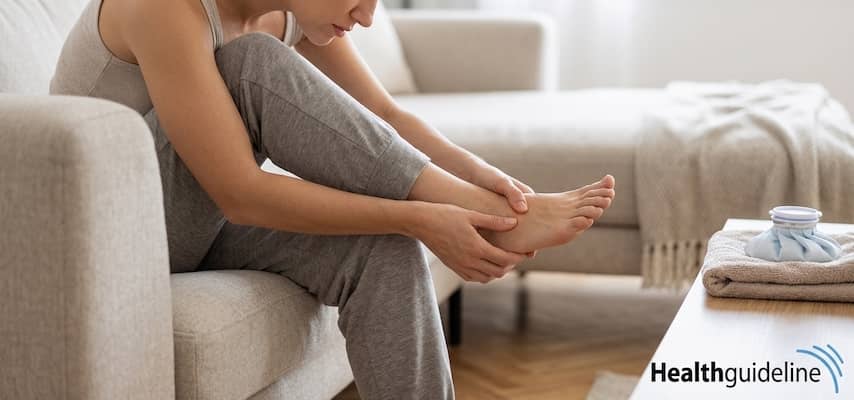
Arch pain is discomfort along the bottom of the foot, between the heel and the ball, most often caused by plantar fasciitis or strain on the tissues that support the arch. Most cases ease with rest, ice, stretching, supportive shoes, and arch-support insoles. See a clinician if pain lasts more than about a week, is severe, or follows an injury.
Arch pain is one of the most common foot complaints, and it rarely stays in the foot alone — strain on the arch can affect how you walk and add stress to your ankles, knees, hips, and back. This guide explains what arch pain feels like, what usually causes it, how to relieve it at home, which arch-support insoles are worth considering, and when it’s time to see a professional.
Key takeaways
- The most common cause of arch and heel pain is plantar fasciitis — inflammation of the tissue along the sole of the foot.
- Conservative care (rest, ice, stretching, supportive footwear, arch supports) helps most people, though relief can take weeks to months.
- Arch-support insoles reduce strain on the arch and can ease pain — they support the foot rather than cure the underlying cause.
- Persistent, severe, or injury-related pain — or pain with swelling, numbness, or trouble bearing weight — deserves a professional evaluation.
What is arch pain, and what does it feel like?
Arch pain refers to pain or tenderness across the midfoot — the curved area between your heel and the ball of your foot. It can feel like a dull ache, a burning sensation, or a sharp pull, and it often worsens with standing, walking, or the first few steps in the morning. The exact cause determines the most effective treatment.
Each foot has two arches: the longitudinal arch that runs the length of the foot, and the transverse arch that runs across its width. These arches absorb impact and return energy every time you take a step, so when the muscles, ligaments, tendons, or bones that support them are irritated or overloaded, pain can follow.
What causes arch pain on the foot?
The most common cause of arch and heel pain is plantar fasciitis — inflammation of the plantar fascia, the band of tissue running along the sole. Flat feet, high arches, overpronation, posterior tibial tendon dysfunction, overuse, unsupportive footwear, extra body weight, and injury can also strain the arch and trigger pain. According to the Cleveland Clinic, plantar fasciitis is the single most common cause of heel pain.
Plantar fasciitis
The plantar fascia is a thick band of connective tissue that runs from the heel to the base of the toes and helps support the arch. When it’s overloaded or overstretched — often from overuse, tight calves, unsupportive shoes, or a sudden increase in activity — small irritations and inflammation can develop. Classic signs include heel and arch pain that is worst with the first steps in the morning and eases after a few minutes of walking, then may return after long periods on your feet. Supportive footwear, arch supports, and stretching are common first steps; you may find our guide to the best shoes for plantar fasciitis helpful here.
Flat feet (fallen arches) and overpronation
Flat feet occur when the arches flatten so that most or all of the sole touches the ground when standing. The Mayo Clinic notes that flat feet are common and usually painless — but some people do experience pain in the arch or along the inside of the foot and ankle, sometimes with swelling, and symptoms often worsen with activity or with unsupportive footwear. Flat feet can be present from childhood or develop later in life from injury or age-related wear. Related to this is overpronation, where the foot rolls too far inward with each step, flattening the arch and adding strain over time. Structured arch supports and stability shoes are frequently recommended for both.
High arches (cavus foot)
At the other end of the spectrum, a high or “cavus” arch places more pressure on the heel and ball of the foot and can leave the midfoot less stable. This can contribute to arch pain, calluses, and a higher risk of ankle sprains. Cushioned insoles that fill and support a high arch often improve comfort and stability.
Posterior tibial tendon dysfunction (PTTD)
The posterior tibial tendon runs from a calf muscle down the inside of the ankle and helps hold up the arch. When it becomes strained or inflamed, pain typically develops along the inside of the foot and ankle, sometimes with swelling, and the arch may gradually flatten. The Mayo Clinic describes injuries to this tendon as among the most common foot and ankle problems, and notes that catching them early makes non-surgical treatment more likely to help. Supportive orthotics and, in some cases, an ankle brace for posterior tibial tendonitis may be recommended.
Overuse, footwear, weight, and injury
Beyond specific conditions, everyday factors matter. Long periods standing or walking on hard surfaces, worn-out or unsupportive shoes, walking barefoot on hard floors, a rapid jump in training, extra body weight, and direct injuries (sprains, strains, or stress fractures) can all overload the arch. Certain types of arthritis can also contribute.
How is arch pain diagnosed?
Diagnosis usually starts with a physical exam. A clinician checks your foot, watches how you stand and walk, presses on tender areas, and asks about your symptoms, footwear, and activity. Imaging such as an X-ray, ultrasound, or MRI is generally used only when needed to rule out a fracture or another condition. Pinpointing the underlying cause is what guides the most effective treatment.
How can you relieve arch pain at home?
For many people, arch pain eases with simple, conservative care: rest and less high-impact activity, ice, gentle calf and plantar-fascia stretches, supportive shoes, over-the-counter arch-support insoles, and short-term use of an OTC pain reliever such as ibuprofen if appropriate for you. Consistency matters — relief often builds over days to weeks rather than overnight.
Practical steps that often help
- Ease off aggravating activity. Reduce or modify the activities that spike your pain, rather than pushing through them.
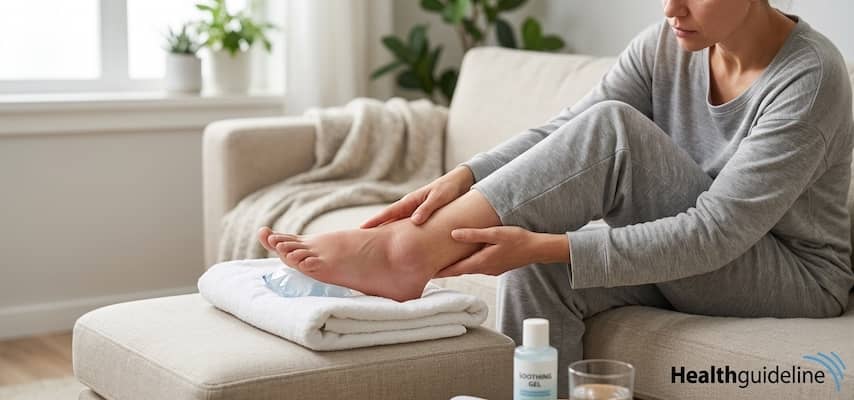
- Ice the sore area. Apply an ice pack wrapped in a cloth to the arch and heel for short sessions to help with discomfort and swelling.
- Wear supportive shoes. Choose footwear with good arch support, cushioning, and shock absorption; avoid flat, flimsy shoes and going barefoot on hard floors.
- Add arch support. Over-the-counter insoles or arch supports can reduce strain on the arch (see the picks below).
- Consider OTC pain relief. Non-steroidal anti-inflammatory drugs (NSAIDs) like ibuprofen may help with pain and inflammation for some people — check that they’re safe for you.
Simple stretches for the arch and calf
Gentle, regular stretching of the plantar fascia and calf muscles is one of the most widely recommended self-care steps. Always stay within a comfortable range and stop if a movement is painful.
- Plantar fascia stretch: Sitting, cross the sore foot over your opposite knee, gently pull your toes back toward your shin until you feel a comfortable stretch through the arch, and hold for about 20 seconds. Repeat a few times.
- Standing calf stretch: Face a wall with hands at eye level, step the sore leg back with the heel down and knee straight, then lean in until you feel a stretch in the calf. Hold about 20–25 seconds and repeat.
- Towel stretch: Sitting with the leg extended, loop a towel around the ball of the foot and gently pull it toward you, keeping the knee straight. Hold about 20–25 seconds.
- Rolling massage: Roll the arch back and forth over a ball or a chilled bottle for a few minutes — many people find this especially soothing first thing in the morning.
Best insoles and arch supports for arch pain
Arch-support insoles can reduce strain on the plantar fascia and the other tissues that support the arch, easing pain and improving comfort for many people — though they support the foot rather than cure the underlying cause. The best choice depends on your arch height, shoe type, body weight, and activity level. The Cleveland Clinic lists over-the-counter or custom shoe inserts (orthotics) and arch supports among the common, modest treatments for plantar-fascia-related pain. Below are five well-established options that are widely available and span different budgets and needs.
How we picked: We prioritized arch-support structure, heel-cup depth, cushioning and materials, fit across different arch types, and genuine availability on Amazon US, and we cross-referenced podiatrist-informed roundups and manufacturer specifications. This is general information to help you compare options — not a substitute for a professional fitting or medical advice.
Top pick for most people: the PowerStep Pinnacle balances firm arch support with real cushioning, suits low, neutral, and high arches, and comes sized so there’s no trimming — a sensible default for everyday arch and heel pain.
| Insole | Best for | Standout feature | Approx. price* |
|---|---|---|---|
| PowerStep Pinnacle | Everyday all-round support | Balanced firm support + cushioning; fits all arch types | ~$35–45 |
| Superfeet Green | Flat feet & overpronation | Firm, high-volume arch + deep heel cup | ~$45–55 |
| Dr. Scholl’s Plantar Fasciitis Relief | Budget / drugstore pick | Affordable, easy to find, trim-to-fit | ~$13–17 |
| Currex RunPro | Runners & active use | Flexible, choose-your-arch-profile running insole | ~$45–55 |
| WalkHero Arch Support | Firmer support on a budget | Semi-rigid TPU shell + deep heel cup, low price | ~$25–30 |
01 / BEST OVERALL
PowerStep Pinnacle
The PowerStep Pinnacle is a podiatrist-designed, semi-rigid orthotic with a supportive arch shell, dual-layer cushioning, and a contoured heel cradle. It works across low, neutral, and high arches and is ordered by shoe size, so there’s no trimming — a practical, well-rounded starting point for everyday arch and heel pain.
Standout features
- Firm-but-flexible support shell
- deep heel cup
- cushioned top layer
- no trimming required.
Pros
- Balanced support and comfort
- suits most arch types
- widely recommended and easy to find.
Cons
- Needs shoes with a removable factory insole
- firmer than plush comfort insoles
- the standard arch height may feel low to some high-arched users.
Best for: Everyday walking and standing, mild-to-moderate overpronation, and plantar-fascia-related pain.
Not ideal for: Anyone wanting a soft, pillowy feel or a slim insole for tight dress shoes.
02 / BEST FIRM, STRUCTURAL SUPPORT
Superfeet Green (All-Purpose High Arch)
A long-standing favorite, the Superfeet Green pairs a tall, firm arch shape with a deep heel cup and a rigid stabilizer cap for maximum structure. It’s trim-to-fit and high-volume, making it well suited to roomier footwear and to people who want strong, stable support rather than soft cushioning.
Standout features
- High, firm arch profile
- deep, wide heel cup
- durable stabilizer cap
- trim-to-fit sizing.
Pros
- Strong, stable support
- excellent heel cradle
- long-lasting
- great for flat feet and overpronation.
Cons
- Firm feel needs a break-in period
- high volume can crowd tight or low-profile shoes
- limited plush cushioning.
Best for: Flat feet, overpronation, and anyone who wants maximum arch structure and stability.
Not ideal for: People who prefer a soft insole, or who wear slim shoes with little internal room.
03 / BEST BUDGET/DRUGSTORE PICK
Dr. Scholl’s Plantar Fasciitis Pain Relief Orthotics
Widely stocked and inexpensive, these full-length Dr. Scholl’s inserts combine a deep heel cup with targeted arch support aimed at plantar-fascia strain and heel pain. They’re trim-to-fit and make an easy, low-commitment entry point if you’re trying arch support for the first time.
Standout features
- Deep, shock-absorbing heel cup
- arch support to limit overstretch
- trim-to-fit
- broad availability.
Pros
- Very affordable
- easy to find in stores and online
- reasonable cushioning
- good first step.
Cons
- Less rigid and structured than premium orthotics
- may wear out sooner
- support can be insufficient for heavier users or significant overpronation.
Best for: Budget-conscious buyers and mild plantar-fascia or heel pain.
Not ideal for: Those needing firm corrective control or maximum durability.
04 / BEST FOR RUNNERS
Currex RunPro
The Currex RunPro is a flexible, dynamic running insole offered in low, medium, and high arch profiles, with a decoupled heel, cushioning, and an energy-returning forefoot. Importantly, it’s built for athletic performance rather than medical correction, so it supports the arch while still moving naturally with your stride.
Standout features
- Selectable arch profile
- lightweight, flexible build
- cushioned, moisture-wicking construction
- responsive forefoot.
Pros
- Matches your arch height
- comfortable and springy for running
- helps reduce fatigue
- breathable.
Cons
- Not a rigid corrective orthotic
- less structural control for significant overpronation
- wears out by mileage (plan to replace it periodically).
Best for: Runners and active people who want arch support without stiffness.
Not ideal for: Anyone who needs firm motion control or a corrective medical orthotic.
05 / BEST FIRMER SUPPORT ON A BUDGET
WalkHero Arch Support Insoles
WalkHero’s popular orthotic offers a semi-rigid TPU arch shell, a U-shaped deep heel cup, and EVA cushioning at a wallet-friendly price. It’s a solid choice if you want firmer, more structured support than a soft drugstore gel insole without stepping up to premium pricing. It’s sold by shoe-size band, so check the sizing chart.
Standout features
- Semi-rigid TPU arch shell
- deep heel cup
- cushioned EVA layer
- many sizes and colors.
Pros
- Firm arch support at a low price
- good heel stability
- well suited to flat feet and long days on your feet.
Cons
- Fit and finish are less refined than premium brands
- the firmness isn’t for everyone
- sizing runs specific, so measure carefully.
Best for: Value seekers who want structured support rather than plush cushioning.
Not ideal for: Anyone wanting a soft feel or a precisely fitted premium orthotic.
A quick note on fit: insoles feel different from person to person, and firm arch supports often need a short break-in period of a few hours a day at first. If an insole causes new pain, stop using it. If you have diabetes, poor circulation, or a diagnosed foot condition, check with a clinician before changing your footwear support.
When should you see a doctor about arch pain?
See a healthcare professional if arch pain lasts more than about a week, is severe, or follows an injury — or if it comes with swelling, redness, warmth, numbness, tingling, or trouble putting weight on the foot. These can point to a fracture, tendon injury, nerve issue, or another condition that needs specific care. As a general rule, getting evaluated early gives conservative treatment the best chance to work and helps prevent the problem from worsening.
Depending on the cause, a clinician might suggest physical therapy, a night splint, a supportive brace or walking boot, custom orthotics, a corticosteroid injection, or — rarely, and only when conservative care hasn’t helped — surgery.
How can you prevent arch pain?
To lower your risk of arch pain, focus on support and gradual loading. Wear supportive, well-fitting shoes with adequate arch support, avoid going barefoot on hard floors for long stretches, stretch your calves and feet regularly, build up activity gradually rather than in sudden jumps, work toward a healthy body weight, and replace worn-out shoes. If you stand in one spot for long periods, an anti-fatigue mat can reduce the load on your feet.
Frequently asked questions
What is the most common cause of arch pain?
Plantar fasciitis — inflammation of the plantar fascia along the sole of the foot — is the most common cause of arch and heel pain. It’s often linked to overuse, tight calves, unsupportive shoes, or a sudden increase in activity, and it typically causes pain that’s worst with the first steps in the morning.
Do insoles really help arch pain?
For many people, yes. Arch-support insoles and orthotics can reduce strain on the plantar fascia and other arch tissues, which often eases pain and improves comfort. They support the foot rather than cure the underlying cause, so pair them with supportive shoes and stretching, and see a clinician if pain persists despite consistent use.
How long does arch pain take to go away?
It depends on the cause. Mild, activity-related arch pain may settle within days once you rest and add support. Plantar fasciitis is often slower — it commonly improves over several weeks to a few months with consistent conservative care. Persistent pain beyond that timeframe is worth discussing with a professional.
Should I stop exercising if my arch hurts?
You usually don’t need complete rest, but it helps to reduce or modify high-impact activities that spike your pain, such as running or jumping, while you recover. Lower-impact movement, supportive footwear, and stretching can keep you active. If pain is sharp, worsening, or follows an injury, hold off and get it evaluated.
What kind of insole is best for flat feet?
Flat feet and overpronation generally do best with a firmer, structured insole that has a supportive arch and a deep heel cup, such as the Superfeet Green or a semi-rigid orthotic. Softer cushioning insoles feel comfortable but often don’t provide enough structure. If in doubt, a professional fitting can help match support to your foot.
Medical disclaimer: This article is for general information only and is not medical advice. Talk to a qualified healthcare professional about your specific situation.