Best Compression Socks for Swelling: 6 Picks (2026)
2026 buying guide · swelling, fit & compression levels
Best compression socks for swelling are not simply the tightest socks you can buy. For everyday or occupational swelling, the right graduated compression can help limit fluid buildup, but the cause of swelling and the correct pressure matter. Our top balanced pick is Wellow Knee High; choose firmer 20–30 mmHg options only when that level is appropriate for you.
Quick picks
Best overall
Wellow Knee High
A softer 18–25 mmHg middle ground with standard and wide-calf options.
Firm compression
Physix Gear
A widely available 20–30 mmHg option when firm compression is appropriate.
How we chose these compression socks
We compared current Amazon US listings with manufacturer specifications and recent hands-on roundups, then prioritized the features that matter most for swelling: a clearly stated graduated-compression level, knee-high coverage, calf-based sizing, comfort for prolonged wear, material quality and realistic ease of putting the socks on. We did not invent ratings, review counts or medical claims, and category labels are editorial judgments rather than clinical rankings.
Best compression socks for swelling at a glance
| Sock | Our category | Compression | Construction | Before you buy |
|---|---|---|---|---|
| Wellow Knee High | Best overall | 18–25 mmHg | Bamboo-viscose blend; knee-high | Balanced pressure; standard and wide-calf options |
| Physix Gear | Best firm compression | 20–30 mmHg | Nylon/spandex; knee-high | Firm pressure; can be harder to put on |
| Sockwell Elevation | Premium firm option | 20–30 mmHg | Merino/rayon/nylon/spandex blend | Firm compression with cushioned sole |
| CHARMKING | Best budget multipack | 15–20 mmHg | Nylon/spandex; multi-pair pack | Moderate compression; many colors |
| SB SOX | Cushioned firm option | 20–30 mmHg | 80% nylon / 20% spandex | Firm; calf-based sizing; latex-free per brand |
| LEVSOX | Patterns and value | 20–30 mmHg | 90% nylon / 10% spandex | Firm; many prints; calf measurement matters |
Important: A higher mmHg number is not automatically better. If swelling is new, significant, one-sided or caused by a medical condition, ask a healthcare professional what type and pressure are appropriate before buying.
The six Compression Socks for Swelling
01 / BEST OVERALL FOR EVERYDAY COMFORT
Wellow Knee High Compression Socks
Wellow’s knee-high sock is our most balanced pick for people who have already been told that graduated compression is appropriate. Its 18–25 mmHg range sits between common 15–20 and 20–30 mmHg options, while the soft bamboo-viscose blend and broad sizing make it easier to consider for long workdays or travel.
Key features
- 18–25 mmHg graduated compression
- Bamboo-viscose blend with stretch fibers
- Knee-high coverage; multiple colors and patterns
- Standard and wide-calf options are offered by Wellow
Pros
- Softer feel than many firm synthetic socks
- Useful middle-ground compression level
- Wide-calf sizing is available from the brand
Cons
- Pricier than budget multipacks
- 18–25 mmHg may still be more compression than some beginners need
- Exact Amazon colors and sizes vary by listing
Best for: People prioritizing softness and all-day wear after confirming that this level of compression is suitable.
Who it is not for: Anyone with sudden or unexplained swelling, significant arterial disease, open wounds, severe neuropathy, or a clinician-directed need for a different compression level.
02 / BEST FIRM COMPRESSION
Physix Gear Compression Socks 20–30 mmHg
Physix Gear is the firm-compression choice in this guide. The current Amazon listing specifies 20–30 mmHg graduated compression, and recent expert roundups continue to highlight it for tired, swollen-feeling legs. The trade-off is predictable: firmer socks can take more hand strength and technique to pull over the heel.
Key features
- 20–30 mmHg graduated compression
- Nylon/spandex construction
- Knee-high unisex design
- Multiple size options on the current US listing
Pros
- Firm graduated pressure
- Thin enough to fit under many pants
- Widely available on Amazon US
Cons
- More difficult to put on than lighter compression
- Firm pressure is not the right starting point for everyone
- Sizing must account for calf circumference, not shoe size alone
Best for: People who have been advised to use firm 20–30 mmHg compression and want a widely available synthetic option.
Who it is not for: First-time buyers who have not established the cause of swelling or whether firm compression is appropriate.
03 / BEST PREMIUM NATURAL-FIBER BLEND
Sockwell Elevation Firm Graduated Compression Socks
Sockwell Elevation combines firm 20–30 mmHg graduated compression with a natural-fiber-focused blend that includes merino wool and rayon. It stands out for people who dislike the slick feel of all-synthetic compression socks and want arch support, a seamless toe closure and a lightly cushioned footbed.
Key features
- 20–30 mmHg firm graduated compression
- Merino-wool blend
- Arch support and seamless toe closure
- Ultra-light cushioned sole on the current Elevation design
Pros
- Soft, temperature-regulating fiber blend
- Supportive foot construction
- Polished everyday styling
Cons
- Higher purchase price than multipacks
- Firm compression can be challenging to put on
- The linked Amazon listing is the women’s Elevation model; check the men’s version if needed
Best for: People who want firm compression plus a softer, premium sock feel.
Who it is not for: Budget shoppers or anyone who has not been cleared for 20–30 mmHg compression.
04 / BEST BUDGET MULTIPACK
CHARMKING Compression Socks 15–20 mmHg
CHARMKING is the value pick for people who want several pairs in rotation rather than one premium sock. The linked Amazon listing is an eight-pair 15–20 mmHg set made from nylon and spandex. That lighter level can be easier to live with, but it should still fit smoothly without rolling, pinching or causing numbness.
Key features
- 15–20 mmHg graduated compression
- Eight-pair Amazon listing
- 85% nylon / 15% spandex on the current listing
- Large selection of colors and patterns
Pros
- Low cost per pair
- Useful for a workweek rotation
- Lighter compression than the 20–30 mmHg picks
Cons
- Less breathable for some wearers
- Multipack sizing can be less nuanced than specialist brands
- Bright designs may not suit every workplace
Best for: Price-conscious buyers who have been advised that moderate 15–20 mmHg compression is appropriate.
Who it is not for: People who need individually fitted medical hosiery or a clinician-prescribed compression class.
05 / BEST CUSHIONED FIRM OPTION
SB SOX Compression Socks 20–30 mmHg
SB SOX is a practical firm-compression option if you want more underfoot cushioning than an ultra-thin dress-style sock. The brand lists 20–30 mmHg graduated compression, an 80/20 nylon-spandex blend, calf-based sizing through XXL, and a latex-free construction. It is still firm compression, so correct sizing matters.
Key features
- 20–30 mmHg graduated compression
- 80% nylon / 20% spandex
- Sizes through XXL with calf measurements
- Latex-free according to SB SOX
Pros
- Clear calf-circumference size chart
- Cushioned everyday construction
- Broad size range
Cons
- Firm compression takes more effort to put on
- Toe seam may bother sensitive feet
- Brand advises checking comfort and removing for pain or tightness
Best for: People who want firm compression with a cushioned feel and a detailed calf-based size chart.
Who it is not for: People who cannot safely tolerate firm compression or who need custom-fitted stockings.
06 / BEST FOR PATTERNS & VALUE
LEVSOX Compression Socks 20–30 mmHg
LEVSOX is the playful alternative to plain black medical-looking hosiery. The current Amazon listing specifies 20–30 mmHg and a 90% nylon / 10% spandex fabric, while the brand’s sizing guidance emphasizes measuring the fullest part of the calf. The prints are a strength, but neutral-color choices can be limited.
Key features
- 20–30 mmHg graduated compression
- 90% nylon / 10% spandex on the linked listing
- Wide variety of prints
- Brand sizing guidance prioritizes calf circumference
Pros
- Many colorful styles
- Firm compression at a value-oriented price point
- Smooth synthetic knit
Cons
- Fewer understated solid options on some listings
- 20–30 mmHg can be difficult to put on
- Pattern and pack configurations change across Amazon variations
Best for: People who want firm compression in colorful designs after confirming that 20–30 mmHg is appropriate.
Who it is not for: Anyone who needs a very specific medical stocking construction, lighter compression or custom fitting.
What compression level is best for swelling?
Compression is measured in millimeters of mercury (mmHg), the same pressure unit used for blood pressure. Graduated socks are tightest near the ankle and become less compressive higher up the leg. Cleveland Clinic describes common over-the-counter ranges as 8–15 mmHg mild, 15–20 mmHg moderate and 20–30 mmHg firm; extra-firm 30–40 mmHg products generally belong under medical supervision.
Cleveland Clinic’s 2026 compression-sock guidance also stresses that people using compression for a medical concern should be measured and should have the pressure level recommended by a healthcare professional.
What does the research show for standing-related swelling?
In a randomized study of 40 male security employees working 12-hour standing shifts, workers wearing either 15–20 or 20–30 mmHg compression stockings did not show the same significant lower-leg edema, fatigue and discomfort changes seen in the regular-sock control group. The authors noted that similar benefits at both pressures suggest the lower level may be sufficient for healthy workers in that setting.
Another study of 58 people with occupational edema found both 15–20 and 20–30 mmHg stockings reduced measured swelling over a workday, with larger reductions at the higher pressure. That does not mean everyone with swelling should self-select 20–30 mmHg; the participants were studied for occupational edema, not unexplained swelling from heart, kidney, arterial or clotting problems.
What to look for when buying compression socks for swelling
1. Start with the cause, not the sock
Swelling is a symptom, not a diagnosis. It can follow prolonged standing or sitting, pregnancy or venous problems, but it can also occur with injury, infection, heart or kidney disease, medication effects and blood clots. If swelling is new, persistent, severe or unexplained, get medical advice before treating it as a simple sock-shopping problem.
2. Choose graduated compression
For everyday knee-high compression, look for a stated mmHg range and a graduated design rather than vague terms such as “support sock.” Graduated compression places the highest pressure at the ankle and tapers upward. Anti-embolism stockings used for people who are largely confined to bed are a different product category and should not be substituted casually.
3. Measure your ankle and calf
Shoe size alone is rarely enough. Follow the exact brand chart and measure where the manufacturer specifies, often around the narrowest ankle and fullest calf. Measure before swelling is at its worst when possible. If one measurement falls into a different size than another, use the brand’s fitting guidance or ask a medical-supply professional rather than guessing.
4. Match the material to your day
Synthetic nylon/spandex socks are durable and usually thinner under clothing. Merino or bamboo-viscose blends can feel softer and manage moisture differently, but they usually cost more. If your feet are sensitive, also check toe seams, foot cushioning and whether the top band stays flat instead of rolling.
5. Think about how you will put them on
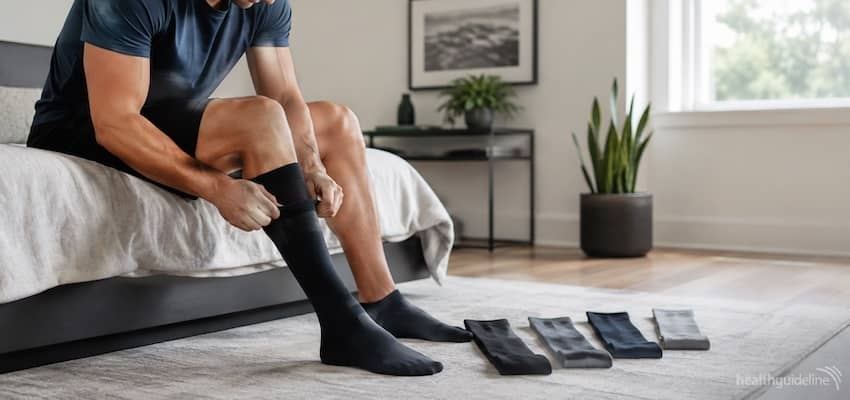
Firm compression can be difficult to pull over the heel, particularly for people with arthritis, limited hand strength, pregnancy or reduced mobility. Put them on gradually rather than yanking the cuff. If donning is the main barrier, see our compression socks with zipper guide for another construction style.
For broader comparisons, see our compression socks guide and knee-high compression socks guide. We also have use-case guides for nurses, men, pregnancy and running.
How to get the right fit and use them safely
- Measure first. Use the exact brand chart, including ankle and calf circumference when requested.
- Put them on before swelling peaks. For daytime compression, many people find morning application easiest; follow your clinician’s instructions if you have a treatment plan.
- Seat the heel correctly. Work the sock up the leg gradually and smooth out wrinkles instead of pulling only from the top.
- Keep the cuff flat. Do not fold or roll the top band into a tighter tourniquet-like ring.
- Recheck your toes and skin. Stop and remove the sock for pain, numbness, tingling, unusual color changes, skin damage or worsening swelling.
- Do not assume “all day” means overnight. Our compression socks for sleeping guide explains why overnight use should follow individual medical advice.
A compression sock should feel firm, not punishing. Deep ridges, persistent numbness, blue or pale toes, increasing pain or a rolled cuff are not signs that the sock is “working harder.” They are reasons to remove it and reassess the fit.
When swelling needs medical attention
Do not self-treat every swollen leg with stronger compression
Cleveland Clinic advises talking with a provider before using compression for severe or unexplained swelling, peripheral artery disease (PAD) or markedly reduced sensation, and advises against routine use over open wounds or skin infections. See the safety guidance.
Get prompt medical assessment if swelling is sudden, painful, red, hot, affects only one leg, or is accompanied by fever. Seek emergency help for swelling with shortness of breath, chest pain/tightness, coughing blood, faintness or severe breathing difficulty. NHS edema warning signs.
Persistent swelling can also need investigation even when it is painless. Cleveland Clinic notes that edema can be linked with heart, liver or kidney disease and recommends medical review for swelling that is sudden, occurs in multiple areas or interferes with normal activity.
Frequently asked questions
Do compression socks really help swelling?
They can help certain types of lower-leg swelling by applying external pressure that limits fluid buildup and supports venous return. Evidence is strongest for venous and occupational swelling, but swelling has many causes. Compression is not a substitute for finding the cause of new, severe or one-sided swelling.
What compression level is best for swollen feet and ankles?
There is no single best level for every person. Common labels include 8–15 mmHg mild, 15–20 mmHg moderate and 20–30 mmHg firm. Cleveland Clinic advises getting measured and asking a provider to recommend the pressure when compression is being used for a medical concern.
Should I choose 15–20 or 20–30 mmHg?
For healthy people with occupational swelling, research has found benefit from both 15–20 and 20–30 mmHg. Firmer compression may reduce measured edema more in some studies, but comfort, health history and fit matter. Do not move to stronger compression simply because swelling looks worse.
Can compression socks make swelling worse?
They can cause problems if they are the wrong size, bunch, roll, restrict circulation or are used when compression is inappropriate. Remove them and seek advice if you develop pain, numbness, tingling, skin discoloration, skin injury or worsening swelling.
Can I wear compression socks if only one leg is swollen?
New swelling in only one leg deserves medical assessment, especially if it is painful, red, warm or sudden. One-sided swelling can have causes that should be evaluated before self-treating with compression. Seek urgent help for swelling with shortness of breath, chest pain or coughing blood.
When should I put compression socks on?
For daytime use, they are commonly easiest to put on in the morning before swelling builds. Follow the manufacturer’s instructions and any schedule given by your clinician. Do not assume that daytime compression socks should be worn overnight unless a healthcare professional specifically advises it.
How should compression socks fit?
They should feel snug and smooth, with the heel seated correctly and no wrinkles, folds or rolled cuffs. Measure the ankle and calf as the brand directs, ideally before swelling peaks. A sock that causes pain, numbness, tingling or color changes is not fitting safely.
This article is for general information only and is not medical advice. Talk to a qualified healthcare professional about the cause of your swelling, whether compression is appropriate, and the pressure level that fits your situation.