Nike Slip Resistant Shoes: The 6 Best Options for Grip at Work (2026)
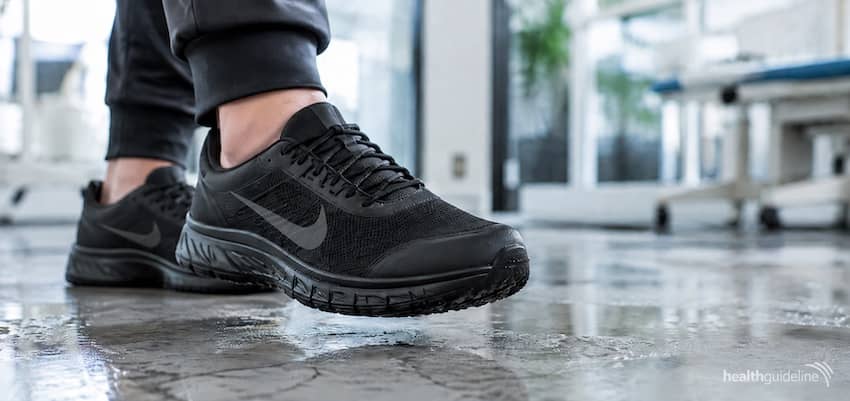
Nike does not make certified (ASTM-rated) slip-resistant safety shoes. But if you want a Nike that grips well for standing, walking and working on smooth floors, a handful of models genuinely deliver.
Best grip on smooth floors
Nike Metcon 10
Its flat, sticky training outsole grips better than any Nike running tread.
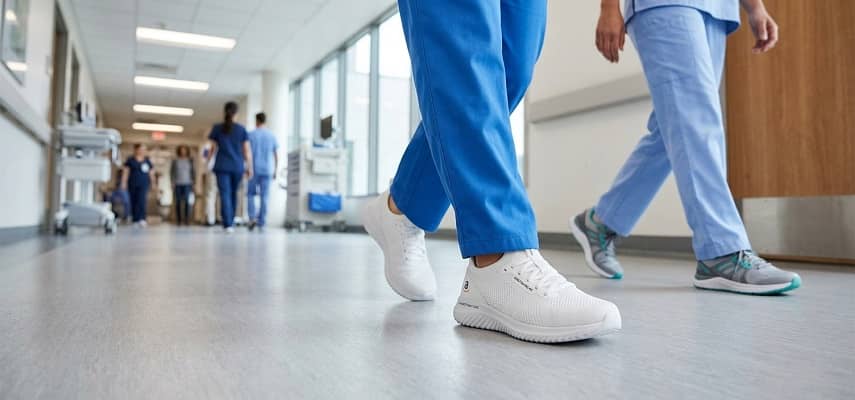
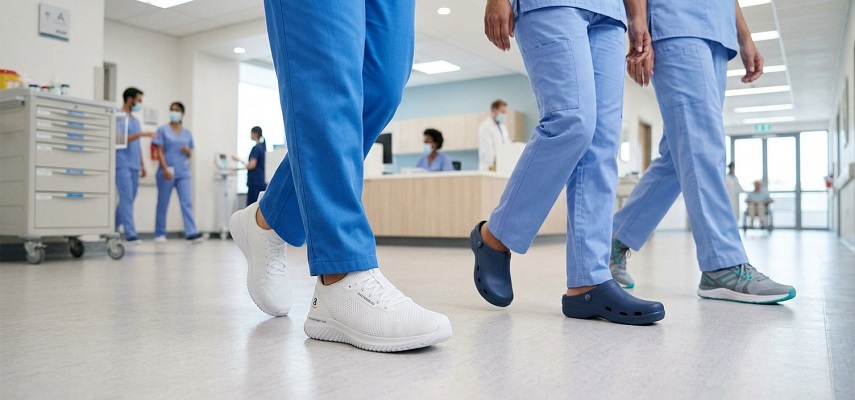
Best for healthcare
Nike Air Zoom Pulse
The one shoe Nike actually designed for slippery workplaces, though it is now mostly resale-only.
Best all-around and easiest to buy
Nike Pegasus 41
Comfortable, durable, available in wide, popular with nurses.
If you are looking for certified non-slip footwear, skip to when Nike is not the right choice.
Are Nike shoes slip resistant?
Most Nike shoes are not certified slip-resistant safety footwear. Nike designed just one shoe specifically for slippery workplaces — the Air Zoom Pulse, made for healthcare. Several other models, such as the Metcon and Pegasus, have grippy rubber outsoles that perform well on smooth, dry floors, but none of them carry an ASTM F2913 slip-resistance rating.
That distinction matters, so this guide does two things: it recommends the Nike models that grip best for real work, and it is honest about where a Nike shoe simply is not the right tool for the job.
What “Nike slip resistant shoes” really means
Search for “Nike slip resistant shoes” and you will find plenty of pages implying Nike sells a line of non-slip work shoes. It does not. Nike makes athletic footwear, not occupational safety shoes, and none of its current models are rated to the ASTM F2913 slip-resistance standard that many employers require.
There is one meaningful exception. In late 2019 Nike released the Air Zoom Pulse, a shoe built specifically “for and tested by nurses,” with a traction pattern engineered for smooth, wet hospital floors and a coated toe box to guard against spills. It is the closest thing Nike has ever made to a purpose-built slip-resistant work shoe. The catch, covered below, is availability.
Everything else on this list is a running or training shoe with a rubber outsole that happens to grip well. That is genuinely useful if you spend long days on smooth indoor floors — but keep two things in mind:
- Running treads are built for forward motion. They can feel grippy underfoot yet are not optimized for the sudden, multidirectional, wet, or greasy hazards found in kitchens, hospitals and warehouses.
- “Grippy” is not the same as “certified.” Lab grip scores and real-world traction are helpful signals, but they are not a slip-resistance certification. If a rule says slip-resistant, a grippy Nike does not automatically satisfy it.
How we chose
We prioritized Nike models with full rubber outsole coverage and grippy tread, then cross-referenced independent laboratory grip testing (RunRepeat measures each shoe’s outsole friction on a wet surface) with hands-on reviews and Nike’s own product specifications. We included honest trade-offs for each shoe and flagged where cushioning, fit or availability is a compromise. We did not lab-test these shoes for ASTM slip resistance, and we do not present any of them as certified safety footwear.
Nike slip resistant shoes at a glance
A quick comparison of the six models before the detail. “Wet grip (lab)” is RunRepeat’s measured outsole friction coefficient on a wet surface, where higher is better and roughly above 0.40 is considered reliable in the rain — a useful signal, not a safety rating.
| Model | Best for | Outsole & grip | Cushioning | Wide fit | Approx. price* |
|---|---|---|---|---|---|
| Nike Air Zoom Pulse | Healthcare / smooth floors | Slip-on, spill-guard toe; designed for wet, smooth floors | Moderate (Zoom Air) | Slip-on (one width) | Resale — varies |
| Nike Metcon 10 | Best grip on slick floors | Flat, sticky rubber; wet grip ~0.38 (lab) | Firm, low | Standard (wider toe box) | Around $150 |
| Nike Pegasus 41 | All-around / on your feet | Waffle rubber; grips fine dry, wet grip ~0.25 (lab) | Firm, moderate | Yes | Around $140 |
| Nike Structure 26 | Support & wide feet | Stability rubber; arch support, durable heel | Cushioned, stable | Wide & extra-wide | Around $150 |
| Nike Vomero 18 | Max cushioning for long shifts | Segmented rubber; wet grip ~0.38 (lab) | Max | Standard (roomy) | Around $150 |
| Nike Revolution 7 | Budget pick | Waffle rubber; wet grip above 0.40 (lab) | Firm, basic | Yes | Around $70 |
01 / THE ONLY NIKE BUILT TO BE SLIP-RESISTANT
Nike Air Zoom Pulse
This is the one. The Air Zoom Pulse is the only shoe Nike has designed from the ground up for slippery workplaces. It was developed and tested with medical workers, and Nike describes it as “a traditional clog made athletic.” The laceless slip-on upper is easy to pull on and wipe clean, a PU-coated toe box guards against spills, and the traction pattern was specifically shaped to grip smooth hospital floors in both wet and dry conditions. An elastic strap and heel pull tabs lock the foot in without laces.
The honest catch is availability. Nike appears to have wound the Pulse down — the last widely available colorways date to around 2022, and today it turns up mostly through resale marketplaces and specialty uniform retailers rather than new on Nike.com or Amazon. Resale prices vary and can sit above the original retail. If you can find a pair in your size at a fair price, it is the most “slip-resistant-minded” Nike you can buy. Just confirm the listing is genuine and in stock before you commit.
Pros
- Purpose-built for spills and smooth floors
- Laceless, easy on/off, easy to clean
- Secure elastic-strap fit; quiet sole
Cons
- Hard to find new; mostly resale
- Resale pricing can run high
- Coated upper is less breathable than mesh
- Still not an ASTM-certified slip-resistant shoe
Who it’s for: healthcare workers who can track down a pair.
Who it’s not for: anyone who needs a current, easy-to-buy shoe today, or footwear that must be certified slip-resistant.
02 / BEST GRIP ON SMOOTH, SLICK FLOORS
Nike Metcon 10
If you want the grippiest current, mainstream Nike, this is it. The Metcon is Nike’s flagship training shoe, and the 2025 Metcon 10 got a complete outsole redesign: a flat, stable base with grippier “004” sticky rubber under the heel and forefoot, a new triangular tread and deeper flex grooves. Independent testing by RunRepeat measured its wet-surface friction coefficient at 0.38 — an above-average result for a cross-trainer. Because the sole is flat rather than shaped for running, it also grips better when you move side to side, not just forward.
The trade-off is comfort. The Metcon is built for lifting, so the ride is firm and low to the ground rather than plush, and RunRepeat notes the rubber lasts longest if you keep the shoe to indoor and gym use. It grips like nothing else in Nike’s lineup on a smooth floor, but it is not a cushioned all-day shoe.
Pros
- Best grip of any current mainstream Nike on smooth floors
- Flat, stable, multidirectional base
- Durable, reinforced construction
- Wider toe box than the Metcon 9
Cons
- Firm, minimal cushioning
- Not ideal for long walking or all-day standing
- Gym-oriented look and feel
- 0.38 is “above average,” not certified slip resistance
Who it’s for: people who want the grippiest everyday Nike for smooth indoor floors, or who train and work in one pair.
Who it’s not for: anyone whose priority is cushioning or long-distance comfort.
03 / BEST ALL-AROUND AND EASIEST TO FIND
Nike Pegasus 41
The Pegasus is Nike’s long-running, do-everything daily trainer, and it is one of the most popular shoes among nurses and anyone on their feet. It uses Nike’s classic waffle-inspired rubber outsole with solid coverage, a ReactX foam midsole paired with two Air Zoom units, and it is offered in wide sizing — a real plus for long shifts.
On grip, the reviews are genuinely mixed, and it is worth being clear about. Many real-world testers report the waffle outsole grips well even in the rain. RunRepeat’s lab, however, recorded a low wet-grip score of 0.25, one of the shoe’s weaker measured traits. The fair takeaway: the Pegasus grips fine on typical dry and damp indoor floors and is a comfortable, reliable, easy-to-buy option — but it is not a standout on soaked or slick surfaces, and like every running shoe its tread favors forward motion.
Pros
- Comfortable, durable, widely available
- Offered in wide sizing
- Versatile for standing, walking and casual wear
Cons
- Firm forefoot; snug, warmer upper
- Mixed wet-grip data in the lab
- Running tread, not certified slip-resistant
Who it’s for: nurses, retail and hospitality staff who want one reliable, easy-to-buy Nike for long days.
Who it’s not for: greasy floors, or forefoot strikers who want plush cushioning.
04 / BEST SUPPORT AND WIDE/EXTRA-WIDE FIT
Nike Structure 26
If you overpronate or simply want maximum support for standing all day, the Structure is Nike’s stability trainer. The 2025 Structure 26 pairs a full-length ReactX midsole with a midfoot support system that wraps the arch and heel to slow the rate of ankle roll, plus a higher stack for a stable, planted platform. High-abrasion rubber in the heel adds durability, while a more flexible forefoot rubber keeps the ride from feeling stiff. Crucially for a work shoe, it comes in both wide and extra-wide.
It is still a running shoe with a 10 mm drop, so it is heavier than a minimalist trainer and can feel like a lot of shoe on very long efforts. Some wearers also find Nike’s toe box narrow even in wide sizing, so size carefully. There is no slip-resistance rating here either — the appeal is support and stability, with a grippy rubber outsole along for the ride.
Pros
- Excellent arch support and stability
- Wide and extra-wide options
- Durable heel rubber; cushioned ReactX ride
Cons
- Heavier than a neutral trainer
- Toe-box fit can run narrow for some
- Running tread, not certified slip-resistant
Who it’s for: people who overpronate or want maximum support and a wide fit for standing all day.
Who it’s not for: anyone who prefers a low, minimal shoe, or who needs certified non-slip footwear.
05 / BEST MAX CUSHIONING FOR LONG SHIFTS
Nike Vomero 18
When the priority is cushioning to get through a 10- or 12-hour day, the Vomero 18 is Nike’s plushest daily trainer. It stacks ZoomX foam over ReactX foam for a soft, “running on clouds” feel that many testers happily use for all-day wear, at a tall 46 mm heel / 36 mm forefoot stack. The redesigned outsole actually adds more rubber coverage than past Vomeros, with extra rubber thickness for durability.
Grip is fine rather than exceptional: RunRepeat measured its wet traction at 0.38 — good on dry ground, only decent when it is truly wet, with a firm rubber that does not shine on soaked surfaces. It is also a heavy shoe that runs warm in summer, and the tall stack feels less “grounded” than a low trainer (though it is more stable than many max-cushion rivals). For pure comfort during long standing shifts, though, nothing else on this list matches it.
Pros
- Outstanding cushioning for standing and walking
- Durable outsole with generous rubber coverage
- Surprisingly stable for a max-cushion shoe
Cons
- Heavy; runs warm in heat
- Only “decent” wet grip; not for slick floors
- Tall stack is not for everyone; not slip-certified
Who it’s for: nurses, retail and warehouse workers who prize cushioning and pain relief over aggressive grip.
Who it’s not for: anyone who wants a low, nimble, grippy shoe, or certified non-slip footwear.
06 / BEST BUDGET PICK
Nike Revolution 7
At around $70, the Revolution 7 is Nike’s entry-level trainer, and it punches above its price on grip. It uses a waffle-inspired rubber outsole made from recycled “Regrind” rubber with above-average thickness, and it is extremely flexible. The pleasant surprise: RunRepeat’s lab put its wet grip above 0.40 — their threshold for handling rain well, and better than the pricier Pegasus 41 in that specific test.
You are still buying a budget shoe, so temper expectations. The midsole is a firm EVA foam, breathability is poor (feet get warm and sweaty), lockdown is only so-so with some reported foot slippage, and the rubber wears faster on abrasive concrete. It runs slightly narrow, though wide options exist. For lighter-duty days on smooth floors, it is a lot of grip and comfort for the money.
Pros
- Inexpensive; strong grip for the price
- Very flexible; comfortable enough for casual shifts
- Durable outsole rubber for everyday use
Cons
- Firm ride; poor breathability
- So-so lockdown; some foot slippage
- Wears faster on rough surfaces; basic, not slip-certified
Who it’s for: budget buyers who want a grippy-enough, comfortable-enough Nike for lighter duty.
Who it’s not for: heavy daily wear on rough surfaces, or anyone needing certified footwear.
How to choose a Nike for grip at work
Since none of these carry a slip-resistance rating, the goal is to pick the model whose outsole, cushioning and fit best match your floors and your shift. A few things to weigh:
Look for full rubber outsole coverage
The more of the outsole covered in rubber (rather than exposed foam), the more consistent the grip and the longer the shoe lasts. Flat, sticky training soles like the Metcon’s tend to grip smooth floors better than the shaped, forward-biased tread of a running shoe.
Match the shoe to your floor
Smooth, dry indoor floors (offices, retail, wards) are forgiving, and any grippy Nike here will do. Wet, oily or greasy floors — think commercial kitchens — are a different category that athletic shoes are not built for. On those surfaces, certified slip-resistant work shoes are the right answer.
Prioritize fit and support for standing
Grip means little if your feet ache by hour six. If you are on your feet all day, weight cushioning (Vomero 18), support and pronation control (Structure 26) and a proper wide fit as heavily as outsole grip. Get fitted, and try shoes on at the end of the day when feet are largest.
Easy to clean is underrated
For healthcare and food service, a wipe-clean upper (like the Pulse’s coated toe box) keeps a work shoe usable far longer than an open mesh that soaks up spills.
When Nike is not the right choice
Being honest saves you money and, potentially, an injury. A Nike is the wrong pick when:
- Your job legally requires certified footwear. If a dress code specifies ASTM F2913 slip-resistant soles or a safety toe, no Nike on this list qualifies. Confirm with your employer, and choose a dedicated slip-resistant or safety work-shoe brand that tests and rates its outsoles.
- You work on greasy or oily floors. Commercial kitchens and similar environments demand outsoles engineered and certified for oil and grease. Athletic treads are not designed for that.
- You need protective features. Steel or composite toes, electrical-hazard protection and puncture-resistant plates are not part of Nike’s athletic lineup.
Slips, trips and falls are among the most common causes of workplace injury, according to occupational-safety authorities such as OSHA — which is exactly why some employers mandate certified footwear. If yours does, treat that requirement as the deciding factor, not brand preference.
Frequently asked questions
Are Nike shoes slip resistant?
Most Nike shoes are not certified slip-resistant safety footwear. Nike built one shoe specifically for slippery workplaces — the Air Zoom Pulse for healthcare workers. Other models like the Metcon 10 and Pegasus 41 have grippy rubber outsoles that perform well on smooth, dry floors, but none carry an official ASTM F2913 slip-resistance rating.
Which Nike shoe is best for restaurant or kitchen work?
For grip on smooth restaurant floors, the Nike Metcon 10 is the strongest pick — its flat, sticky rubber outsole grips better than Nike’s running treads. However, no Nike shoe is rated for greasy, oily commercial kitchens. If your job requires certified non-slip footwear, choose a dedicated slip-resistant work brand instead.
Are Nike shoes good for nurses?
Yes. Nike is one of the most popular brands among nurses for comfort and support during long shifts. The Air Zoom Pulse was designed and tested with nurses, while the Pegasus 41 and Structure 26 offer cushioning and grippy rubber outsoles. None are certified slip-resistant, but all grip well on typical hospital floors.
Are running shoes slip resistant?
Running shoes grip well on dry pavement, but their treads are optimized for forward motion, not the multidirectional, wet, or greasy hazards found in many workplaces. They can feel grippy day to day, yet they are not a substitute for certified slip-resistant work shoes where a job legally requires them.
Does Nike make OSHA or ASTM-certified slip-resistant shoes?
No. Nike does not currently market shoes carrying an ASTM F2913 slip-resistance rating or a safety certification. Its shoes are athletic footwear, not occupational safety shoes. If your workplace requires certified slip-resistant or safety-toe footwear, you will need a dedicated work-shoe brand that tests and rates its outsoles.
Are Nike Metcons good for standing all day?
The Metcon 10 grips well thanks to its flat, sticky outsole, but it is a training shoe with a firm, low-cushion base built for lifting — not plush all-day comfort. For long shifts on your feet, a cushioned model like the Vomero 18 or Pegasus 41 will usually feel better, even if grip is slightly less aggressive.
Can I wear Nikes if my job requires slip-resistant shoes?
Only if your employer accepts them. Many workplaces that mandate slip-resistant footwear require an ASTM F2913 rating, which Nike shoes do not carry. Check your employer’s dress code first. If certified shoes are required, a grippy Nike will not satisfy the rule — choose a tested slip-resistant work shoe instead.
This article is for general information only and is not medical, safety or professional advice. The Nike shoes covered here are athletic footwear, not certified slip-resistant or safety equipment, and none carry an ASTM F2913 slip-resistance rating. If your workplace requires certified slip-resistant or protective footwear, follow your employer’s policy and applicable safety guidance. If you have foot pain or a medical condition, talk to a qualified healthcare professional about your specific situation. Product availability and prices change frequently — confirm current details on the retailer’s page before buying.