Best Knee Braces for Osteoarthritis of the Knee (2026): Unloader, Hinged, and Compression Options Compared
Key Takeaways
Best overall (diagnosed one-sided OA)
DonJoy OA Nano
A lightweight over-the-counter unloader that shifts load off the worn compartment.
Best budget pick
NEENCA Professional
The most important step is not the brace — it’s the diagnosis. Which brace helps depends on where your arthritis sits and how severe it is, so confirm your OA pattern with a doctor or physical therapist first.
JUMP TO A SECTION
What is the best knee brace for osteoarthritis?
There is no single best knee brace for everyone. The right choice depends on where the arthritis sits and how severe it is. An unloader (offloader) brace has the strongest clinical rationale and suits diagnosed medial or lateral (one-sided) OA, including “bone-on-bone” pain. A compression sleeve or hinged brace fits milder, more generalized, or instability-related knee pain. Ask your clinician which type matches your diagnosis.
Osteoarthritis (OA) is the “wear-and-tear” form of arthritis, in which the cartilage that cushions the ends of the bones gradually thins and roughens. It is common: an estimated 14 million Americans live with symptomatic knee OA, and it becomes more frequent with age. A knee brace won’t reverse cartilage loss, but for the right person it can reduce pain, improve confidence on the leg, and help you stay active while you manage the condition in other ways.
This guide explains the main brace types, what the evidence actually says, and then compares seven real, currently-available options across different needs and budgets — from a $20 compression sleeve to a rigid off-loading brace.
Do knee braces actually help osteoarthritis?
For some people, yes — but the evidence is modest and mixed. Major guidelines from the American College of Rheumatology/Arthritis Foundation and the American Academy of Orthopaedic Surgeons support bracing as one option for knee OA, especially when the knee is painful or unstable. Braces work best as part of a plan that also includes exercise, weight management, and physical therapy — not as a stand-alone cure.
Clinical guidelines don’t fully agree, which is worth knowing before you buy. The 2019 American College of Rheumatology / Arthritis Foundation guideline conditionally recommends a knee brace for people with knee OA — particularly where there is mechanical instability, significant pain, or arthritis that limits walking. The American Academy of Orthopaedic Surgeons likewise lists bracing among non-surgical options. By contrast, the UK’s National Institute for Health and Care Excellence (NICE) does not recommend braces routinely, reserving them for joint instability, abnormal loading, or cases where exercise alone isn’t enough. Underlying all of this, the randomized-trial evidence is generally rated low-to-moderate quality, and researchers note there is no agreed “ideal” brace type yet.
A few practical signals do stand out in the research:
- Unloader braces have the most rationale and study support, and appear to be dose-dependent — one study found people who wore an unloader more than 8 hours a day saw roughly a 51% improvement in WOMAC (a standard OA pain/function score), versus about 36% in those wearing it around 6 hours. In other words, the benefit tracks with how consistently you actually wear it.
- Simple compression sleeves can help too. A 2019 study reported that basic knee sleeves produced meaningful pain reduction and faster walking speed after about six months of use in early knee OA.
- Adherence and fit matter more than brand. The best brace is the one you’ll wear correctly and comfortably every day.
Types of knee braces for osteoarthritis
Unloader (offloader) brace
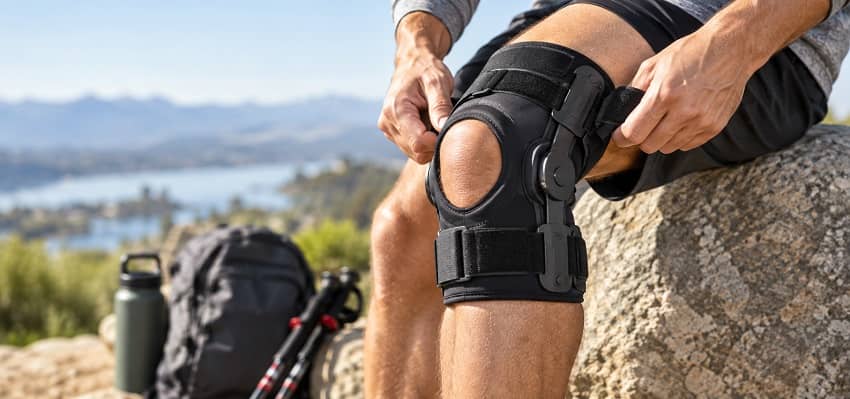
A rigid or semi-rigid brace with a hinge that applies a gentle sideways force to “open up” and take pressure off the worn compartment — shifting load toward the healthier side of the joint. This is the type most often recommended by orthopedic specialists for unicompartmental (one-sided) OA, including advanced “bone-on-bone” arthritis. Crucially, unloaders are side- and compartment-specific: a medial (inner) brace for a left knee is a different product from a lateral (outer) brace or a right-knee version, so the correct diagnosis and version matter.
Hinged brace
A wrap or sleeve with rigid side hinges and stabilizer straps that add lateral stability and control side-to-side movement. Best for OA knees that feel like they give way or buckle, or where arthritis is combined with some ligament laxity. It offers more structural support than a sleeve without the compartment-specific off-loading of a true unloader.
Compression sleeve
A pull-on elastic or knit sleeve, often with a silicone kneecap pad. It provides warmth, gentle support, swelling control, and improved proprioception (your sense of where the joint is in space, which is often reduced in OA). This is the everyday workhorse for mild-to-moderate, generalized knee OA — affordable, low-profile, and easy to wear under clothing.
Wraparound / adjustable brace
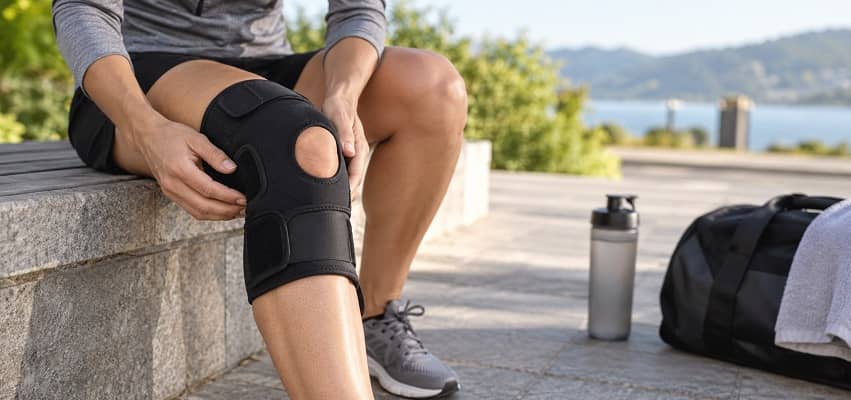
Uses straps rather than a pull-on design, so you can fine-tune compression and it’s easier to put on with limited hand strength or a larger leg. Often includes an open-patella “donut” for targeted kneecap support. A good middle ground between a basic sleeve and a hinged brace.
How we chose
We prioritized products that are genuinely available to consumers on Amazon (US), that map to a clear OA use-case, and that come from brands with an established track record in orthopedic supports. We favored designs whose mechanism matches how OA braces are actually intended to work (compartment off-loading, medical-grade compression, proprioceptive support, or lateral stability), and we deliberately spanned a range of prices and severities. We have not invented star ratings or prices; where numbers appear, they’re approximate and change often, so treat every price as “check current price.”
Best knee braces for osteoarthritis: quick comparison
| Brace | Type | Best for | Standout feature | Price band* |
|---|---|---|---|---|
| DonJoy OA Nano | Unloader (rigid) | Diagnosed medial/lateral OA wanting a light off-loader | ~14 oz frame, adjustable off-loading, 4-point leverage | Premium |
| DonJoy OA Everyday | Unloader (rigid) | Mild-to-moderate one-sided OA, all-day wear | Dial-adjustable hinge, short 12.5″ frame | Mid-range |
| Bauerfeind GenuTrain | Compression sleeve | Mild-to-moderate, generalized OA | Medical-grade knit + Omega kneecap pad | ~$130–160 |
| NEENCA Professional | Compression sleeve | Budget everyday support | Patella gel pad + side spring stabilizers | ~$20–30 |
| McDavid Hinged Knee Brace | Hinged | OA with instability / giving-way | Bilateral polycentric hinges + stability straps | ~$30–50 |
| NEENCA Plus Size | Compression sleeve | Larger thighs / plus size | Extended sizing, side stabilizers | ~$25–35 |
| Incrediwear Knee Sleeve | Sleeve (non-compression) | All-day warmth & circulation | Semiconductor-element fabric, seamless fit | ~$40–55 |
The 7 best knee braces for osteoarthritis
01 / BEST OVERALL OVER-THE-COUNTER UNLOADER
DonJoy OA Nano
DonJoy is one of the most recognized names in off-loading knee bracing, and the OA Nano is its lightweight, off-the-shelf option for osteoarthritis. It uses a malleable low-profile frame with DonJoy’s adjustable off-loading (Adjuster) technology and a four-points-of-leverage design to shift weight-bearing load away from the affected medial or lateral compartment — at a listed weight of roughly 14 ounces, it’s among the lighter functional OA braces available. Because a clinician can contour the frame, it can fit awkward leg shapes better than a fixed brace.
Pros
- Genuine off-loading mechanism with the most clinical rationale
- Very light and low-profile for a rigid brace
- Frame can be adjusted/contoured for fit
Cons
- Premium price
- Must buy the correct side and compartment (medial vs lateral, left vs right)
- Bulkier under trousers than a sleeve
Who it’s not for: people with mild, diffuse aches or no confirmed one-sided OA — a sleeve is cheaper and likely enough.
02 / BEST VALUE ADJUSTABLE UNLOADER
DonJoy OA Everyday
The OA Everyday is DonJoy’s more affordable, prefabricated off-loader built for daily activities. It uses a telescoping condyle pad on the side opposite the worn compartment to apply an adjustable unloading force that gently “gaps” the joint as you walk; you increase or decrease that force with a hex tool on the hinge. At about 12.5 inches it’s one of the shorter off-loading braces, which many people find easier to wear at home or work. Choose the medial version (link above) or the lateral version to match your affected side.
Pros
- Real, tunable off-loading at a lower price than premium unloaders
- Short frame is comfortable for all-day wear
- Trusted brand for OA bracing
Cons
- Less refined and heavier-feeling than the OA Nano
- Side/compartment-specific — order carefully
- Best for mild-to-moderate, not severe deformity
Who it’s not for: athletes needing maximum correction, or anyone with severe malalignment better served by a custom brace.
03 / BEST MEDICAL-GRADE COMPRESSION SLEEVE
Bauerfeind GenuTrain
If you want a step up from a drugstore sleeve, the German-made GenuTrain is a benchmark. Its breathable medical-grade knit delivers gradient compression, while an integrated silicone Omega pad seats around the kneecap to deliver a gentle intermittent massage and help reduce swelling. It’s machine-washable, low-profile enough to wear under clothing, and the brand’s supports have carried Arthritis Foundation recognition. For people whose arthritis is concentrated on the inner knee, Bauerfeind also makes a variant, the GenuTrain A3, with a star-shaped massage pad specifically aimed at medial arthritis pain (search “Bauerfeind GenuTrain A3” and verify the listing before buying).
Pros
- Excellent build quality and comfort for long wear
- Targeted kneecap support plus swelling/proprioception benefits
- Precise sizing for a snug therapeutic fit
Cons
- Expensive for a sleeve
- Snug medical sizing runs small — measure carefully
- Compression support only; no rigid off-loading
Who it’s not for: severe one-sided “bone-on-bone” OA that needs mechanical off-loading rather than compression.
04 / BEST BUDGET COMPRESSION SLEEVE
NEENCA Professional Knee Brace
NEENCA is one of Amazon’s most popular knee-support brands, and this sleeve punches above its price. It combines a patella gel pad with side spring stabilizers and a non-slip design, and it’s registered as a Class 2 medical device and listed as HSA/FSA-eligible. For mild-to-moderate OA, everyday soreness, or added support during walks and light exercise, it’s an easy, low-cost place to start before spending on a specialist brace. Budget alternatives worth comparing include Modvel, CAMBIVO, and POWERLIX sleeves (verify listings before buying).
Pros
- Very affordable; low-risk way to try a sleeve
- Gel pad + side stabilizers add more than a plain sleeve
- HSA/FSA-eligible
Cons
- Not as durable or refined as premium brands
- Sizing can be tight — check the thigh-circumference chart
- Support is modest; not for instability or severe OA
Who it’s not for: anyone whose knee buckles or who has confirmed severe compartmental OA.
05 / BEST FOR OA WITH INSTABILITY
McDavid Hinged Knee Brace
When an arthritic knee also feels unstable, a hinged brace can add the lateral support a sleeve can’t. This McDavid uses bilateral polycentric hinges with side stabilizers and adjustable stability straps to control side-to-side movement while still allowing a natural range of motion. It’s a practical, mid-priced choice for people who describe their knee as “giving way,” or who have OA alongside some ligament laxity, and it’s widely used for general knee support.
Pros
- Real lateral stability from dual hinges
- Adjustable straps fit a range of legs
- Reasonable price for a hinged brace
Cons
- Bulkier and warmer than a sleeve
- Adds stability, not compartment off-loading
- Some find heavy-duty hinged braces stiff at first
Who it’s not for: people with only mild aches and no instability, who don’t need the added bulk.
06 / BEST FOR LARGER LEGS
NEENCA Plus Size Knee Brace
Standard sleeves often roll, pinch, or simply don’t fit above a certain thigh circumference — a common frustration for larger individuals, who are also more likely to experience knee OA. NEENCA’s plus-size version keeps the patella gel pad and side stabilizers of the standard model but is cut for bigger legs, with breathable, quick-drying fabric intended for all-day wear. Always measure your thigh about four inches above the kneecap and follow the size chart rather than guessing from height and weight.
Pros
- Genuinely accommodates larger thighs
- Same gel-pad + stabilizer support as the standard NEENCA
- Affordable and FSA/HSA-friendly
Cons
- Still a compression sleeve, not an off-loader
- Fit is sensitive to accurate measuring
- Modest support for severe OA
Who it’s not for: people who fit standard sizing, or who need rigid off-loading.
07 / BEST LOW-PROFILE SLEEVE FOR WARMTH & CIRCULATION
Incrediwear Knee Sleeve
Incrediwear takes a different approach from a tight compression sleeve: its fabric is woven with semiconductor elements (germanium and carbon) that the brand says are activated by body heat to support circulation, and the seamless sleeve is designed for comfortable all-day and overnight wear without squeezing the joint. Many users like it simply as a warm, non-bulky layer for stiff, achy arthritic knees. An honest caveat: independent, high-quality evidence for the specific “semiconductor/circulation” mechanism is limited, so set expectations around comfort and warmth rather than a proven clinical effect.
Pros
- Very comfortable, seamless, non-constricting
- Good for all-day or overnight warmth
- No pressure points from gel pads or straps
Cons
- Mechanism claims aren’t strongly evidence-backed
- Little structural support or off-loading
- Pricier than basic sleeves
Who it’s not for: anyone needing firm support, stability, or compartment off-loading.
How to choose the right knee brace for your osteoarthritis
Match the brace to your situation rather than to marketing. A few questions that narrow it down quickly:
- Where is your arthritis? If a clinician has told you it’s one-sided — medial (inner) or lateral (outer) — an unloader targeting that compartment makes the most sense. Generalized or kneecap-related OA usually does better with a sleeve.
- How severe is it? Mild-to-moderate aching → start with a compression sleeve. Advanced, “bone-on-bone,” or activity-limiting pain → consider an unloader, ideally with clinical guidance.
- Does your knee feel unstable? Buckling or “giving way” points toward a hinged brace for lateral support.
- Will you actually wear it? Comfort and ease of use drive adherence, and adherence drives results. A brace in a drawer helps no one.
- Fit and size. Most sleeves are sized by thigh circumference measured a few inches above the kneecap — follow the chart, not your clothing size. Unloaders are also left/right and medial/lateral specific.
How to measure for the right fit
For compression sleeves, measure the circumference of your thigh roughly four inches above the center of your kneecap, and (if the chart asks) around the knee’s center, then match those numbers to the manufacturer’s size chart. If you fall between sizes, sizing down gives more compression and sizing up gives more comfort. For unloader and hinged braces, confirm the affected knee (left or right) and compartment (medial or inner vs lateral or outer) before ordering — this is exactly the kind of detail a physical therapist or fitter can confirm.
Frequently asked questions
Do knee braces really work for osteoarthritis?
For some people they help, but the effect is modest and varies. Reviews rate the evidence as low-to-moderate quality, yet major guidelines still list bracing as a reasonable option, especially for painful or unstable knees. Unloader braces have the most support, and benefit tends to increase the more consistently the brace is worn. Braces work best alongside exercise and weight management.
What type of knee brace is best for bone-on-bone knee OA?
For advanced, one-sided “bone-on-bone” osteoarthritis, an unloader (offloader) brace is usually the most appropriate type. It applies a gentle sideways force to shift weight-bearing load off the worn compartment onto the healthier side of the joint. Because these braces are compartment- and side-specific, it’s best to confirm your OA pattern with a doctor and, ideally, be fitted professionally.
Can I wear a knee brace for osteoarthritis all day?
Often yes, particularly during weight-bearing activity like standing, walking, or exercise, and research on unloaders suggests more daily wear can mean more benefit. That said, comfort matters: watch for pinching, skin irritation, numbness, or swelling below the brace, and take it off if you notice these. If you have circulation issues or diabetes, ask your clinician how long to wear it.
Do I need a prescription to buy an OA knee brace?
Many effective braces — compression sleeves, hinged braces, and several over-the-counter unloaders — can be bought without a prescription online. However, getting a diagnosis first helps you buy the right type and, for unloaders, the correct side and compartment. Custom or high-end off-loading braces are typically prescribed and fitted by a clinician, and may sometimes be eligible for insurance coverage.
Unloader brace or compression sleeve — which should I choose?
Choose an unloader if you have confirmed medial or lateral (one-sided) OA and want to off-load a specific worn compartment. Choose a compression sleeve if your arthritis is milder, more generalized, or centered on the kneecap, and you mainly want warmth, gentle support, swelling control, and better joint awareness. Many people start with an affordable sleeve and step up if needed.
Will wearing a knee brace make my knee weaker?
There’s no strong evidence that appropriate, part-time brace use weakens the knee, and clinicians who fit OA braces generally reassure patients on this point. The bigger risk is relying on a brace instead of strengthening the muscles that support the joint. Most experts recommend pairing a brace with a physical-therapy or exercise program that builds quadriceps and hip strength.
How do I know if my osteoarthritis is medial or lateral?
You usually can’t tell reliably on your own. A clinician determines the affected compartment from your symptoms, a physical exam, and often a standing X-ray that shows where the joint space has narrowed. This matters because unloader braces are built specifically for the inner (medial) or outer (lateral) side, so an accurate diagnosis ensures you buy a brace that actually off-loads the right area.
The bottom line
A knee brace can be a genuinely useful tool for osteoarthritis — reducing pain and helping you stay active — but it isn’t a cure, and the best type depends on your specific diagnosis. If your OA is one-sided and painful, an unloader like the DonJoy OA Nano has the strongest rationale; for milder, everyday support, a quality sleeve such as the Bauerfeind GenuTrain or the budget NEENCA Professional is a sensible start; and if your knee feels unstable, a hinged brace adds control. Whichever you pick, confirm the right type and fit with a healthcare professional, and treat the brace as one part of a broader plan.
This article is for general information only and is not medical advice. Osteoarthritis and knee pain have many causes, and the right treatment varies from person to person. Talk to a qualified healthcare professional — a doctor, physical therapist, or certified orthotic fitter — about your specific diagnosis before choosing or wearing a knee brace, especially if you have circulation problems, diabetes, skin issues, or significant swelling.