Trim Clinical Strength CLA: Does It Actually Work? An Honest Review (2026)
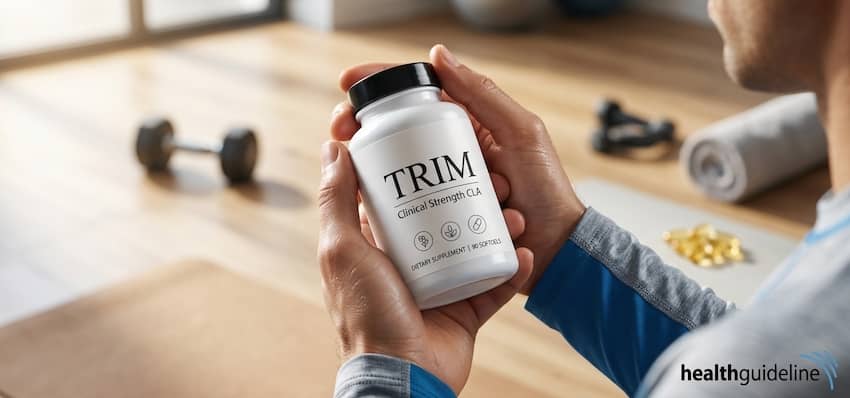
“Trim Clinical Strength CLA” is marketing language for high-dose CLA (conjugated linoleic acid) softgels sold as fat-loss aids. The honest verdict from the research: CLA has only a small, inconsistent effect on body fat in humans — nowhere near the results seen in mice, and not a replacement for diet and exercise. If you still want to try a well-made CLA supplement, our top pick for quality is Sports Research CLA 1250 (95% active CLA, third-party tested). Budget option: NatureWise CLA 1250. Always talk to your doctor first.
If you’ve searched for “Trim Clinical Strength CLA,” you’ve probably seen it promoted as a powerful way to burn fat and get lean. This guide cuts through the marketing: what CLA is, what the science actually shows about it for weight loss, whether it’s safe, and — if you decide it’s worth a try — which real, currently available CLA supplements on Amazon are made well. No hype, honest pros and cons, and a clear reminder throughout that supplements are the small stuff, not the main event.
What is “Trim Clinical Strength CLA”?
“Trim Clinical Strength CLA” is a marketing label used for high-dose conjugated linoleic acid (CLA) softgels sold as weight-loss aids. CLA is a fatty acid found naturally in beef and dairy; the supplement version is usually made from safflower oil. “Clinical strength” simply signals a higher dose per capsule — it does not mean the product has proven clinical results.
A few different products have used “Trim” and “clinical strength” language over the years (liquid formulas, softgels, and multi-level-marketing blends), so the exact name isn’t tied to one single listing. What they share is the active ingredient: CLA. Because the name is inconsistent — and because the ingredient is what matters — the practical question isn’t “is this one bottle good?” but “does CLA work, and which CLA product is made properly?” That’s what the rest of this guide answers.
Does CLA actually work for weight loss?
Only modestly, at best. CLA reduces body fat impressively in mice, but human trials are mixed and underwhelming. A meta-analysis of long-term studies found that people taking CLA lost roughly 0.7 kg (about 1.5 lb) more than those on a placebo over six months or longer — a difference most researchers consider too small to be clinically meaningful.
CLA is actually one of the most-studied weight-loss supplements in the world, which is helpful, because it means we don’t have to guess. Here’s what the better evidence says:
- It works far better in animals than in people. A 2019 University of Washington review described CLA as having “substantial efficacy in mice, and modest efficacy in obese human populations.” The gap between the mouse results and the human results is the whole story of CLA.
- The human effect is small and plateaus quickly. A widely cited 2007 meta-analysis of 18 controlled trials found only a modest reduction in body fat — on the order of a tenth of a kilogram per week during roughly the first six months, after which the effect tends to level off.
- Long-term, the benefit is barely there. A separate systematic review of trials lasting six months or more pooled the results and found people on CLA lost about 0.7 kg more than placebo. The reviewers noted that several of the underlying studies had serious methodological problems, and that a difference that small isn’t clinically important.
- Even combined with exercise, it doesn’t move the scale. A 2023 review found that CLA plus exercise could slightly lower body fat, but did not reduce overall body weight, improve exercise performance, or improve cholesterol.
The bottom line: CLA is not a fat-burner in the way it’s marketed. At best it may nudge body composition slightly over months of consistent use, alongside a calorie-controlled diet and regular activity. It will not melt fat, and — like a waist trimmer belt or a sweat vest — it cannot target fat from a specific area such as the belly. Spot reduction isn’t a thing, no matter the product.
Is CLA safe? Side effects to know
For most healthy adults, CLA appears reasonably safe at doses up to about 3–6 grams a day in the short term. The most common side effects are digestive — nausea, stomach upset, and loose stools. Higher doses and long-term use are less well studied, and CLA may worsen blood-sugar control in people with diabetes or metabolic syndrome.
A few specifics worth knowing before you buy:
- Digestive upset is the usual complaint — taking softgels with food helps some people tolerate them better.
- Blood sugar and insulin. One particular form of CLA (the trans-10, cis-12 isomer) has been linked to insulin resistance in studies of men with metabolic syndrome, and research in people with diabetes found CLA could negatively affect insulin and glucose. If you have diabetes, prediabetes, or metabolic syndrome, this is a real reason to talk to your doctor first.
- Liver. Rare cases of liver injury (including a documented case of acute hepatitis linked to CLA) have been reported. Rare doesn’t mean impossible.
- It’s technically a trans fat. CLA is a naturally occurring trans fat, which isn’t the same as the harmful industrial kind — but supplement CLA is manufactured from vegetable oils and has a different mix of forms than the CLA you’d get from food, so it may not behave the same way.
CLA is not appropriate for everyone: skip it (or get medical clearance first) if you’re pregnant or breastfeeding, have diabetes or liver problems, or take medications such as blood thinners. See the when to talk to a professional section below.
How we chose these CLA supplements
Since the ingredient matters more than the brand name on the bottle, we prioritized CLA products that are made to a high standard and clearly labeled. Specifically, we looked for: a transparent percentage of active CLA (higher-quality safflower-oil extracts are standardized to 80–95%), third-party or in-house lab testing, non-GMO sourcing, manufacturing in cGMP-compliant facilities, and honest labeling that doesn’t promise miracles. We included options across dose, budget, and dietary needs (including a vegan pick), and we’ve been upfront that the modest-evidence caveat applies to all of them equally.
Best CLA supplements on Amazon at a glance
| Product | Best for | Active CLA | Key feature | Price |
|---|---|---|---|---|
| Sports Research CLA 1250 | Best overall | 1,187 mg per softgel (95%) | Third-party tested, non-GMO safflower | Mid-range — check Amazon |
| Bronson CLA 3000 | Higher dose, fewer pills | 2,250 mg per 2-softgel serving | Legacy brand (since 1960), non-GMO | Mid-range — check Amazon |
| NatureWise CLA 1250 | Best value / mainstream | 1,000 mg per softgel (80%) | Popular, halal gelatin, non-GMO | Budget — check Amazon |
| Sports Research Vegan CLA | Best vegan / vegetarian | 1,000 mg per veggie softgel (80%) | Plant-based capsule, non-GMO | Mid-range — check Amazon |
| Nutricost CLA 800 mg | Best budget | 800 mg per softgel | Simple, low cost per serving, lab tested | Budget — check Amazon |
01 / BEST OVERALL
Sports Research CLA 1250
Sports Research CLA 1250 is our pick for the best-made standard CLA supplement: each softgel is standardized to 95% active CLA (about 1,187 mg) from non-GMO safflower oil, it’s soy- and gluten-free, made in a cGMP-compliant US facility, and third-party tested. It’s a clean, honestly labeled product — which is the most you can reasonably ask of a CLA supplement, given the evidence limits on the ingredient itself.
Key features
- 95% active CLA
- non-GMO safflower oil
- soy- and gluten-free
- third-party tested
- made in USA.
Pros
- Highest active-CLA percentage on this list
- strong quality control and transparency
- trusted, widely reviewed brand.
Cons
- Uses gelatin softgels (not vegan — see the vegan pick below)
- a full daily dose means taking multiple softgels
- and, like every CLA product, the weight-loss benefit is modest at best.
Best for: Most people who want a high-quality, well-tested CLA and understand it’s a minor helper, not a solution.
02 / HIGHER DOSE, FEWER PILLS
Bronson CLA 3000
Bronson CLA 3000 delivers 2,250 mg of active CLA per two-softgel serving, so you can reach a higher daily intake without swallowing as many capsules. It comes from safflower oil, is non-GMO, gluten- and soy-free, and lab tested. Bronson is a long-established supplement brand (in business since 1960), which some buyers find reassuring.
Key features
- 2,250 mg active CLA per serving
- safflower oil
- non-GMO
- gluten- and soy-free
- laboratory tested.
Pros
- Efficient dosing for people who want a higher amount
- long-standing brand
- available in larger counts for fewer reorders.
Cons
- Gelatin softgels (not vegan)
- a higher dose doesn’t translate into a meaningfully bigger effect based on the research
- not third-party-certified in the same way as some competitors.
Best for: People who specifically want a higher per-serving dose in fewer capsules.
03 / BEST VALUE / MAINSTREAM
NatureWise CLA 1250
NatureWise CLA 1250 is one of the most popular CLA supplements around, and it hits a nice balance of price and quality: 1,000 mg of active CLA (80%) per softgel from non-GMO safflower oil, with halal-certified gelatin and no gluten, soy, or dairy. If you want a widely used, trusted mainstream option without paying a premium, this is an easy choice.
Key features
- 1,000 mg active CLA per softgel (80%)
- non-GMO safflower oil
- halal gelatin
- gluten/soy/dairy-free.
Pros
- Popular and well-reviewed
- competitively priced
- halal-certified softgels.
Cons
- Lower active-CLA percentage than the 95% options
- gelatin (not vegan)
- same modest-evidence caveat as all CLA.
Best for: Budget-conscious buyers who want a trusted, everyday brand.
04 / BEST VEGAN / VEGETARIAN
Sports Research Vegan CLA
Most CLA softgels use animal gelatin, which rules them out for vegans and vegetarians. Sports Research Vegan CLA solves that with a plant-based veggie softgel, while still delivering 1,000 mg of active CLA (80%) per capsule from non-GMO safflower oil. Same brand quality standards as the flagship, in a vegan-friendly capsule.
Key features
- 1,000 mg active CLA per veggie softgel (80%)
- plant-based capsule
- non-GMO safflower oil
- soy- and gluten-free.
Pros
- One of the few genuinely vegan CLA options
- reputable brand
- non-GMO.
Cons
- Lower active percentage than the 95% flagship
- typically costs a little more than gelatin versions
- modest evidence, as with all CLA.
Best for: Vegans and vegetarians who want a CLA supplement without gelatin.
05 / BEST BUDGET
Nutricost CLA 800 mg
If you mainly care about cost per serving, Nutricost CLA is a straightforward, no-frills option: 800 mg of CLA per softgel, non-GMO, gluten-free, and made in a GMP-compliant, FDA-registered facility with independent lab testing. It’s a sensible pick for trying CLA without spending much — just keep your expectations grounded in the evidence above.
Key features
- 800 mg CLA per softgel
- non-GMO
- gluten-free
- third-party tested
- budget-friendly bottles.
Pros
- Low cost per serving
- simple, clean label
- large counts available.
Cons
- Lower per-softgel dose (you may take more capsules)
- gelatin (not vegan)
- modest evidence, like all CLA.
Best for: Cost-focused shoppers who want to try CLA inexpensively.
What to look for when buying a CLA supplement
Percentage of active CLA
Quality safflower-oil CLA is standardized to 80–95% active CLA. A “1250 mg” softgel at 95% delivers more active CLA than the same size softgel at 80%. Check the supplement facts, not just the number on the front.
Source and purity
Look for non-GMO safflower oil, manufacturing in a cGMP-compliant facility, and third-party or independent lab testing. These signal a product that contains what the label says.
Dose and daily capsules
Most studies used around 3–4 grams of CLA per day. Higher-dose softgels mean fewer capsules, but remember that a bigger dose has not been shown to produce a meaningfully bigger effect.
Dietary needs
Standard softgels use animal gelatin. If you’re vegan or vegetarian, choose a plant-based veggie softgel specifically.
Honest labeling
Be wary of any CLA product promising dramatic or “targeted” fat loss. The evidence doesn’t support those claims, and honest brands don’t make them.
Realistic expectations: what CLA can and can’t do
It’s worth saying plainly: no pill substitutes for the basics. Sustainable fat loss comes from a modest calorie deficit, enough protein, strength and cardio training, and sleep. CLA, at most, may be a very small add-on for some people over months of consistent use — and it does nothing on its own. If a product’s marketing implies otherwise, that’s a reason to be skeptical, not to buy. Your money is almost always better spent on good food and, if you want support, a session or two with a registered dietitian.
When to talk to a healthcare professional
Speak with a doctor, pharmacist, or registered dietitian before starting CLA — especially if you:
- Are pregnant or breastfeeding.
- Have diabetes, prediabetes, or metabolic syndrome (CLA may affect blood sugar and insulin).
- Have liver disease or a history of liver problems.
- Take prescription medications, including blood thinners.
- Experience ongoing digestive issues, abdominal pain, or any unusual symptoms after starting a supplement — stop and seek advice.
Frequently asked questions
Does Trim Clinical Strength CLA really work for weight loss?
Not in the dramatic way it’s marketed. “Clinical strength” refers to the dose, not to proven results. Human research shows CLA produces only a small, inconsistent reduction in body fat — around 0.7 kg more than placebo over six months in pooled studies — which most experts consider too minor to matter without diet and exercise.
How long does CLA take to work?
In studies where any effect appeared, it developed slowly over weeks to months and was most noticeable within roughly the first six months before leveling off. If you try CLA, give it several consistent weeks alongside a proper diet and activity plan — and stop if you notice side effects or no benefit.
How much CLA should I take per day?
Most clinical trials used about 3 to 4 grams of CLA daily, split across softgels with meals. Doses up to roughly 6 grams a day have been used short-term without serious problems in healthy adults, but more is not better here. Confirm the right amount for you with a healthcare professional.
Can CLA cause side effects?
Yes. The most common are digestive — nausea, upset stomach, and loose stools. Less commonly, CLA may worsen insulin resistance in people with diabetes or metabolic syndrome, and rare cases of liver injury have been reported. Taking it with food and starting at a lower dose can help tolerability.
Is CLA better than diet and exercise?
No — and it’s not close. Diet, strength training, cardio, and sleep are what actually drive fat loss. CLA is, at best, a very small potential add-on for some people. Any supplement that claims to outperform lifestyle changes is overselling. Spend your effort and money on the fundamentals first.
Does CLA target belly fat specifically?
No. Spot reduction — losing fat from one chosen area like the belly — isn’t possible with any supplement, wrap, or device. Your body draws on fat stores throughout the body as you lose weight overall. Products implying targeted belly-fat loss are making a claim the science doesn’t support.
Medical disclaimer: This article is for general information only and is not medical advice. Talk to a qualified healthcare professional about your specific situation before starting any supplement.