Aircast AirSport Ankle Brace Review (2026): Support, Fit & 3 Alternatives
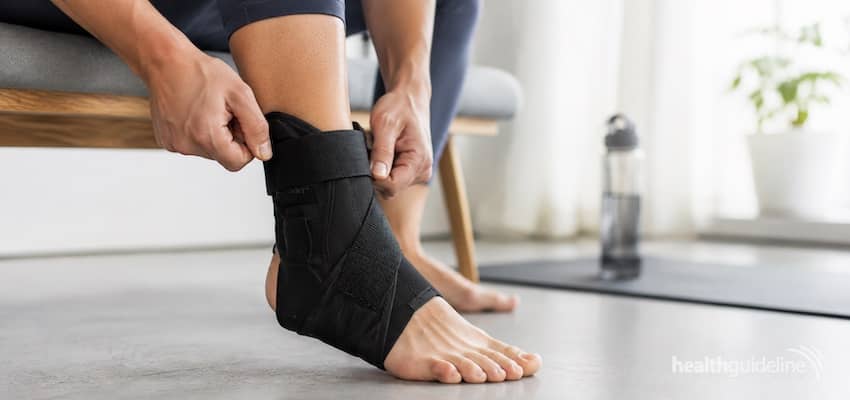
The Aircast AirSport is our top pick for anyone recovering from a Grade I or II ankle sprain who still wants to stay active. Its semi-rigid shell and foam-filled air cells give real side-to-side (inversion/eversion) protection, and the step-in design makes it fast to put on.
Best overall
Aircast AirSport
Best low-profile
Aircast A60
Best value lace-up
Med Spec ASO
Best maximum support
Zamst A2-DX
If you have rolled your ankle before, you already know how easily it happens again — and how much a good brace can help you trust the joint. The Aircast AirSport ankle brace is one of the most recognizable semi-rigid supports on the market, built for the person who wants stability without giving up their sport or daily routine. Below is an honest look at how it works, who it suits, where it falls short, and three verified alternatives so you can pick the right level of support for you.
Is the Aircast AirSport ankle brace worth it?
Yes — for active people recovering from a mild-to-moderate (Grade I or II) ankle sprain or managing chronic instability, the Aircast AirSport is a well-designed, well-supported choice. Its semi-rigid shell and air-cell cushioning limit the sideways rolling that causes most sprains while staying comfortable enough for daily wear. It is bulkier than a simple sleeve, which is the main trade-off.
How we chose
We compared the AirSport against the most widely used ankle braces in the same category, weighing five things that actually matter to buyers: level of support (how well it resists inversion/eversion), fit and sizing, breathability, ease of putting it on, and how well it works across different activities and budgets. We cross-checked the support claims against sports-medicine sources, including the American Academy of Orthopaedic Surgeons (AAOS) and the Journal of Orthopaedic & Sports Physical Therapy, and confirmed that every product below is a real item currently listed on Amazon.com. We do not use affiliate links, and no brand paid to be included.
Top picks at a glance
| Brace | Best for | Support level | Standout feature | Approx. price* | Link |
|---|---|---|---|---|---|
| Aircast AirSport | Grade I–II sprain recovery & prevention | Moderate–high (semi-rigid) | Semi-rigid shell + foam air cells | ~$55–70 | View on Amazon |
| Aircast A60 | Low-profile everyday support | Mild–moderate | 60° stabilizer, fits in most shoes | ~$30–45 | View on Amazon |
| Med Spec ASO | Budget lace-up / team sports | Moderate | Lace-up + figure-8 straps | ~$30–40 | View on Amazon |
| Zamst A2-DX | Maximum support / high-grade sprains | High (rigid guards) | Exo-grid guards + X-strap | ~$60–75 | View on Amazon |
01 / Best overall
Aircast AirSport — Best overall
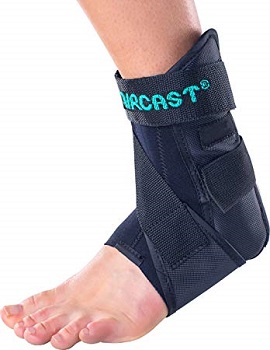
The AirSport is Aircast’s sport-focused take on its clinically established air-stirrup design. It pairs a semi-rigid outer shell with foam-filled air cells on each side of the ankle, so it cushions and compresses while still blocking the sideways roll that causes lateral sprains. An anterior talofibular (ATF) cross strap plus integral forefoot and shin wraps add compression and stability, and the “step-in” design (toes in first, then automatic heel adjustment) makes it genuinely quick to put on. It is a strong fit for someone bouncing back from a Grade I or II sprain who wants to keep training rather than sit still.
Key features
- semi-rigid encased shell
- foam-filled air cells
- ATF cross strap
- forefoot and shin wraps
- step-in design with automatic heel adjustment
- coated, latex-free fabric.
Pros
- real inversion/eversion protection
- comfortable compression that doesn’t feel punishing
- fast on and off
- left/right-specific anatomical fit
- unisex.
Cons
- bulkier than a compression sleeve
- may not fit inside slimmer or low-cut shoes
- slightly limits end-range ankle motion (by design)
- costs more than a basic sleeve.
Best for: active adults recovering from a mild-to-moderate sprain, or people with chronic ankle instability who want dependable support for sport and daily life.
Not for: anyone needing a slim brace that disappears inside a dress shoe, or someone with a severe (Grade III) injury who should be evaluated in person first.
02 / Best low-profile alternative
Aircast A60 — Best low-profile alternative
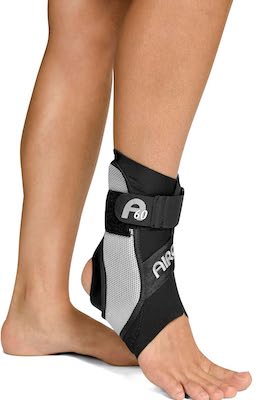
If the AirSport sounds like more brace than you need, the Aircast A60 is the slimmer sibling in the same family. Its stabilizers are molded at a 60-degree angle to guard against rollovers, a single strap replaces lacing so it goes on in seconds, and the breathable Breath-O-Prene fabric keeps your foot cooler. Because it is lower-profile, it fits inside more shoes than the AirSport — a good match for everyday wear or milder instability rather than active injury recovery.
Pros
- slim enough for most athletic shoes
- very quick single-strap application
- breathable
- lighter feel.
Cons
- less overall support than the semi-rigid AirSport
- not ideal for higher-grade sprains.
Best for: low-profile daily support and mild prevention.
03 / Best value lace-up
Med Spec ASO — Best value lace-up
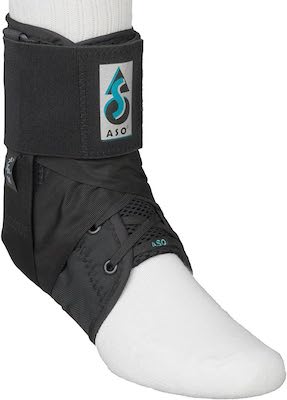
The Med Spec ASO is a long-time favorite of athletic trainers and a staple of lace-up ankle braces. Instead of a rigid shell, it uses a lace-up boot plus figure-8 stabilizing straps that mimic athletic taping, giving you adjustable, dial-in support that still slides into most shoes. It is bilateral (fits either foot) and typically the most wallet-friendly option here, which makes it popular for basketball, volleyball, and other cutting sports.
Pros
- highly adjustable
- taping-style figure-8 support
- fits in most athletic shoes
- budget-friendly
- either foot.
Cons
- lacing takes longer than a strap or step-in brace
- fabric can loosen over a long session and need re-tightening.
Best for: team-sport athletes and anyone who wants tunable support on a budget.
04 / Best for maximum support
Zamst A2-DX — Best for maximum support
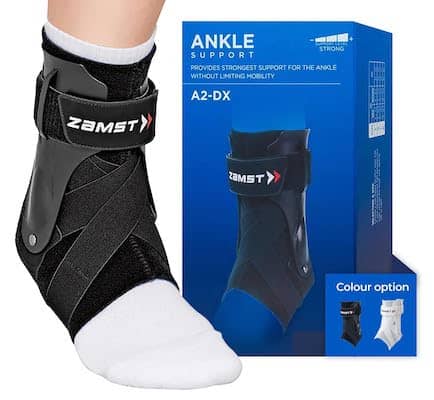
When you want the most protection, the Zamst A2-DX is built for moderate-to-severe sprains and serious court and field athletes. Rigid exo-grid guards sit on each side of the ankle, and an X-strap adds all-direction (anterior, lateral, and medial) coverage, with a rear-entry system and buffer pads to tune the fit. It is the firmest brace on this list — closest in spirit to the AirSport but with more aggressive guards — and a common pick for basketball, volleyball, and lacrosse.
Pros
- strongest support here
- anatomical left/right fit
- all-direction X-strap
- adjustable buffers.
Cons
- most rigid and least “invisible” in a shoe
- premium price
- can feel like a lot for mild strains.
Best for: high-grade sprain recovery and high-impact sports where rollovers are common.
What to look for when buying an ankle brace
Support level
Braces range from soft compression sleeves (mild) to lace-up supports (moderate) to semi-rigid and rigid shells like the AirSport and Zamst A2-DX (moderate-to-high). Match the support to the job: prevention and mild instability need less than active recovery from a moderate sprain.
Fit and sizing
The AirSport is sized XS–XL by shoe size and is left/right-specific, so check the size chart on the listing and pick the correct foot. If you are between sizes, most athletes size up for comfort. A brace that is too loose won’t protect you; too tight and you’ll stop wearing it.
Breathability
You will wear a brace for hours, so ventilation matters. Breathable materials cut down on sweat, odor, and skin irritation — a real factor for daily wear and long training sessions.
Ease of application
Step-in and single-strap designs (AirSport, A60) are faster than lacing. A lace-up (ASO) is slower but lets you fine-tune tension. Pick what you’ll realistically use every day.
Your activity
Cutting sports like basketball and volleyball put the most rollover stress on the ankle and reward firmer support. Walking, hiking, and everyday wear can often use a lower-profile brace.
About ankle sprains and when a brace actually helps
A lateral ankle sprain happens when the foot rolls inward and overstretches the ligaments on the outside of the ankle. Braces help by limiting that extreme sideways motion. According to the American Academy of Orthopaedic Surgeons, a removable support such as an air-stirrup–type (“aircast”) brace is a reasonable option for a Grade 2 sprain, while more severe (Grade 3) injuries may need a cast or in-person care.
The evidence for bracing is encouraging but specific. A clinical review in the Journal of Orthopaedic & Sports Physical Therapy found that semi-rigid and lace-up braces significantly reduced initial and recurrent ankle sprains in athletes and military populations, generally without hurting performance. Systematic-review data suggest bracing (or balance/neuromuscular training) can cut the recurrence rate by roughly half in people who have sprained an ankle before — but people with no prior sprain history appear to benefit far less. In other words, a brace is most valuable if you have rolled your ankle already or have known instability, and it works best alongside rehab and strengthening, not as a replacement for it.
When to see a professional
See a doctor or physical therapist if you can’t bear weight, if there’s significant swelling, bruising, numbness, or deformity, if the ankle feels unstable or “gives way” repeatedly, or if pain isn’t improving after a few days. A brace supports and protects — it is not a diagnosis or a cure, and severe sprains and fractures need proper evaluation.
Frequently asked questions
Is the Aircast AirSport good for a sprained ankle?
Yes. The AirSport is specifically designed for people prone to ankle sprains and for recovery from Grade I or II sprains. Its semi-rigid shell and air cells provide support and compression on both sides of the ankle, helping limit the sideways rolling that aggravates a sprain while you stay active.
How do I size the Aircast AirSport?
The AirSport is sized from X-Small to X-Large based on your shoe size and comes in left- and right-specific versions, so choose the correct foot. Sizing runs a little differently for men and women, so check the manufacturer’s size chart on the Amazon listing and, if you’re between sizes, most people size up.
Can you wear the Aircast AirSport in shoes?
Often, yes, but it is bulkier than a slim sleeve, so it fits best in roomier athletic shoes and may not fit low-cut or tight footwear. If fitting inside everyday shoes is your priority, the lower-profile Aircast A60 or the lace-up Med Spec ASO are easier to slip in.
AirSport vs A60 — which should I choose?
Choose the AirSport for more support during active recovery from a moderate sprain; choose the A60 for slimmer, everyday protection and mild instability. The AirSport’s semi-rigid shell protects more, while the A60 is lighter, quicker to apply, and fits in more shoes.
How long should I wear an ankle brace?
It depends on your injury and goals. Many people wear a brace during activity while recovering and for a period afterward to prevent re-injury. Because timelines vary with severity, follow the guidance of your doctor or physical therapist rather than a fixed rule, and pair bracing with strengthening and balance work.
Can an ankle brace prevent sprains?
For people who have sprained an ankle before or have instability, research suggests bracing can meaningfully reduce recurrence — by roughly half in some studies. For those with no history of sprains, the preventive benefit appears smaller. A brace is a helpful tool, but it works best combined with proper rehab and conditioning.
Medical disclaimer: This article is for general information only and is not medical advice. Talk to a qualified healthcare professional about your specific situation.