Best Cream for Nipples When Breastfeeding (2026)
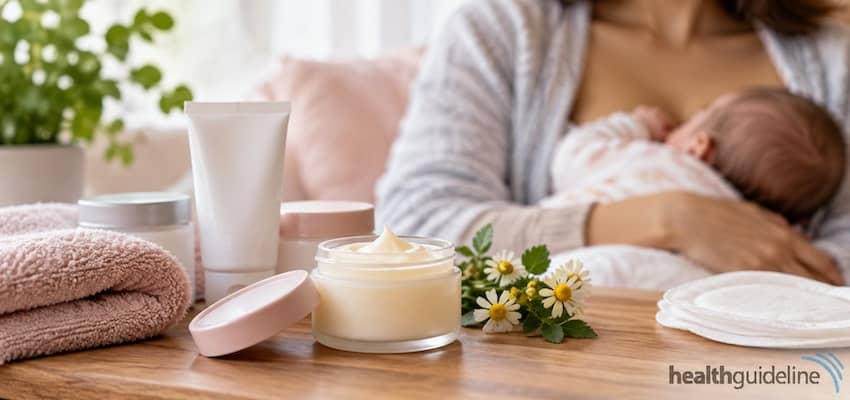
2026 breastfeeding nipple-care guide · ingredients, comfort & when to get help
The best cream for nipples when breastfeeding is not a cure for every kind of nipple pain. A well-labeled nipple cream or balm can moisturize and protect dry, irritated skin, but pain that happens at every feed, cracking or bleeding, or pain that keeps returning deserves breastfeeding support and sometimes medical assessment. This guide compares five current options while keeping that distinction clear.
Which nipple cream should you choose?
Choose by formula and skin preference rather than assuming one cream is medically superior. Lansinoh Lanolin is the simplest single-ingredient option; Earth Mama is our lanolin-free pick; and Motherlove is especially practical if you also want a balm the manufacturer says can be used on pump flanges.
Simple formula
Lansinoh Lanolin
One ingredient — ultra-purified lanolin — with no removal required before feeding according to Lansinoh.
Lanolin-free
Earth Mama
A certified-organic blend of oils, plant butters, beeswax and calendula for readers who prefer to avoid lanolin.
Nursing + pumping
Motherlove
An unscented, lanolin-free organic balm that Motherlove also labels for use as a pump-flange lubricant.
How we chose these nipple creams
We verified the current ingredient lists and directions on manufacturer websites, then confirmed that the exact products have active Amazon.com U.S. product pages. We prioritized clear labeling for breastfeeding use, simple or well-disclosed formulas, no-removal directions, and meaningful differences between products. We did not rank products by volatile star ratings or claim independent testing.
Important: “Best” here means the best fit for a particular formula preference or use case, not a proven medical winner. A 2026 systematic review found very-low-certainty evidence and no significant difference between topical breast milk and lanolin for nipple cracks or pain. The underlying cause of pain still matters.
Best creams for nipples when breastfeeding at a glance
| Product | Best for | Formula | Removal before feeding? | Amazon |
|---|---|---|---|---|
| Lansinoh Lanolin | Simple single-ingredient option | 100% ultra-purified lanolin | Manufacturer says no | Check current offer |
| Earth Mama Organic Nipple Butter | Lanolin-free overall | Organic oils, butters, beeswax, calendula | Manufacturer says no | Check current offer |
| Medela Purelan | Single-ingredient squeeze tube | Natural lanolin | Manufacturer says no | Check current offer |
| Motherlove Nipple Cream | Nursing + pump lubrication | Organic olive oil, beeswax, shea, marshmallow root, calendula | Manufacturer says no | Check current offer |
| Lansinoh Organic Nipple Balm | Larger certified-organic balm | Seven organic oils/butters including coconut, plus beeswax | Manufacturer says no | Check current offer |
Five nipple creams worth comparing in 2026
01 / SIMPLE SINGLE-INGREDIENT FORMULA
Lansinoh Lanolin Nipple Cream
Lansinoh is the most straightforward choice in this list if you want one ingredient rather than a botanical blend. The formula is ultra-purified lanolin, and Lansinoh says it contains no additives or preservatives and does not need to be removed before breastfeeding. That simplicity also makes it easy to know exactly what you are putting on your skin.
Key features
- Single ingredient: ultra-purified lanolin
- No preservatives or added fragrance listed by Lansinoh
- Manufacturer says no need to remove before breastfeeding
- Tube packaging is easy to keep in a feeding or diaper bag
Pros
- Very short ingredient list
- No wipe-off step according to the label
- Useful for dry skin beyond nipple care
Cons
- Thicker and greasier than many plant-oil balms
- Not suitable if you specifically want to avoid lanolin
- Natural oils can mark fabric
Best for: Breastfeeding parents who prefer a single-ingredient barrier/moisturizer and already know lanolin agrees with their skin. Who it is not for: Anyone who has previously reacted to lanolin or wants a lanolin-free formula.
02 / LANOLIN-FREE OVERALL PICK
Earth Mama Organic Nipple Butter
Earth Mama is our most balanced lanolin-free option because its current formula is clearly disclosed and certified organic. It combines olive oil, beeswax, cocoa butter, shea butter, mango butter and calendula extract. Earth Mama says the balm does not need to be washed off before nursing and can also be used on pump flanges.
Key features
- Lanolin-free formula
- Certified organic by Oregon Tilth
- Olive oil, beeswax and three plant butters
- Manufacturer says no need to wash off before nursing
Pros
- Good option for people avoiding lanolin
- Transparent six-ingredient formula
- Can double as a pump-flange lubricant per the manufacturer
Cons
- Contains several botanicals, so it is less simple than pure lanolin
- Contains beeswax, so it is not vegan
- Jar packaging means fingertip application
Best for: Readers who want a lanolin-free, certified-organic balm with a soft, multi-oil formula. Who it is not for: Anyone avoiding beeswax or preferring the shortest possible ingredient list.
03 / SINGLE-INGREDIENT SQUEEZE TUBE
Medela Purelan Lanolin Nipple Cream
Medela Purelan is another one-ingredient lanolin option, so the choice between it and Lansinoh is mainly about brand preference, tube size and texture rather than a proven clinical advantage. Medela describes Purelan as natural lanolin that forms a protective layer, and its current directions say there is no need to remove it before breastfeeding or pumping.
Key features
- Single-ingredient natural lanolin cream
- No removal required before feeding according to Medela
- Squeeze-tube format
- Also labeled for other areas of dry skin
Pros
- One ingredient makes the formula easy to evaluate
- Portable tube rather than a jar
- No wipe-off step per manufacturer directions
Cons
- Still a lanolin product, so it does not solve a lanolin preference or sensitivity
- Rich texture may feel heavy to some users
- Natural oils can stain clothing
Best for: People who want a simple lanolin cream in a squeeze tube. Who it is not for: Anyone who prefers a lanolin-free balm or has previously reacted to lanolin.
04 / NURSING + PUMPING
Motherlove Nipple Cream
Motherlove is a practical pick for people who alternate between direct nursing and pumping. The lanolin-free formula uses extra virgin olive oil, beeswax, shea butter, marshmallow root and calendula. Motherlove says the balm does not need to be removed before breastfeeding and can be applied to a pump flange as a lubricant.
Key features
- Lanolin-free and unscented
- Certified organic by Oregon Tilth
- Five disclosed organic ingredients
- Manufacturer labels it for pump-flange lubrication
Pros
- Useful for both nursing nipple care and pumping friction
- No lanolin or petroleum listed
- Shorter botanical list than some multi-butter balms
Cons
- Contains beeswax, so it is not vegan
- Jar packaging requires clean fingers or an applicator
- Botanical ingredients are not ideal for everyone with reactive skin
Best for: Nursing and pumping parents who want one lanolin-free balm for both skin moisturization and flange lubrication. Who it is not for: Anyone avoiding beeswax or preferring a one-ingredient formula.
05 / LARGER CERTIFIED-ORGANIC BALM
Lansinoh Organic Nipple Balm
Lansinoh Organic Nipple Balm is a larger, multi-ingredient alternative to the brand’s classic lanolin tube. Its seven-ingredient formula uses sunflower oil, olive oil, beeswax, coconut oil, shea butter, calendula extract and argan oil. Lansinoh says it is USDA-certified organic and does not need to be removed before breastfeeding.
Key features
- Lanolin-free seven-ingredient balm
- 100% USDA certified organic according to Lansinoh
- Two-ounce jar
- Manufacturer also labels it for pump lubrication
Pros
- Lanolin-free certified-organic option
- Larger jar than many travel-sized creams
- No wipe-off step per manufacturer directions
Cons
- More ingredients make it harder to identify a trigger if skin reacts
- Contains coconut oil and beeswax, which some shoppers prefer to avoid
- Jar format is less convenient for one-handed application
Best for: People who want a larger certified-organic, lanolin-free jar and like a multi-oil balm. Who it is not for: Anyone seeking a vegan formula, a coconut-free balm or the simplest possible ingredient list.
What should you look for in a breastfeeding nipple cream?
Start with a product explicitly labeled for breastfeeding nipples, read the full ingredient list, and follow the maker’s directions about whether it must be removed before a feed. Then choose between a single-ingredient lanolin cream and a lanolin-free balm based on your own skin history, texture preference and pumping routine.
1. A formula you can identify easily
A short ingredient list is useful when your skin is already irritated because it is easier to know what you are using. Lansinoh Lanolin and Medela Purelan are single-ingredient products; the other picks use disclosed botanical oils, plant butters and beeswax. “Natural” or “organic” does not automatically mean irritation-free for every person.
2. Clear feeding directions
All five products in this guide currently state that they do not need to be removed before breastfeeding. That is a manufacturer labeling point, not proof that every nipple cream on the market can be left on. If you use a different cream, follow that exact label rather than assuming the directions are the same.
3. Lanolin or lanolin-free
Lanolin is thick and occlusive, so it can work well as a moisture barrier, but some people simply dislike its texture or know that lanolin does not agree with their skin. Lanolin-free balms use oils and butters instead. Neither category has been shown to be universally superior for breastfeeding nipple pain.
4. Pumping use
If pumping friction is part of the problem, look for a product whose maker specifically says it can be used on pump flanges. Earth Mama, Motherlove and Lansinoh Organic all provide this use in their current directions. Pump discomfort can also come from flange size, suction or technique, so lubricant is not the only variable to check.
Do not use cream to push through persistent pain. NHS guidance says nipple pain is often linked to positioning and attachment, and ACOG notes that persistent breast or nipple pain can also involve pump trauma, dermatitis, infection, vasospasm and other causes. A product can protect skin while the cause is being addressed; it cannot diagnose the cause.
Do nipple creams actually help sore or cracked nipples?
Nipple creams can moisturize dry skin and create a protective barrier, but current research does not show a clear medical “best” treatment for nipple pain. A 2026 meta-analysis of four randomized trials involving 711 participants found no significant difference between topical breast milk and lanolin for nipple cracks or pain, with very-low-certainty evidence.
The evidence is weaker than the marketing
The 2026 review concluded that it remains uncertain whether lanolin performs differently from topical breast milk for reducing cracks or pain. An earlier Cochrane review likewise found insufficient evidence to recommend a specific topical treatment for painful nipples. In other words, comfort products may still be useful, but the evidence does not support promising fast healing or guaranteed pain relief.
When should nipple pain be checked by a professional?
Get breastfeeding help early if one or both nipples hurt at every feed, start to crack or bleed, or come out flattened, wedged or white. Contact a clinician if pain is severe, does not improve, or occurs with fever or other breast symptoms. Persistent pain should not be managed with cream alone.
Signs that need more than a balm
- Pain at every feed, cracking or bleeding — NHS recommends getting help early with positioning and attachment.
- Cracked or damaged skin, or pain that does not improve over the first 1 to 2 weeks — CDC advises speaking with a lactation consultant, doctor or nurse.
- Pain with fever or other breast symptoms — seek medical advice to identify the cause.
- Persistent pain despite a comfortable-looking latch — ACOG notes that causes can include pump trauma, skin conditions, infection, vasospasm and other problems that need targeted care.
If you are building a newborn-care list too, you can also browse our pacifier guide for breastfeeding babies and cloth diaper guide for newborns.
Frequently asked questions
What is the best cream for nipples when breastfeeding?
There is no clinically proven best cream for everyone. For a simple formula, consider a purified-lanolin product such as Lansinoh or Medela Purelan. If you prefer lanolin-free, Earth Mama or Motherlove are current options with clearly disclosed ingredients. The more important step is addressing persistent latch, pump or medical causes of pain.
Does lanolin heal cracked nipples?
Lanolin can moisturize and form a protective barrier, but “heals cracked nipples” is too strong as a general claim. A 2026 meta-analysis found no significant difference between topical breast milk and lanolin for nipple cracks or pain, and the certainty of the evidence was very low. Cracking also warrants attention to latch and other causes.
Do I need to wash nipple cream off before breastfeeding?
Follow the instructions for the exact product. All five products in this guide currently state that they do not need to be removed before breastfeeding, but that does not apply automatically to every balm or topical medication. If a product label says to remove it, wash or wipe it off as directed.
Can nipple cream fix pain from a poor latch?
No. A cream may reduce dryness or friction, but it cannot correct positioning or attachment. NHS and CDC guidance both emphasize getting help when feeds remain painful or nipples are cracked, damaged or misshapen after feeding. A lactation professional can observe a feed and help identify whether latch or another issue is contributing.
Can I use nipple cream before pumping?
Some products are specifically labeled for pump-flange lubrication. Earth Mama, Motherlove and Lansinoh Organic currently include that use in their directions. If pumping still hurts, check flange fit, suction level and technique rather than adding more balm indefinitely, because friction is only one possible reason pumping may be uncomfortable.
When should I get help for sore or cracked nipples?
Get help early if pain occurs at every feed, nipples crack or bleed, or they look flattened, wedged or white after feeding. CDC also recommends speaking with a lactation consultant or clinician if damaged nipple skin or pain does not improve over the first 1 to 2 weeks, and seeking care for pain with fever.
Medical disclaimer: This article is for general information only and is not medical advice. Talk to a qualified healthcare professional or lactation professional about your specific situation.