Best Wrist Compression Sleeves of 2026: 7 Picks for Wrist Pain
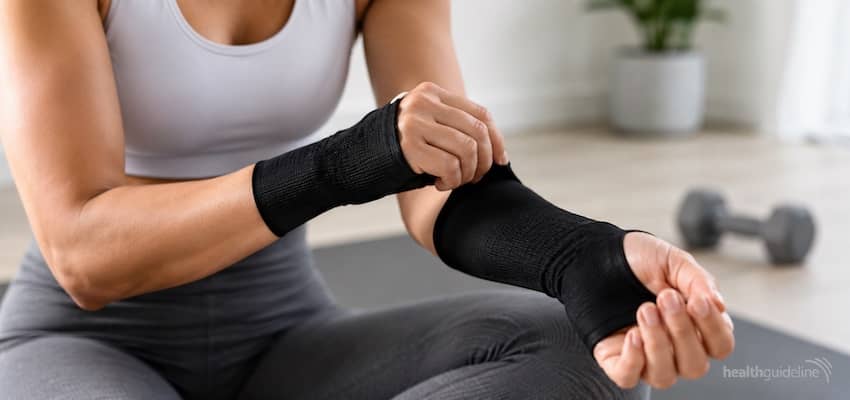
Our best overall pick is the OrthoSleeve WS6 — a thin, non-copper sleeve with a kinesiology-tape-style support panel that’s comfortable enough for all-day typing. Best value: Sparthos (sold as a pair). Best for thumb-side pain: the Neo-G Wrist & Thumb Support. One honest caveat up front: a compression sleeve can ease mild aches, swelling and soreness, but it is not the same as a rigid night splint, and it won’t “heal” or cure a wrist problem.
If your wrists ache after a long day at the keyboard, a workout, or repetitive work, a compression sleeve for the wrist is one of the simplest, lowest-cost things to try. A good sleeve applies gentle, even pressure that can calm mild swelling, add a reassuring feeling of support, and keep the joint warm. Below are seven wrist compression sleeves worth considering, what each one is genuinely best for, and — just as importantly — what the medical evidence actually says about them.
JUMP TO A SECTION
How we chose these wrist compression sleeves
We looked only at sleeves that are actually sold on Amazon from established brands, then matched them to real situations: desk work, lifting, arthritis, thumb pain and sensitive skin. We prioritized breathable fabric, a snug-but-not-constricting fit, and honest value over marketing hype. For the medical context, we leaned on the American Academy of Orthopaedic Surgeons (AAOS), Cleveland Clinic, Consumer Reports and the Arthritis Foundation rather than manufacturer copy. These links carry no affiliate tag — we don’t earn a commission on them.
Do wrist compression sleeves actually work?
Sometimes — for mild cases. The clinical evidence is genuinely mixed, but many people get real relief from everyday wrist aches, swelling and soreness. A sleeve works mainly by applying gentle, even pressure and warmth and by discouraging awkward wrist positions. For diagnosed carpal tunnel, though, authorities like the AAOS recommend a rigid splint that holds the wrist neutral — especially worn at night.
Compression is a well-established idea in medicine: elastic garments apply steady pressure that helps limit fluid buildup and swelling, which can mean less discomfort and better mobility. One Cleveland Clinic pilot study even found that a device applying targeted radioulnar pressure to the wrist improved carpal tunnel symptoms within two weeks — though that was a specialized device, not an off-the-shelf sleeve. The takeaway: a soft sleeve is a reasonable, low-risk thing to try for mild, activity-related aches, but treat it as comfort and support, not a cure.
Top wrist compression sleeves at a glance
| Sleeve | Best for | Standout feature | Approx. price* |
|---|---|---|---|
| OrthoSleeve WS6 | All-day / typing | Thin “K-Zone” support, no copper | ~$25 |
| Zensah Compression Wrist Sleeve | Sports & lifting | Fold-over cuff for extra compression | ~$20 |
| Sparthos Wrist Support (Pair) | Value | Two seamless sleeves per pack | ~$16–20/pair |
| Neo-G Wrist & Thumb Support | Thumb-side pain | Added thumb support; Class 1 medical device | ~$18–22 |
| Vive Wrist Compression Sleeve | Sensitive skin | Soft, gentle, breathable knit | ~$13–16 |
| CopperJoint Compression Sleeve | Copper fans | Firm compression + odor control | ~$20–25 |
| Copper Compression w/ Adjustable Wrap | Adjustable support | Wrap strap to dial in pressure | ~$20–25 |
The 7 best wrist compression sleeves reviewed
01 / BEST OVERALL
OrthoSleeve WS6
The OrthoSleeve WS6 is a thin, sock-like sleeve with a built-in “K-Zone” support panel — think kinesiology-tape support without the tape. It slides on easily, disappears under a shirt cuff, and uses silver (not copper) for odor control, which makes it our top pick for all-day desk and typing wear.
Key features
- micro-nylon/spandex knit
- separate thumb opening
- wears on either hand
- moisture-wicking
- recently redesigned with a wider palm and thumb area.
Pros
- genuinely low-profile
- firm-but-comfortable compression
- no copper gimmick
- breathable for long wear.
Cons
- sold as a single sleeve (buy two for both wrists)
- light support only — not for significant instability
- hand-wash to preserve the stretch.
Best for: office workers, typists and anyone with mild, carpal-tunnel-type daytime aches.
02 / BEST FOR SPORTS & LIFTING
Zensah Compression Wrist Sleeve
Zensah’s sleeve is built for athletes. A fold-over cuff lets you add extra compression on demand, the seamless 60/40 nylon-spandex fabric moves with you, and a thumb hole keeps it from sliding during lifts, golf swings or gym sessions.
Key features
- flip-cuff for adjustable compression
- thumb hole for a secure fit
- anti-odor and moisture-wicking fabric
- from a compression-apparel brand established in 2004.
Pros
- add compression when you need it via the cuff
- athletic, full-range-of-motion fit
- breathable and odor-resistant.
Cons
- lighter support when the cuff is down
- single sleeve
- snug sizing runs small for some wrists.
Best for: weightlifting, golf, tennis and general gym use.
03 / BEST VALUE
Sparthos Wrist Support Sleeves (Pair)
Sparthos gives you two seamless sleeves for roughly the price of a single premium one, which makes it the easy value pick if you want to support both wrists or keep a spare. The knit is soft and stretchy with a second-skin feel for everyday wear.
Key features
- comes as a pair
- seamless construction
- multiple sizes and colors
- general daily wrist support.
Pros
- two sleeves per pack
- affordable
- comfortable, low-bulk fit
- good for everyday soreness.
Cons
- light support only
- sizing can run snug
- it’s a comfort sleeve, not a medical brace.
Best for: budget buyers, both-wrist support and general aches.
04 / BEST FOR THUMB-SIDE PAIN
Neo-G Wrist & Thumb Support
If your pain sits at the base of the thumb or on the thumb side of the wrist — think “texting thumb,” De Quervain’s-type strain or thumb arthritis — the Neo-G adds the targeted thumb support most plain sleeves lack. It’s registered as a Class 1 medical device and is a favorite of physiotherapists.
Key features
- multi-zone compression
- combined wrist and thumb support
- breathable “Airflow” fabric
- fits left or right
- from a support brand established in 2004.
Pros
- real thumb support
- medical-device registration
- breathable
- trusted by physios.
Cons
- more structured and a bit warmer than a plain sleeve
- single unit
- check hand orientation when ordering.
Best for: thumb involvement, De Quervain’s-type strain and base-of-thumb arthritis. If you need firmer thumb immobilization, see our thumb spica splint guide.
05 / BEST FOR SENSITIVE SKIN
Vive Wrist Compression Sleeve
Vive’s sleeve keeps things simple: soft, breathable, stretchy fabric that provides gentle compression and warmth without digging in. It’s a good starting point if you have sensitive skin or just want light, comfortable all-day support for arthritis or mild strain.
Key features
- soft breathable knit
- fits right or left hand
- single sleeve
- from an established medical-supply brand
- machine washable.
Pros
- gentle on skin
- comfortable for long wear
- affordable
- reputable brand.
Cons
- the gentle compression may be too light for some
- single unit
- basic support only.
Best for: sensitive skin, mild arthritis and gentle everyday warmth.
06 / BEST COPPER OPTION (WITH AN HONEST CAVEAT)
CopperJoint Compression Wrist Sleeve
If you specifically want a copper sleeve, CopperJoint is a well-made one with firm, all-day compression. Be clear-eyed about what the copper does, though: independent testing finds the support comes from the compression and fit, while copper’s only proven benefit is odor control — not pain relief. (More on that below.)
Key features
- copper-infused knit
- firm compression
- all-day fit
- single- or pair-pack options.
Pros
- firm, secure compression
- breathable
- copper genuinely helps with odor on long wears.
Cons
- copper’s pain-relief marketing isn’t backed by evidence — you’re paying for the compression, not the metal.
Best for: buyers who want a snug copper sleeve and value odor control.
07 / BEST FOR ADJUSTABLE SUPPORT
Copper Compression Recovery Wrist Sleeve with Adjustable Wrap
This one adds a wrap-around strap so you can dial in more support than a plain sleeve gives — useful if you want firmer stabilization for a flare-up or a workout but aren’t ready for a rigid brace. As with any copper product, the support comes from the compression and the adjustable strap, not the copper itself.
Key features
- sleeve plus an adjustable strap
- fits either hand
- copper-infused fabric.
Pros
- adjustable compression
- more support than a plain slip-on sleeve
- versatile for work or workouts.
Cons
- bulkier than a basic sleeve
- the copper adds no proven pain relief
- double-check size and hand.
Best for: people who want adjustable, firmer support that stops short of a rigid splint.
What to look for when buying a wrist compression sleeve
Compression level and fit
The sleeve should feel snug but never tight enough to pinch, throb or cause numbness or tingling. A simple check: you should be able to slip a finger underneath the fabric. Too much pressure can actually restrict circulation and make symptoms worse, so more is not better here.
Material and breathability
Most quality sleeves use a nylon/spandex blend that stretches and wicks moisture. If you’ll wear it for hours, breathability matters. If you have sensitive skin, look for a soft, latex-free knit (the Vive and OrthoSleeve options are good bets) and give it a wash before first wear.
Sleeve vs. splint — a key difference
A compression sleeve gives soft, flexible support and warmth while letting your wrist move. A splint or rigid brace immobilizes the wrist in a neutral position. For diagnosed carpal tunnel or a recent injury, a firmer brace is often the better tool — see our guides to the best carpal tunnel braces and wrist braces for tendonitis.
Thumb support and pain location
Plain sleeves support the wrist but leave the thumb free. If your pain is thumb-side, choose a wrist-and-thumb design like the Neo-G. Pain on the pinky side of the wrist is a different pattern — our wrist brace for ulnar pain guide covers that.
Single vs. pair, and skip the copper hype
If both wrists bother you, a pair (like Sparthos) is more economical. And when comparing copper vs. non-copper sleeves, pay for the fabric, fit and compression — not the metal, which doesn’t add proven pain relief.
Understanding wrist pain: carpal tunnel, tendonitis and arthritis
Carpal tunnel syndrome happens when the median nerve is compressed at the wrist; it affects up to 1 in 20 adults, and its hallmark symptoms are numbness, tingling and pain — often worse at night. Tendonitis and repetitive strain injuries come from overusing the wrist and hand, and arthritis brings joint stiffness and ache. A compression sleeve may ease the mild, activity-related versions of these symptoms by adding warmth, gentle support and light swelling control — but it does not treat the underlying cause, and it is not a diagnosis.
The truth about copper-infused wrist sleeves
Copper-infused sleeves are marketed as pain-relievers, but the evidence doesn’t back that up. Consumer Reports and the Arthritis Foundation have found no proof that copper woven into fabric reduces joint pain, and in 2015 the U.S. Federal Trade Commission fined the brand Tommie Copper $1.35 million over deceptive claims that its copper garments relieved chronic and severe pain. Copper does have one proven perk — it’s naturally antimicrobial, so it helps control odor on garments worn for long stretches. The bottom line: any relief you feel from a copper sleeve comes from the compression, not the copper. That’s not a reason to avoid copper sleeves (several are excellent compression garments); it’s just a reason not to pay a premium for the metal.
When to see a professional
A sleeve is fine to try for mild, occasional aches. But it’s worth seeing a doctor, hand therapist or physiotherapist if you notice any of the following:
- Numbness or tingling that persists, or that wakes you at night.
- Weakness, clumsiness or dropping things.
- Wasting or loss of muscle at the base of the thumb.
- Wrist pain after a fall or injury.
- Symptoms that last more than a few weeks or get worse despite rest.
These can be signs of a problem that needs proper assessment, and getting it checked early usually means simpler treatment.
Frequently asked questions
Do wrist compression sleeves really work?
For mild, everyday wrist aches, many people find they help — but the clinical evidence is mixed rather than conclusive. Sleeves work by applying gentle pressure and warmth and by discouraging awkward wrist positions, which can ease soreness and mild swelling. Think of them as comfort and support for minor issues, not a cure for an underlying condition.
Does a compression sleeve help carpal tunnel?
A soft sleeve may relieve mild daytime carpal tunnel symptoms by adding gentle support and warmth. But for a confirmed diagnosis, the AAOS recommends a rigid splint that holds the wrist in a neutral position, especially at night, when symptoms tend to flare. Many people use a light sleeve by day and a splint at night.
How tight should a wrist compression sleeve be?
Snug but comfortable — you should be able to slip a finger underneath the fabric. It should never cause throbbing, numbness, tingling or color change in your fingers. If it does, it’s too tight: excess pressure can restrict circulation and make symptoms worse, so size down the compression rather than up.
Can I wear a compression sleeve all day, and can I sleep in it?
Wearing a comfortable sleeve during the day is generally fine for most people. Sleeping in one is different: for carpal tunnel, a rigid night splint that keeps the wrist neutral is usually more helpful than a soft sleeve. If you want to wear any compression overnight, check with your doctor first.
Sleeve or splint — what’s the difference?
A compression sleeve is soft and flexible: it adds support and warmth while letting your wrist move freely, which suits mild aches and daytime use. A splint is rigid and immobilizes the wrist in a neutral position, which is what’s recommended first for mild carpal tunnel — particularly at night.
Do copper wrist sleeves work better than regular ones?
Not for pain. Independent reviews from Consumer Reports and the Arthritis Foundation found no evidence that copper in fabric reduces joint pain, and the FTC has penalized a major brand for overstating those claims. Copper’s real, proven benefit is odor control. Any support you feel comes from the compression itself, not the copper.