Neck and Shoulder Heating Pad: 6 Best Picks for Pain Relief in 2026
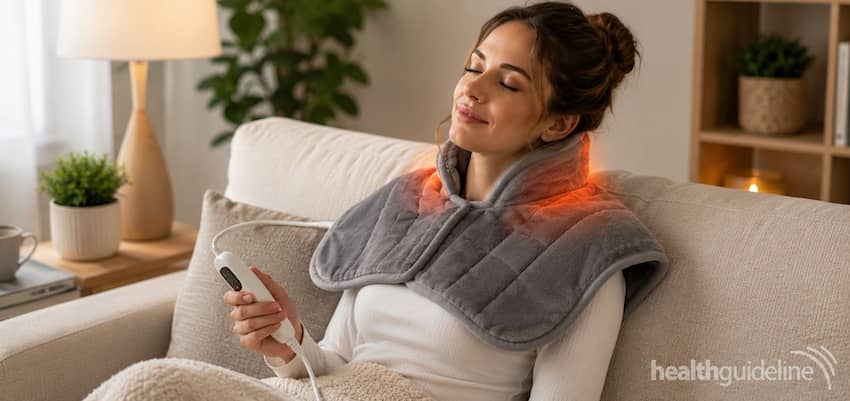
For most people the Pure Enrichment PureRelief Neck & Shoulder is the best all-round heating pad — it’s contoured for the neck and traps, stays put with a magnetic closure, and comes with a 5-year warranty.
Also great: the Comfytemp Weighted pad for weighted, hands-free comfort, and the cordless Huggaroo microwavable wrap for travel.
If you spend long days at a desk, sleep in an awkward position, or carry your stress in your shoulders, a neck and shoulder heating pad is one of the simplest and cheapest ways to loosen tight muscles and ease everyday soreness. Heat won’t fix whatever is causing the pain, but it relaxes muscles and boosts blood flow exactly where you feel it most. Below are six genuinely good options for 2026 — spanning corded, cordless, weighted and microwavable — each with honest pros and cons.
What’s the best neck and shoulder heating pad in 2026?
For most people, the Pure Enrichment PureRelief Neck & Shoulder Heating Pad is the best all-round choice. It’s contoured specifically for the neck and trapezius area, stays in place with a magnetic closure, offers four heat settings plus a moist-heat option, and is backed by an unusually generous five-year warranty. If you’d rather skip cords entirely, a microwavable wrap like the Huggaroo is a versatile, travel-friendly alternative that also works as a cold pack.
How we chose
We focused on heating pads that are actually shaped for the neck and shoulders — not generic rectangles — that hold heat evenly and include sensible safety features such as automatic shut-off. We prioritized adjustable heat, a secure fit, machine-washable covers and solid warranties, and we cross-checked each product’s features and long-term owner feedback against reputable review sources rather than marketing claims. Every product here is a real item currently sold on Amazon. Prices, ratings and stock change constantly, so treat the figures below as a starting point and confirm the latest details on each listing.
Top picks at a glance
| Heating pad | Best for | Heat type | Power | Approx. price* |
|---|---|---|---|---|
| Pure Enrichment PureRelief Neck & Shoulder | Best overall | Dry or moist | Corded (9 ft) | ~$30 |
| Sunbeam Neck & Shoulder | Best for moist heat | Dry or moist | Corded (9 ft) | ~$45 |
| Comfytemp Weighted | Best weighted (electric) | Dry | Corded (9.5 ft) | ~$45 |
| Pure Enrichment PureRelief Cordless | Best cordless & portable | Dry (battery) | Rechargeable | ~$60 |
| Huggaroo Microwave Wrap | Best microwavable / hot & cold | Moist (microwave) | Cordless | ~$35 |
| REVIX Heated Neck Wrap | Best for aromatherapy | Moist (microwave) | Cordless | ~$35 |
01 / Best overall
1. Pure Enrichment PureRelief Neck & Shoulder — Best overall
The PureRelief Neck & Shoulder is our top pick because it’s purpose-built for this exact area. A contoured collar with a magnetic closure keeps it draped over your neck and traps, four heat settings let you dial in the warmth, and there’s a moist-heat option for deeper relief. Add a long 9-foot cord, a machine-washable micromink cover and a five-year warranty, and it’s an easy everyday recommendation.
Key features:
- contoured neck/shoulder shape
- magnetic closure with wide universal-fit collar
- 4 heat settings
- dry or moist heat
- ~9 ft cord
- 2-hour auto shut-off
- machine-washable cover
- storage bag.
Pros
- shaped specifically for the neck and traps and stays in place
- long cord reaches the couch or bed
- moist-heat option
- standout 5-year warranty
- washable.
Cons
- corded, so you’re tethered to an outlet
- the fixed shape doesn’t suit every body
- the collar tends to feel warmer than the shoulder ends.
Best for: desk workers and anyone who wants a reliable, no-fuss electric pad for daily neck and shoulder tension.
02 / Best for moist heat
2. Sunbeam Heating Pad for Neck and Shoulder Pain Relief — Best for moist heat
Sunbeam’s contoured pad includes a moistening sponge, so you can switch on moist heat whenever you want it — many people find it penetrates tight, achy muscles better than dry heat. It warms up fast, has four temperature settings, and uses a magnetic clasp plus weighted edges to stay put. A long 9-foot cord and a 90-minute auto shut-off round it out.
Key features:
- dry or moist heat (moistenable sponge)
- rapid heating
- 4 temperature settings
- magnetic clasp with weighted edges
- roughly 22 x 14 in
- 9 ft cord
- 90-minute auto shut-off
- machine-washable cover.
Pros
- genuine moist-heat option
- quick warm-up
- lighter and less bulky than some wraps
- long cord
- washable.
Cons
- some owners say it doesn’t stay hot very long
- a faint odor when new
- corded.
Best for: people who specifically want moist heat for stiff, sore muscles.
03 / Best weighted (electric)
3. Comfytemp Weighted Heating Pad — Best weighted (electric)
The Comfytemp combines electric heat with a weighted, micro-glass-bead wrap for a gentle “hugged” feeling while it warms your neck, shoulders and upper back. Where it really stands out is control: nine heat levels and eleven auto-shut-off timers ranging from 30 minutes to nine hours, plus a machine-washable cover and a five-year warranty. It’s a great match if you like a bit of pressure with your heat.
Key features:
- weighted (~2.2 lb) micro-glass-bead fill
- 9 heat settings
- 11 auto-off timers (0.5–9 hours)
- backlit LED controller
- roughly 19 x 22 in
- ~9.5 ft cord
- machine-washable cover.
Pros
- weighted pressure many find calming
- very granular heat and timer control
- washable
- strong warranty and replacement policy.
Cons
- heavier than a plain pad
- some say the top heat setting is only moderate
- corded.
Best for: anyone who likes deep-pressure comfort along with heat, or who wants precise timer control.
04 / Best cordless & portable
4. Pure Enrichment PureRelief Cordless — Best cordless & portable
This cordless version of the PureRelief runs on a rechargeable battery pack, so you can wear it around the house or on the go without being tied to an outlet — no microwave required either. It adds gentle weighted pressure from glass beads, four heat settings from 110–140°F, magnetic closures to keep it secure, and a soft micromink cover with a carry pouch.
Key features:
- rechargeable battery (cord-free)
- around 2 hours of portable use per charge
- weighted (~3.5 lb glass beads)
- 4 heat settings (110–140°F)
- magnetic closures
- micromink cover
- carry pouch.
Pros
- true cordless freedom with adjustable electric heat
- weighted comfort
- genuinely portable.
Cons
- limited runtime per charge
- pricier than corded models
- needs recharging.
Best for: commuters, travelers and anyone who dislikes being tethered to a wall socket.
05 / Best microwavable / hot & cold
5. Huggaroo Microwave Heating Pad — Best microwavable / hot & cold
Huggaroo’s microwavable wrap needs no cords or batteries: heat it for about 90 seconds and it delivers roughly 10–15 minutes of deep, moist heat from clay beads. It’s weighted for a comforting drape, doubles as a cold pack straight from the freezer, and packs easily for travel. For a versatile, budget-friendly option, it’s hard to beat.
Key features:
- microwavable (no cord)
- moist heat from clay beads
- weighted
- works hot or cold
- hypoallergenic Minky cover
- roughly 18 x 14 in with a 3.5 in collar.
Pros
- no cords or outlet needed
- hot and cold in one
- travel-friendly
- generally affordable.
Cons
- intense heat lasts only ~15 minutes
- on the heavier side for some
- must be reheated
- no precise temperature control.
Best for: travel, quick sessions, and anyone who wants both heat and cold from a single wrap.
06 / Best for aromatherapy
6. REVIX Heated Neck Wrap — Best for aromatherapy
The REVIX wrap pairs microwavable moist heat with a natural filling of flaxseed, millet and clay beads, scented with lavender, chamomile, peppermint and lemongrass — so relief comes with a bit of relaxing aromatherapy. It works hot or cold and drapes snugly over the neck and shoulders. Just note the cover isn’t machine washable, and the scent is stronger than some people expect.
Key features:
- microwavable (no cord)
- natural flaxseed/millet/clay-bead fill
- lavender, chamomile, peppermint and lemongrass scent
- works hot or cold
- soft Minky cover
- roughly 19.6 x 7.75 in.
Pros
- genuinely relaxing scent
- natural filling
- hot or cold use
- hands-free drape.
Cons
- scent is too strong for some
- heat doesn’t last long
- cover isn’t washable.
Best for: anyone who wants a spa-like, scented wind-down along with their heat.
What to look for when buying a neck and shoulder heating pad
Contoured fit and size
The single most important factor is shape. A pad designed to contour around the neck and shoulders — usually with a collar and a magnetic or Velcro closure — sits where you need it and stays there. A generic rectangle can work, but it tends to slide off the trapezius muscles. If you’re taller or broader, check the dimensions and look for a “universal fit” or extra-wide collar.
Corded electric vs cordless or microwavable
Corded electric pads give steady, adjustable heat and often add timers and safety features, but they keep you near an outlet. Microwavable wraps and battery-powered pads are cordless and portable, and microwavable ones usually double as cold packs — the trade-off is that they cool down within 10–20 minutes and offer little temperature control. Many people end up owning one of each.
Heat settings and temperature range
More heat levels mean you can find a comfortable temperature and ease off if your skin gets too warm. Electric pads commonly top out around 130–140°F. If you’re heat-sensitive or plan to use it often, a pad with several settings is worth prioritizing over a simple low/high switch.
Auto shut-off and safety
An automatic shut-off (typically 30 minutes to 2 hours) is a genuine safety feature — it reduces the risk of burns and fire if you doze off or forget to switch it off. A heat-resistant, machine-washable cover also helps protect your skin and keeps the pad hygienic.
Moist vs dry heat
Dry heat (standard electric pads) is convenient and mess-free. Moist heat — from a microwavable wrap or an electric pad with a moistening sponge — is often described as penetrating deeper and feeling more soothing. If that appeals to you, choose a pad that specifically offers a moist-heat option.
Weighted or not
Weighted pads add a few pounds of glass or clay beads for a gentle, deep-pressure sensation many people find calming. If you like the idea of a “hug” while you heat, look for a weighted model; if you want something light to wear while moving around, skip the extra weight.
Warranty and washability
A removable, machine-washable cover keeps things fresh, and a longer warranty (some run up to five years) is a reassuring sign of quality. These are easy details to overlook that make a real difference over months of use.
How to use a neck and shoulder heating pad safely
Heat therapy is generally very safe, but a few simple habits keep it that way. Apply heat for about 15–20 minutes at a time, then take a break to let your skin cool — longer isn’t better and raises the risk of burns. Always keep a layer of fabric between the pad and bare skin, and never use a heating pad on damaged or numb skin. Don’t fall asleep on a corded pad; if you use one before bed, choose a model with automatic shut-off and keep the setting low. If you’re pregnant, or you have diabetes, reduced sensation or a circulation condition, talk with your doctor before using heat.
Does heat actually help neck and shoulder pain?
Yes — for the right kind of pain. Heat therapy increases blood flow, which brings more oxygen and nutrients to tight, sore tissue and helps muscles relax and loosen. According to the Arthritis Foundation, warmth can loosen stiff joints and ease aching muscles, and clinicians often recommend it for chronic pain, muscle spasms, arthritis and that “slept-wrong” morning stiffness. A 2021 meta-analysis found that applying heat within an hour of exercise helped muscles recover from soreness.
Heat isn’t always the answer, though. For a fresh injury with swelling — say, a sudden strain or a jolt in the first day or two — ice is usually the better choice, because cold reduces blood flow and calms inflammation. A useful rule of thumb is ice for a new injury, heat for an ongoing ache. Research is mixed on whether one is truly better overall; one emergency-department study found heat and cold worked about equally well alongside ibuprofen for acute neck and back pain. Whichever you choose, remember that heat and ice ease symptoms rather than treating the underlying cause — gentle movement and stretching do the long-term work.
Other ways to ease neck and shoulder pain
A heating pad works best as part of a bigger routine. Gentle stretching and regular movement matter most for lasting relief. Alongside heat, you might also try:
- a supportive cervical pillow for neck and shoulder pain, especially if you wake up stiff;
- a neck and shoulder massager or shiatsu back-and-neck massager to work out knots;
- a TENS unit for neck pain for nerve-related discomfort;
- and better posture — a posture-correction brace can help if desk slouching is the real culprit.
When to see a professional
Heat is a reasonable home remedy for everyday tension, but some symptoms need a proper evaluation. Consider seeing a doctor or physical therapist if your neck or shoulder pain lasts more than a week despite home care, keeps returning, or is getting worse. Seek prompt medical attention if the pain follows an accident or fall, radiates down your arm or into your hand, or comes with numbness, tingling, weakness, or problems with balance or coordination. This article is for general information only and is not medical advice — talk to a qualified healthcare professional about your specific situation.
Frequently asked questions
Is heat or ice better for neck and shoulder pain?
Both help, but they suit different situations. Ice is generally better for a fresh injury with swelling in the first 24–72 hours, because it calms inflammation. Heat is better for chronic stiffness, muscle tension and everyday aches, because it relaxes muscles and boosts blood flow. When you’re unsure, use whichever feels more comforting, or ask your doctor.
How long should you leave a heating pad on your neck and shoulders?
Most experts suggest around 15–20 minutes per session, then a break to let your skin cool. Longer isn’t better — prolonged heat raises the risk of burns and skin irritation. If you want more relief, take a break and reapply rather than leaving the pad on continuously, and always follow the product’s own instructions.
Are neck and shoulder heating pads safe to use during pregnancy?
Localized heat on the neck and shoulders is generally considered lower-risk than heat on the abdomen, but pregnancy raises specific concerns about raising your core body temperature. Keep sessions short, use a low setting and avoid overheating. Because every pregnancy is different, check with your doctor or midwife before using a heating pad.
Electric or microwavable heating pad — which is better?
It depends on your priorities. Electric pads give steady, adjustable heat and often add timers and auto shut-off, but they tie you to an outlet. Microwavable wraps are cordless, portable and double as cold packs, but they cool within 10–20 minutes and offer no precise temperature control. Plenty of people find it handy to own both.
Can you sleep with a neck heating pad on?
It’s safest not to. Falling asleep on a heating pad increases the risk of burns, especially at higher settings. If you use one before bed, pick a pad with automatic shut-off, keep the heat low, and take it off before you sleep. For ongoing night-time neck pain, a supportive cervical pillow is a better long-term fix.
How often can you use a neck and shoulder heating pad?
For everyday aches and stiffness, using heat a few times a day in short 15–20 minute sessions is generally fine for most people. Listen to your skin, avoid falling asleep on a corded pad, and don’t rely on heat alone for pain that keeps coming back — see a professional if it persists.
Medical disclaimer: This article is for general information only and is not medical advice. Talk to a qualified healthcare professional about your specific situation.